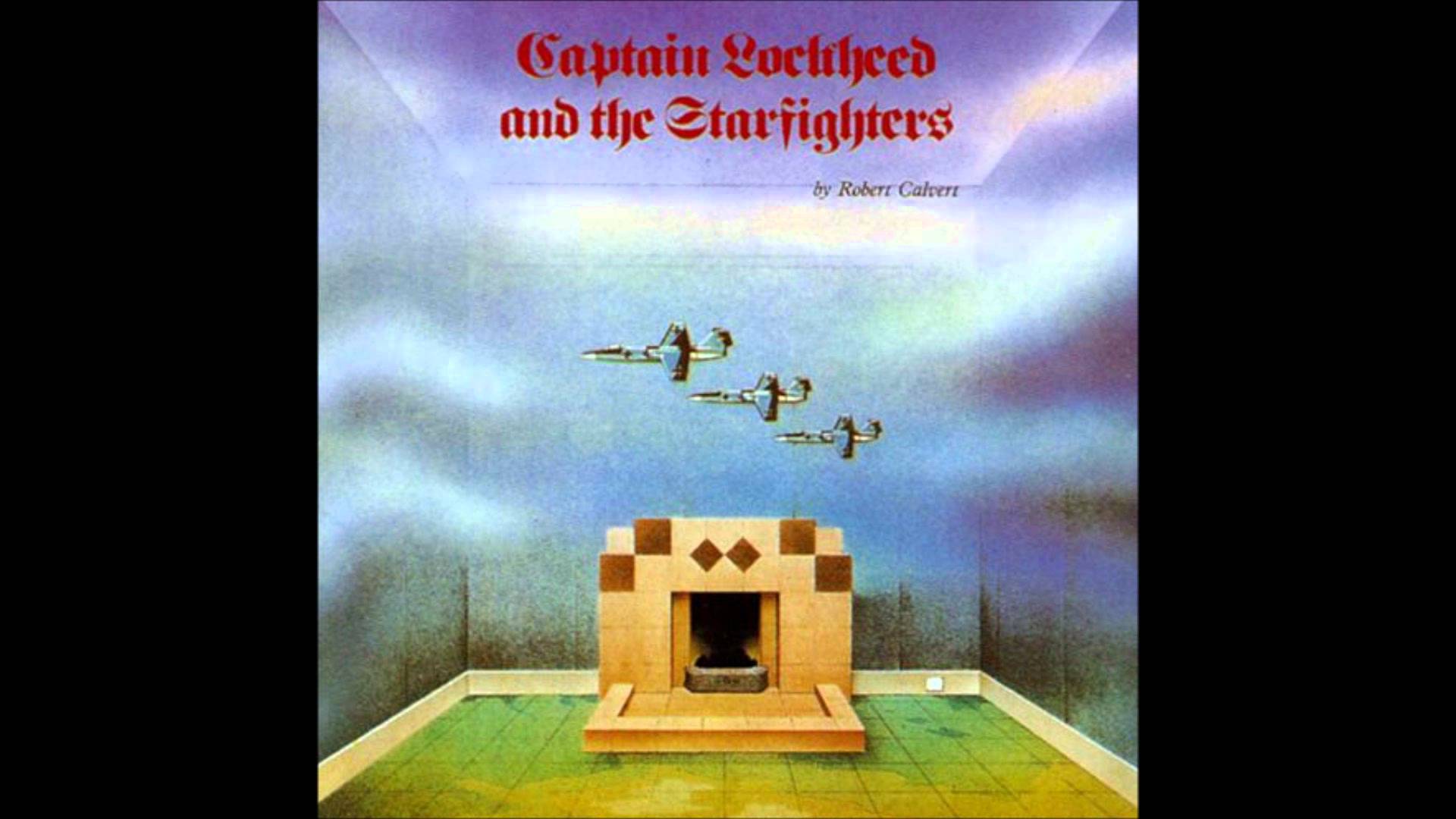
An avgeek parallel to the internet’s Godwin’s law, as online discussion on the topic of the German F-104 Starfighter grows longer, the probability of a mention of its allegedly dismal attrition record, or of ‘W****maker’, approaches 1. A total of 292 Lockheed F-104s were lost in German military service, one for each of the words in this article. By 21st-century standards, it’s a catastrophe. In fact, Starfighter attrition was an improvement over its predecessor in Luftwaffe service, the RF/F-84F. Proportionally, it suffered fewer losses than the RAF’s Lightning, that perennial ‘pilot’s aircraft’ (just what aircraft isn’t?). Long before the Tornado was drafted, the F-104G was blazing a trail across inclement European skies as the first true multi-role combat aircraft of the jet age.
In Luftwaffe service, the Starfighter was admittedly limited in its roles of interception and reconnaissance, but as a low-level nuclear strike fighter, it provided teeth to back up NATO’s rhetoric into the early 1980s. Substitute the additional fuel pack used in the strike role for the M61 Vulcan cannon (which found its first application on the F-104), and hang as much conventional ordnance as that famous tiny wing would permit, and the Starfighter was equally useful in the conventional attack role. The German Navy might have wanted the Phantom or Buccaneer, but they showed just what ‘Kelly’ Johnson’s design could do low over the chilly Baltic, toting anti-ship missiles or running the important ‘Baltic Express’ reconnaissance mission.
The F-104G was never far from scandal in Germany and elsewhere; even the F-35 would struggle to bring down a Dutch monarch or inspire two concept albums!
A fascinating episode that is rarely discussed is how close Britain’s RAF got to adopting Mirage IVs. This insider’s account of this unusual episode in aviation’s annals is taken from Charles Gardner’s ‘British Aircraft Corporation – A History’. This true story starts shortly after the shock-cancellation of the BAC TSR.2.
“BAC promptly, and on a self-help basis, did all it could to offer an alternative to the F-111 purchase, while naturally welcoming the Jaguar and AFVG proposals. These would load the design offices, but would not replace the TSR.2 on the factory floors for some years. What was urgently needed was some production and consequent payment for hardware. Hence the affair of the Spey-Mirage.
The idea was to get the government to take jointly made Mirage IV airframes fitted with Spey engines instead of buying the F-111. This, BAC argued, could provide a highly efficient TSR.2 replacement aircraft, fully capable of performing the TSR.2 tasks, at a total cost, for seventy-five aircraft of under £2 million each. Production assembly would be from two lines, one in France and one at BAC, and production deliveries could start in 1969.
The proposal was exactly in accord with the announced Government policy of Anglo-French colorations, would use an existing engine in an existing airframe, and incorporate already developed avionics and nav-attack systems. It would be complimentary to the AFVG, which was also to be BAC/Dassault collaboration, and, furthermore there were signs that the French air force might be very interested in buying some. Allen Greenwood for BAC and Ronnie Harker of Rolls-Royce become very active in promoting this solution.
Find out about Britain’s cancelled STOVL superfighter here
Mr. Healey has since said he only loses his temper about once in three years, but, when he does, it is an awesome experience. By all accounts he lost his temper over the BAC/Rolls-Royce Spey-Mirage proposals and referred to BAC in quite unprintable terms. In on outburst he said he would divert his two Anglo-French proposals to Hawker and leave BAC to ponder its sins. It is difficult to understand why he should have taken such a view, as he had not yet ordered any F-111s, and the F-111, to his certain and detailed knowledge, was already a very dubious proposition indeed. For some reason, however, he believed BAC was trying to roll stones in the way of his AFVG project, which was absurd.
BAC wanted both the AFVG for the future, and the Spey-Mirage for immediate reasons. The Spey-Mirage was aimed specifically at the F-111 and not the AFVG, and there can be little doubt that it would have filled this bill very well indeed. It would certainly have been an incomparably better aircraft than the subsonic Buccaneers, which the RAF eventually was forced to take when the AFVG fell through. An American General said of the Buccaneer proposal in 1965, ‘It will give its opponents hysterics, and earn the pity of its friends. The USAF discarded aircraft of the Buccaneer performance a decade ago.’
The better the Spey-Mirage looked the angrier grew the Minister and Ministry of Defence, while the Air Staff even went to the extent of interfering with RAF flight test reports, as one of the pilots has subsequently admitted. In the end, Sir Henry Hardman, Ministry of Defence Permanent Secretary, spelt it out to Lord Portal personally that, if BAC expected any more MoD work, it (and Rolls-Royce) better lay off Spey-Mirage as the RAF was determined to have F-111s.
…
Dassault, who would have done very well out the deal, were understandably angry, and there was much reference to the perfidy of Albion and of her lip service to a European concept while actually being a vassal of the USA. The French were shortly to have their revenge, if for different reasons and motives.”
You will only hear about the latest exclusive aviation features by following Hush-Kit on Twitter
Hush-kit is reminding the world of the beauty of flight.
An Air France Boeing 707-328 and popstar Dion Di Mucci in 1962. The song is a cover of Jerry Leiber and Mike Stoller’s ‘Ruby Baby’ originally recorded by The Drifters. As an aside, there’s an amazingly fierce cover of this song by Cody Brennan featuring some great guitar playing by the young Roy Buchanan (the intro of which was re-used by The Cramps for ‘Alligator Stomp’.
When Gary Powers’ U-2 was shot down in 1960, it was clear that flying high offered Britain’s V-bombers no protection. Instead the RAF began training to go in under the radar. The strain of flying in thick low-level air soon caused fatigue cracks that saw the immediate retirement of the RAF’s Vickers Valiant B1.
‘And paint the fucker black …’
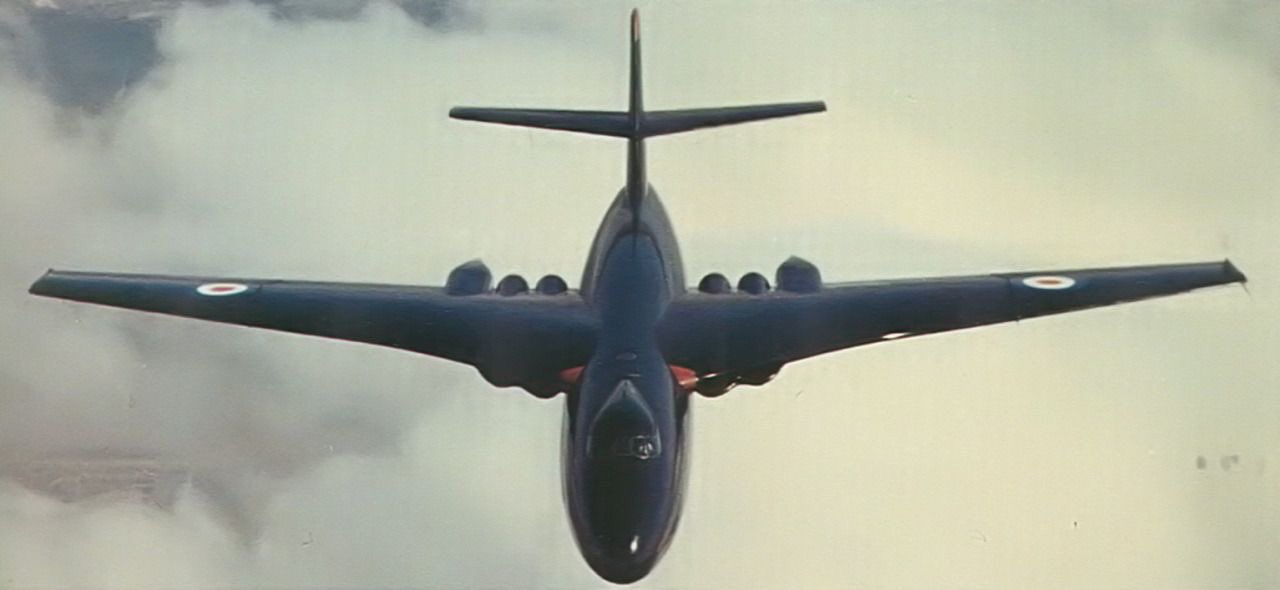
The irony is that Vickers had actually built an aircraft that was perfectly suited to the new tactics. Alongside the standard Valiant, a one-off variation on a theme had been ordered. Based on experience from WWII, the Air Staff wanted a machine that could fly ahead of the main bomber force to accurately mark targets. The result was the Valiant B.2. Beefed up to fly fast and low, the ‘Pathfinder’ was tested at speeds of up to 640mph. That’s comparable to the low level performance of the USAF’s swing wing B-1B Lancer, a machine that first flew nearly thirty years later and remains in service today.
Lowdown at 600mph, condensation wrapped the bomber in its own flaring cloud. It only added menace to an imposing presence that test pilot Brian Trubshaw had been instrumental in creating. When he saw the bomber’s muscular shape in the Vickers design office, he signalled his approval, then added ‘And paint the fucker black …’
Rowland White’s new book, The Big Book of Flight, is published by Bantam Books on May 23rd, 2013. The Valiant B2 – and other cancelled aircraft projects – are all featured in the book. Alongside much more besides, from airline food to drones, by way of cluster ballooning, WWII, aerial firefighting and tortoises in deep space. To keep well-informed of the latest aviation stories follow @hush_kit on twitter or on Facebook.
Piston-engined fighters ruled the roost for thirty years. A brutal survival of the fittest ensured a rapid evolution of these characterful machines; the final fighters were over six times faster and around ten times heavier than the first generation. Whereas the first fighters had only a single rifle-calibre weapon, the Tigercat of 1943 had an awe-inspiring arsenal of four ‘.50 Cals’ and four 20-mm cannon. The Tigercat also had forty times more horsepower than a World War I fighter. The era of classic fighter planes ended on a high-point with huge, powerful masterpieces. We look at the zenith of ‘prop’ fighter design and choose the ten most formidable machines. To keep this blog going- allowing us to create new articles- we need donations. We’re trying to do something different with Hush-Kit: give aviation fans something that is both entertaining, surprising and well-informed. Please do help us and click on the donate button above – you can really make a difference (suggested donation £10). You will keep us impartial and without advertisers – and allow us to carry on being naughty. A big thank you to all of our readers.
10. Focke-Wulf Ta 152H
Faster and possessed of greater range than the Spitfire XIX, the Ta 152H was possibly the finest piston-engined fighter in the world at high altitude. Had the war lasted and the high-flying B-29 been committed to Europe then this aircraft would have been its nemesis.
9. Lavochkin La-11
The ultimate Soviet piston-engined fighter and the go-to aircraft for low and medium altitude operations, the La-11 represented the zenith of the superlative Lavochkin series of combat aircraft and is one of the few aircraft on this list to have seen a serious amount of use on operations. Combat Aircraft’s Thomas Newdick noted that it was “Last of an illustrious line, and scored a hat-full of Cold War air-to-air kills (well, a lot more than the Sea Fury, anyway)… the La-9 was a better flier, but the La-11 marked the apogee of the Soviet piston-engined fighter. It also showed that you could still eke performance out of the rugged basic design (which went back to 1940), while the agile Yak series of fighters came to an end with the wartime Yak-3 (after which its wing was put to use for early jet fighters).”
8. Dornier Do 335
The Do 335 was very unorthodox. It featured two tandem engines in the fuselage and a unique ‘push-me/pull-you’ propeller arrangement. With the power of a two-engined aircraft and the frontal cross-section of a single: the result was a remarkable top speed of 474 mph. Pierre Clostermann was one of the first allied pilots to encounter the aircraft, however even in the extremely fast Tempest, the flight he was leading was unable to catch the ‘Pfeil’. Fortunately we will never know what this amazing machine was truly capable of. The performance of the pre-production aircraft was spectacular. A handful served on operations but little is known of what they achieved. Had the jet engine not burst onto the scene, it is likely that a spate of designs would have aped its revolutionary layout.
Was the Spitfire overrated? Full story here. A Lightning pilot’s guide to flying and fighting here. Find out the most effective modern fighter aircraft in within-visual and beyond-visual range combat. The greatest fictional aircraft here. An interview with stealth guru Bill Sweetman here. The fashion of aircraft camo here. Interview with a Super Hornet pilot here. Most importantly, a pacifist’s guide to warplanes here. F-35 expose here.
Thank you for reading Hush-Kit. Our site is absolutely free and we have no advertisements. If you’ve enjoyed an article you can donate here– it doesn’t have to be a large amount, every pound is gratefully received. If you can’t afford to donate anything then don’t worry.
At the moment our contributors do not receive any payment but we’re hoping to reward them for their fascinating stories in the future.
7. Spitfire Mk 24
The last model of Spitfire designed for land operations by the RAF was a potent combat aircraft, and easily one of the world’s finest at the end of the 1940s. This serves to underline the remarkable unbroken development of a basic design that first flew in 1936, the Mk 24 was twice as heavy, more than twice as powerful and showed an increase in climb rate of 80% over that of the prototype Spitfire.
6. Grumman F7F Tigercat
Over 4000 horsepower. a Great range, a superb climb and tremendous speed of 460mph. For a twin-engined aircraftit was also highly manoeuvrable. It is therefore surprising to learn that it scored only two kills (and they were slow vulnerable biplanes). However it could be argued that it has done more good than any other aircraft on this list as Tigercats operated for many years as fire-fighting tanker aircraft in California. Interestingly the F7F was intended to be named ‘Tomcat’ but this was deemed to be too sexually suggestive – a serious problem for an aircraft designed to kill people.
5. Martin-Baker M.B.5
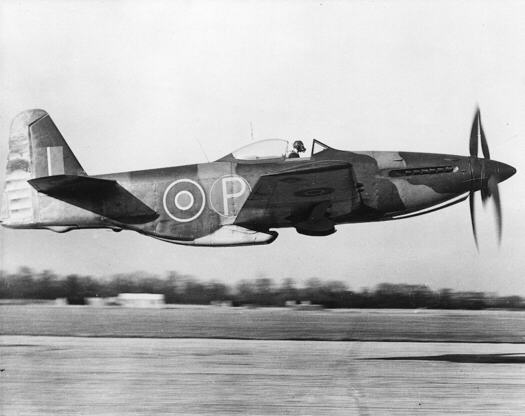
The greatest Allied might-have-been of the war? The M.B.5 drew unanimous praise from those who flew it, for its speed, range and climb-rate were outstanding, and it got more out of the Rolls-Royce Griffon than any other aircraft. Whether it would have lived up to its obvious potential will remain unknown, having the misfortune to emerge into a world teeming with inferior but numerous Spitfires and Tempests. Click here for the ten greatest cancelled fighters.
4. North American P-82 (later F-82) Twin-Mustang
A bizarre machine consisting (more or less) of two lengthened P-51H fuselages joined with a new centre section, the P-82B holds the record for the longest un-refuelled non-stop flight by a propeller-driven fighter (8129 km). It was also exceptionally fast. Sadly for the USAF later models of the Twin-Mustang were powered by Allison engines rather than the superlative Merlin fitted to earlier examples (due to increased royalties demanded by Rolls-Royce) and performance was reduced as a result.
Faster and far longer ranged than the first-generation jets, the Hornet also happens to be achingly beautiful. Eric Brown, the world’s most experienced test pilot, maintained it was his favourite piston-engined aircraft, as he put it “My favourite piston engine (aircraft) is the de Havilland Hornet. For the simple reason it was over-powered. This is an unusual feature in an aircraft, you could do anything on one engine, almost, that you could do on two. It was a ‘hot rod Mosquito’ really, I always described it as like flying a Ferrari in the sky.” (Sea Hornet illustrated).
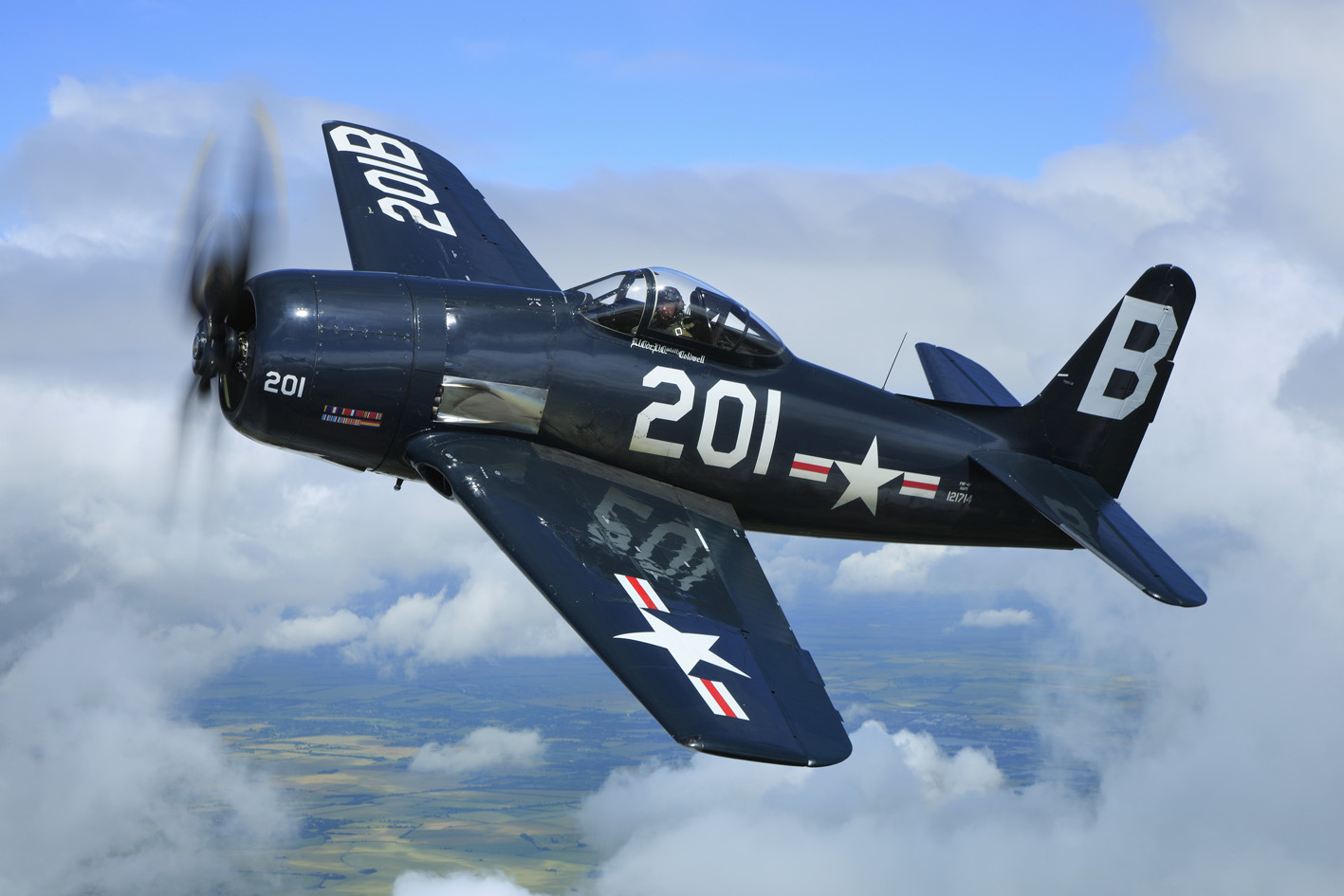
Equal 1st: Hawker Sea Fury and Grumman F8F Bearcat:
One holds the absolute climb rate record for piston-engined aircraft, the other the maximum speed record. Both appeared as a result of the same problem – it was too difficult to operate a jet fighter from a carrier and thus piston-engined fighter development was allowed to develop to its apogee. They are so closely matched that it is impossible to choose between them. Captain Eric Brown, who flew both, sums it up rather neatly:
“In the case of the Bearcat I found myself inevitably comparing it with the Hawker Sea Fury, and there really was very little to choose between the two. The Bearcat probably had the edge on climb and manoeuvrability, but was not such a good weapons platform nor as good in instrument-flight conditions as the Sea Fury. It was rather like the Fw 190 versus Spitfire IX situation – they were so evenly matched that if they met in combat the skill of the pilot alone would have been the deciding factor. Both were certainly great aircraft.”
The Sea Fury was the pinnacle of Hawker’s illustrious prop fighter line. The Sea Fury had everything a great fighter needs: it was tough, well-armed, fast and agile . Despite its enormous size and power (2,480 HP) it had delightful handling qualities; pilots were impressed with how spin-resistant it was, and Sea Fury pilot Dave Eagles gave it it ‘top marks for agility’. The Sea Fury was sent to war in Korea, where it proved itself an excellent warplane, notably downing a MiG-15 jet fighter in 1952.
Thank you for reading Hush-Kit. Our site is absolutely free and we have no advertisements. If you’ve enjoyed an article you can donate here. At the moment our contributors do not receive any payment but we’re hoping to reward them for their fascinating stories in the future.
Thank you for reading Hush-Kit. Our site is absolutely free and we have no advertisements. If you’ve enjoyed an article you can donate here. At the moment our contributors do not receive any payment but we’re hoping to reward them for their fascinating stories in the future.
“If you have any interest in aviation, you’ll be surprised, entertained and fascinated by Hush-Kit – the world’s best aviation blog”. Rowland White, author of the best-selling ‘Vulcan 607’
I’ve selected the richest juiciest cuts of Hush-Kit, added a huge slab of new unpublished material, the beautiful coffee-table book is available now from Amazon here
From the cocaine, blood and flying scarves of World War One dogfighting to the dark arts of modern air combat, here is an enthralling ode to these brutally exciting killing machines.
The Hush-Kit Book of Warplanes is a beautifully designed, highly visual, collection of the best articles from the fascinating world of military aviation –hand-picked from the highly acclaimed Hush-kit online magazine (and mixed with a heavy punch of new exclusive material). It is packed with a feast of material, ranging from interviews with fighter pilots (including the English Electric Lightning and Mach 3 MiG-25 ‘Foxbat’), to wicked satire, expert historical analysis, top 10s and all manner of things aeronautical, from the site described as
“the thinking-man’s Top Gear… but for planes”.
The solid well-researched information about aeroplanes is brilliantly combined with an irreverent attitude and real insight into the dangerous romantic world of combat aircraft. The book is a stunning object: an essential addition to the library of anyone with even a passing interest in the high-flying world of warplanes, and features first-rate photography and a wealth of new world-class illustrations.I’ve selected the richest juiciest cuts of Hush-Kit, added a huge slab of new unpublished material, and with Unbound, I want to create a beautiful coffee-table book. Here’s the book link .
Which of these would be more effective at conducting a humanitarian relief in a threat area?
CRISIS 2016 – A simmering conflict in a Central African nation has spread to a neighbouring country, with armed militias crossing the border and threatening the stability of a newly-elected government. With little notice, its Capital City comes under threat, and a plea is made to the international community for peacekeepers to help restore order.
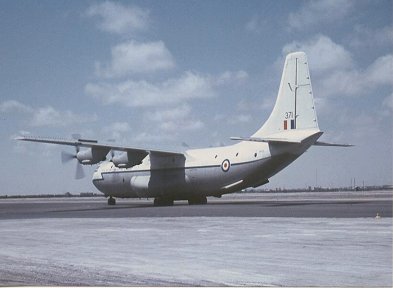
With historic ties to the region, France is quick off the mark, dispatching an A400M Atlas with a HQ contingent, pallets of equipment, and peacekeepers – 60 personnel in all, with 20 tonnes of cargo. Meanwhile, another Western European nation pledges its assistance, but must turn to the private sector for its airlift needs – they charter a Shorts Belfast to carry their contingent, which will consist of a similar force of 100 peacekeepers along with engineering equipment.
Both transports leave Europe within an hour of each other, however the faster Atlas is first to arrive in Capital City. Rolling blackouts mean the Atlas’ crew need to use Night-Vision Goggles to touch down on a pitch black runway. The slower Belfast meanwhile arrives by dawn, its crew making a VFR approach. By then, the Atlas has reversed itself onto a gravel apron to disgorge its load, and begun loading foreign citizens for evacuation. The Belfast meanwhile is unloaded on a taxiway – all available concrete aprons at Capital City’s airport are occupied by the hulks of 727s and Tu-134s abandoned by the previous regime. Fortunately, the Belfast has brought with it a bulldozer and tow, and by mid-morning, enough cleared space has been made on the concrete tarmac. By now, the Atlas has departed with a full complement of 116 evacuees.
At midday, a panicked message comes through to the peacekeepers – a contingent of 130 people (including an Al Jazeera correspondent and their cameraman) are stranded in a village on the country’s border, with militias cutting off all roads in and out. The Belfast has been unloaded and is ready, but there’s a problem – the village’s airstrip is unsurfaced, and too short for it to land there. Another French Atlas is heading for Capital City carrying a load of peacekeepers, and is re-directed inflight, touching down at the village airstrip after dark – again, with the crew utilising Night-Vision Goggles.
It’ll take two trips to shuttle out the village evacuees by Atlas to the Capital City. The first flight is made without problem, but during the loading of passengers for the second flight, intelligence is received that the militias have enlisted a ‘sympathetic’ Air Force Colonel from their home country to the cause. MiG-23s have been observed sneaking over the border, and while French AWACS and Fighter Cover are on their way, the Atlas crew need to leave the airstrip – and fast. Wearing Night-Vision Goggles, the crew of the Atlas lifts off the runway but stays low, using terrain to mask the aircraft from detection.
The trip to Capital City is made without incident, and the evacuees cross the tarmac to the waiting Belfast. There’s just enough time for the Belfast’s crew to stroll over to the newer airlifter and give it a look over. They listen to the Atlas’ crew describe in (broad) detail the evacuation mission, and tour over the 21st century airlifter. The Belfast’s crew have their tour cut short however when their own aircraft, some 52 years old, has been loaded and is ready to fly out.
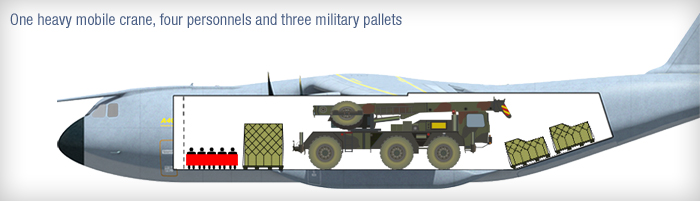
Winner: A400M Atlas. It’s an unfair comparison – the Belfast was never intended to take payloads ‘to the foxhole’ – but rather, deliver loads to a bridgehead where they could either self-deploy or be loaded in to Beverleys or Argosies. On a strategic level, it’s a fairly even fight – the Belfast is roomier, the Atlas a lot faster. Both are easy to load. But the Atlas is built to land with its load to the fight, under whatever conditions. Despite broadly similar planform and dimensions, it’s hard to compare two aircraft seperated by 40 years and two different roles. What is interesting however is that they are two aircraft united by a common ‘enemy’ – the C-130.
It’s been suggested that had fate turned differently for the United Kingdom, 30 Belfasts would have been produced (instead of 10), and they would have served a full career (instead of retirement from the service in the mid-70s). A few soldiered on in to civil charter, but the Belfast’s race was over before it began. Twisting finances saw the C-130K – with its smaller cargo bay but far greater versatility on airfields – take precedence with the Royal Air Force.
(see the English Electric Lightning versus S-300 SAM here)
Some 40 years later, the Royal Air Force is on the cusp of introducing an aircraft which combines the best of both worlds – the Belfast’s strategic capacity (loading entire helicopters and armoured vehicles) with the Hercules’ access to semi-prepared airfields in tough conditions. The degree to which an Atlas can accomplish this in an operational theatre will become clear from 2015, when they arrive in to service with the Royal Air Force’s No. 70 Squadron. The Belfast will have been long gone (the last civil charter airframe sits at Cairns Airport), but an interesting contest will brew in the next decade as the Atlas faces off against C-130s (and C-17As, Antonovs and Embraers) for airlift surpremacy.
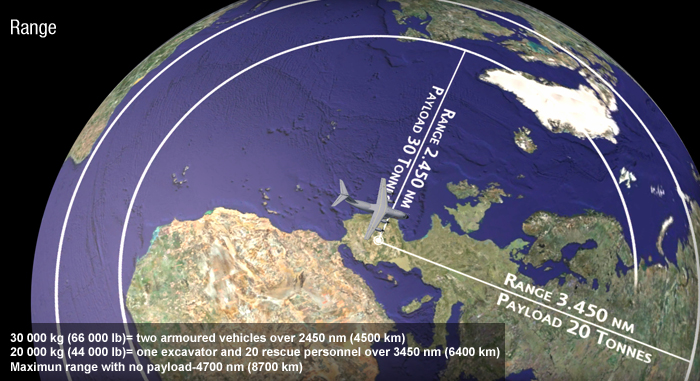
Payload: A400M 37 tonnes or 81,600lbs; Belfast 35 tonnes or 78,000lbs.
Cargo ‘Box’: A400M: 17.7m long (plus 5.4m on ramp), 4m wide, 3.85m high (4m aft of wing); Belfast: 25.7m long, 4.9m wide, 4.06m high.
Cruise Speed: A400M 421kts; Belfast 292kts.
Range with max payload: A400M 1781nm; Belfast 970nm.
Want to see more stories like this: Follow my vapour trail on Twitter: @Hush_kit
Thank you for reading Hush-Kit. Our site is absolutely free and we have no advertisements. If you’ve enjoyed an article you can donate here. At the moment our contributors do not receive any payment but we’re hoping to reward them for their fascinating stories in the future.

 German Starfighter by Thomas Newdick
  In Luftwaffe service, the Starfighter was admittedly limited in its roles of interception and reconnaissance, but as a low-level nuclear strike fighter, it provided teeth to back up NATO’s rhetoric into the early 1980s. Substitute the additional fuel pack used in the strike role for the M61 Vulcan cannon (which found its first application on the F-104), and hang as much conventional ordnance as that famous tiny wing would permit, and the Starfighter was equally useful in the conventional attack role. The German Navy might have wanted the Phantom or Buccaneer, but they showed just what ‘Kelly’ Johnson’s design could do low over the chilly Baltic, toting anti-ship missiles or running the important ‘Baltic Express’ reconnaissance mission.