Aviation album cover of the week




Though pretty depressing, these Afghanistani rugs depicting US drones are intriguing.


Image credit: http://www.timetoast.com
The two periods in which biplane fighters saw combat in significant numbers oddly coincided with the beginning and very end of the fighting biplane‘s development with nearly twenty years of comparative peace in between. Thus any assessment of the ‘greatest’ biplane fighters naturally looks at these bookends of the biplane story. Many fine aircraft appeared, flew for a few years in the squadrons, and were quietly withdrawn without ever firing a shot in anger. This cursory, and totally arbitrary, list of the greatest looks only at those ‘lucky’ enough to have seen operational combat service and naturally follows the odd pattern of the biplane‘s most significant periods of service, 1914-18 and 1936-41, before the monoplane showed two fingers to two wings for good. Please also grant us the cognitive dissonance required to use terms like ‘scorer’, we do not intend to celebrate war or to trivialise the lives lost in these dogfights.

The Fokker Eindecker, which beat the DH.2 into service, was little more than a lash-up, a machine gun bolted to an existing (inadequate) airframe and liable to fall apart if the gun was fired. The DH.2 quickly gained ascendancy over the German monoplane and remained in frontline service into 1917, a remarkable career given its pioneering quality. The opening shots in the long war between monoplane and biplane had been fired and the biplane was the initial victor.

Eventually surpassed by aircraft of greater power and strength, the Nieuport lingered in frontline British service into early 1918 and even then some of the more influential pilots retained one for personal use, notably Albert Ball and Charles Nungesser. Virtually all Allied aces scored at least some of their kills on the type.

However, these terrifying handling qualities conferred upon the Camel exceptional manoeuvrability, it may well have been the most manoeuvrable fighter of all time, and in a turning fight the Camel was untouchable. The statistics bear this out, Camels accounted for 1294 victories, more than any other fighter type of the war. Its rival the SE5a was in virtually every respect a better aircraft but the Camel seemed to capture the wider imagination, possibly due to Biggles and of course the type’s most famous pilot, Snoopy.

A massive production programme meant that despite entering service as late as May 1918, some 3300 had been built by the end of hostilities in November. Famously singled out to be handed over to the Allies as a condition of the armistice terms the D.VII re-entered production in the Netherlands and ultimately served in the air arms of 19 nations, in some cases well into the 1930s.

“If you have any interest in aviation, you’ll be surprised, entertained and fascinated by Hush-Kit – the world’s best aviation blog”. Rowland White, author of the best-selling ‘Vulcan 607’
I’ve selected the richest juiciest cuts of Hush-Kit, added a huge slab of new unpublished material, and with Unbound, I want to create a beautiful coffee-table book. Get your copy now right here
From the cocaine, blood and flying scarves of World War One dogfighting to the dark arts of modern air combat, here is an enthralling ode to these brutally exciting killing machines.
The Hush-Kit Book of Warplanes is a beautifully designed, highly visual, collection of the best articles from the fascinating world of military aviation –hand-picked from the highly acclaimed Hush-kit online magazine (and mixed with a heavy punch of new exclusive material). GET YOUR copy now right here
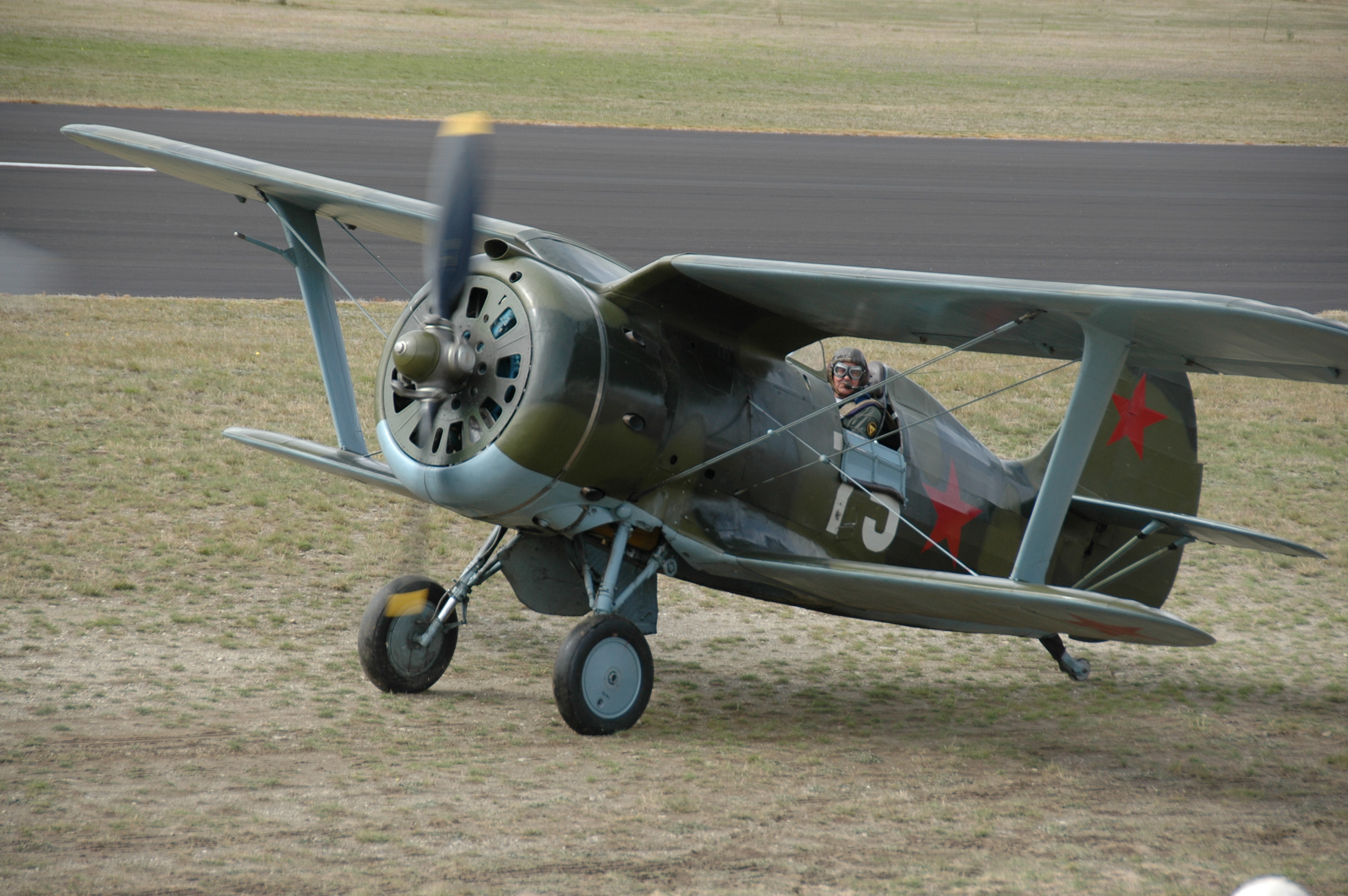
6. FIAT CR.32 Freccia

Meanwhile, over Spain, Fiat flew the flag for Fascism against the Communist upstart I-15, its one major advantage over the Soviet aircraft being its heavier armament. Spain would prove to be its finest hour, it was capable of destroying the Tupolev SB-2 bombers that were thought uninterceptable due to their speed – indeed Spain saw the unusual situation that both sides possessed monoplane bombers that were faster than their respectivebiplane fighters, a situation that hastened their replacement by speedier monoplanes.

4. Kawasaki Ki-10

3. Gloster Gladiator

Curiously the Gladiator pops up in an unusual number of unequal conflicts far from its home where it was forced to operate (invariably heroically and to great propaganda value) in the face of numeric and technological superiority – thus conveniently mirroring the general experience of the biplane fighter in World War II. Flying for the Chinese against the Japanese, with the Finns against the Soviets, the Belgians against the Luftwaffe and, most famously, with the RAF against the Italians over Malta the Gladiator stoically defied the odds. More prosaically, when operated in numbers against a similarly equipped enemy it performed excellently and a similar situation to the CR.32/I-15 situation in Spain developed over Africa, where it clashed regularly with the Fiat CR.42, which, though slightly faster, did not handle as well as the Gloster. Despite being the RAF’s last biplane fighter it was also that service’s first fighter to sport an enclosed cockpit, there are not many aircraft that were simultaneously in the vanguard of development whilst totally obsolete.

Thank you for reading Hush-Kit. Our site is absolutely free and we have no advertisements. If you’ve enjoyed an article you can donate here. At the moment our contributors do not receive any payment but we’re hoping to reward them for their fascinating stories in the future.
Have a look at 10 worst British military aircraft, Su-35 versus Typhoon, 10 Best fighters of World War II , top WVR and BVR fighters of today, an interview with a Super Hornet pilot and a Pacifist’s Guide to Warplanes. Was the Spitfire overrated? Want something more bizarre? The Top Ten fictional aircraft is a fascinating read, as is The Strange Story and The Planet Satellite. The Fashion Versus Aircraft Camo is also a real cracker. Those interested in the Cold Way should read A pilot’s guide to flying and fighting in the Lightning. Those feeling less belligerent may enjoy A pilot’s farewell to the Airbus A340. Looking for something more humorous? Have a look at this F-35 satire and ‘Werner Herzog’s Guide to pusher bi-planes or the Ten most boring aircraft. In the mood for something more offensive? Try the NSFW 10 best looking American airplanes, or the same but for Canadians.
“If you have any interest in aviation, you’ll be surprised, entertained and fascinated by Hush-Kit – the world’s best aviation blog”. Rowland White, author of the best-selling ‘Vulcan 607’
I’ve selected the richest juiciest cuts of Hush-Kit, added a huge slab of new unpublished material, and with Unbound, I want to create a beautiful coffee-table book. Order your copy now right here
Pre-order your copy now right here
I can only do it with your support.
 Credit: Paul Smit
There is only one An-225. Not even enough to breed.
I recently watched an American documentary on the Antonov An-225 and was drowned in hyperbole relating to the aircraft’s size. It’s the biggest, but I don’t want to bore you by telling you how many blue whale tits would fit inside it or how many buses stacked up would equal it or any of that; it is the appearance of the machine that I love – SIX ENGINES, the best-looking tail of any aircraft since the P-61 and a comically multi-wheeled main gear all add up to make a very special aircraft.
As a brattish child prodigy once pointed out to Alan Partridge,’You can’t have gradations of uniqueness.’, something is either unique or isn’t, and the sole An-225 is indeed unique. There is an incomplete second An-225 in Kyiv that Russia was eyeing up as a potential mothership for its next-generation spaceplane. But considering the relationship between Russia and Ukraine, the An-225 – like other freakishly oversized birds before it- may one day (in the next twenty years or so) become extinct.


I was wondering which aircraft saved the most lives? Perhaps it is the C-130, Mi-8 or An-124 with their mass of humanitarian work? Or the many brave firefighters using aircraft around the world? Or the meteorological aircraft that have spotted extreme weather conditions? The aircraft that have mapped unexplored areas or spotted precious resources? Maybe it was the pesticide spraying aircraft that fought malaria or help crops? I’d love to hear your thoughts.

Sleek as your face, the Lockheed SR-71A Blackbird. Image: USAF
Martin Cloe investigates the link between razors and planes and decides he’s not happy.
Apart from the excellent treatments for testicular cancer, the best thing about being a man in the modern age is the Mach3 razor. Though its blades couldn’t be more expensive if they were made by Lockheed Martin, it lives up to the hype: it is a superb razor. It is alleged that developing the razor, which reached the shelves in 1998, cost $570 million in research and development. The razor took around the same time as the F-35 to develop; the manufacturer Gillette started development of a three blade razor in the 1970s and took years to master one that didn’t cause increased skin irritation. The name was well-chosen, putting glamorous images of the SR-71 Blackbird into many men’s heads. What I didn’t like was an ‘improved’ version, the ‘Mach3 Turbo’. Ignoring the relative merits or demerits of the razor (in my opinion the attempt to improve on perfection was unnecessary and cynical – like Silent Eagle, and was a less pleasant shave) and instead look at the name ‘Mach3 Turbo’.
Technically the SR-71 was the fastest turbojet-engined aircraft. In 1976 the aircraft smashed the performance records for C-1 (Landplanes) in Group 3 (turbo-jet) reaching a terrifying speed of 2,193 miles per hour. But calling it a turbojet-powered aircraft is rather misleading- at these speeds the spinning bits are causing more drag than thrust; at the higher end of the Blackbird’s performance spectrum the aircraft is effectively powered by ramjets. I know, it could be said that the MiG-25, with its turbojets, was Mach 3 capable, but it was Mach 3-capable in the same as my mountain bike is 150 mph-capable: it can do it if you’re willing to change the wheels and tyres afterwards (and allow three miles of braking distance). So suggesting that a Mach3 Turbo would have more grunt than a simple Mach3 seems a bit of a confused message. In fact it’s even more confused as it seems to have been borrowed from the automobile lexicon. I know how I can make my Mach3 car faster, I’ll stick a supercharger on it! This is a bit insulting to men. Oh wait, before I explain why, I should explain some of the silliness in the difference between the marketing of men’s and women’s razors: change the colour, change the name, change the slogan. I’ll give an example: the same razor in both sex-assigned versions was once advertised in the same break. The women’s version had its ‘blades behind silky-fine wires’, the men’s ‘was so sharp it had to be kept behind bars’. The reason I brought this up was my disappointment at the forced marriage between Mach3 and Turbo as words. It’s like there was a meeting to generate ‘words men like‘ and two were just thrown
together without rhyme or reason. I mean why not go the whole hog and call it the Titty-burger, the Football-Barbecue or the relationship-without-commitment-Cornish-Pasty.
Rant over.

In an earlier post I tried to understand the reasons for the configuration of the P-996 Lazer Fighter Jet from Grand Theft Auto 5. Though the article was tongue in cheek some questions did remain. Why had Rockstar Games modified the appearance of the F-16? Apart from the novelty factor and as an exercise in creative design, there may be another reason. I was recently talking to the 3D modeller Francis Bennett and we came on to this subject. He noted that some aircraft manufacturers (notably several) in the US require permission for their designs to be used in games. Apparently this even extends to World War II aircraft, with this in mind it may be that the appearance of the P-996 was the result of a thwarted request to Lockheed Martin to use the form of the real F-16. A modified F-16 could be modified from existing 3D models, saving both time and effort.