Air Combat Memoirs Of The Iranian Air Force Pilots: Iranian Air Force Pilots In Combat

Review:  Air Combat Memoirs Of The Iranian Air Force Pilots: Iranian Air Force Pilots In Combat (1980-88) Translated and edited by Kash Ryan

f5_pilots_b4_iraq_mission

The last great air war was that between Iran and Iraq (1980-1988). Two titanic air forces armed with advanced fighters took part in aerial battles on a scale that will hopefully never be repeated. The Iranian air force was equipped with the F-4 and F-5E, but the undisputed master of the skies was the F-14 Tomcat which destroyed over 150 Iraqi aircraft.

Thank you for reading Hush-Kit. This site exists because people like you support it here.

Before the Shah’s overthrow in 1979 the USA had provided Iran with advanced weaponry, including the formidable F-14 Tomcat and F-4 Phantom II. Such complex systems required specialized training and support, an arrangement which would not last long. Iran’s new regime and the US began a sour relationship. Following the ’79 hostage crisis, a weapons embargo was in place. The F-14 was particularly potent, but also particularly hard to maintain- how long it could remain combat ready cut-off from technical support and new spares was a pressing question. When the massed forces of Saddam Hussein invaded in 1980, the issue of keeping Iran’s fighters in the sky gained existential import.

Against this onslaught from a numerically superior enemy, the Islamic Republic of Iran Air Force found itself with a rapidly-declining stockpile of weaponry and spare parts. The IRIAF’s force of Amercian-built F-4s, F-5Es and F-14s was pitted against Iraq’s Soviet MiG-21, ’23 and ’25s and French Mirage F1s. The MiG-25 was the fastest fighter in the world, and was manned by Iraq’s elite fighter pilots- and was a daunting opponent. In the attack role, Iraq had the Super Etendard (armed with a weapon two years away from becoming a household word in Britain, the Exocet) and the tough Sukhoi Su-20 and ’22.

Kash Ryan has assembled and translated a fascinating selection of pilot’s accounts from the air war that followed. Mr Ryan’s motivation for this collection of miscellaneous combat stories from IRIAF pilots is interesting:
“In an era, when the ‘Islamic Revolutionary Guards’ get the glory and money (even though they did very little fighting during the important stages of the war), it is of utmost importance to tell the stories of the real heroes who fought for their country with one hand tied behind their back.

tmg-slideshow_xl
Although some of the stories are somewhat humdrum, the life-threatening constraints caused by the lack of materiel give a nervous edge to many of the stories. Because of the lack of precious Phoenix air-to-air missiles, for example, pilots were instructed to use the inferior Sidewinders instead. There is an exciting account from an F-14 pilot about chasing Iraqi Mirage F-1s near to the border, and (being armed only with heat-seeking Sidewinders) having to get closer and closer to the Mirages for the missiles to be able to successfully home in on the enemy’s engines and exhaust.
Several of the stories involve tankers and refuelling dramas. One of the pleasures of this book is seeing tanker aircrew getting their due recognition, instead of as in many such accounts being dismissed as “flying gas station attendants.”

Iranian_Northrop_F-5_during_Iran-Iraq_war.jpg

“F-14 instructor, MiG-25 killer and all round gentleman”
There’s a gripping account of a sortie where F-14s were flying escort duty, protecting the ship tankers that Iran relied on for its economy. The F-14s are already low on fuel when they’re alerted that thirteen Iraqi bogies are incoming. The grim decision is made to protect the ships at all cost, and to fly till the fuel runs out. Once the fuel is gone the procedure is for the radio/weapons operator to eject first followed by the pilot. While searching for the Iraqis they’re told twenty air-to-air missiles have been fired, so they use up precious fuel jinking to avoid them. Fortunately for them, the Iraqi tactics at that time were for aeroplanes to fire their missiles only when advised by ground control, so none of the 20 missiles hit. Luckily a KC-707 tanker appears in the nick of time to refuel the F-14s.

Click here for ‘Werner Herzog’s guide to pusher aircraft
On another occasion, a flight of F-14s are low on fuel but are warned of approaching Iraqi jets. The KC-707 radio operator deals with the problem cunningly, by faking radio calls to non-existent approaching armed F-4s. The Iraqis take the bait and turn back. Another tanker story concerns a reconnaissance F-4 being hit by anti-aircraft artillery, then unable to hold fuel so flying home still sucking on the KC-707’s teat.

bf81szneqrz1uypmhlng
Like many pilots, the IRIAF pilots had their superstitions, and dreams and premonitions were taken seriously. One story has a pilot being telephoned by someone ordering him not to fly as a KC-707 tanker pilot has had a bad dream about his being shot down. The F-14 pilot thinks it’s another pilot playing silly buggers, so ignores the call, and is then told off when he returns, unscathed, from his mission.
The book is the stronger for being an account of the everyday stresses and emergencies. For instance, one story concerns a bombing raid that, for a few awful hours, is believed to have gone wrong and become a friendly fire incident.
The quiet bravery of the airmen comes across strongly as in this anecdote that ends:
“A dozen miles or so closer to our home base, we began to lose hydraulic pressure, causing the plane to roll on its side. At that point, we knew it was time to punch out. Though I was glad we’d gained altitude, it certainly wasn’t a smooth ride. In the end, I had to endure two months of hospitalization before I could return to the flight line. Though I suffered great pain by being ejected at 15,000 feet while inverted, I survived and served for another 20 years or so.”

Iranian_F-4E_Phantom_II_armed_with_AGM-65_Maverick
Although the patriotism of the air force personnel comes across strongly, this is not true for all since there is a footnote to one story:
Note: 1Lt Rahman Ghana’at Peesheh, the WSO on this very mission, later defected to Iraq as a newly minted Major with his armed F-4E. His own WSO suffered years of captivity and torture in Iraq for refusing to cooperate with the enemy.
There are several vignettes that stand out, and bring immediacy to the accounts. One pilot recalls seeing, during a surprise bombing raid, Iraqi AAA crew running from their volleyball court to the guns. One pilot describes another as “an F-14 instructor, MiG-25 killer and all round gentleman.

Click here for Superb aircraft the US stymied 

I’m not sure if this says more about how Farsi translates into English, or Iranian air force culture, or the nature of the situation- but the pilots have something distinctly old-fashioned about their way of talking. They frequently come across as impressively understated- displaying a kind of nonchalance and black humour reminiscent of the pilots of the Royal Flying Corps.

f4wing_jpg

Another story recounts a member of the ground crew offering to sacrifice a lamb before a raid, to bring them luck, probably something that doesn’t happen in the RAF.
My main criticism of this book is that several of the stories are simply non-anecdotes that leave the reader scratching their heads wondering what the point of the story was. Although it includes a useful glossary, the book would also benefit from a potted history of the conflict and/or a timeline. It would also benefit from a more thorough proofread (judge not…) and a little finessing.
On the whole, this is an enjoyable book, and one that throws light on a section of a conflict now almost forgotten outside the Middle East. Perhaps the last word should go to one of the Iranian pilots: “Those were the good old days. Tough but memorable.”

Thank you for reading Hush-Kit. This site exists because people like you support it here. 

Reviewed by Torquil Arbuthnot, Literary Editor for The Chap magazine.

Review:  Air Combat Memoirs Of The Iranian Air Force Pilots: Iranian Air Force Pilots In Combat (1980-88) can be bought here

Kash Ryan can be followed on Twitter: @Kash2538

Follow my vapour trail on Twitter: @Hush_kit

Guide to surviving aviation forums here

You should also enjoy some more of our articles: There’s a whole feast of features, including the top WVR and BVR fighters of today, an interview with a Super Hornet pilot and a Pacifist’s Guide to Warplanes. Was the Spitfire overrated? Want something more bizarre? The Top Ten fictional aircraft is a fascinating read, as is The Strange Story and The Planet Satellite. The Fashion Versus Aircraft Camo is also a real cracker. 

‘Werner Herzog*’s guide to pusher aircraft

“While a tractor aeroplane is hungry for a future it can never reach to consume, the pusher is forever pushing the present into the past to escape the horror of the now”

Legendary German film maker Werner Herzog took time out of his busy schedule to choose his favourite ‘pusher’ aircraft and to ponder on what went wrong enough in your life to lead you to spend time on aviation blogs.

Guten tag. Ich bin Werner. The ‘pusher’ aircrafts below demonstrate, better than any art or literature, all that is futile and Fremdschämen in the human experience and I will explain them to you so that you will know. The photograph of an aeroplane is the cruelest thing: as we look at this symbol of free flight we are head down und locked in our cyclic unthinking.”

*Not Werner Herzog


9. De Schelde Scheldemusch
5433LLook at the happy man in his little biplane. He is Dutch. He does not comprehend the limitless pain and suffering that lies at the heart of the universe. His biplane will soon show it to him though, look:
 
 
And what does he get for his trouble?
Nothing but bruises and the condescending pity of the citizens of Gravesend.”


8. Seabird Seeker
JY-SE1_Seabird_Seeker_(7690053920)
 
“This pitiful creature is a part of the air force of Jordan. The Jordanians use it for ‘reconnaissance’, for looking at the ground. They fly their bulbous craft over the endless sandy wastes at the border of their country, looking for incursions by Israelis. The Jordans have camouflaged their aeroplane as a gangster rapper, foolishly believing that nothing else strikes greater terror into the Israeli heart. They are deluded of course, but is their obsession with visually representing the power of ‘urban’ musical expression on their little pusher monoplane any more delusional than the desire of the USAF or the Luftwaffe to visually represent the power of the sky itself on their fighter jets? This is a big question but we must not be afraid of the enormity of our interrogations when looking at the world of pusher aircrafts.”
 
Click here if you’ve lost interest in me and would turn your back on my words to read about the ten best-looking Canadian aeroplanes. 
 
7. Fane F.1/40
26-2
“‘What have you done today Fane my friend?’ 
‘I have designed for you an unpleasant aircraft to fly in your mac and with your trilby on your head’
Where is the man in the trilby and the mac going? Where did he come from? Ultimately he is hurtling only towards death, where he came from we are not told though this ‘Fane’ tried to make the journey more agreeable for him for reasons that are not clear. As we try to alter our surroundings to make our lives and the lives of those we love more comfortable we succeed only in divorcing ourselves from the greater truths and mysteries of the vast uncaring universe. That Fane used many of the windows from the house in which the man liked to live with his mac and his trilby in the construction of his unpleasant machine made for a difficult situation between them when it was discovered by the man when he returned home in his trilby and his mac.”


6. Saab J 21
1949-1956-Saab-92-1950-And-J21-1600x1200
 
 
“I know a little about these in the wild, Saab J 21s, both parents incubate the egg in stints that last between one day and three weeks. Incubation lasts around 150 to 175 days, the longest incubation period of any aircraft. It can be an energetically demanding process, with the adult losing as much as 83 kg of body weight a day. After hatching, the chick is brooded and guarded for three weeks until it is large enough to defend and thermoregulate itself. During this period the parents feed the chick small meals when they relieve each other from duty. After the brooding period is over, the chick is fed in regular intervals by both parents. The parents adopt alternative patterns of short and long foraging trips, providing meals that weigh sometimes 12% of their body weight. The meals are composed of squid, fish and krill I think.”


5. Piaggio Avanti
Cacciatore-di-Stelle.jpg
“I am gripped by Weltschmerz when I see it, why cannot all aircrafts be so beautiful?”
 
4. Beechcraft Starship
N514RS.jpg
 
“I met the actor Tom Cruise once. He was descending the airstairs of the Beechcraft Starship in which he had been flown into Pisa airport in 1997. A ‘Ship’ for a ‘Star’: a Starship. “Hey Walter!” he yelled at me “Hey, I want to be in one of your clever films! Can you put me in one please Walt?” or something like this. ‘Das ist Walter’? Was this a reference to Zabranjeno Pušenje? More likely my mystic American was recalling the source itself, Hajrudin Krvavac. 
 
I was not unaware of his fame and I confess that the idea of his presence in one of my films was attractive if only for the attention that would naturally follow if he performed for me. I approached him. When I was at a distance of five metres, maybe four and a half metres, I don’t know, I became suddenly aware of this overbearing smell, a filthy smell, like, like an abattoir or a sewage treatment plant or something of this kind, something awful and terrible and it was all I could do to prevent myself from retching.
 
Click here if you’ve lost interest in me and would turn your back on my words to read my article on the frustrated sexuality of the Eurofighter promotional film. 
I then noticed that Tom Cruise’s head and body was covered in a disgusting mixture of vomit and human shit and bits of rotting, raw meat, it was as I imagine a demon from the depths of some hideous ring of hell such as Danté might devise if he were in a particularly bad head place. I became aware that Tom Cruise was speaking but of course, well I am not, I don’t know… Superman, all I could do was prevent myself from being absolutely sick right onto Tom Cruise, though I don’t suppose this would actually have made a difference to the infernal mess all over his expensive suit. Anyway, I have no idea what he said through this time as I stood there, trying not to be sick on the world’s most famous actor who was already covered in sick and worse than this. It seemed an eternity to me but I estimate now that maybe a minute and twenty seconds had gone past and Tom Cruise was looking a little strangely at me, I muttered some confused platitude about how it was wonderful that he thought of me and that we must try and meet again when it was more… convenient for him. The next thing I remember is running, sprinting like Jesse Owens, away from the hideous stench surrounding Tom Cruise and then vomiting and vomiting and vomiting for what felt like hours. I have no idea what happened. I am assured by other individuals who were present that Tom Cruise was not, in fact, covered in any substance apart from his own skin and clothes. All I can guess is that at that moment the metaphorical become the physical for me personally at this time and revealed itself on the person of Tom Cruise but what this horrific vision could truly represent I do not know. And this is my memory of the Beechcraft Starship.”
3. Brditschka HB-3 (family)
Mose_5
The Austrians are a strange and lovely people although they never smile nor laugh. They have a mountain-filled countryside so pleasing to the eyes and the soul that they have developed a small aeroplane just to look at it. They believe that each sense should be as little distracted by the others as possible to fully maximise the experience of the sense they are trying to specifically enjoy at any given time. Thus the Brditschk’s motor may be stopped from operating and the pusher motor-aeroplane becomes a gliding aeroplane, as near silent as any air vehicle can be, that they may truly experience the beauty of their homeland from the aerial viewpoint to the maximal extent. The Austrians worship the god Ba’al and drink only rainwater. They do not tolerate mess.”
 
2. Kyushu J7W Shinden
Kyushu-J7W-Shinden-2
An aircraft points its nose at the sky, it cannot help it, it must fly. The Shinden was gripped by Torschlusspanik- running madly fast as it knew the world it was made for would soon be over, and it would not have time to prove itself. It is not a choice nor a commonplace whim, it is an absolute requirement and if it is not fulfilled it is a tragedy. It is beautiful in its unequivocality. Like an untouched ink-filled fountain pen of great quality or an incandescent lightbulb. It did fly but only thrice. The pain of the pseudo-memory of the countless other soaring adventures it would never have in the clouds sometimes makes me physically weep but only when I am alone and usually when I am in the bath for some reason.”
1. Vultee XP-54 ‘Swoose Goose’
Vultee-XP-54-4“In 1940, we are told, the US army air force submitted a request for designs for a new kind of ‘pursuit airplane’ in which one of the main specifications was that ‘the pursuit ship should resemble a phallus or possess a phallic aesthetic of some kind’. It is not known if this line was included as some kind of inexplicable joke or if it was a genuine request. Perhaps the generals simply believed that the sexual masculinity of the pursuit machine would cause their enemies to run in fear and confusion. Or that they would be embarrassed from the heavens by this physical manifestation of cheap erotical power; these men after all thought that painting an angry face on their aeroplanes literally made them scarier, like a totem or a terrifying icon. Or perhaps they realised that sex and death are inherently linked and were simply reflecting the eroticism at the heart of the collective murder and pain and death of modern warfare. Ultimately the obscure failure of the phallus-aircraft became a metaphor for the impotence of the Generals and by association mankind as a whole.  It is surely not an accident that the phallus-aircraft was designed and built by a company whose name (‘Vultee’) means ‘vulva’ in the language of the Sami people of the northern snowlands.” 
Werner Herzog was channelled by Edward Ward and to a far lesser extent, Joe Coles
I’m sure Ed will provide a link tomorrow to better explain his existence to you.

Follow my vapour trail on Twitter: @Hush_kit

Guide to surviving aviation forums here

You should also enjoy some more of our articles: There’s a whole feast of features, including the top WVR and BVR fighters of today, an interview with a Super Hornet pilot and a Pacifist’s Guide to Warplanes. Was the Spitfire overrated? Want something more bizarre? The Top Ten fictional aircraft is a fascinating read, as is The Strange Story and The Planet Satellite. The Fashion Versus Aircraft Camo is also a real cracker, as is Superb aircraft that the US stymied. Oh, and there’s also Flying and Fighting in the Lightning: a pilot’s guide.

Clipped wings: Superb aircraft that the US stymied 

Saab_Viggen_nose_(ID_unknown)_(7617810916).jpg

In the urea- and ale-scented company of British aviation enthusiasts you’re seldom far from an anti-American sentiment. Many an aircraft nerd has aggressively swung his fully extended Canon Telephoto lens around and almost ruptured his Goretex, as he aggrievedly described the Evil Empire’s various successful attempts to crush our aircraft industry; the same feelings can also be found in France, Canada and Germany (where it is literally true). Here are ten superb aircraft that may have been stymied by US interests. Address all angry emails to the writer, Harry Westhuizen. 

If you can donate, please do. We  are currently well behind our funding targets. Many thanks.

10. MBB Lampyridae

Federal Nighthawk

lampyridae_MBB_manned_tunnel_model_stealth_2


The MBB Lampyridae was a West German project of the early eighties to produce a low-observable missile fighter. US stealth efforts were deeply classified at the time but the German company MBB arrived at a similar solution to the F-117 independently. The design relied on a simple faceted shape to control radar returns. It is rumoured that following a trip to the MBB black projects section in 1987 by USAF officers, the US demanded that the project be cancelled.

9. Dassault Mirage 4000 

Aigle morts

big_thumb_b2ff89ba163dd665e556197b3d47aad5

The Mirage 4000 was the big brother of the Mirage 2000, with two engines, instead of one, and three times the internal fuel capacity. The type would have been similar in role and capabilities to the F-15E, with an emphasis on long-range attack missions. The type was developed concurrently with the ‘2000 and shared many key technologies. Like the F-20, it was developed with private company money, rather than relying on a firm state order. Iran and Saudi Arabia were both interested in the type, but the former nation turned anti-West after the 1979 revolution and the latter chose the F-15E instead under intense pressure from the US.

8. IAI Lavi 

Fertummelt F-16

image004.jpg

The Lavi was an indigenous Israeli fighter design based on the F-16 but with a canard delta configuration. It was developed with a great deal of assistance from the US, something which drove Northrop crazy as it would be a (more advanced) rival to the F-20 Tigershark. A photo exists of the J-10 designer standing by the aircraft as part of a Chinese trade delegation fuelling rumours that the Lavi may have influenced, directly or indirectly, the J-10’s design. While some in the US actively supported the project, others saw it as creating a sales rival to the F-16 and F/A-18 and were against it. Even in Israel, many in the military were critical of the programme as it was swallowing huge chunks of the military budget. Though in all likelihood it would have been a formidable aircraft and the spearhead of an Israeli manned aircraft industry, it was cancelled in 1987 under US pressure.

A-Z of aviation here

7. Northrop F-20 Tigershark

The $1.2 billion extinct Tiger

F-20_Tigershark_launching_AGM-65_Maverick

Ok, so this was a US design killed by the US, but the case still stands (and it’s always a good time to look at F-20 photos). The export embargo of the standard F-16 meant the US had no light fighter to flog to friendly dictators and allies on a budget. The desire for a ‘non-provocative’ (i.e. not too capable) had started in 1970, but without even a domestic order was left on a back-burner. Northrop stepped in with the F-20, which was essentially a hot-rod single-engined F-5E. The F-20 had superb performance; it was exceptionally fast (its climb rate was phenomenal), agile and easy to maintain. Unlike the contemporary F-16, the F-20 had a beyond visual range missile capability (in the form of the Sparrow). It was also expected, perhaps somewhat optimistically, to consume 53% less fuel, require 52% less maintenance manpower, have 63% lower operating and maintenance costs and have four times the reliability of average front-line designs of the era (now wondering if the baseline fighter considered for this comparison was the F-4). Despite endorsements from Chuck Yeager and a slick marketing campaign (that was slowed down considerably by the need to run the marketing via the State Department) the aircraft failed to achieve an actual order – its lack of even a domestic order made it unattractive to potential clients. Once the Lavi was in development and the F-16 was cleared for export, the F-20 was finished.

6. Saab 37 Viggen

Kissinger’s Thunderclap 

Saab_AJS-37_Viggen_37098_52_(SE-DXN)_(9256079273).jpg


The Saab 37 Viggen was an extremely capable, and lavishly well-equipped, fighter-bomber. It was also a very expensive project to remain purely in the domestic market, export customers were wanted to spread the financial burden. Its failure to achieve export success was largely down to its Swedish origin, a country with an inconvenient regard for ethics when exporting military hardware. It was not just the good principles of the Swedish government that got in its way: it was also a mite too specialised towards Swedish needs. The Viggen did in fact achieve an export order, from India in 1978. But the US didn’t like it, and refused an export licence for the licence-built Volvo RM8 engines (which were modified afterburning versions of the Pratt & Whitney JT8D). The US were worried by the potential for the Swedes to include secret US technology in the export version, despite Saab’s claim to the contrary. In a telegram about the matter, Kissinger noted:

“RECENT SWEDISH TRANSFER OF US-ORIGIN LASER RANGEFINDER EQUIPMENT TO YUGOSLAVIA, WHICH LATER REPORTEDLY TURNED UP IN EGYPT, RAISES QUESTION AS TO SWEDISH ABILITY TO CONTROL THIRD-COUNTRY TRANSFER OF US TECHNOLOGY.” The US scuppered the deal, and the Indians chose the Jaguar instead. The superb Viggen lived a life of domestic bliss, never having to drop a bomb in anger.

5. British Aircraft Corporation TSR.2

To Hell with BAC

BAC-TSR.2-First-Flight-TO-1.jpg

The TSR. 2 was seemingly designed to power British aviation forums, and generates a colossal 500kW an hour of bile and venom. The TSR.2 was actually an exceptionally capable bomber that never went beyond the prototype stage. Though its staggering costs were a key contributor to its demise, there are many that point the finger at a jealous US presence that killed the project.

The book ‘CONCORDE, THE INSIDE STORY’ was written by the British Aircraft Corporation vice-chairman Geoffrey Knight. In this book he quotes Julian Amery, the Conservative Aviation Minister of the time, as saying the cancellation of the TSR.2 (and HS P.1154) was enacted by the US President in frustration at his failure to kill the Concorde project.

4. Avro CF-105 Arrow

You Canuck be serious 

cf105_12


Ok, so it wasn’t just US pressure that killed the insanely ambitious Arrow, it was also the sobering budgetary requirements of this Canadian super-fighter, but don’t dare suggest that in the dark masses of Canadian aviation enthusiasts that huddle around bonfires at night burning effigies of Eisenhower. The Arrow was very much the F-22 of its time, it had exceptionally advanced avionics, and promised unparalleled performance. Its cancellation is still bitterly remembered by many in Canada.

3. Miles M.52 

Bell end supersonic dream of Winkle

 M52.jpg~original

Eric ‘Winkle’ Brown is the most experienced test pilot in the world, with no other rivalling the amount of types on his log book. He almost became the first man to go supersonic in level-flight, in the Miles M.52. The type was well designed (in wind tunnels it comfortably punched through to Mach 1.38), and pioneered the ‘flying tail’ which has since become a must-have item for most tailed supersonic aircraft. The type could have become the first supersonic aircraft but official support was withdrawn for odd reasons that have never been adequately explained. The flying tail, so important for supersonic flight, was copied by Bell designers (following a visit to the UK) and the excellent M.52 became an historical footnote. See you later stabilator.

2. Saunders-Roe SR.177

Rocket to the Crypt

sr177d

Good old Lockheed, always avoiding any dodgy activity… apart from the alleged corruption in the Italian deal C-130, oh and the Japanese F-104 and L-1011 affair, and various alleged shenanigans in Saudi Arabia. The F-104 Starfighter  ‘Deal of the Century’ to various European nations was allegedly particularly squalid, with individuals involved in procurement, including Prince Bernhard of the Netherlands, receiving handsome ‘sales incentives’. Before the F-104 was selected by the West Germans, they had a great deal of interest in Britain’s SR.177 hybrid jet-rocket fighter. A fighter which would have had a climb rate unsurpassed until the Typhoon and Raptor. With West Germany’s deselection, Britain lost interest in the type and it was cancelled, though advances in jet engines and ground defences were also contributing factors.

1. Aérospatiale-BAC Concorde

Droop Snoot given Boot

British_Airways_Concorde_official_handover_ceremony_Fitzgerald.jpg


That the fabulous Concorde failed to sell to any export customers is at least partly due to US interference. You can listen here to President Kennedy getting very angry about Pan Am’s 1963 Concorde order.  Many in US Government and industry were terrified that the European effort would steal the US dominance of the 1970s airline world. The consortium secured non-binding options for over 100 Concordes from the major airlines of the day, but in the end not a single aircraft was exported. Initially the threat of Concorde was used to bolster America’s own supersonic passenger programme, though when the Boeing 2707 was cancelled the tone changed in many quarters of the US aerospace industry which publicly poured scorn on the idea of supersonic air travel. The British anti-Concorde effort, led by Richard Wiggs, were noble in intentions, largely concerned as they were with environmental issues – but there is some evidence that many of the concerns in the US regarding noise concerns were stoked to ensure Concorde would not succeed. The US anti-Concorde effort combined with noise fears and regulations and rising oil prices to kill Concorde’s chances.

Thank you for reading Hush-Kit. Our site is absolutely free and we have no advertisements. If you’ve enjoyed an article you can donate here– it doesn’t have to be a large amount, every pound is gratefully received. If you can’t afford to donate anything then don’t worry.

Follow my vapour trail on Twitter: @Hush_kit

Guide to surviving aviation forums here

You should also enjoy some more of our articles: There’s a whole feast of features, including the top WVR and BVR fighters of today, an interview with a Super Hornet pilot and a Pacifist’s Guide to Warplanes. Was the Spitfire overrated? Want something more bizarre? The Top Ten fictional aircraft is a fascinating read, as is The Strange Story and The Planet Satellite. The Fashion Versus Aircraft Camo is also a real cracker. 

Au Revoir A340: Ian Black bids a fond farewell to a European giant

unnamed-5

Last week, former RAF Lightning pilot Ian Black took his final flight at the controls of the Airbus A340. Here he explains how he fell in love with a European classic that is all too often overlooked. 

So, the A340, that’s the long skinny one isn’t it?

Yes and no – The A340 is basically a four-engined A330 – The 340- 300 looks like a normal airliner, almost a “classic”. If someone said ‘here’s a pencil draw an airliner’- that’s what you’d get. The A340-600 which I flew most is a breed apart – with a fuselage plug that makes it look a bit out of proportion, for a while it held the crown as the world’s longest airliner and pioneered the idea of onboard cameras.

Didn’t it have a reputation for being underpowered?

The 340-300 was known as a “finely tuned quad”, the 340-600 with Rolls-Royce Trents was more than powerful. You have to remember that this was an aeroplane that had the capacity to carry 300 + passengers, 100+ tons of fuel and stacks of cargo, yet fully loaded it was still powerful; empty it was gloriously overpowered!

What were the three best things about flying it?

It was an Airbus so it was state-of-the-art and very ergonomic.

It had a side-stick, so felt like a 368-ton fighter.
The flight control protection system was supremely safe.

 …And the three worst things?

The 340-600 was a bit thirsty – eights tons per hour

The 340-300 was never spoilt for power.
I can only think of two things which says a lot for the Airbus !

Can you tell me something most people don’t know about the A340?

No … You can actually pull 2.5+ G in an A340 which is within the design limit – but not nice for the passengers!

Did it have a nickname, or particular reputation?

Strangely it doesn’t have a nickname – It’s quite tricky to do a smooth landing in it consistently.

Click here to read Ian Black’s guide to flying and fighting in the Lightning.

What was your most memorable A340 flight and why?

Quite a few – I’ve been very lucky in Virgin Atlantic to have clocked a few firsts: I collected G-VGOA from the Airbus factory on its delivery flight for Virgin Atlantic; I flew an A340-600 at the Goodwood Revival meeting and at the Bird Man of Bognor show; I flew the first A40-600 into Los Angeles and recently into Barbados. Some of my memorable flights have been flying an empty aircraft non-stop to Manilla – fifteen hours for Major servicing.

unnamed-4

 What advice would you give a pilot about to fly an A340 for the first time?

If you take the ‘automatics’ out it’s just another aeroplane and needs to be flown as such.

unnamed-1

Is it true that the A340 performs badly in turbulence (compared to its rivals)?

Not at all. The Boeing 747 is particularly  stable, but the A340 is like any other aircraft in turbulence.

What are the A340’s rivals?

The world has changed in the time the A340 has been on the scene. Initially, oil was $30 a barrel and four engines for long haul seemed a catchy phrase. When oil hit $150 a barrel it didn’t seem so clever. Now oil has plummeted again, four-engined aircraft are no longer frowned upon. The Boeing 777 is a worthy rival. 

What is the future for the A340?

If oil prices stay low I think the A340 will be around for many years. It’s very reliable and has the benefit (340-600) of an exceptional cargo load. This has the benefit of an airframe that still makes money when passenger loads are light

What is your personal relationship with the aircraft type?

Like any French female…one of love!

unnamed

Will you miss it?

Definitely,  I think after flying with a side-stick it’s going to be hard flying with a yolk. In thirty years of flying, I’ve never had to fly with a yolk. Times change and the Boeing 787 is proving to be a great aircraft for Virgin Atlantic. The passengers love it and it’s having a big impact on the future of long haul flying – The future is definitely bright.

Virgin_Atlantic_Airbus_A340-313X;_G-VAIR@LHR;13.05.2013_708fg_(8742375598).jpg

Images: Ian Black 

Check out Ian’s books at www.firestreakbooks.com

Follow my vapour trail on Twitter: @Hush_kit


You should also enjoy some more of our articles: There’s a whole feast of features, including the top WVR and BVR fighters of today, an alternate history of the TSR.2, an interview with a Super Hornet pilot and a Pacifist’s Guide to Warplanes. Was the Spitfire overrated? Want something more bizarre? The Top Ten fictional aircraft is a fascinating read, as is The Strange Story of The Planet Satellite. The Fashion Versus Aircraft Camo is also a real cracker. 


Delights from the Hush-Kit aviation archives

242791_tu-95_-samolyot_-bombardirovshhik_1600x1241_www-gdefon-ru.jpg

As our creaking librarian navigates the dust we take you to the darkest recesses of our archives. Abandon hope (of not getting distracted for an hour).

DANGER: the following article contains links to distracting aviation articles that may seriously affect today’s productivity.

arsenal-vb-10-production.jpg

A is for Arsenal VB 10  and Aurora (spyplane) , Antonov An-225 (most powerful planes), An-2 and Airshow review. And AESA (RBE2)

f-5b-1-lo-lightning-42-67332-1
B is for Beyond- visual range combat (top ten fighters) , Worst British Military Aircraft and most Boring planes and (myth of) Bermuda Triangle

C is for Convair Model 49, Cars (relationship with aircraft design)  and conspiracy theories 

Convair-Model-49-2

D is for Douglas A2D Skyshark

douglas_a2d-1_in_flight_1954


E is for expensive (ten most expensive aircraft in production) and English Electric Lightning (flying and fighting in) 

fic-car1.gif

F is for French (10 worst French aircraft), Fashion (versus aircraft camouflage) , Fictional (top ten fictional aircraft) and Fiat G.95 supersonic VSTOL fighter

Thank you for reading Hush-Kit. Our site is absolutely free and we have no advertisements. If you’ve enjoyed an article you can donate here– it doesn’t have to be a large amount, every pound is gratefully received. If you can’t afford to donate anything then don’t worry.

At the moment our contributors do not receive any payment but we’re hoping to reward them for their fascinating stories in the future.

G is for German (best-looking German aircraft)

focke-wulf-fw-200-condor.png

H is for helicopter (ten coolest cancelled helicopters) and Hawker P.1154

img_0046.jpg

I is for interview, (stealth-guru Bill Sweetman, supercar design genius Peter Stevens and British fighter test pilot Dave Eagles) and Italian Fighters (A history of). And Indian air power. 

F-19_stealth_fighter_Atilla_Hejja

J is for Japanese (best-looking Japanese aircraft) and Jump Jets (the top ten)

kawasaki-ki-61-hien-tony-37.jpg

K is for Kafka (read his airshow review here)

Franz_Kafka_1917.jpg

L is for Lockheed Martin F-35 and Latin-American aeroplanes (the most attractive ten) . oh, and Lyulka AL-21. It’s also for lies (10 lies about aircraft)

F-35liveFireMissileHit


8Kn1YdN.jpg

M is for Mixmaster (Douglas XB-42) and Mirage (Dassault)

Douglas XB-42A

Douglas XB-42A in flight. (U.S. Air Force photo)


N is for Northrop Grumman LRSB analysis and North American Na-335 ‘F-15’

O is for Outbreak of World War II (Best fighters in service)

P is for Phantom (interview with Royal Navy pilot), Pacifist (guide to warplanes) and Piston-Engined Fighters and the word Plane (is right to use it?)

mirage-iiirs.jpeg

Q is for QF target drones and Quiz 

R is for Rafale (versus Typhoon) 
and Recce Fighters

S is for Spitfire, Dismantling the myth 
 ,  Swedish aeroplanes (top ten) and an interview with a Super Sabre pilot and Syria (RAF in). Also for swept forward wings.

T is for Typhoon and Typhoon versus Su-35

U is Undercarriages (ten most whacked-out examples)

f2y_sea_dart_2.jpg

V is for Vampire (de Havilland), Valiant B2  and Viggen

W is for Westland Wyvern and worst carrier aircraft

X is for XC-12
 and X-planes (worst)

Y is for Y-shaped tail (The strange story of the Planet Satellite)

Z is for Zero How the A6M won the Battle of Britain

ac3b025ceeac2cb96b8fb36d97910c13

Thank you for reading Hush-Kit. Our site is absolutely free and we have no advertisements. If you’ve enjoyed an article you can donate here. At the moment our contributors do not receive any payment but we’re hoping to reward them for their fascinating stories in the future.

The Top Ten Recce-fighters


Northrop_RF-5E_with_USAF_markings_061006-F-1234S-080.jpg

The shoot-down of a Turkish air force RF-4E Phantom II in 2012 highlighted the inherent dangers of the fighter-recce mission. Reconnaissance-fighters have flown some of the most daring aerial missions, often flying alone deep in enemy airspace, relying on speed and guile for survival. A panel of experts was assembled to decide which aircraft would make the selection, in what become one of the most heated debates in this site’s history.

Hush-Kit can only survive through the generosity of its readers. Our site is absolutely free and we have no advertisements (any you do see, are from WordPress). If you’ve enjoyed an article you can donate here. 

10. Supermarine Swift

Though the Swift lived in the shadow of the more successful Hunter, it was a capable low-level recce fighter. The type lived up to its name and in 1953 earned the world air speed record (it reached 737.7 mph over Libya) , though this was stolen away by the Douglas Skyray a  mere eight days later. RAF Swifts were based in West Germany, where in the event of war it would have been expected to run the gamut of the Warsaw Pact’s defences, then the most formidable anywhere. It was one of the first service aircraft fitted with an afterburner, following the F-94 Starfire and F6U-1 Pirate. The afterburner was unreliable at high altitude, but this did affect the Swift in the low-level tactical reconnaissance role.

9. Lockheed F-4/5 Lightning

Before the Thunderbolt and the Mustang reached service, the Lockheed P-38 Lightning was by far the US Army Air Corps most exciting fighter. It set records and it looked like it had flown straight out of the future (it would inspire the looks of a whole generation of American cars but that is another story). It was also more than usually suited to adaptation to the reconnaissance role than the average fighter aircraft of 1940 being possessed of a very good range and a decidedly large aircraft and thus well able to handle carrying the bulky camera equipment of the time over a long distance. The first ‘combat-capable’ P-38 was the E model and this was the first selected to be adapted for reconnaissance. Designated the F-4, its armament was replaced with four cameras. Some were built as such at the factory, others modified in the field but around 100 were produced. Somewhat surprisingly these were the first of the Lightning family to see operational service, the first sortie being made from Australia in April 1942. In Europe, the P-38 had a decidedly mixed career, with many teething troubles that led to its never really being entirely acceptable to its crews at the time it was most sorely needed and it faded from fighter operations as the P-47 and P-51 became available in decent numbers. By contrast the reconnaissance versions proved invaluable from the start and would prove to be America’s most effective reconnaissance aircraft in every theatre in which they operated. Some 1400 were built or modified from fighter airframes, early examples being designated F-4, later aircraft derived from the P-38G onwards were known as the F-5. None was armed and most were painted in various shades of blue. Initially this consisted of a specially developed paint resulting from much research and experiment called, rather charmingly, ‘Haze’. Difficult to apply and prone to simply flaking off it was replaced by a different, bluer, paint called ‘Synthetic haze’ which did just fine until the USAAF decided that its aircraft were no longer to be painted at all. This did not go down well with the F-5 pilots who were required to fly an unarmed aircraft alone through hostile skies for many hours and might be forgiven for wishing their aircraft to blend in as much as possible with their surroundings rather than shine and shimmer in the sunlight like chromium. As a result the last F-5Es, all of which were converted from P-38Js, were painted with British PRU blue upon their arrival in England.

Despite all their success the reconnaissance Lightning will probably best be remembered as the aircraft in which the renowned French author and pilot Antoine de Saint-Exupéry disappeared. His F-5B was missing until 2000 when a diver discovered the wreckage spread over a large area of the Mediterranean. It will probably never be known what caused the aircraft to crash and is a most unfair association for the finest US reconnaissance aircraft of the war.

8. Hawker Hunter FR.10

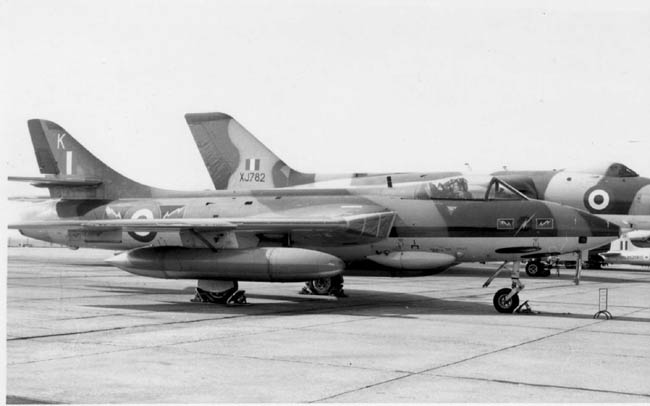
The Hunter FR.10 was an extremely good fighter-reconnaissance aircraft. Its near ‘idiot-proof’ handling characteristics, low-level speed and range made it well-suited to the mission. Apart from the camera fit, the FR.10 differed from fighter Hunters in having additional armour-plating and a voice recorder.

7. Dassault Mirage IIIR

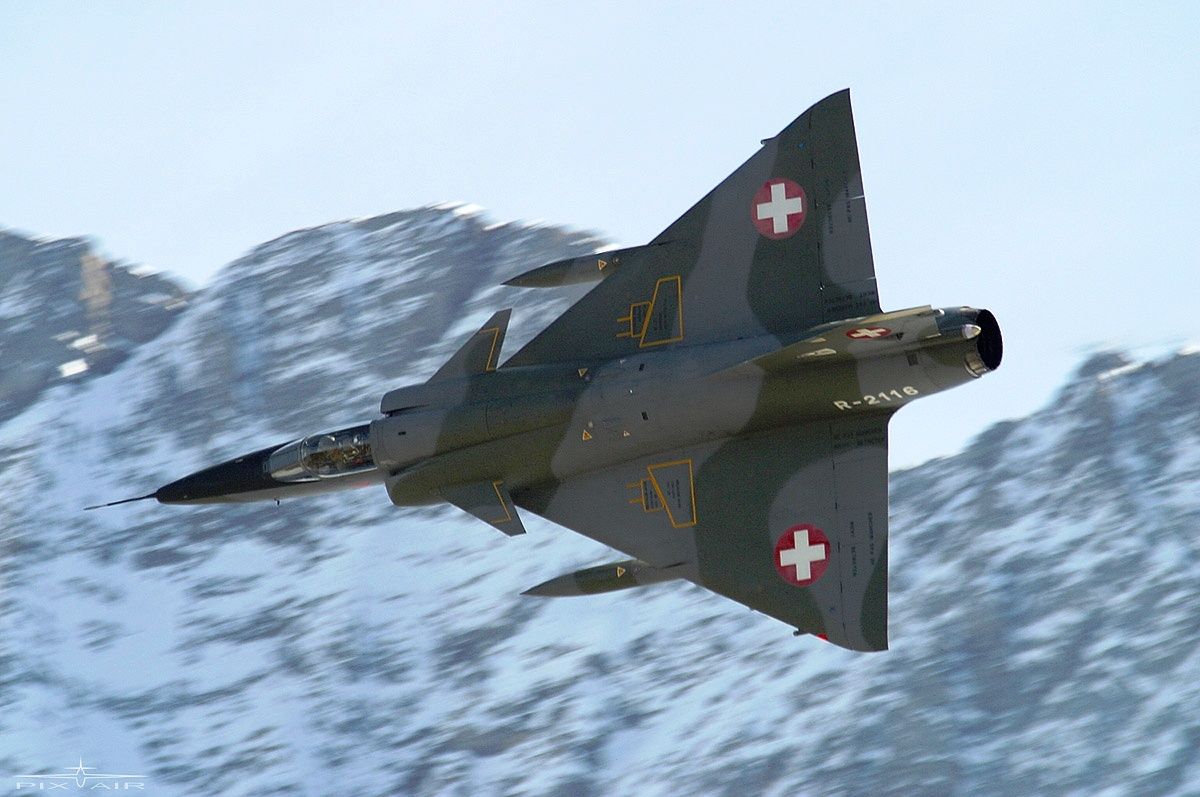
The French Mirage IIIR saw war in the air forces of Pakistan and Israel. The type saw less controversial service with Switzerland, which with 18 aircraft bought, was the largest export customer.

5. Saab AJSH 37 Viggen

The story of the Viggen’s development is similar to that of the Tornado; it started life as a bomber, and was then developed into a fighter and reconnaissance aircraft. The Viggen was extremely well equipped, For the photographic SF version, the radar in the nose was taken out to make room for one SKa 24 57 mm, three SKa 24C 120 mm and two SKa 31 600 mm photographic cameras. IVKa 702 t also carried one Infrared linescan camera. Additional sensor pods could be carried on the fuselage stations.


4. Mikoyan-Gurevich MiG-25R ‘Foxbat-B’

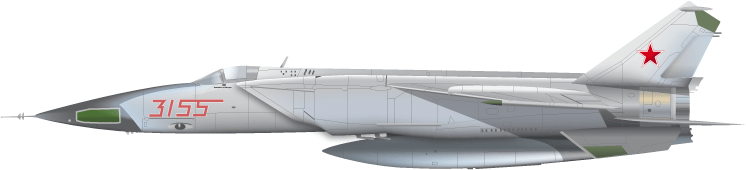
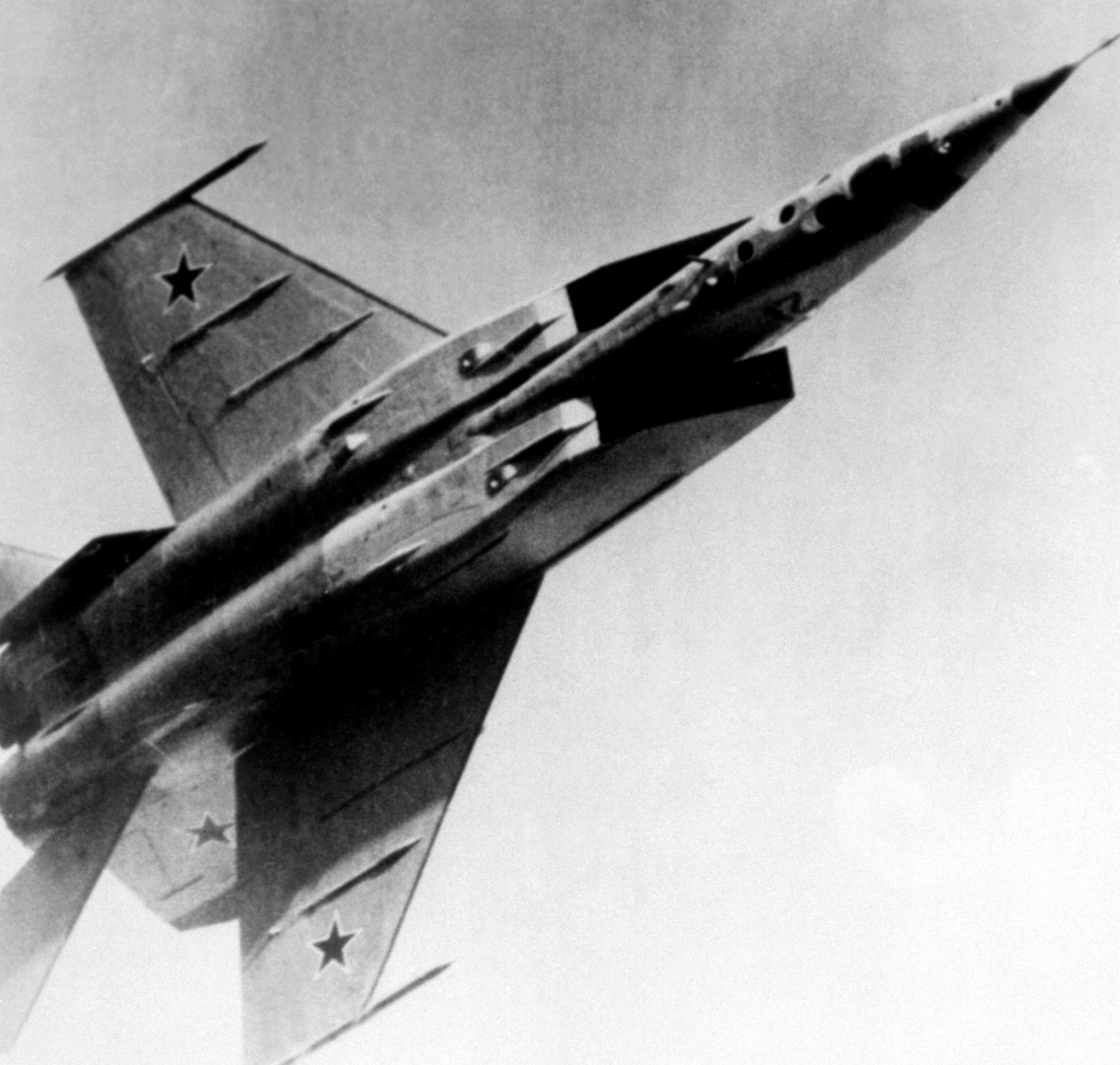
One of the judging panel thought the MiG-25R should not be included as a recce-fighter, because while most of the recce-fighters on this list are modifications of fighters, in the case of the ‘Foxbat’- the recce version was planned from the outset. Strictly speaking, the armed reconnaissance versions of the MiG were recce-bombers, high-speed strike aircraft able to haul an impressive load of eight 500kg bombs — treated with special coatings to resist overheating at Mach 2.8+.

Anyway, we felt that the MiG-25 should be included, as it was also an operational fighter. And in terms of recce-fighters, it is certainly the fastest. What’s more, this Cold War classic remains in front-line service with the Russian Air Force, with the latest upgrade set to keep it at the front line for some years to come.

The USSR sent two MiG-25Rs, and two MiG-25RBs to Egypt in March 1971. They were operated by the Soviet 63rd Independent Air Detachment set up especially for this mission. Det 63 flew over Israeli-held territory in Sinai on reconnaissance missions roughly 20 times.  A MiG-25 was tracked flying over Sinai at Mach 3.2,  leading the West to believe that the ‘Foxbat’ had a true tri-sonic capability; it later transpired that this speed was only achievable at the expense of the engines. The normal limiting speed was Mach 2.8, which is still far faster than any other recce-fighter.

The Soviet Union also flew MiG-25RBs over Iran in the 1970s though this was halted when the introduction of the F-14 Tomcat into the IIAF made the mission too risky.

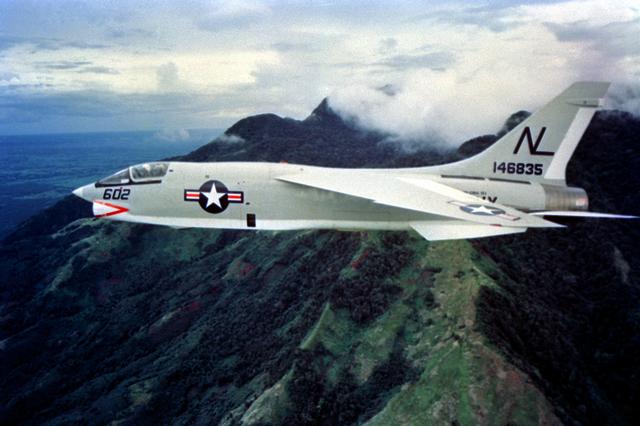
3. Vought RF-8 Crusader

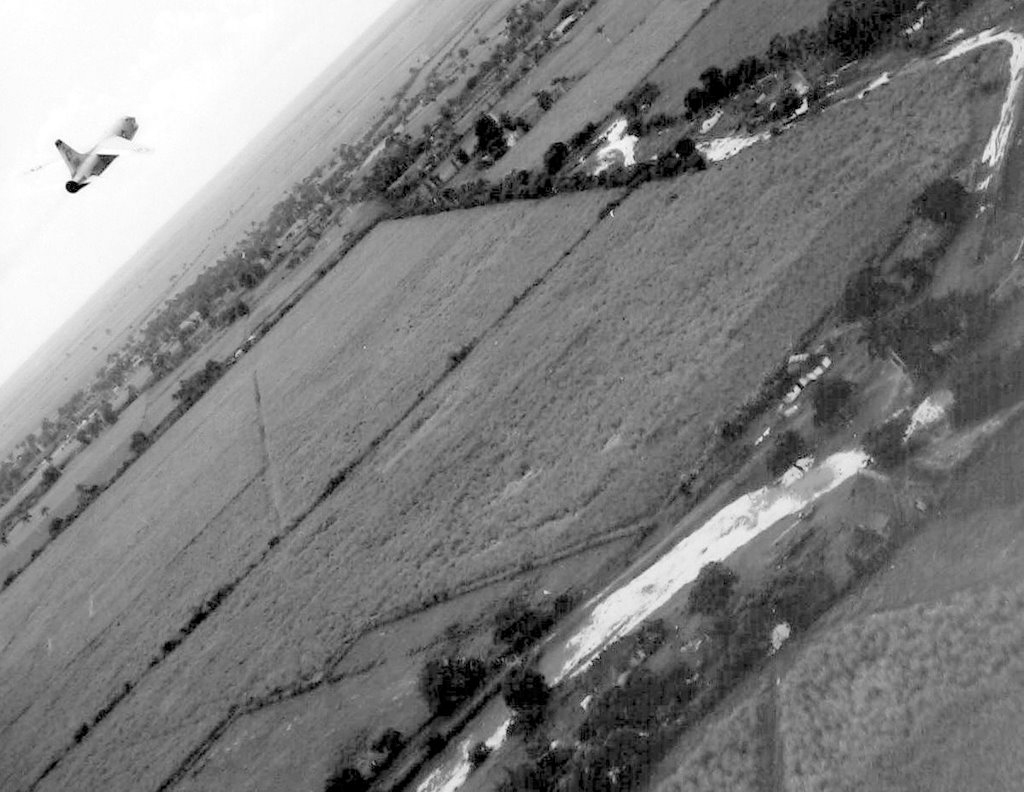
The RF-8 almost started World War 3, or possibly helped avert it. U-2 flights over Cuba in 1962 showed possible signs that the Soviet Union was creating a nuclear missile base. However, the high altitude U-2 photos were not good enough to say this for sure, what was needed was close, low-level photography. To do this over Cuba was dangerous to say the least. The US Navy sent in RF-8 Crusaders in October 1962, flying at extremely low-level at supersonic speeds. The images they brought back proved conclusively what the US feared. No RF-8s were shot down on these daredevil missions.

3. Supermarine Spitfire (recce-fighter variants)

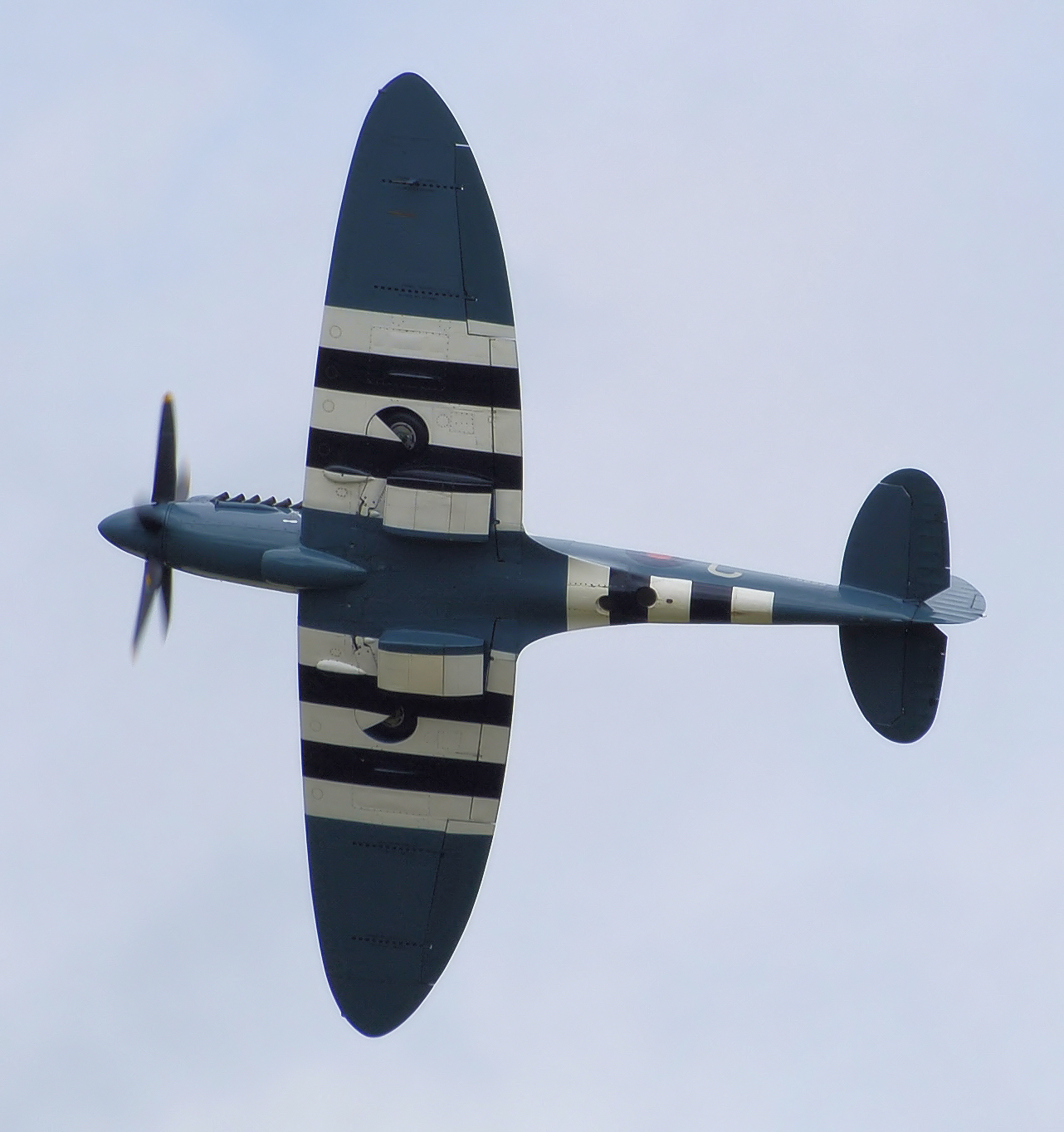
As well as being arguably the best fighter of the second world war, the Spitfire has a pretty decent claim to being its finest reconnaissance aircraft too: it pioneered a radical new conceptual approach to aerial photo reconnaissance, was fantastically successful and recorded the fastest speed ever attained by a piston-engined aircraft (over 600 mph in a dive). Not bad for an aircraft that only existed due to the eccentric persistence of one man, Sidney Cotton.
As well as spiriting Christian Dior’s managing director out of occupied France, taking clandestine photographs of Luftwaffe airfields from an aircraft piloted by Field Marshall Kesselring and inventing the Sidcot suit, Sidney Cotton was convinced that photo reconnaissance needs were best served not by converted bombers or army co-op aircraft as conventional wisdom stated but by suitably modified fighter aircraft. The PR (and later FR) Spitfires were the result. Luckily for the RAF, Cotton had pretty influential friends (ie Churchill) and managed to obtain two Spitfire Is during 1940 to be modified for the reconnaissance role. These were immediately successful and prompted more conversions and eventual factory-built reconnaissance Spitfires. With Cotton’s modifications speed was significantly increased over the fighter version but the range was colossal. Despite the fact that it was a modification of a Spitfire I (a fighter suffering from a chronically short endurance), the PR Type F was able to perform reconnaissance missions to Berlin during the summer of 1940 – try doing that in a Blenheim.
The PR Type G however ushered in a new era, although it could not range quite so far as Berlin it was the first or the PR Spitfires to retain the full armament of the standard fighter. It was a formidable aircraft – faster than the fighter, longer ranged and able to fight its way out of any trouble it might not be able to outrun, a formula that would later be repeated for the other truly great British reconnaissance aircraft, the Mosquito. Later Griffon-powered versions were just as effective and would serve in the RAF until 1954.
Cotton’s Spitfires were produced in ever greater numbers and pioneered some fascinating technology. New camouflage paints were developed with a super-smooth finish to aid performance but in seemingly unlikely shades not seen on any previous military aircraft such as all-over pale blue green (called camoutint) and, famously, pink. High altitude, high-speed stereoscopic photography was implemented for the first time and enabled the size of the V-1 and V-2 to be calculated. Oblique photography was also pioneered by these aircraft, and an oblique camera in a Spitfire brought back the first evidence of the Giant Wurzburg radar and inspired a Commando raid to steal one.
Ultimately the success of the reconnaissance Spitfires may be judged by the fact that from 1940 to VE day, they ranged all over Europe with relative impunity, a period during which the German’s were almost totally unable to photograph the British Isles from the air – at least until the advent of the jet…

2. McDonnell Douglas RF-4 Phantom II

The fast, tough Phantom is ancient. You wouldn’t think an enormous, smoky fighter with a radar signature the size of a bus would make an ideal recce platform, and to be honest it is reaching the end of it useful life. However, it has performed admirably in this role for several decades. The Phantom is a strong aircraft, with some built-in, battle resistance. This, combined with a high top speed (Mach 2.2) and a two-man crew made the aircraft an effective reconnaissance platform.

The type flew missions in Vietnam and the Arab-Israeli War. Though there only four squadrons of RF-4Cs deployed they lost 72 aircraft in combat, demonstrating the very dangerous nature of the post-strike recce mission that RF-4s performed.

During the late 60s the top secret Project Dark Gene began. CIA and Imperial Iranian Air Force (IIAF), aircraft were sent to probe the Soviet Union’s air defence system and assess its capabilities. In 1973, an IIAF RF-4C manned by an Iranian pilot and US back-seater was intercepted by a Soviet MiG-21, when the Russian fighter failed to destroy its opponent with missiles and guns, it resorted to ramming it. The ramming attack destroyed both aircraft and killed the MiG-21 pilot (posthumously awarded as a Hero of the Soviet Union). The version of the Phantom used in these operations was rumoured to be a nuclear-capable RF-4C with enhanced ELINT systems.

Was the Spitfire over-rated? Find out here. You may also enjoy top WVR and BVR fighters of today, an interview with a Super Hornet pilot and a Pacifist’s Guide to Warplanes. Want something more bizarre? The Top Ten fictional aircraft is a fascinating read, as is The Strange Story of The Planet SatelliteFashion Versus Aircraft Camo is also a real cracker. 

Follow my vapour trail on Twitter@Hush_kit

1 .McDonnell RF-101 Voodoo

From Cuba to the Taiwanese straits the RF-101 surveyed the world’s political faultlines with virtual impunity. Fast, long-ranged, but most importantly in the right place (or rather wrong place) at the right time, the Voodoo ensured its place in history.

Spitfire contretemps: Part 4


98-15197h

In his controversial article ‘Dismantling the Spitfire myth’ Matthew Willis asserted that the Spitfire’s role in British history is hugely over-stated. Jon Lake countered by defending its reputation in ‘Spitfire’s Revenge’. Willis clipped his wings, strapped on some cannon and fired back with this. Here is Lake’s response, the fourth part of a fascinating debate. 

Since writing my response to Matthew’s attempted demolition of the Spitfire I have been lucky enough to have spent a day with a former Spitfire pilot who flew most marks of that aircraft, and who was part of a Mustang wing being formed for Tiger Force at the end of the War.

He was in no doubt whatsoever as to the relative merits of Spit, Hurricane and Mustang. Over the course of my 31 years working full time in aviation, I’ve met and talked in depth to many wartime pilots – British, American, and German, including aces like ‘Grumpy’ Unwin, Bobby Oxspring, Pete Brothers, Johnny Kent, Johnny Johnson, and even (biggest namedrop so far) a German bloke called Galland. Most of the Spitfire, Hurricane, and Bf 109 pilots I’ve spoken to, wartime and current, acknowledge the Spitfire I and II’s superiority over the Hurricane, and the Bf 109E’s absolute superiority over the Hurricane. The margin between Spitfire and ‘109 is more open to argument.

Rafale versus Typhoon here

I’m also lucky enough to have a history degree, from a good University, with some knowledge of historiography, so I’m unapologetic about dismissing Matthew’s original piece as being revisionist. I would define revisionism as being a departure from the authoritative and generally accepted doctrine, in a way that is partial, and biased, and which attempts to distort history to fit a preconceived notion and to support a particular interest group.

Britain was slow in harnessing its industrial might for aircraft production, but there is no real reason why Fighter Command could not have been ‘Spitfire heavy’ in 1940, and had it been, it would have performed better. In any case, when we’re engaged in ‘what ifs’ then we’ve already started to engage in a degree of stretching historical fact. But without the Spitfire, the RAF would have been buggered, frankly, both during 1940, and more importantly afterwards, when the Hurricane’s lack of development potential and inferiority would have made the war in the air very much more one-sided – especially once the Bf 109F and Fw 190 entered the fray. The Spitfire V was able to hold its own, while the IX dominated. The Hurricane would have been downed in droves. Matthew continues to insist that “the fighter position was marginal in 1940” and that this is “undeniable”, and that this “was largely as a result of the Spitfire.” This is simply not true. We never looked likely to run out of aircraft in 1940, but the losses of experienced aircrew was a real problem, and to say that we could have generated more from the FTSs or from ground tours ignores the crucial difference between an experienced expert and a rookie. Matthew whines that: “The Fleet Air Arm, meanwhile, was fighting to keep supply lines in the Mediterranean open with scant resources, while priority was still being given to RAF types.” That’s because the RAF was responsible for the air defence of the UK – a critical role against an existential threat, and the Spitfire was the only available aircraft that was capable of guaranteeing any degree of air advantage over the UK. With so many aircraft necessarily tied down to defend the homeland, the offensive sweeps can be seen as a useful adjunct, rather than some kind of pointless and wasteful self-indulgent project by the Air Marshals. And the day and night operations over occupied Europe complicated the Germans task, and made life difficult for their fighter and bomber crews alike.

Bf109_wrecks_North_Africa.jpg

Meanwhile, in the Med, I’d venture to suggest that the most vital role was played by the RAF fighters operating from Malta, rather than the FAA. Finally the Mustang: a poor gunnery platform, in which target tracking proved difficult, and an aircraft which had vicious departure characteristics if mishandled when manoeuvring. As a result, the Mustang struggled against a well-flown Fw 190, where a Spitfire IX could cope easily. The post-war SETP evaluation of US fighters placed the Mustang behind the P-47, F6F and F4U. The Mustang came last in rate of climb, stall warning, height loss in the stall, turn performance, stick force per g (manoeuvring stability), agility, heading change time, and air-to-air tracking, and was second last in acceleration, roll performance, and air-to-ground tracking. Just one extract from the report gives a flavour of the Mustang: “The P-51 gave no warning whatsoever of an accelerated stall. At the stall, the aircraft departed with complete loss of control, achieving 270-degree of roll before recovery. Departure was accompanied by violent aileron snatch strong enough to rip the control stick from the hand. In short, the P-51 suffered from a Part I deficiency.


Supermarine_Spitfire_MkIIa_&_North_American_P-51_Mustang_13_(5969192356)


Meanwhile the Griffon engined XIV and XVIII were even better, enjoying a better all round capability than the Mustang, Typhoon or Tempest, apart from on take off, where the colossal torque showed only too clearly that the tail surfaces should have been increased just a little more than they were, and that an earlier adoption of contra props would have been transformational. But Matthew’s central point is that the Spitfire’s advantages were not ‘worth’ the extra production man hours that it supposedly tied up. Two points. The first is that I distrust his figures on production times, and wonder whether he is actually comparing like with like (he certainly isn’t when he compares British and US types, since US industrial production was superior in all sorts of way, and there’s little doubt that (say) North American could not have produced Spitfires more quickly than Supermarine or Castle Bromwich). The second is more important, and that is that no alternative aircraft promised to give the degree of superiority required to defend the UK – properly and necessarily the primary role of air power until June 1944.”

You may also enjoy top WVR and BVR fighters of today, an interview with a Super Hornet pilot and a Pacifist’s Guide to Warplanes. Want something more bizarre? The Top Ten fictional aircraft is a fascinating read, as is The Strange Story of The Planet SatelliteFashion Versus Aircraft Camo is also a real cracker. 

Follow my vapour trail on Twitter@Hush_kit

Jon Lake


The 14 most attractive Canadian aeroplanes

PCN-4407

Following the many complaint emails the last time we asked George (a grumpy, and famously incompetent, soundman) to review a top ten, we decided never to ask him again. But then we changed our mind. We left George with a bag of homegrown and some photos of Canadian aircraft. We have told the British embassy in Ottawa to remain on a high-security alert. Over to George..

Once again Hush-Kit publishes an article so tedious that it is immeasurably improved by my comparing the aircraft in it to animal genitalia.

Oh Canada, a country famed for not having fourteen attractive anythings. Unless you find moderate political beliefs and moose dicks attractive, which I feel I’ve made fairly clear I don’t.

So put down your poutine pots and syrup bottles, and enjoy the fourteen least appalling looking Canadian planes to take to the cold drab skies, eh?

14. Avro Canada CF-105 Arrow ‘The Doomed Delta’

415919.jpg

The famous white-suited Canuck ‘asphalt whisperers’ who are employed to apologise to any square foot of tarmac that has to bear the weight of a taxiing plane.

13. Avro Canada VZ-9 Avrocar ‘Unidentified Canadian Object’

Colour_avrocar_59.jpg

What’s the female equivalent of a phallic symbol?* A gynic symbol? Vulvic?

Whatever it is, this is that and I’m DTF.

*Note from editor: the word you’re looking for is ‘yonic’.

12. de Havilland Canada DHC-1 Chipmunk

SONY DSC

“I think this plane made it into the top 14 just because it’s yellow.”

11. Bombardier Challenger 350 ‘The Cocaine Train’

Bombardier Challenger 300

“If I’m spending my hard earned coke money on a plane from a company called Bombardier, I’d better be able to rain fiery death on my enemies… I can’t? Do you know how many Siberian tigers and pearl handled Lugers I could have bought with this money? “

10. Canadian Vickers Vedette 

1967-0897-001-1

“This looks like the trainers your mother buys you because ‘they’re just as good as Nikes’. No mum, as the other kids made painfully clear, they’re not.”

9. Canadian Vickers Vancouver

18ace48ce54d5df1114c9cd7aeb2399e

“We really scraped the bottom of the barrel looking for attractive Canadian planes, so we stuck some wings on the barrel and voila.”

8. Canadian Vickers Vista

Canadian_Vickers_Vista_ZZ_RCAF_31_Oct_1928_SAM_Photo.jpg

“Endgame in the canoe arms race.”

Was the Spitfire overrated? Full story here. A Lightning pilot’s guide to flying and fighting here. Find out the most effective modern fighter aircraft in within-visual and beyond-visual range combat. The greatest fictional aircraft here.  An interview with stealth guru Bill Sweetman here. The fashion of aircraft camo here. Interview with a Super Hornet pilot here. Most importantly, a pacifist’s guide to warplanes here. F-35 expose here

7. Vickers Velos ‘Flight of the Phoenix Cinema’ 


18208-ugliest-aircraft-ever-build-velosandgcaskprintsample

Isn’t this from that film where a ragtag bunch crash their plane in North London and Jimmy Stewart has to rebuild it out of bay windows and bike sheds?


6. Vickers Vanessa

Canadian_Vickers_Vanessa_ExCC

“Ah Vanessa. If she just took off her big spectacles she’d be beautiful. Something, something, handling characteristics.”

5. de Havilland Canada DHC-6 Twin Otter ‘Twotter’

Viking-1-On-the-Water

Hey ding dong, just painting the word ‘Viking’ on the side of your business casual aircraft doesn’t make it cool. If you type ‘viking’ into Google the top result is an office supplies company. This is the aeronautical equivalent of a bunch of pens.

4. Fleet 50 Freighter ‘Catfish

ac3b025ceeac2cb96b8fb36d97910c13.jpg

“This is the plane version of the ‘Facebook angle’. If my experiences are anything to go by it has racist tattoos on its fuselage.”


3. Canadair CC-106 Yukon

12369134_1089039214474847_7854976372279332668_n

“Oh hello, this is the Canadian Airforce. We’d like a plane please.”

“What kind of plane?”

“A fucking boring one.”

 2. Canadian Car and Foundry FDB 3

CWmcx-uXIAAX6Zf

Famed chubby chaser and aircraft designer Arnie Hemplocke (far left) and his two fat muses, Sydney and Paul Fuccbois.

  1. Avro Canada C102 Jetliner

Avro Canada C-102 Jetliner

I commissioned this artist to do a dick pic for me, but even he couldn’t capture its graceful might and sleek power, so I donated it to the Louvre. It’s the big triptych in the ‘Viande Et Des Legumes a Deux’ wing.

You may also enjoy top WVR and BVR fighters of today, an interview with a Super Hornet pilot and a Pacifist’s Guide to Warplanes. Want something more bizarre? The Top Ten fictional aircraft is a fascinating read, as is The Strange Story of The Planet SatelliteFashion Versus Aircraft Camo is also a real cracker. 

Follow my vapour trail on Twitter@Hush_kit