Bell reveals High-Speed VTOL Concept Based on a Folding Tilt-rotor: Our Analysis from Helicopter Expert Dr Ron Smith


Yesterday, Bell Helicopters revealed a futuristic stop-fold aircraft concept combining the advantages of a tilt-rotor with potentially higher top speeds. We consider the proposal with the help of former Head of Future Projects for Westland Helicopters, Dr Ron Smith.

New ideas in rotorcraft technology never die, but sometimes they remain in a state of metaphorical autorotation until the technology reaches appropriate maturity. The tilt-rotor is a very old idea, dating back to the 1909 Dufaux triplane from Switzerland, but it wasn’t until 98 years later that the concept became an operational reality with the V-22 Osprey. Clearly some ideas take a very long time to leave the experimental phase and enter service; Could the same be true of the stowed stop-fold prop rotor? The advantages of tucking away the huge prop-rotors of a tilt-rotor and switching to jet propulsion are obvious, you frontal cross-section is massively reduced and you can potentially break the 540mph barrier that has long limited propeller-powered aeroplanes.

According to Ron Smith, “This concept dates back to 1967 with the Bell Model 627. In 1967 the US Air Force solicited proposals for `low-disc-loading [Vertical Takeoff and Landing] configurations suitable for high-speed flight.’ Bell responded with a proposal for a folding proprotor design. Development and analysis included design studies, leading up to a 1972 test with a full scale 25 foot diameter pylon and rotor assembly wind tunnel in the NASA-Ames Large Scale Wind Tunnel. The original Bell Helicopter proposed stop-fold tiltrotor design allowed for vertical take-off and landing. Take off was followed by a tilt rotor transition sequence rotating the pylon rotor assembly from helicopter to airplane mode, with wing lift supporting the aircraft.


A final conversion sequence involved slowing and then stopping the rotors and folding the blades rearward along the pylon, with propulsion being taken over by direct jet engine thrust.
The Bell Helicopter report of the full-scale blade fold tests (Report D272-099-002, May 1972) is available here.
The images to the left have been extracted from that report and make an interesting comparison with the imagery recently released by Bell.


The current Bell HSVTOL imagery from their recent press release is shown above.

Bell’s press release summarises the capability objectives as follows:
“HSVTOL technology blends the hover capability of a helicopter with the speed, range and survivability features of a fighter aircraft. Bell’s HSVTOL design concepts include the following features:
Low downwash hover capability Jet-like cruise speeds over 400 kts
True runway independence and hover endurance
Scalability to the range of missions from unmanned personnel recovery to tactical mobility
Aircraft gross weights range from 4,000 lbs. to over 100,000 lbs.


Bell’s HSVTOL capability is critical to future mission needs offering a range of aircraft systems with enhanced runway independence, aircraft survivability, mission flexibility and enhanced performance over legacy platforms.


With the convergence of tiltrotor aircraft capabilities, digital flight control advancements and emerging propulsion technologies, Bell is primed to evolve HSVTOL technology for modern military missions to serve the next generation of warfighters.”


The downwash velocity comment depends on the comparison being made. Tilt rotor designs will have higher downwash velocity than a single rotor helicopter at comparable all up weight. They will, however, have greatly reduced downwash compared with jet or fan-lift concepts. There will be drag penalties associated with the rotor and rotor nacelle assemblies, even when folded, but a speed range up to 400 kt seems quite credible.
There is also no fundamental reason why the concept should not be scalable over a wide range of roles and all up weights.


The artists impressions show designs that incorporate some fuselage faceting to reduce radar signature. Despite this, one suspects that real world excrescences associated with blade fold mechanisms will impact both airframe drag and radar signature. The image also shows three different intake arrangements and optimisation of the engine installation will necessarily depend on both radar and IR signature requirements. It is not clear whether an entirely separate propulsion engine is used in addition to a powerplant to provide shaft power to the rotors, or whether a variable cycle engine is proposed that can deliver a controllable mix of jet thrust and shaft power.

KEEP THIS SITE GOING BY SUPPORTING US ON PATREON The Hush-Kit Book of Warplanes will feature the finest cuts from this site along with exclusive new articles, explosive photography and gorgeous bespoke illustrations. Pre-order The Hush-Kit Book of Warplanes hereThank you. Our controversial merchandise shop is here and our Twitter account here @Hush_Kit. Sign up for our newsletter here. The Hush-Kit Book of Warplanes will feature the finest cuts from this site along with exclusive new articles, explosive photography and gorgeous bespoke illustrations. Pre-order The Hush-Kit Book of Warplanes here.

The Hush-Kit Book of Warplanes by Joe Coles (editor): Unbound


The starting point for a demonstrator would probably avoid the risk and complexity of developing a variable cycle solution simultaneously with a new airframe configuration.
The Bell report from 1972 lists key risks. Not surprisingly, these focus on static and dynamic loads during the blade fold sequence. Having said that, this test programme extended to 40 start / stop transition sequences conducted at full scale in the Ames Wind tunnel. Even though this data was collected some 50 years ago, it does represent (along with more recent experience) a significant contribution to risk reduction.
The risks identified in the 1972 Bell report were (my interpretation of the findings):
• Proprotor instability (alleviated by folding the blades before reaching the high speed flight regime).
• Potentially large amount of blade flapping during the blade fold sequence, requiring flapping restraint and associated dynamic loads. A short duration blade fold sequence would limit the number of cycles to which the system is exposed.
• Dynamic excitation of the wing and pylon structure during the blade fold sequence. During testing, this was found to be associated with blade / wing aerodynamic interference.
• The report also comments that it was found that the mechanisms associated with the folding-proprotor concept are a significant design challenge from the standpoint of achieving a reliable mechanism at a reasonable weight.
All-in-all, Bell Helicopters appear to be well placed to pursue this development. The challenge will be to secure a stable funding stream for the lengthy design and development program that will be involved. The Army is showing sustained interest in high-speed rotorcraft and one imagines that there would be significant interest across the US armed forces in understanding the options to replace the V-22 Osprey.


This could be a starting point and technology demonstration at lower weights could spin off additional applications.

r/WeirdWings - Bell/Boeing Tactical Tiltrotor. A forward swept wing tiltrotor that transforms into a supersonic jet fighter. One of many exotic designs spawned from the LHX program. (Early ‘80s—Early ‘90s)
The stop-fold tilt-rotor idea has long been studied by Bell. This extremely exciting Bell/Boeing Tactical Tiltrotor was forward swept wing tiltrotor that transforms into a supersonic jet fighter. This was one of many exotic designs spawned from the LHX programme. (Early ‘80s—Early ‘90s).

What is the real-world need do you think?

“Bell would say – Civil: executive helicopter replacement (- like the Bell 609 tilt rotor now moved to Leonardo). Air taxi operations?

Military applications – combat search & rescue, special forces, Osprey replacement, armed UAS?”

What are the advantages?

“Primarily speed, possibly manoeuvrability, external noise. (Could be like Osprey – makes the naval fleet operation less vulnerable).”

What are the disadvantages or potential problems?

“Complex transmission and propulsion arrangements, load prediction, certification, failure modes? (but not much worse than tilt-rotor).”

Is it worth the effort? 

“Only if there is a genuine requirement backed up by funding / political support and timescales that are achievable.”

What will be the hardest aspect to master if it goes ahead? 

“Certification, complexity. Accommodating associated military requirements (crashworthiness? radar & IR signatures, weapon system integration, defensive aids, sensors, operation in adverse environments, survivability, etc.). Weight (issue for anything VTOL), achieving predicted payload and range. Development cost & timescales. (Just like any other military procurement).”

Do you think it will happen? 

“Very hard to answer. If it starts to look like a threat to other programmes, their respective protagonists will lobby against it. I can see smaller variants being pursued because something civil might spin off into an armed UAS. Work on smaller platforms will ultimately de-risk more ambitious developments. I’d say less than 50% chance but higher than that for something at the technology demonstrator level with an eye on actual applications.”


Ron Smith
August 2021

Everything You Always Wanted to Know About Soviet World War II Combat Aircraft (but were afraid to ask) with author Edward Ward

Regular Hush-Kit contributor and High Priest of the Cult of the Wyvern, Edward Ward, has written a book on Soviet military aircraft of World War II. We took the time to grill Ed on Soviet warplanes and other perversions.

What is the biggest myth or misconception about Soviet aircraft in WW2?

“There are a few prevalent in the West largely due to the paucity of information available during the Cold war, a time when trashing Soviet engineering in general, even historically, was politically expedient. At the same time, the exploits of Western aircraft in Soviet service was played down by Soviet authorities for exactly the same reason. Subsequently the truth has filtered out but the old myths are stubborn. A good example is that of the P-39 Airacobra, an aircraft rejected from operations by the RAF and unloved by the USAAF. Subsequently palmed off on the USSR, most reference works stated for years that the P-39 found a measure of success over the Eastern Front in the ground attack role due to its heavy armament. We now know that the Airacobra was never employed in ground attack units and was only ever used in the air superiority role, at which it excelled. It was so good in fact that it replaced the Spitfire in service with several units, a fact that would have left British and American pilots aghast. The reason for the disparity in experience was that the P-39 turned out to be, largely by accident, ideally suited to the combat conditions it was committed to. The P-39’s primary failing was that its altitude performance was poor, in the East this was irrelevant as most combat took place at medium and low level and at these altitudes the Airacobra was fast and handled very nicely – it is not a coincidence that a P-39 won the first post-war Thompson Trophy against much more fancied Mustangs, Thunderbolts and Lightnings. It was very reliable and rugged, easy to fly, and its tricycle undercarriage was well suited to the rough fields it had to operate from and Soviet pilots rated it as equivalent or superior to contemporary models of Bf 109 and Fw 190 in aerial combat. Grigory Rechkalov scored 48 of his 54 confirmed ‘kills’ in a P-39, the highest score by any pilot flying a US-built aircraft in the Second World War and its diminutive nickname of Kobrushka ‘Little Cobra’ gives one an inkling of the affection it engendered. None of this was widely known until fairly recently.”

What were the three most important Soviet types and why?

“Difficult to say definitively but I would go for the Yak fighters, the Ilyushin Il-2 Sturmovik and the Polikarpov U-2/Po-2. The Yaks were the most important Eastern front fighter type, continually improved throughout its life and built in insane numbers (about 40,000). The Il-2 has become emblematic of Soviet air power to the extent that it gave its name to a (very good) Flight Simulator in the 21st century and also serves as the perfect demonstration of the Soviet fixation on air power as a tactical extension of its ground forces. The U-2/Po-2 is the most produced biplane of all time and as well as being a perfectly good trainer and general purpose machine in the mould of the Tiger Moth, more importantly served as the particularly Soviet ‘light nuisance bomber’. A maddening attacker that caused little material damage but was constantly operating over German positions by night, was virtually uninterceptable and impossible to detect coming (approaches were usually made with the engine off and thus in virtual silence). German soldiers could seldom get a good night’s sleep and its psychological effect cannot be overstated. For the chauvinistic German army the fact that many of these terrifying attacks were flown by women was almost unbelievable and led to their nickname of the Nachthexen – Night witches. The Germans also copied the Soviet tactics with their own biplane trainers. Later the same aircraft became notorious as ‘Bedcheck Charlie’ of the Korean War, this time disturbing American sleep.”

You know you wnat it! Pre-order our Hush-Kit Book of Warplanes Volume 2 today

How important was the Il-2?

“Simultaneously unbelievably important yet not as important as everyone thought at the time if that isn’t straying too far into cognitive dissonance territory. An Il-2 attack was a terrifying and demoralising experience but much like the Typhoon in the West, its actual destructive effect was overestimated, especially when attacking with rockets. But then, all wartime unguided rockets were appallingly inaccurate. But the Il-2 had a secondary role as a kind of icon – like the Spitfire in Britain, it become symbolic of a specifically Soviet fight back against the invader and as you are probably aware was built in greater numbers than any other combat aircraft in history (sort of – the Yak fighters are all more or less the same but get counted as separate types, if they are all considered the same aircraft then they are the most produced combat aircraft of all time).”

Edward also created this superb Soviet Spitfire design exclusively for Hush-Kit

What is the stereotype of Soviet WW2 aircraft and how true is it?

“The Western stereotype is, I suppose, of a badly built, primitive, probably outdated aircraft, likely to achieve success against the much superior German machines only through weight of numbers. This is not true, though like most stereotypes there is a grain of truth at its heart that has been grossly exaggerated. For the fact is that Soviet aircraft, especially early in the war, did lack many refinements common on comparable contemporary aircraft. Early MiG-3s didn’t even have a fuel gauge for example. There has also been a distinct cold war bias when describing the same technology when used by the Russians rather than the Western allies. The use of composite wooden construction on the de Havilland Mosquito for example is generally presented as absolutely fucking mindblowing yet the use of composite wooden construction (for the same reasons) in Soviet fighters especially is usually served up as evidence of their primitive nature. The Lavochkin fighters for example used ‘delta drevesina’, a composite wooden material consisting of layers of birch strip bonded with bakelite film, this material being both appreciably stronger than any untreated wood and fire resistant. Both wing and fuselage were covered with a stressed skin of bakelite ply, minimising the usage of steel and aluminium in the airframe. There was a huge shortage of steel in particular in the USSR in the early war period.”

What was the finest Soviet fighter of the war and how did it compare with its German/Brit/US counterparts?

“It’s a toss-up between the late Yaks and the Lavochkin La-7, given that one of these is a lightweight inline powered fighter and the other a somewhat heavier radial machine, this mirrors the situation in Germany with the Bf 109 and Fw 190 as well as the American P-51 and P-47. There is a general correlation with the dainty Spitfire and heavyweight Typhoon/Tempest as well. Looked at in statistical terms all Soviet fighters were notably smaller and much lighter than their contemporaries, especially the Yaks. Both types were very highly rated for handling both by Soviet pilots and by test pilots from other nations, even the Germans had nice things to say about them in this regard. Performance wise, in say mid 1944, both the La-7 and Yak-3 are beginning to appear in large numbers and compare very favourably with the world’s best. The La-7 manages 423 mph at its best altitude and the Yak 447 mph. By contrast the Tempest V tops out at 427 mph, the Spitfire XIV at 448 mph, the P-47D at 428 mph and the P-51D at 437 mph. On the other side, the 109G-10 is capable of 428 mph and the Fw 190D-9 of 440 mph so everything is in the same sort of area speed wise, although they are all attaining these at different heights. The Tempest was probably the Western Allies best performing fighter at low and medium altitude so is the most directly comparable. The Soviet fighters cannot match the altitude performance of the others but that is irrelevant for their operating environment. In armament terms there is probably the biggest disparity, the La-7 has two 20-mm ShVAK cannon and the Yak-3 just the one, backed up with two 12.7-mm BS machine guns. Soviet fighters always had an armament considered inadequate by other nations. In range performance both the Soviet types lag behind their allies, though the special long-range Yak-9DD was developed for escort duties with a 1300 mile range so it’s not a complete walkover as that’s the same as the operational range of the P-51D (with drop tanks), a fighter known for its long legs.”

Edward Ward designed this t-shirt exclusively for Hush-Kit.

What were the biggest strengths and weaknesses of Soviet aircraft designs?

“Like most nations, the Soviets built a range of aircraft that possessed differing strengths and weaknesses but one area in which they lagged somewhat was in engine technology. The Klimov M-105 fitted to all the Yak fighters for example was essentially an outgrowth of the Hispano-Suiza 12Y and its power output was comparatively modest compared to the Merlin, though both started in roughly the same horsepower class, by 1945 the most advanced Klimovs were delivering around 1300hp whilst the Merlin was offering 2000hp or more. Soviet inline engines could never match the reliability of Western engines either due to lesser build quality. The radials were better but as these were all developed out of 1930s American designs (the Shvetsov Ash-82 derives from the Wright Cyclone for example) one can’t help but think they were cheating a bit. By contrast Soviet aerodynamic science was arguably better than that of the West. The USSR never found much use for the P-47s they were sent through lend-lease, regarding it as aerodynamically primitive, but they were astounded by its build quality and the powerplant design was intensively studied. The Soviets were perfectly happy to copy the best bits of other nations aircraft too – they bought a Ju 88 and a Dornier 215 from Germany before Hitler invaded and the Ju 88 in particular considerably influenced the design of the Tu-2.”

Did Soviet aircraft design influence other nations’ aircraft design?

“Not much to be honest. Or at least not directly anyway. The Polikarpov I-16’s impressive showing over Spain could be argued to have spurred the speedy and very successful development of the Messerschmitt 109 but the fact that it was the world’s first low wing, cantilever monoplane with a retractable undercarriage seems to have gone largely unnoticed when it appeared in the early 30s. To be fair, Soviet aircraft didn’t get out much. Later on, the Yak-3 had a sufficiently impressive combat performance to provoke a Luftwaffe general directive to ‘avoid’ combat with it below 5000 metres (which more or less ruled out all combat on the Eastern Front) but the Germans never attempted to emulate the Russian aircraft, even if grudgingly impressed by it. Japan got hold of a LaGG-3 but didn’t think much of it, which was quite reasonable as the LaGG was a pretty terrible aircraft.”

Why was so much fighting at low level on the Eastern Front?

“The simple answer is because neither side was particularly interested in strategic bombing (though both engaged in it a little) and the air war in the East saw the clash of the two greatest tactical air forces the world has ever seen. By contrast, the main thrust of the Allied air effort in the west from the Battle of Britain to D-day was strategic bombing, effective anti aircraft defences had forced bombers to operate higher and higher to survive and therefore it became a relatively high-altitude theatre. But if you look at what the 9th AF and 2 TAF were doing in the west from D-day onwards you see a similar situation emerge as in the East, a lot of low-level tactical short range CAS by fighter bombers and heavy employment of medium bombers. It is no coincidence that the most numerous lend-lease bomber supplied to the Soviets was the Douglas A-20. This wasn’t what planners in the USSR were expecting though, as proved by the large scale production of the MiG-3, a dedicated high-altitude interceptor. The poor old MiG then got itself a pretty poor reputation by being employed almost exclusively in combat at an altitude for which it had not been designed which seems rather unfair.”

How important was Soviet air power to the defeat of Germany?

“The short answer is very. Was it as important as Western air power? Difficult to say. The Eastern Front is generally considered to have absorbed roughly 80% of the German war effort in total but this is not equally distributed amongst the fighting forces. If you look at German aircraft loss statistics, whilst there are peaks and troughs depending on what’s going on at any given time, the general rule is that the losses are split (very) roughly half and half between east and west. The Soviet air force was fighting initially at a qualitative and numerical disadvantage but domestic aircraft production capacity was huge (German intelligence disastrously underestimated it), vast numbers of Western aircraft were supplied to the USSR effectively for free, and aircrew training greatly improved from the dark days of 1941 for the next four years. By 1945 the Red Army was arguably the most effective combined arms fighting force in the world and you can’t deny the devastating effect that air power played in its eventual victory.”

Russian Aircraft of World War II - Technical Guides (Hardback)

So Russia bombed Berlin? What is the story?

“Just like everyone else in the interwar era, the USSR got simultaneously hugely excited by and terribly worried about the potential of long range bombing. The Soviets developed the impressive Tupolev TB-3 in the early thirties, a strategic bomber ahead of its time but then seemed to largely forget about strategic bombing. The TB-3 was still in service in 1941 but was looking distinctly long in the tooth and the Berlin mission, though well within the range capability of the TB-3 would probably have proved suicidal for the lumbering, fixed-gear Tupolev. It was decided nonetheless that in the first months of the Great Patriotic War that Berlin must be bombed as a morale boosting measure and to prove to the Germans that the Soviets could strike back in response to Luftwaffe bombing of Moscow. Weirdly, the first aircraft to do so were naval Ilyushin DB-3T torpedo bombers of the Red Banner Fleet as the commander of the Soviet naval aviation, S.F. Zhavoronkov, proposed a bombing strike on Berlin and formulated a plan during July 1941. Admiral Kuznetsov approved the plan and on 7 August 1941 fifteen DB-3Ts flew from the Baltic island of Ösel off the Estonian coast. Five aircraft bombed Berlin, the others attacking secondary targets. German radio announced the raid as having been by British aircraft and stated five aircraft had been shot down. In reality none had been lost (one aircraft crashed on landing). Further raids were made over the following weeks and during August the crews of two naval squadrons, made 86 sorties, bombed Berlin 33 times, dropping 311 bombs with a total weight of 36,050 kg. Berlin was visited by the four-engine Pe-8 bomber for the first time on 10 August 1941 and the Soviets regularly bombed the German capital, as well as other cities, for the duration of the war. The loss rate was staggeringly low by contemporary standards – in 1942, one Pe-8 was being lost for every 106 missions (it got worse later) but the numbers of aircraft involved was pathetic, there never being more than 30 operational Pe-8s at any given time and the efforts of the Soviet bombers were essentially unknown in the rest until comparatively recently. The fact that I own a book named ‘The Allied Bomber War 1939-45’ (published 1992) and it does not mention a single Soviet mission or aircraft in any of its 207 pages is fairly indicative.”

What is your fav Soviet aircraft and why?

Asisbiz Soviet AF Polikarpov I 153 Chaika Red 59 destroyed on the ground by  Luftwaffe straffing Barbarossa

“It changes on an almost daily basis. However I have always had a penchant for Polikarpov’s fighters. I like rotund aircraft and the I-16, I-15 and I-153 are certainly not sleek. For now I will say the I-153 Chaika. I love that it’s a biplane fighter yet it replaced a monoplane fighter at the front and aesthetically it is unique, a gull-winged, retractable undercarriage biplane which from many angles resembles a barrel.”

Tell us about your book

“It’s a straightforward primer on Soviet aircraft of World War II, part of a series of Technical Guides published by Amber Books, fellow Hush Kit alumnus Thomas Newdick wrote the German entries in the series. I like to think of it as the modern equivalent of those excellent little Salamander Guides in the 1980s. Although it is relatively compact I hope I’ve got some fun nuggets in there, hopefully there’s some aircraft you’ve never heard of (the Shche-2 anyone?) and some surprises: perhaps the world’s first rotorcraft to see combat action? I have also tried to approach every type with an open mind, refer to Russian sources and not just repeat the clichés, fabrications and omissions I read over and over again in the (Western) books of my childhood. Oh and although it’s named ‘Russian Aircraft of World War II’ it is actually Soviet aircraft but the publisher informed me that the word ‘Soviet’ makes people automatically think of the Cold War and who am I to argue?”

What should I have asked you?

“How many Soviet aircraft were designed by people in prison? – the answer is a lot. My next book is on German aircraft of the First World War and it’s surprisingly pleasant not having to deal with designers being thrown in gulags or shot because their aircraft wasn’t immediately perfect.”

KEEP THIS SITE GOING BY SUPPORTING US ON PATREON The Hush-Kit Book of Warplanes will feature the finest cuts from this site along with exclusive new articles, explosive photography and gorgeous bespoke illustrations. Pre-order The Hush-Kit Book of Warplanes hereThank you. Our controversial merchandise shop is here and our Twitter account here @Hush_Kit. Sign up for our newsletter here. The Hush-Kit Book of Warplanes will feature the finest cuts from this site along with exclusive new articles, explosive photography and gorgeous bespoke illustrations. Pre-order The Hush-Kit Book of Warplanes here.

The Hush-Kit Book of Warplanes by Joe Coles (editor): Unbound

Which aircraft is most like you and why?

Blackburn B-24 Skua | BAE Systems | International
PHOTO: BAE SYSTEMS

“Blackburn Skua: British, mildly interesting in a way, and possessed of much potential in its early days but ultimately flawed, outdated and slow.”

IL2 Sturmovik guide: how to play IL2 Battle of Stalingrad | Wargamer

Clash of the cancelled Round 3: Myasishchev M-50 ‘Bounder’ versus North American B-70 Valkyrie

History chewed out and spat out some incredible aeroplanes. We drag these rotting morsels out of the compost mulch of history and drag them to our laboratory/fight-club for autopsy. To assist us in our morbid analysis is Hush-Kit’s tamed scientist and engineer Jim ‘Sonic’ Smith (a key figure in the Typhoon and UK JSF programmes among others). To further our thrills we shall pit these dead aeroplanes against each other!


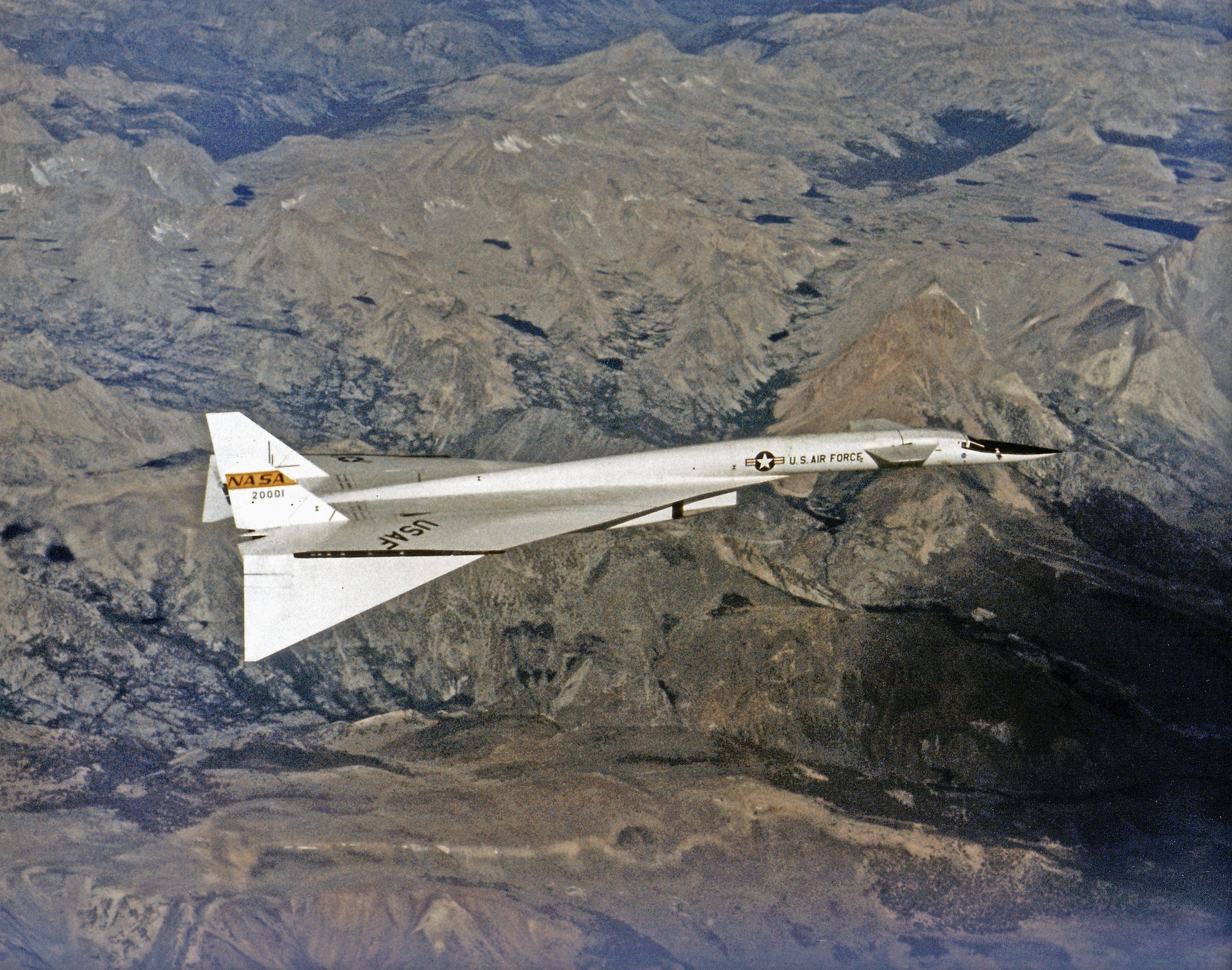
This comparison showcases two outrageously ambitious supersonic bomber concepts, the US B-70 Valkyrie and the Myasishchev 103-M from the Soviet Union. Designing any long-range aircraft to fly at sustained supersonic speeds is a challenging exercise, and most such aircraft have really been designed with a supersonic dash capability, rather having a long-range supersonic cruise capability. The two aircraft considered here date from the 1960s, with the Myasishchev M-50 having less ambitious performance goals than the XB-70A, which was a bold and unsuccessful attempt to replace the B-52 with an aircraft capable of cruising at Mach 3.


Myasishchev M-50

Myasishchev M-50 / M-52 Bounder | Old Machine Press

The M-50 was a delta-winged bomber, which first flew in October 1959. The aircraft caused a sensation with its appearance at the 1961 Soviet Aviation Day fly-past at Tushino. With an approximate loaded weight of 320,000 lb, the M-50 was intended to cruise at subsonic speeds, but was capable of a supersonic dash at speeds up to about Mach 1.5. The propulsion system consisted of four podded engines. The inboard pair were mounted on pylons at about the mid-point of each wing, and were fitted with afterburners. The outer pair of engines had no afterburners, and were carried on the extreme wing tip.


The aircraft had a delta wing and a low-set tailplane which have been described as generically similar to a scaled-up MiG 21. While this may be true for the planform shapes, the overall appearance is quite different, and extremely imposing, and ‘futuristic giant bomber’ is what springs to mind.


While appearing extremely spectacular, the M-50 was intended to be further developed into service, the production version to be the Myasishchev M-52. The various reference sources available quote a wide variety of performance figures, but, as it is believed the prototype made only 19 flights, I would conclude that performance was disappointing. This would have been at least partly due to the unavailability of the 40,765 lb thrust Zubets RD-16 engines proposed for the production aircraft, and their substitution with Dobrynin RD-7 engines of 35,275 lb thrust (afterburning) and 20,945 lb thrust (dry).

KEEP THIS SITE GOING BY SUPPORTING US ON PATREON The Hush-Kit Book of Warplanes will feature the finest cuts from this site along with exclusive new articles, explosive photography and gorgeous bespoke illustrations. Pre-order The Hush-Kit Book of Warplanes here. Thank you. Our controversial merchandise shop is here and our Twitter account here @Hush_Kit. Sign up for our newsletter here. The Hush-Kit Book of Warplanes will feature the finest cuts from this site along with exclusive new articles, explosive photography and gorgeous bespoke illustrations. Pre-order The Hush-Kit Book of Warplanes here.


The M-50/M-52 programme was cancelled, with the Tushino appearance of the aircraft in 1962 being the final flight of the M-50 prototype, and the M-52 not proceeding to flight test. As with most of the major powers, a combination of issues, including the vulnerability of manned strategic bombers; advances in the capability of ballistic missiles; and the development of submarine-based nuclear deterrent strategies lead to the cancellation of the programme.


North American XB-70A Valkyrie

Even today, nearly 60 years after the first flight of the Valkyrie, on Sept 21, 1964, the performance aspirations for the aircraft seem incredible. The intention was to replace the B-52 with an aircraft cruising at Mach 3.0 at 70 – 80,000 ft with an unrefuelled range of 7500 miles. The airframe to deliver this performance was an astonishingly beautiful slender canard delta, powered by no less than 6 General Electric YJ-93 engines, each delivering about 19,500 lb thrust dry, or 31,000 lb in afterburner.


The engines were carried in a wedge-shaped common nacelle forming the fuselage below the wing, while above the wing a slender circular fuselage extended ahead of the wing, carrying the crew compartment and canard. The lower fuselage was shaped so that, in combination with the folded down outer wing, lift could be gained through the shockwaves generated by the aircraft at its Mach 3.0 cruise speed. This arrangement also reduced trim drag, and increased lateral and directional stability at high speed. The wing planform was a pure triangle, with 65 ½ degrees leading edge sweep and a straight trailing edge.


Because of the high cruise speed envisaged for the aircraft, the structure of the Valkyrie was largely stainless steel, with extensive use of honeycomb panels, and some use of titanium. Stainless steel honeycomb structures have proved to be troublesome in other applications, and significant electrolytic corrosion was found at a late stage in the construction of the first aircraft, requiring a partial re-build.


During the development of the aircraft, parallel developments in Inter-Continental Ballistic Missile (ICBM) technology and concerns about the effectiveness of surface to air missiles against even the fast and high-flying XB-70A, resulted in President Kennedy declaring in March 1961 that America’s forthcoming missile capability “makes unnecessary and economically unjustifiable the development of the B-70 as a weapon system at this time”. The effort was reduced to two aircraft, which would deliver a programme of research into high-speed flight, and would retain a capability to be developed as a weapon system if necessary.


The aircraft proved capable of achieving its design cruise speed of Mach 3.0, although the lateral and directional behaviour of the first aircraft was unsatisfactory at high speed, and it was eventually limited to a maximum speed of Mach 2.5. The second aircraft was built with a dihedral of 5 deg rather than the slight anhedral of the first aircraft, and this change resolved the high-speed stability problems. Unfortunately, the second aircraft was lost in a mid-air collision on 8 June 1966.


Myasishchev M-50 ‘Bounder’ and North American XB-70A Valkyrie Assessment
Two spectacular-looking supersonic bombers, one Soviet, one American. Both aircraft were ultimately unsuccessful in being developed into operationally useful capability, with the M-50 making only 19 flights, and the XB-70A requiring significant redesign to cure lateral-directional stability issues.
No air combat comparison is presented. The M-50 appears to have been a failure. The XB-70A demonstrated very impressive high-speed cruise capability, but was not developed as a weapon system.
That said, it is an easy decision to make on which of these was the better aircraft. The M-50 never got to fly with the planned production engine, and some reports question whether it was even able to fly at supersonic speeds. The XB-70A was able to demonstrate sustained flight at just over Mach 3, and performed valuable service for NASA in aerodynamic and sonic boom trials.


Both aircraft looked extremely futuristic, and particularly impressive in flight, but the XB-70A Valkyrie gets my vote as the better loser, as it came much closer to its design objectives. The requirements for both aircraft were essentially overtaken by events, as their intended strategic nuclear strike role passed into the realm of the ICBM, whether land-based or submarine-launched.

KEEP THIS SITE GOING BY SUPPORTING US ON PATREON The Hush-Kit Book of Warplanes will feature the finest cuts from this site along with exclusive new articles, explosive photography and gorgeous bespoke illustrations. Pre-order The Hush-Kit Book of Warplanes hereThank you. Our controversial merchandise shop is here and our Twitter account here @Hush_Kit. Sign up for our newsletter here. The Hush-Kit Book of Warplanes will feature the finest cuts from this site along with exclusive new articles, explosive photography and gorgeous bespoke illustrations. Pre-order The Hush-Kit Book of Warplanes here.

Five Fun Vaguely Flight-Related Facts about Ascension Island with author Oliver Harris

Pin on Aircraft

Having spent the last couple of years writing a spy thriller set on Ascension Island I was interested to see this mysterious bit of British volcano surfacing in the news recently, once as a place the Home Secretary thought might be good to send asylum seekers, once turning up on the UK’s Green List of holiday destinations that required no quarantine.

Those who explored it as an option for a getaway might have been disappointed. An eight square mile lump of rock in the South Atlantic, halfway between Brazil and Angola, Ascension is one of the most remote islands in the world. Anyone researching their trip to its beaches would have seen that it contains a lot of satellite dishes, a golf course made of ash, two military bases (US and UK) and a village with a school and convenience store. But they’d also learn that potholes on the runway have meant that all MOD flights from Brize Norton (previously the only straightforward way to reach the place) have been suspended for the past four years, and you now need to get three flights in each direction (available once a month), or buy yourself a yacht. You also need permission from the island’s Administrator to stay there. And the only hotel has recently closed down. All of which provokes the question: what’s there? And why?

It was this enigmatic oddness that me think it would be a great setting for a novel (Ascension, pub. this month by Little, Brown). In the name of plugging it to the esteemed readers of Hush Kit, I present five vaguely flight-related nuggets about the island.

1. The name refers to the flight of Christ

Jesus Gif GIF - Jesus Gif Flying - Discover & Share GIFs

Although the island was first discovered by the Portuguese in 1501, it was so unappealingly barren that no one bothered to pass on the news, which meant it had be re-discovered two years later by the naval officer Afonso de Albuquerque who spied it on Ascension Day, the church feast day that celebrates Jesus flying up into Heaven after his resurrection.

It was still too unappealing to claim, though. No one wanted it until 1815, when the British came along, having incarcerated Napoleon on St Helena a few hundred miles away. A small British naval garrison was stationed on Ascension to deny it to the French. For administrative reasons, the island was classified as a stone ship – ‘HMS Ascension’ – to be operated at the discretion of the Admiralty. This made the commandant of the island technically a ship’s captain, with all the legal powers that the role implies. Every child born on Ascension from 1815 to 1922 was officially recognized as having been born at sea.

2. The US built the runway incredibly fast

During the Second World War, it was decided that an airfield on Ascension would be a good idea. The US and UK settled on a location in the south-west of the island named Wideawake Field after the numerous sooty terns (also known as wideawake birds) that inhabited the area.

Wideawake Airfield runway construction

The U.S. Army’s 38th Engineer Combat Regiment arrived in March 1942 and spent the first 27 days unloading 8000 tons of equipment they had brought with them. A lack of sand and stone to make cement meant they had to use volcanic ash mixed with sea water and bird droppings. The operation proceeded 24/7, with soldiers working under camouflaged lighting systems at night so as to shield their activity from enemy ships.

The runway – 6,000 feet long and 150 feet wide – was completed in just 91 days. Its first visitor was an American Consolidated B-24 Liberator by the name of Our Kissin’ Cousin en route to Natal (in South Africa) from Accra in Ghana. As a refuelling station, Wideawake Airfield facilitated indispensable aviation support for British troops in North Africa when Rommel was launching his offensive on Cairo. It also provided a base for anti-submarine raids, sinking numerous German U-boats and dampening Axis naval pursuits in the South Atlantic. One of the biggest dangers, however, involved the wideawakes themselves. Pilots had to take caution when landing and taking off, as birds could get caught in aircraft engines or break a window. During the height of their breeding season, the airfield had to shut down.

Wideawake Airfield (2)

3. Birds on Ascension

The island provides one of the most important homes in the South Atlantic for several species, including the sooty tern, the red-footed booby and the Ascension Island frigatebird, but things haven’t always been easy for its feathered population. In 1815, the British introduced cats to sort out a rodent crisis arising from rats that had got aboard from ships in the early days. But the cats were far more tempted by the seabirds, and soon the bird population had been decimated, with survivors only hanging on in cat-inaccessible locations. In 2000, a project to eradicate feral cats from the island was begun (using traps and cages) and within two years they’d been largely destroyed. So had 38% of the domestic cat population, causing some public consternation. But all in all it was a happy ending, and five seabird species have now recolonized the mainland. The wellbeing of the rats remains unknown.

4. Falklands usage

Victor at Ascension 1982 1

On 5 April 1982, Nimrods were deployed to Wideawake airfield to support the war against the Argentinians, first being used to fly local patrols against potential Argentine attacks, and to escort the British Task Force as it sailed south towards the Falklands, then as communications relay support for the Operation Black Buck bombing raids.

Operations Black Buck 1 to 7 involved extremely long-range ground attack missions by RAF Vulcan bombers against Port Stanley Airport in the Falkland Islands, then occupied by the Argentinians. The raids, at almost 6,600 nautical miles (12,200 km) and 16 hours for the return journey, were the longest-ranged bombing raids in history at that time.

Because the Vulcan was designed for medium-range missions in Europe it lacked the range to fly to the Falklands without refuelling several times. The RAF’s tanker planes were mostly converted Handley Page Victor bombers with similar range, more often seen refuelling fighters scrambled in response to incursions into British airspace by bombers from the Soviet Union, so they too had to be refuelled in the air, involving relays of aircraft. A total of eleven tankers were required for two Vulcans (one primary and one reserve), which would have been an impressive logistical effort even if they hadn’t all been sharing the same runway.

aar vulcan-victor

In the end, the raids had minimal impact on Port Stanley airport, and the damage to Argentine radars was quickly repaired. It has been suggested that the RAF wanted to be involved in the conflict as a guard against further budget cuts.

5. Spaceflight

Although the US initially abandoned the airfield at the end of the Second World War, they returned in 1956. The runway was lengthened and widened to allow for larger aircraft, and later to provide emergency landing for the Space Shuttle. At the time, it was the world’s longest airport runway.

This was just the start of Ascension’s role in the space program, though. In 1967, NASA established a tracking station for Apollo and other spaceflights in a remote area of the island known as Devil’s Ashpit. There are rumours suggesting that the island was used for training the astronauts as well – getting them used to isolation – and even that its surreal rockscape served as the backdrop for a faked moon landing. While these remain unconfirmed, it’s a matter of record that the Devil’s Ashpit station was the first on earth to receive the words: ‘The Eagle has landed.’

NASA staff kept a pet donkey named J.J. outside the operations building, a descendant of donkeys left on the island by Portuguese sailors two centuries earlier. ‘She was there at the tracking station to greet us every morning,’ Harry Turner, a data and antenna programmer wrote in 2003. “We were in the middle of the Apollo 11 mission and we lost all hydraulics to our antenna, meaning that within a short time we would lose the signal from the spacecraft. We ran out to the antenna and found that J.J. had backed her butt into the emergency stop switch.’

Ascension’s remote location continues to make it a good place to keep an eye on things up above us. The new US Space Force has a unit on the island, operating a Meter-Class Autonomous Telescope as part of a space surveillance system for tracking orbital debris (amongst other things?). They also use the Global Positioning System monitoring site at Ascension, which involves one of the four dedicated ground antennas that GPS relies on (the others are on Diego Garcia, Kwajalein (Marshall Islands), and at Cape Canaveral). Meanwhile, post-Brexit, the two European Space Agency Galileo Sensor Stations located on the Falklands and Ascension Island are being removed. The stations host cryptographic material which, in accordance with the EU security rules, can’t be located in non-EU territory.

All of which makes for an odd moment in the history of this British lump of lava. Will it end up in US hands entirely? Is it already? Is the long-overdue repair to the runway connected to plans for a new spaceplane? Or a desire to keep the island inaccessible? Any attempts to put the island’s business on a more democratic footing – for example, by granting citizenship to some of its more longstanding residents – have been quashed. Half a millennia after its discovery, Ascension remains as mysterious as ever, just a lot more busy.

Ascension by Oliver Harris is published by Little, Brown on July 15 (and by HMH Books in the US on the same date).

Ascension by Oliver Harris | Hachette UK (littlebrown.co.uk)

Ascension | HMH Books

Ascension Island and Britain's presence in the South Atlantic

Clash of the cancelled Round 2: North American YF-107A versus Vought XF8U-3 Crusader III

North American's F-107 Was the "Ultra Sabre" and Perhaps the "Ultra  Might-Have-Been" | Defense Media Network

History chewed out and spat out some incredible aeroplanes. We drag these rotting morsels out of the compost mulch of history and drag them to our laboratory/fight-club for autopsy. To assist us in our morbid analysis is Hush-Kit’s tamed scientist and engineer Jim ‘Sonic’ Smith (a key figure in the Typhoon and UK JSF programmes among others). To further our thrills we shall pit these dead aeroplanes against each other!


What a fabulous pair of aircraft these are. The souped-up F-100 development chasing a requirement eventually won by the F-105 Thunderchief, and the Crusader on steroids that eventually lost out to the F-4 Phantom II. The thing that grabs you about both aircraft is simply the look. The YF-107A with its ‘over the top’ variable ramp supersonic intake and recessed, nuclear-capable, weapons bay, and the Crusader 3 with its shark-mouth intake and large twin dorsal fins, which had to be folded up to the horizontal for a successful landing. Just Wow!

F8U-3 Crusader Was 'Really Hot' Might Have Been | Defense Media Network


North American YF-107A


The YF-107A was a development of North American’s successful F-100 Super Sabre, intended to be a versatile fighter bomber aircraft, capable of missions ranging from air defence to nuclear strike. Initial development centred on a design with a chin intake, like that of the F-8 Crusader, to accommodate a nose mounted radar. This was later changed to the signature dorsal intake design when the Air Force indicated a desire that the aircraft be capable of delivering a tactical nuclear weapon.
Other innovative features of the design included an all-moving fin for yaw control, as used later, on the A-5 Vigilante, and a supersonic variable area inlet duct, later used on the XB-70. Although the wing planform was essentially the same as the F-100, roll control dispensed with ailerons, and used spoilers instead. The 16, 950 lb thrust J-57 engine of the Super Sabre, was replaced by a more powerful 24,500 lb thrust J-75 engine, and the YF-107A was able to demonstrate a maximum speed of Mach 2.0.
The aircraft was armed with 4 20mm cannon, and could also carry up to 10,000 lb of external stores. Following completion of its flight test program, the Air Force conducted a fly-off between the YF-107A and the Republic F-105 Thunderchief, which was narrowly won by the latter. The F-105 was a bigger, heavier aircraft, almost equally dramatic in appearance, which after a difficult development period went on to a long and distinguished career with the USAF. Its particular forte, towards the end of its USAF career, was serving in a SEAD (Suppression of Enemy Air Defences) role as a ‘Wild Weasel’ in the Vietnam war.


Vought XF8U-3 Crusader III

Vought XF8U-3 Crusader III single-engine supersonic fighter aircraft, a  competitor for the US Navy's 1955 Match +2 fleet defense interceptor  program, but eventually cancelled after the McDonnell Douglas F-4 Phantom II  was


In the mid-1950s, the F8U Crusader had been successful in a US Navy competition for a supersonic shipboard fighter. McDonnell’s proposal in that competition did not make the short list for selection. Displeased by this, McDonnell proposed to the Navy a highly capable twin-engine attack aircraft, the AH-1. In parallel, Vought proposed to the Navy a follow-on development of the F8U, designed around a single J-75 engine, the XF8U-3 Crusader 3.


The Crusader 3 was projected to deliver Mach 2.3+ capability, and would be armed with 4 x 20 mm cannon and 3 air-to-air missiles. The US Navy looked favourably on this proposal, and ordered five prototypes, the first of which flew on June 2, 1958.

h


Meanwhile, the US Navy had indicated to McDonnell-Douglas that they were no longer interested in the AH-1, but (influenced by the XF8U-3 proposal) were now looking for 2-seat long-range all-weather interceptor to be armed only with air-to-air missiles, targeted using the aircraft’s radar system. This aircraft was to be designated the F4H-1, and made its first flight on May 24, 1958.
The US Navy was now in a position to choose between the fast, manoeuvrable, F8U-3 single-seat, single-engine interceptor, and the larger and heavier McDonnell F4H, with two engines, two crew, all-weather radar, and missile armament.
By the end of 1958, the Navy had selected the McDonnell F4H Phantom II, and over years of development and service with many air arms, this proved to be one of the greatest Naval aircraft of all time. The relatively large, low aspect ratio wing of the Phantom, coupled with its twin J79 engines, provided a capable and versatile platform, and the aircraft is still in service today in small numbers.
What of the Super Crusader? Well, the performance of the aircraft as a Naval interceptor was probably unmatched in terms of speed and handling qualities, but compared to the Phantom, it was disadvantaged by having a less capable weapons system, and by being a single-seat, single-engine configuration. The maximum speeds claimed for the XF8U-3 vary, but the aircraft was capable of at least Mach 2.3, and had outstanding manoeuvrability. One of the most distinctive features of the Crusader 3 was the large twin ventral fins carried under the rear fuselage. These were linked to the undercarriage, so that they were deployed downward when the undercarriage was up, and retracted to a horizontal position when the undercarriage was lowered for landing.
The 5 aircraft built were transferred to NASA, and operated from Patuxent River, where they were said to have routinely defeated USN Phantoms in mock dogfights, to the annoyance of the USN.


YF-107A and XF8U-3
Two sensational-looking aircraft, which eventually lost out to two outstanding and versatile competitors, the F-105 Thunderchief and the F4H Phantom II.
The YF-107A and the XF8U-3 were both more manoeuvrable than the aircraft which were favoured with production orders, but the latter proved to be versatile, capable, and impressive performers with long service lives. Both the F-105 and the Phantom II were eventually used in roles which had not been envisaged in their design, and the Phantom, in particular, made a rare, and successful transition for a Naval aircraft, to serve not only with the USAF, but many other land-based air arms.
Both the YF-107A, with its dorsal intake, and the XF8U-3 with its shark-mouth intake and retractable ventral fins, appeared futuristic. Both succeeded in meeting their design objectives and were flown successfully, and both missed out in the procurement game to worthy competitors.
It is really difficult to pick between these two spectacular and relatively successful designs, neither of which ever made it into service. The YF-107A might well have been a better fighter than the F-105, but the F-105 later excelled as a heavy strike aircraft and made the SEAD role a speciality. Similarly, the XF8U-3 was a better within-visual-range fighter than the A4H, but lacked the all-weather capability and versatility of the latter. My choice goes to the XF8U-3 Crusader 3 as the better loser, but this is a judgement based on aesthetics rather than analysis.

North American YF-107A and Vought XF8U-3 – Air Combat Comparison

These aircraft were designed to quite different requirements. The XF8U-3, although only really a day fighter, was heavily armed, with 4 20 mm cannon and 3 air-to-air missiles. It was also very fast, at Mach 2.3+, had a lower wing loading than the YF-107A, and a greater thrust to weight ratio.

The YF-107A was intended to have greater flexibility, and, indeed, to have a tactical nuclear strike capability. It lacked the missile armament of the XF8U-3, but had the same cannon armament, and would also have been a fast and manoeuvrable aircraft, although not to the same degree as the XF8U-3.

In air-to-air combat, the XF8U-3 would be expected to have the edge in sustained and instantaneous turn rate, and in energy manoeuvrability. It would also, in principle, have been able to engage at greater range using its air-to-air missiles.

On sortie generation, there seems little to choose between the aircraft, which both used variants of the same engine. The folding ventral fins of the XF8U-3 are an additional element, but this might be offset by the slightly more difficult to access engine of the F-107.

KEEP THIS SITE GOING BY SUPPORTING US ON PATREON The Hush-Kit Book of Warplanes will feature the finest cuts from this site along with exclusive new articles, explosive photography and gorgeous bespoke illustrations. Pre-order The Hush-Kit Book of Warplanes hereThank you. Our controversial merchandise shop is here and our Twitter account here @Hush_KitSign up for our newsletter here. The Hush-Kit Book of Warplanes will feature the finest cuts from this site along with exclusive new articles, explosive photography and gorgeous bespoke illustrations. Pre-order The Hush-Kit Book of Warplanes here.

F-107 Ultra Sabre, what would have been the F-100 Super Sabre's successor:  Warthunder

What we know about Russia’s new ‘Fleabag’ stealth fighter: Sukhoi Checkmate Q&A with RUSI Thinktank’s Justin Bronk & update from Jim ‘Sonic’ Smith

Checkmate, new Sukhoi fifth-generation stealth fighter jet is seen during an opening ceremony of the MAKS-2021 air show in Zhukovsky, outside Moscow, Russia, July 20, 2021.  Sputnik/Alexei Nikolskyi/Kremlin via REUTERS

Russia reveals what is described as a prototype of a new fighter aircraft at the MAKS 21 airshow. We caught up with Justin Bronk (Research Fellow at the RUSI  think-tank and Editor of RUSI Defence Systems) to find out more 


Is the Checkmate at MAKS a mock-up or aircraft?
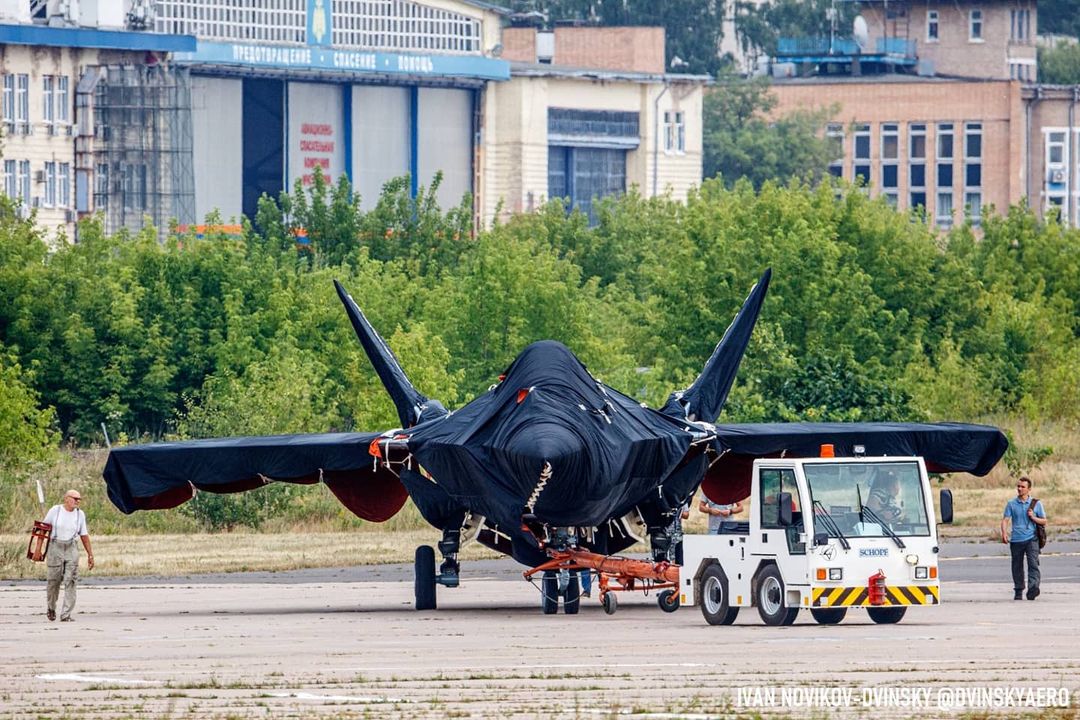
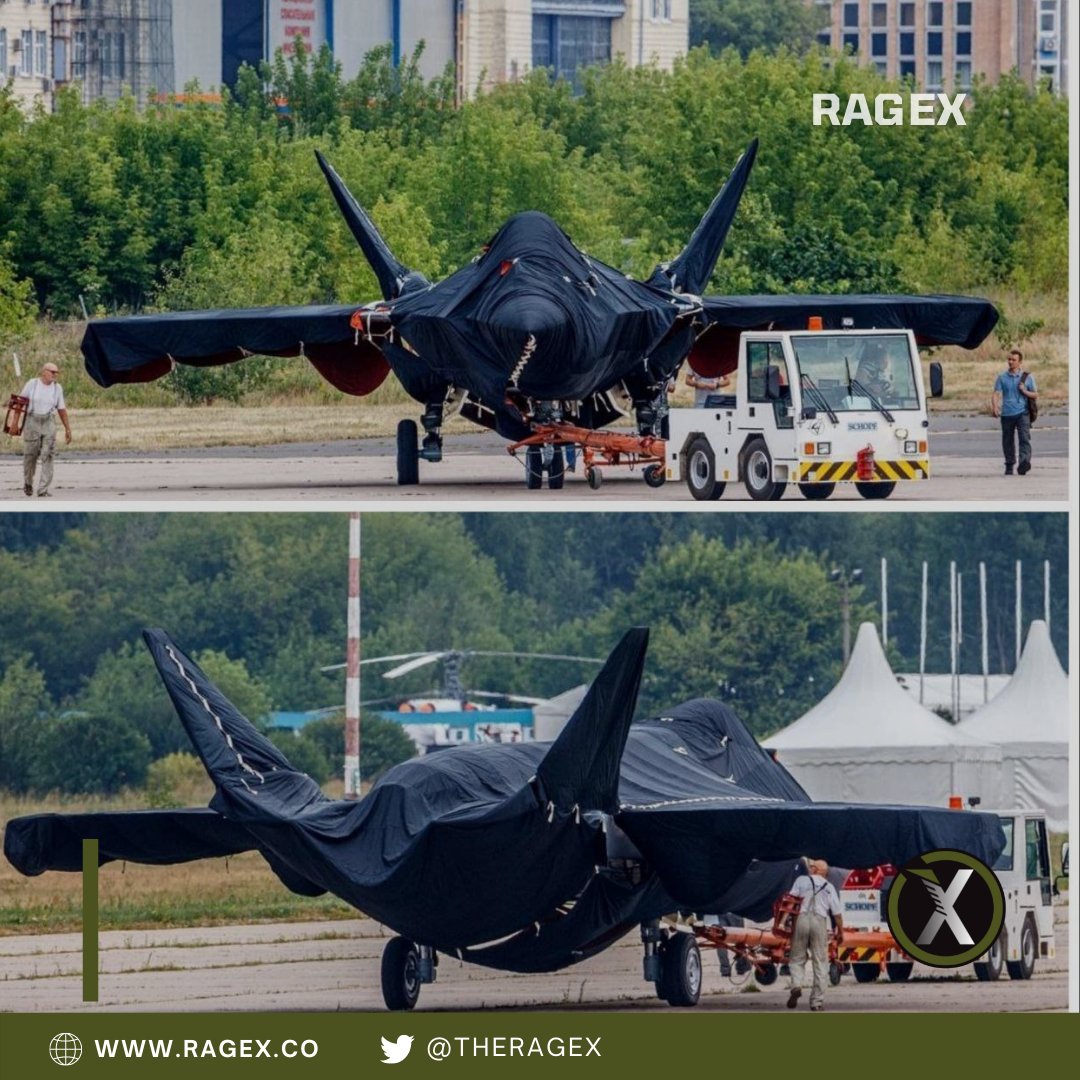
Without higher resolution images it is difficult to be certain. However, the lack of wiring and hydraulic lines within the visible parts of the main landing gear well, as well as the rather oversimplified external textures seen in the leaked footage pre-official the unveiling appear to suggest a mock up rather than a functioning aircraft.


What does the configuration reveal about the aircraft’s role and capabilities?
The Light Tactical Aircraft (LTA) designation and the configuration show that this is clearly a concept aimed at producing a relatively cheap and cheerful, somewhat low observable light fighter, primarily for the export market.
The relatively compact size and engine/intake placement will limit the space available for internal weapon bays. I would guess two IR dogfight missiles in the small side-mounted bays ahead of the main landing gear, and space for 2-4 R-77 class BVR missiles in a ventral bay. However, larger air-to-air and air-to-ground ordinance would likely have to be carried externally. It is also likely to have a modest range with internal fuel due to the competing demands for landing gear housing, weapons bays and avionics within a compact airframe.
As with the Su-57, the LTA features an Infra-Red Scan and Track (IRST) sensor embedded at the junction between the forward canopy and the nose, and will likely feature an active electronically scanned array (AESA) type radar in the nose. The latter, however, will be limited in size due to the narrow and aggressively tapered nose profile.  
One particularly notable feature is the lack of conventional elevators. Instead, the LTA has canted stabilisers which are more vertical than I would have expected if a ruddervator (or V-Tail) configuration was intended to provide primary pitch authority. Instead, it would appear that pitch authority will be provided by a combination of tailless delta style elevon control and at least 2D thrust-vectoring. This suggests to me that the LTA has a lessened design emphasis on supermanoeuvrability than previous Russian fighter designs.

No photo description available.
Image: Vasily Kuznetsov: https://flickr.com/photos/27984580@N05…


How far is Russia from an operational Checkmate?
I would suggest that this is a long way from an operational aircraft. The slick PR campaign and dramatic reveal at MAKS is obviously an attempt to convince some of the nations mentioned in the Rostek commercial to buy into a nascent development programme. The slow development pace and limited procurement scale of the Su-57 Felon (which is far more important to Russia’s own defence needs) shows the limits of UAC’s ability to develop the LTA to an operational aircraft without significant external funding. 


Will it be used domestically? How will it aid the Su-57 force and what would it replace?
The Russian Aerospace Forces (VKS) tend to purchase a range of different combat aircraft at a small scale to keep the various formerly Sukhoi and Mikoyan design bureaus and production lines viable. Therefore, if the LTA is developed successfully into an operational aircraft, then I’m sure that the VKS will purchase it on a limited scale. However, I suspect that they would prefer to increase the quantities and maturity of the Su-57 over committing to the LTA on a large scale.


What would be the hardest technology for the Russia’s to master if the aircraft is seen as a counter/alternative to F-35?
There are three key technologies which Russia will need to master before the LTA could be seen as a competitive stealth fighter in a practical combat environment:
Firstly, they would need to master compact AESA radars for use on fighter aircraft – something which is being worked on with the Su-57 but is still causing headaches. The key issue is that to be a viable stealth fighter, an aircraft must not only be difficult to detect on radar, but must also be able to detect and engage enemy aircraft without revealing itself through the energy emitted by its radar. This capability is referred to as low-probability of intercept/low-probability of detection (LPI/LPD), and it is a vital factor in the survivability and lethality of the F-22 and F-35 which is often missed by non-specialist commentators.
In very broad-brush terms, LPI/LPD radars work by exploiting the fact that AESA radars employ hundreds of individual beams rather than one or several large and more powerful ones in a mechanically scanned or PESA type radar. Use of specific frequency, wavelength and pulse repetition techniques for these many individual beams can enable AESA radars to avoid producing an easily identifiable signature within the electronic ‘noise’ of the modern air environment. However, the programming, threat EW intelligence granularity and signal processing capabilities required are highly complex and difficult to master. Furthermore, the goalposts are constantly moving as passive electronic warfare (think detection, classification and tracking of hostile signals) capabilities improve with technology. In other words, what was LPI/LPD against Russian or Chinese systems in the 2000s is almost certainly not LPI/LPD against (say) a USAF F-35A in 2025. Without a genuinely LPI/LPD AESA radar, an operational LTA would expose its position against modern opponents every time it used its primary sensor – rendering its low-observable shaping features far less useful.
The second key technology is achieving the necessary level of industrial quality control to produce viable low-observable aircraft in quantity. While bespoke hand finishing can potentially produce relatively low-observable results for prototypes, traditionally Russian fighter manufacturing has not been conducted to the extremely fine tolerances and quality control levels required to mass produce stealth fighters. This also carries over to the maintenance side of things – can the VKS (or potential export customers for that matter) afford to change their maintenance and operating procedures to a sufficient degree to maintain stealth properties in service for any length of time? For air forces used to operating previous generations of Mikoyan or Sukhoi products (with their famously high tolerance for rough conditions), it would be a culture and budgetary shock to say the least.
The third key technology set is in the field of advanced materials science and thermal management. One of the biggest challenges in moving from a prototype that looks a bit like a 5th generation aircraft to a genuine operational capability is incorporating all the myriad sensors, avionics, life support and fuel/engine systems. All of these components, especially the sensors and fuel/engine systems generate a great deal of heat when in use. This must be managed without adding the usual ducts, ram air intakes etc which would destroy the stealth properties of the airframe. They must also all compete with fuel and weapons for very limited space within an outer mould line which is fixed for RCS control reasons. Sensors must also be covered with fairings or airframe skin which allows their own emissions to pass unimpeded, but interacts with hostile radar in such a way as to not compromise the RCS.


How will it likely differ in concept to the F-35?
The LTA is clearly aiming for a significantly lower degree of stealth at a much lower price point compared to the F-35. It can be thought of perhaps as a somewhat low-observable spiritual successor to the MiG-21, where the F-35 is intended to be a very-low observable spiritual successor to the F-16, EA-18G and F-15E.


Does a STOVL or carrier variant seem likely?
STOVL doesn’t look compatible with the airframe, as it requires such specific design features to achieve – not least positioning the centre of vertical thrust roughly on the overall centre of gravity. I also doubt that it has the required high-alpha flight characteristics and pitch authority for CATOBAR carrier operations given the intake design and previously mentioned reliance on elevons/thrust vectoring.

Do you like how it looks?
It’s certainly refreshing! A different take to add to the increasing number of mini-F-22 or F-35 clone mock ups popping up around the world. A qualified ‘yes’ on the looks front.


How much experience does Russia have in stealth and how much does it embrace the concept?
Russia lacks any experience with true VLO stealth. However, it has made significant progress with LO airframe design features in the Su-57, and it certainly has the potential to manufacture a new generation of combat aircraft (with the Felon as the centrepiece) that get past the traditional massive signature weakness of the Flanker and Fulcrum series.
I think Russia has its own take on stealth as a concept, with a firmly realistic internal appraisal of its own industrial and financial limitations, as well as the constantly improving nature of NATO sensors which make true VLO performance in a major war ever harder as a goal for future systems. For them, I think RCS reduction features are seen as key to maintaining current levels of competitiveness in the air – whilst ever improving long range SAM systems and ground based radars form the first line of defence (or offense) against NATO airpower. For me, Russian boasts about F-22 or F-35 levels of stealth in novel air systems are simply propaganda aimed at the Russian domestic audience and prospective export customers.


What should I have asked you?
How much of the technology developed at such expense and effort for the Su-57 can be leveraged for the LTA/Checkmate?


Likely export customers or partners?
The three most obvious potential candidates would be India, the UAE and Turkey. However, India is likely to be very wary after its experiences with the PAK FA/FGFA programme and poor support for the Su-30MKI fleet post acquisition. The UAE appears to be (bafflingly from my perspective) being allowed to purchase the F-35, so is unlikely to be interested in the LTA. Turkey has its own TF-X ambitions for domestic LO fighter development and has also seen ‘behind the curtain’ on F-35 before being ejected from the programme so will have very high operational expectations for any future ‘stealth’ fighter acquisition which the LTA is unlikely to be able to meet.
Otherwise, Vietnam, Argentina and Algeria are all potential candidates, but the likely competition is from more mature and lower risk offerings from China.

Where does this leave rival fighter design bureau MiG?

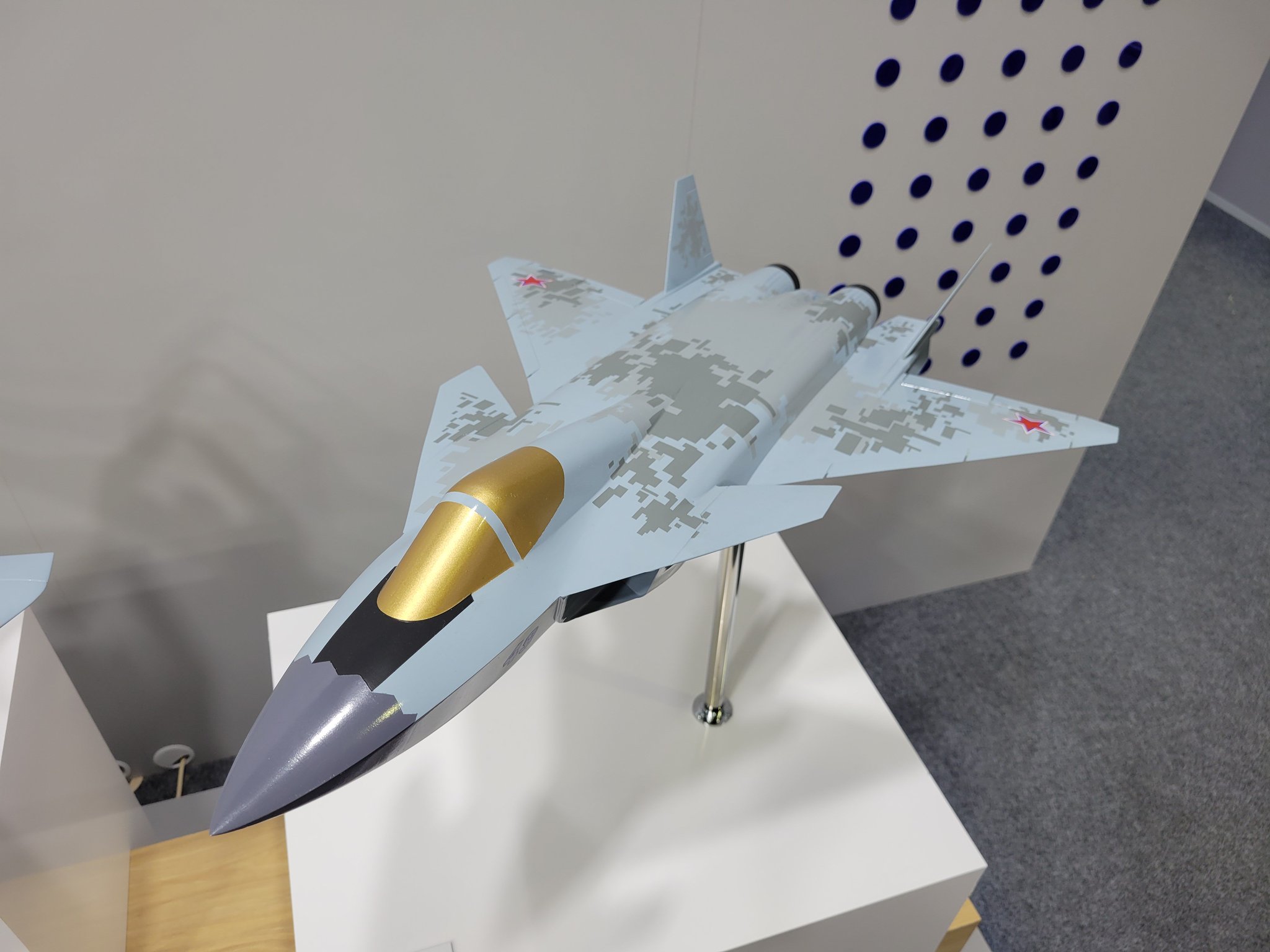
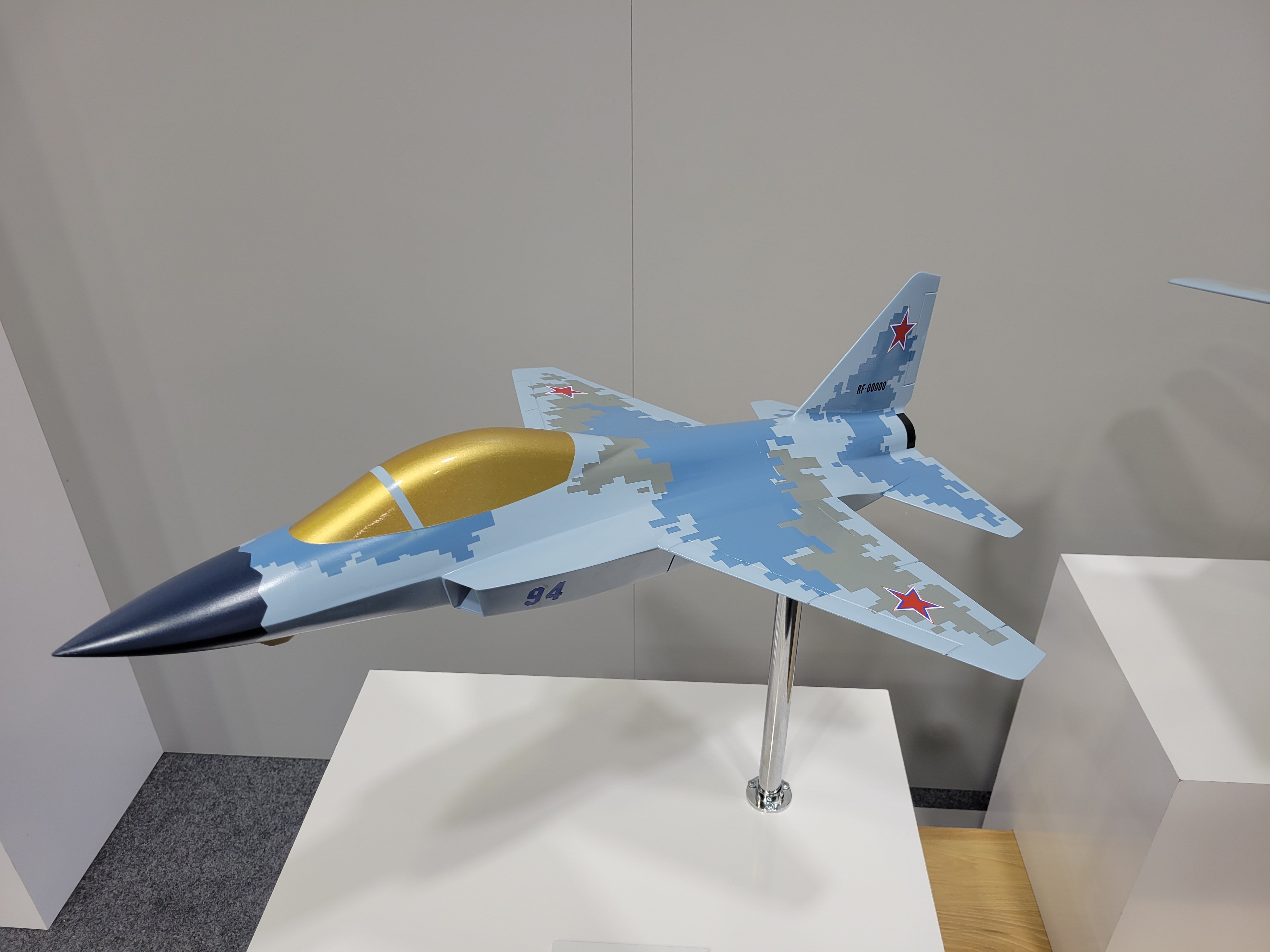
MiGs models of a new design has not received as much attention as the Checkmate. MiG’s new light combat aircraft proposal

The MiG-35 is already a damp squib, very much in the shadow of the Sukhoi product line in Russian service and on the export market. After MiG’s recent absorption within UAC I think the composite firm will focus on its more successful Sukhoi products rather than new MiG-derived concepts. The MiG-35 It isn’t much cheaper than a Su-35S, does everything worse, no large orders, AESA radar wasn’t delivered as promised…

Image
MiG’s proposed new carrier fighter
Image
MiG’s new light combat aircraft proposal


Will it happen?
If I had to bet? No.

KEEP THIS SITE GOING BY SUPPORTING US ON PATREON The Hush-Kit Book of Warplanes will feature the finest cuts from this site along with exclusive new articles, explosive photography and gorgeous bespoke illustrations. Pre-order The Hush-Kit Book of Warplanes hereThank you. Our controversial merchandise shop is here and our Twitter account here @Hush_Kit. Sign up for our newsletter here. The Hush-Kit Book of Warplanes will feature the finest cuts from this site along with exclusive new articles, explosive photography and gorgeous bespoke illustrations. Pre-order The Hush-Kit Book of Warplanes here.

Checkmate, new Sukhoi fifth-generation stealth fighter jet is seen during an opening ceremony of the MAKS-2021 air show in Zhukovsky, outside Moscow, Russia, July 20, 2021.  Sputnik/Alexei Nikolskyi/Kremlin via REUTERS
(Hush-Kit spoke to someone who has seen it up close who commented: “It’s real, but lacks some systems for sure”)

Jim Smith update

An image of the Checkmate aircraft (or possibly mock-up) has now appeared, and the analysis below has been updated to reflect this.

The aircraft has been reported to be Russia’s first single-engine supersonic low observable tactical fighter, and has been developed by Sukhoi, and is being presented at the MAKS show by Rostec. The stated intent is to ‘rival the US fifth-generation F-35 aircraft’. The aircraft is also described as a domestic light fighter, which will compete with the F-35 in export markets. This latter comment is backed up by a video on the Rostec website which identifies a number of countries by name including India, Argentina, and Vietnam, as well as some elements suggestive of Middle Eastern states.

The new photographs show an aircraft that loosely resemble the earlier ‘teaser’ imagery, but with significant differences in the intakes, fuselage and wing planform.

The ‘Checkmate’ aircraft (Hush Kit reporting name ‘Fleabag’) has a novel diverterless intake under the nose, with a unique V-shaped appearance following the shape of the underside of the forward fuselage. The position of the intake is not dissimilar to the teaser image, but the aperture has a higher aspect ratio V-shaped slot appearance. It’s appearance is definitely a ‘smiley’ intake, and I feel sure this echoes Rostec’s feelings about their very successful publicity campaign leading up to the Checkmate launch.

Looking at the intake, one wonders whether a vari-cowl will be fitted, similar to that on the Su-57 and Eurofighter Typhoon, to allow greater mass flow through the engine in high thrust and low airspeed conditions.

The YF-23's Air Inlet Design Was Its Most Exotic Feature You Never Heard Of
Was the 'stealth feature' of the Su-57 just a ruse? - Quora

 The wing appears to differ from the teaser image. While retaining a highly-tapered, thin, low-aspect-ratio planform, the trailing edge has relatively little forward sweep, resulting in a relatively conventional cropped-delta planform, rather than a near-diamond planform. The planform is similar to the Tejas, the Mirage 2000 and Eurofighter Typhoon, to cite three examples from different sources.

The forward fuselage of the Checkmate aircraft features a strong chine in the plane of the wing, which grows into a highly-swept leading edge root extension, or strake. The intake is located at the start of this strake, and a large door is located in the underside of the strake. While this might be a forward weapons bay, it could also provide access to aircraft systems and equipment.

The main undercarriage legs are widely spaced, and retract forward. As a result, there is significant space under the centre fuselage, which could provide significant volume for a weapons bay, at a location which would be closer to the aircraft centre of gravity.

The rear view of the Checkmate/Fleabag aircraft appears to show a single afterburning nozzle, located between twin butterfly tails. Given Sukhoi experience in the application of thrust vectoring to its heavy fighter designs, it would be surprising if this were not also fitted to the new aircraft.

The teaser image features an Infra-red Seeker Tracker, located ahead of the cockpit, and a radar in the aircraft nose. This is a typical arrangement for a Russian fighter, and is replicated on Checkmate, although separate Rostec imagery has suggested the use of a multi-purpose targeting sensor, like the EOTS system fitted to the F-35. This system is not visible in the new image of Checkmate, but could simply be out if sight on the port side of the aircraft.

Combat Systems Fusion Engine for the F-35

The fuselage and tail design of Checkmate are somewhat reminiscent of the McDonnell MFVT (Mixed Flow Vectored Thrust) ASTOVL concept, and although that single-engine aircraft featured twin side-intakes, there is still a resemblance between it and Checkmate/Fleabag. The image shows a model held by the Newark Air Museum, who kindly provided this picture.

The MFVT design was one of the propulsion alternatives examined in early UK-US joint technology studies looking at possible ASTOVL concepts in advance of the JSF program. I am not suggesting that Fleabag is a STOVL aircraft, but rather noting that the fuselage volume taken up in the MFVT for its STOVL system results in a fuselage shape compatible with the internal weapons bays which are a feature of Checkmate/Fleabag.

McDD/Northrop/BAe ASTOVL/MRF/JAST/JSF studies | Page 2 | Secret Projects  Forum

What can we infer about the aircraft? To me, the highly-tapered, low aspect ratio wing suggests that the design is intended to be used for BVR combat. The wing area and aspect ratio suggest that supersonic acceleration, and, with high thrust-to-weight ratio, a vectoring nozzle, and a strake ahead of the wing, instantaneous turn rate, will be strong features of the aircraft. On the other hand, sustained turn rate, required for WVR engagements, will be weaker. The configuration should result in the instantaneous turn rate being structurally, rather than aerodynamically, limited for substantial parts of the manoeuvring air combat envelope.

Whether a low signature is achieved by Checkmate will depend on a number of aspects – not just the shape, but also the materials, the manufacturing standards, and the electromagnetic properties of the surfaces and structure. The novel intake uses shaping of the lower fuselage to provide a diverterless intake, and the relatively high position of the engine will allow a sinuous intake duct to screen the front face of the engine.

There has been much uninformed commentary, suggesting that Checkmate is a copy of the American X-32 or F-35. In my view, there are sufficient original features in the design of the intake, the fuselage, the cockpit, the wing and the empennage, to indicate that is not the case. The similarities are really limited to being a design solution to what may have been similar objectives to those of the JSF program, but without the requirements for STOVL or deck landing.

What, then, is the intended objective, or role, of Checkmate? Limited, and possibly unreliable hints about its performance suggest a maximum speed in the region of Mach 2.0, and a maximum take-off weight of 18 tonnes. This suggests an aircraft in the general class of a MiG 29 replacement. However, the space available for internal stores, and the attention paid to reducing signatures, indicates that tactical strike is also an important role, suggesting that Checkmate may indeed be a Russian Strike Fighter.

From the wording used in the press release – descriptors like ‘domestic light fighter’ and ‘tactical fighter’, and the reference to exporting the aircraft, it could be that the new Sukhoi is intended to be a cheap alternative to the F-35, indicating, perhaps, that some compromises in the signature area might have been made in the interests of containing acquisition, operating and maintenance costs.

 With the marketing emphasis on the export market, perhaps the main objective is to provide an exportable multi-role combat aircraft, while retaining the option of a non-exportable version for local air defence and tactical strike. Such an aircraft would complement the Su 57, delivering air superiority, and a future MiG-31-replacement, which would provide strategic air defence.

F-36 Kingsnake: Air Force's Next Fighter Jet? | F-16 Replacement

Could the aircraft be a Russian equivalent to the @Hush_Kit F-36 Kingsnake concept, aiming to regain the position once achieved with the widespread use of the MiG-21, by undercutting the cost of the F-35?

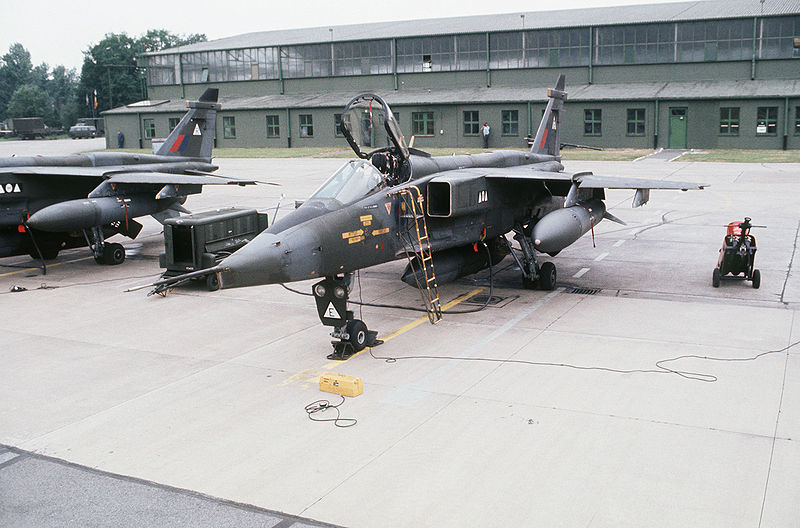
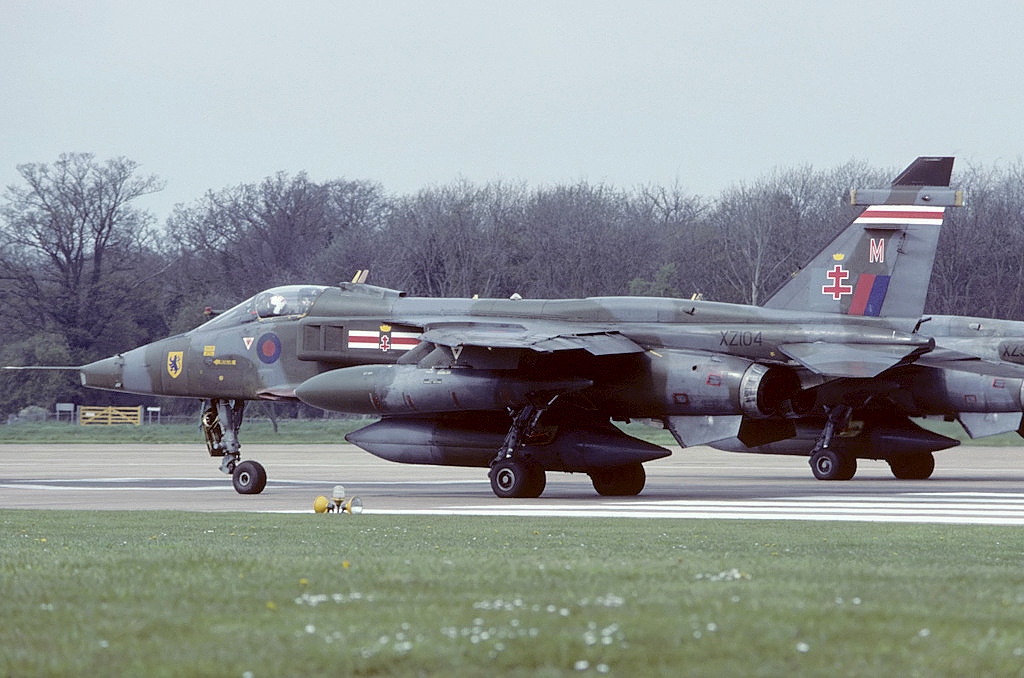
I flew the Cold War Jaguar fighter-bomber

The only things that got in the way of a RAF Jaguar pilot’s survival in a potential war was a huge armada of Warsaw Pact fighters, a vast force of Warsaw Pact anti-aircraft systems, the ground… and the gung-ho friendly air defenders! We spoke to Peter Day to find out what life was like as a Cold War Jaguar pilot.

Describe the Jaguar in three words

“Comfortable, ergonomic, underpowered. 

OR:

      Contrived, compromised, capable.”

“Hawk missile batteries who alleged that they would have two similar piles of wreckage after hostilities, theirs and ours, so not much aircraft recognition, identification friend or foe or safety lane in use!”

Complete this sentence: The Jaguar needed…

     “More development in all areas.”

What was the best thing about the Jaguar?

     “Relative ease of day visual single seat operation at low level (LL).”      

..and the worst?

     “Lack of thrust.”

What would have been your wartime mission and how confident would you have been to survive it?

“Dual roled for Strike and Attack. Nuclear delivery and conventional ground attack from a fixed base or flank war deployments as an ‘expeditionary’ unit. The expectation was that there would be a period of Attack operations either Close Air Support (CAS), Interdiction (INT) or Offensive Counter Air (OCA) on NATO flanks or across the Inner German Border (IGB), before Selective or General Nuclear Release.

NATO flank attack operations in Allied Command Europe Mobile Force (AMF) were generally ‘on demand’ tasking against border violations, light naval forces or amphibious expeditions. Overland the Jaguar expected a high mission success to loss ratio in CAS and INT under exercise or research conditions using Operational Low Flying (OLF) and ‘lay-down’ weapons 1000lb retard or BL755 cluster weapon, shallow dive gunnery was really not sensible, see below! The combination of the Navigation and Weapon Aiming Sub-System (NAVWASS) and tactical flying could place you at an optimum weapons release point with good accuracy and minimum unmask time, although some of NATO’s flanks are pretty flat challenging exposure to defences.

Prototype Jaguar XW563 dropping a 1000lbs bomb, circa 1974 (C0019)

    The Continuously Computed Impact Point (CCIP) displayed on the bomb fall line (air-to-ground ‘live line’) in the Head Up Display (HUD) required a very short period of stable flight for accurate results. Pre-planned target positions or Target of Opportunity (TOO) designation using either ground laser marking or the onboard Laser Ranger and Marked Target Seeker (LRMTS) in the chisel nose for range calculations which greatly improved accuracy by avoiding an incorrect ‘flat earth’ trajectory calculation which caused errors.

File:RAF Jaguar Tactical Meet.JPEG

    Attacks against light naval forces were always going to be high risk despite some fiendish tactics developed in conjunction with the German Navy F-104 units who would be tasked over the southern Baltic Sea, Kattegat and the ‘Belts’ various between the Danish islands, the Sound separating them from Sweden, the German mainland and Bornholm island. This was an exciting and varied ‘playground’ but very, very flat i.e. no orographic screening! 

    The F-104 had a good anti-ship radar but a Litton ‘tramlines only’ inertial navigation system. The Jaguar had no radar but a very good NAVWASS even allowing for some strange over-sea doppler effects from the Radar Altimeter, so the Jaguars kept the formation away from known defences and the F-104s found the target. 

  Perhaps the most effective tactic was the four aircraft  F-104 ‘wagon-wheel’ circling out of effective ZSU-23 range above 10,000ft and using high angle dive attacks either simultaneously (exciting) from the sun quadrant in turn or 180º opposed (equally exciting). The Jaguars usually waited for a weakened landing ship target to lay-down BL755 on. Occasional high angle gunnery was considered but as all these tactics required a high cloud base other options were developed. Low-level mixed pairs of F-104/Jaguar could hide behind islands out of ship radar contact using NAVWASS and appear using F-104 radar to lay-down attack blind if necessary in sea fog or low cloud. Loosely timed co-ordinated pairs avoiding fragmentation issues did cause havoc in NATO shipping ranks during exercises. 

KEEP THIS SITE GOING BY SUPPORTING US ON PATREON

 IGB violation was the Central Front threat and the opposing unit was the 3rd Shock Army. There is an apocryphal statement that the only thing stopping 3rd Shock reaching RAF Bruggen was the Niederkrüchten traffic lights which were always red when you arrived. The immediate task would have been CAS but as dual-role Jaguar, other than recce (alone, unarmed and unafraid), would probably not have been committed unless a guaranteed stop was likely. Jaguar survivability over the Forward Edge of Battle Area (FEBA) was marginal at best with all the lead in the air, not to mention the forward based MIM-23 Hawk missile batteries who alleged that they would have two similar piles of wreckage after hostilities, theirs and ours, so not much aircraft recognition, identification friend or foe or safety lane in use!

Jaguar T.2

    INT would be an attempt to slow the advance by interdicting supply chains, resources or river crossings all of which would be defended and reached by crossing the FEBA. Pre-planned attacks were available but at high risk due to the proximity of the FEBA. On call INT was likely if a stop was possible or the first line of defence was being overwhelmed, both possible scenarios.

    OCA was also pre-planned and because of the distance behind the FEBA circuitous routing, safe lane or medium level returns could be planned. Ad hoc enemy air defence en route was ‘luck of the draw’ but airfield/missile site close defences were fairly predictable and could be minimised by approach route, attack geometry and weapons selected. Long toss ballistic delivery was also an option to avoid target overflight or exposure to close-in weapons systems.

VINTAGE FOOTAGE SHOWS JAGUAR ATTACK AIRCRAFT UNDERTAKING MOTORWAY TRIALS -  The Aviation Geek Club

    More time had to be spent ‘red side’ and the Jaguar had quite good ‘legs’ at low level so a target 150nm+ beyond the IGB was quite feasible retaining the underwing tanks, bearing in mind RAF Bruggen was some 150nm from the likely FEBA. Simulation and Red Flag data indicated that with good pre-planning, current enemy intelligence and support missions less than 10% attrition was likely.

    Strike operations involving selectable yield lay-down or loft deliveries of WE.177A were a UK contribution to the US Single Integrated Operational Plan (SIOP) in force at the time administered locally by SACEUR, either as a Selective Release (Selrel) – tailored counterforce – mission or during General Release. As a single seat day/night/all-weather (yes, as declared!) visual operator this would have been a really big ask and mission ending Controlled Flight Into Terrain (CFIT) would have been as likely as enemy air defence attrition or weapon side-effects. Flying on a forecast QNH altimeter setting, at an altitudes minus all the safety margins/percentages, IMC, relying on the NAVWASS with occasional glimpses of the ground would have been a ‘go to the end of the printed line in your route book and deliver the weapon’ scenario, if you got that far. Day VMC was doable, night or IMC would have been very high attrition.”

What were you first impressions? How did it compare with other aircraft you’d flown?

“Luckily I was awarded a Hunter course at RAF Chivenor before joining the Jaguar Conversion Unit, soon to be 226 OCU, at RAF Lossiemouth. So with minimal ground attack experience all the shiny levers were very exciting and the fleet had almost zero miles on the clock. Comparing it initially to the Hunter the speed performance was similar but manoeuvre was ‘⍺’ governed and the obvious difference in wing area told the story with reduced performance.

During manoeuvre the wings deflected up but the fuselage bent down at nose and tail causing the spine to lengthen. The control system rods which passed along the spine did not, so an input of both rudder and tailplane occurred above 4g which was undesirable! A ‘spine bending compensator’ was incorporated into the aircraft’s yaw and pitch auto stab systems to overcome this effect at high ‘g’.

    Exaggerated nose-up attitudes for take-off and landing took getting used to but the handling and stability in its planned low level regime was excellent. Attack system handling could be as easy or difficult as you wanted to make it with many modes available, but the Projected Map Display (PMD) magnet and NAVWASS housekeeping caused many ‘head-in’ inattention scares and some losses. The Head Up Display (HUD) was new to the RAF and not 1:1 scaled for display size reasons amongst others, so good though it was it took a little interpreting and critical manoeuvring was better accomplished on the classic head down attitude indicator (AI) horizon e.g. loft/toss weapons delivery recovery in cloud to avoid ‘laddering’ in the HUD i.e. the rungs – attitude bars – rushing past like a waterfall and causing disorientation.”

How good were the navigational systems? 

   “The NAVWASS as designed was excellent give or take a couple of minor ergonomic/switch issues. Unfortunately the hardware and software were running to keep up with the plan. So much so in certain cases that when I collected a Jaguar GR1 from BAe Warton the central PMD was not fitted and I delivered it, safely, to RAF Lossiemouth staring at my feet every time I looked into the cockpit. Most of the ‘black boxes’ – primarily the Inertial Platform (IP), Platform Electronics Unit (PEU), Computer, Air Data Compute (ADC) – were quite ‘cutting edge’ technology and as it transpired liked to be ‘matched’ with each other, certainly the IP and PEU. The HUD waveform generator and projecting low light TV didn’t like firm landings, neither did the IP which often commented with a large X on the ‘frozen’ HUD. Excellent work by the avionics engineers, manufacturers and BAe gradually resolved all the issues and the ‘matching’ of LRUs had a significant effect at unit level. When the system was ok it was outstanding for its flexibility and accuracy leading to the ‘bomb in a bucket’ quote by OC 226OCU.”

Tell me something I don’t know about the Jaguar 

     “Two blue land-away baggage cases were supplied by BAe with each new aircraft fitting perfectly into the gun ammunition boxes.”

File:RAF Jaguar Tactical Meet.JPEG

Did it have enough power?

    “There was never enough power and the Adour, an Anglo/French cooperation, was optimised for high take-off thrust in reheat, good specific fuel consumption, providing a high speed dash capability and was to be changeable in 30 minutes! Good job there were two. Engine improvement were forthcoming including ‘part throttle reheat’ (PTR) to improve single engine handling, arguably also survivability, allowing reheat at less than maximum engine N1 rpm. Eventual Adour marks improved all engine performance aspects but there was rarely spare power, depending on the configuration.”

How do you rate it in the following categories

Instantaneous turn rates 

      “Always ⍺ (12, 14, 17 depending on config) and power limited but with 450kts a 6g+ 180º break was possible with a 150kt loss. Wing area was 75% of a Hawker Hunter and it showed.”

Sustained turn

     “Entirely power and configuration dependent, not good in a low level turning fight with stores loaded. Clearing the wing turns it into a supersonic trainer and it is very capable but the mission is lost. W/L of 650kg/m² was nearly triple the Hawker Hunter figure.”

Sepecat Jaguar GR.1 (XZ365 J) of 41 Squadron on deployment to Norway (P015220)
Image: RAF Cosford

Take-off/landing performance

     “Landing first, easy, precise (⍺), brake parachute equipped with big brakes – excellent! Take-off has been variously described as due to the curvature of the earth and was certainly an Operations Manual reference event depending on entropy, configuration and airfield. Reliance on ‘clear wing’ after engine failure would be operationally standard. Full reheat was standard and operational formation take-offs would be a race to the first waypoint.”

High AoA performance 

     “Interesting, in that it had a very ‘hard’ flight envelope boundary. It flew very well up to the ⍺ limits for various configurations but beyond them, certainly dynamically, wing rock then instability in yaw and pitch led to a departure which was un-recoverable at low level, barely so at medium level with a ‘centralise’ controls recovery.”

Climb rate 

     “Totally weight and configuration dependent but the clean aircraft at 10 tonnes had a T/W of 0.5 similar to a Hawker Hunter, and climbed to 30,000ft in just over 1 minute. Fully war configured time to height was fairly pitiful and very fuel consuming.”

RAFG Jaguars

Range

   “Jaguar was designed to have a good specific fuel consumption in dry power cruise and aerodynamically efficient tanks and weapons didn’t affect that too adversely at low level. Accelerating to penetration or attack speed was a reheat event, PTR helping to sustain on reaching. 300nm plus lo-lo radius of action with four weapons was quite feasible Ferry at altitude was comfortable with two and a half hours un-refuelled on external tanks; clean ferry was nearly two hours cruise climbing and exploiting the transonic aerodynamics.”

Weapons platform 

    “Very stable level, shallow and high angle dive and in long toss/loft although the ballistics for real weapons over long distances were a little suspect. Relatively high-wing loading assisted by good auto-stab/damping systems smoothed tracking.”

The Hush-Kit Book of Warplanes will feature the finest cuts from this site along with exclusive new articles, explosive photography and gorgeous bespoke illustrations. Pre-order The Hush-Kit Book of Warplanes hereThank you. Our controversial merchandise shop is here and our Twitter account here @Hush_Kit. Sign up for our newsletter here. The Hush-Kit Book of Warplanes will feature the finest cuts from this site along with exclusive new articles, explosive photography and gorgeous bespoke illustrations. Pre-order The Hush-Kit Book of Warplanes here.
 

Combat effectiveness

    “Apart from the inaccurate loft/toss (nuclear weapon kill probability resolved that) all other weapons deliveries had to overfly the target so surprise, OLF and attack geometry were critical. If the lay-down/shallow dive weapons were delivered they would hit. However, ingress/egress versus CAP fighters, area/land forces air defence and SHORAD meant that cunning planning was crucial and range consuming. Lo-lo or lo-lo-hi were the only options for survival and then the Hawks or even the ‘home plate’ CAP might get you

    (F-4 Phantom 1, Jaguar 0 – 25 May 1982).

    Basically a digital Hunter so it did ok and got better with age.”

Cockpit 

“Roomy, good visibility, quite ergonomic with an unfriendly computer interface, the hand control was a good idea but felt very analogue. Don’t mention ‘slugging’!”

KEEP THIS SITE GOING BY SUPPORTING US ON PATREON

How affectionate did you feel towards the aircraft? 

 “Very as it was joy to fly, more robust than you would think and would deliver weapons with a new order of accuracy. What equipment should have been added to the aircraft? Better RWR and defensive aids. Radar of course but no hope. Lots of ‘goodies’ did arrive with the GR1A, better NAVWASS, chaff/flare, ECM and Sidewinder. TIALD laser designator pod capability, bigger, engines and aiming improvements all installed in the GR3A.”

Having flown both, who would likely win in a guns-only fight between a Javelin and a Jaguar? 

    “Jaguar without doubt mostly due to its hit and run capability. Javelin lacked dynamic manoeuvring although the ‘shotgun’ spread of four Adens would cause havoc if they hit you.”

What should I have asked you? 

       “Air-to-air refuelling ✔️ Probe installation with good geometry, easy to fly but spoke the basket and the debris goes down the starboard engine, total embarrassment! A ‘one shot’ hook was fitted, good for RTOs and hydraulic failure landings. Further taxying, if possible, was accomplished with a roller skate under the ‘shoe’ or a suitable length of rope attached to the safety pin and holding the hook off the ground. Re-setting the hook was like pulling a giant longbow.

       The T2 had worse high ⍺ characteristics than the GR1, mainly due to B/A ratio factors, but the FAF seemed to have a very ‘carefree’ handling regime with it, perhaps they knew something? It was not nuclear wired so was a bit of an orphan late on in war exercises. The fuel system was automatic with a French ‘fairy lights’ display for when it malfunctioned, a frequent early problem, you then had to interpret and select an appropriate switch to avoid flaming out. The excellent brake parachute in its tin container had a habit of falling out at random if poorly fitted and subject to high ‘g’ or OLF in turbulence. There are containers in the Scottish Highlands today.

  Could the Jaguar have operated from an unprepared or graded airstrip? Yes – everyone had great confidence in the French designed ‘train d’atterrissage’ or ‘train’ and it could absorb all sorts of arrivals.”

       What about recce? “Good question, the centreline recce pod as fitted was excellent and when it was digitally updated developed a mind of its own to produce good content despite the pilot!”

KEEP THIS SITE GOING BY SUPPORTING US ON PATREON


Jaguar Conversion Unit (226 OCU) Jun – Sep 1974

No 6 Sqn RAF Coltishall Oct 1974 – Apr 1977 ‘Flying Can-openers’

No 14 Sqn RAF Bruggen May 1977 – Aug 1980 ‘Crusaders’

HQ RAFG Jaguar Staff Officer Sep 1980 – Feb 1983

1500+ flight hours Jaguar

Latest thoughts on new Russian mystery fighter aircraft: ‘Fleabag’ achieves checkmate

Image
Though earlier artists impressions show an undernose intake the aircraft or mock-up appears to have should mounted intakes somewhat reminiscent of those of the F-22 and to a lesser extent, the Berkut. I do wonder what their intake shape is… and there are rhomboid options that would make M~2.0 feasible. I think this aircraft is a candidate for MiG-29 replacement, but with emphasis shifted away from WVR combat.

TASS has announced that Russia’s latest fighter aircraft will be unveiled, and, indeed, demonstrated, at the MAKS-2021 show on July 20.

Photographs of the shrouded aircraft (or possibly mock-up) have now appeared, and the analysis below has been updated to reflect these images.

The aircraft is reported to be Russia’s first single-engine supersonic low observable tactical fighter, and has been developed by Sukhoi, and is being presented at the MAKS show by Rostec. The stated intent is to ‘rival the US fifth-generation F-35 aircraft’. The aircraft is also described as a domestic light fighter, which will compete with the F-35 in export markets. This latter comment is backed up by a video on the Rostec website which identifies a number of countries by name including India, Argentina, and Vietnam, and some imagery suggestive of Middle Eastern states.

The new photographs show an aircraft that loosely resemble the earlier ‘teaser’ imagery, but with significant differences in the intakes and fuselage.

Compared to the ‘teaser’ imagery, the ‘Checkmate’ aircraft (Hush Kit reporting name ‘Fleabag’) has twin intakes located on the sides of a rhomboidal cross-section fuselage, resembling the intake installation on the F-22, rather than a large diverterless intake under the nose. The wing appears to be similar to the teaser image, being highly-tapered, thin, and with a low-aspect-ratio, near-diamond planform.

The forward fuselage of the teaser image had a small forward canard, which appears to be absent on the shrouded ‘Fleabag’ aircraft. The shrouding of the aircraft is very effective in confusing the aircraft profile, and it is not impossible that a strake is present, in the same plane as the wing, and that the intakes are below this strake, rather like the F-18 installation. All of this must remain speculative until clearer images are available. 

The rear view of the Fleabag appears to show a single afterburning nozzle, located between twin butterfly tails. Given Sukhoi experience in the application of thrust vectoring to its heavy fighter designs, it would be surprising if this were not also fitted to the new aircraft. The teaser image features an Infra-red Seeker Tracker, located ahead of the cockpit, and a radar in the aircraft nose. This would be a typical arrangement for a Russian fighter.

Image
A once classified British study from 1993 shows a similar design solution in wing planform and tail configuration.

The wing planform and tail design are somewhat reminiscent of the McDonnell MFVT (Mixed Flow Vectored Thrust) ASTOVL concept, and as this single-engine aircraft featured twin side-intakes, there is quite a strong resemblance between it and what we can see of ‘Fleabag’. The Newark Air Museum in the UK have a model of that concept, shown below. The MFVT design was one of the propulsion alternatives examined in early UK-US joint technology studies looking at possible ASTOVL concepts in advance of the JSF program. I am not suggesting that Fleabag is a STOVL aircraft, however – the fuselage volume taken up in the MFVT for its STOVL system simply results in a fuselage shape compatible with the internal weapons bays which must surely be a feature of Fleabag.

What can we infer about the aircraft? To me, the highly-tapered, low aspect ratio wing suggests that the design is intended to be used for BVR combat, as the wing area and aspect ratio suggest sustained turn performance might not be a strong point. Checkmate is likely to have a high thrust-to-weight ratio, a vectoring nozzle and a strake ahead of the wing. This should result in the instantaneous turn rate being structurally, rather than aerodynamically, limited for substantial parts of the manoeuvring air combat envelope. The fuselage below the wing line is rhomboidal, the flat sides and fuselage width suggesting reasonable size internal weapons bays, which are necessary if the aircraft is to have a low signature.

Image

Whether a low signature is achieved will depend on a number of aspects – not just the shape, but the materials, the manufacturing standards, and the electromagnetic properties of the surfaces and structure. Certainly, some are firmly of the view that the canard foreplane, and the large under-fuselage intake, are incompatible with a low signature aircraft. It is interesting that these features do not appear to be present in the shrouded Checkmate/Fleabag aircraft.

From the wording used in the press release – descriptors like ‘domestic light fighter’ and ‘tactical fighter’, and the reference to exporting the aircraft, it could be that the new Sukhoi is intended to be a cheap alternative to the F-35, indicating, perhaps, that some compromises in the signature area might have been made in the interests of containing acquisition, operating and maintenance costs.

Image

Could the aircraft be a Russian equivalent to the Hush-Kit F-36 Kingsnake concept, aiming to regain the position once achieved with the widespread use of the MiG-21, by undercutting the cost of the F-35? The primary intent might be to develop a widely exportable aircraft, with, perhaps, Russian usage being limited to a ‘non-exportable’ variant used for local air defence and tactical strike. This might supplement a force mix including manned and unmanned systems, and drawing on the capabilities of future systems like the Su-57 for air superiority, and a future MiG-31 replacement. for strategic air defence.

 Could the aircraft indeed be a Russian equivalent to the @Hush_Kit F-36 Kingsnake concept, aiming to regain the position once achieved with the widespread use of the MiG-21 by undercutting the cost of the F-35?

– Jim Smith

Save the Hush-Kit blog. Our site is absolutely free. If you’ve enjoyed an article you can donate here. Your donations keep this going. Thank you. 

First comments on new single-engine Russian fighter: Checkmate?

Teaser images may describe configuration of new light/medium-weight Sukhoi fighter

Image

TASS has announced that Russia’s latest fighter aircraft will be unveiled, and, indeed, demonstrated, at the MAKS-2021 show on July 20. We consider what this might mean and what the configuration of the circulating images reveals.

The aircraft is reported to be Russia’s first single-engine low signature supersonic tactical fighter, and has been developed by Sukhoi. The stated intent is to ‘rival the US fifth-generation F-35 aircraft’. The aircraft is also described as a domestic light fighter which will compete with the F-35 in export markets.

The below image above is a ‘teaser’ for the aircraft and must be viewed with some caution until the actual hardware is revealed. The basic configuration shown in the illustration above has a near-diamond wing planform, with thin highly-tapered low-aspect-ratio wings, a forward canard, and twin butterfly tails. The aircraft has a single engine, with a large diverterless intake (UPDATE: the aircraft or mock-up photographed beneath a tarpaulin has shoulder mounted intakes similar to that of the F-22 and appears not to have a canard) under the forward fuselage. An Infra-red Seeker Tracker is located ahead of the cockpit, and a radar is mounted in the aircraft nose.

This 2017 3D model is unconnected to the model on Borisov’s desk but is interesting to compare.

This model was seen on a Sukhoi executive’s desk, deliberate teaser or disinformation?

Given Sukhoi experience in the application of thrust vectoring to its heavy fighter designs, it would be surprising if this were not also fitted to the new aircraft.

The wing planform and tail design are somewhat reminiscent of the McDonnell MFVT (Mixed Flow Vectored Thrust) ASTOVL concept but the aircraft features a chin intake rather than side intakes. The Newark Air Museum in the UK have a model of that concept, shown below. The MFVT design was one of the propulsion alternatives examined in early UK-US joint technology studies looking at possible ASTOVL concepts in advance of the JSF programme.

What can we infer about the aircraft? To me, the highly-tapered, low aspect ratio wing suggests that the design is intended to be used for BVR combat, as the wing area and aspect ratio suggest sustained turn performance might not be a strong point. The fuselage below the wing line is rhomboidal, the flat sides and fuselage width suggesting reasonable size internal weapons bays, which are necessary if the aircraft is to have a low signature.

Whether a low signature is achieved will depend on a number of aspects – not just the shape, but the materials, the manufacturing standards, and the electromagnetic properties of the surfaces and structure. Certainly, some will question whether the canard foreplane and the large under-fuselage intake are compatible with this intent.

From the wording used in the press release – descriptors like ‘domestic light fighter’ and ‘tactical fighter’, and the reference to exporting the aircraft, it could be that the new Sukhoi is intended to be a cheap alternative to the F-35, suggesting, perhaps, that some compromises in the signature area might have been made in the interests of containing acquisition, operating and maintenance costs.

The Hush-Kit Book of Warplanes will feature the finest cuts from this site along with exclusive new articles, explosive photography and gorgeous bespoke illustrations. Pre-order The Hush-Kit Book of Warplanes hereThank you. Our controversial merchandise shop is here and our Twitter account here @Hush_Kit. Sign up for our newsletter here. The Hush-Kit Book of Warplanes will feature the finest cuts from this site along with exclusive new articles, explosive photography and gorgeous bespoke illustrations. Pre-order The Hush-Kit Book of Warplanes here.

 Could the aircraft indeed be a Russian equivalent to the @Hush_Kit F-36 Kingsnake concept, aiming to regain the position once achieved with the widespread use of the MiG-21 by undercutting the cost of the F-35?

– Jim Smith

Save the Hush-Kit blog. Our site is absolutely free. If you’ve enjoyed an article you can donate here. Your donations keep this going. Thank you. 

Hush-Kit thoughts

It is hard to know what to make of Russian rumours or even official statements regarding military hardware, and this is a prime example. There are more unknowns than facts around this fighter. Is it single-engined? Is it primarily for export? Could there be a STOVL variant? Manned, unmanned* or (more absurdly) optionally manned? If built, would it be built by Sukhoi or MiG (some recent releases mention Sukhoi but many older ones mention MiG)? If it is for export, and a cheap stealthish fighter could be just the ticket, then a launch or partner nation will be sought. India is said to like their Russian-sourced MiG-29UPGs very much but was far from happy with its treatment in the Sukhoi/HAL Fifth Generation Fighter Aircraft (FGFA) project. Whether they would want another partnership after the mess of FGFA is open to question, though a later off-the-shelf purchase would seem a viable idea. So who could afford to invest in such a fighter? Even domestic orders are far from assured these days with the MiG-35 floundering in obscurity, the Su-57 flailing around in single digits while even the dominating ‘Flanker’ series is not being ordered in enormous numbers. Outsiders who would love a long range stealthy fighter-bomber include Iran and Argentina but both seem highly unlikely to get involved. China has its own Shenyang FC-31 kicking around (somewhere) which appears to be in the same category so Sino-Russian collaboration seems an unlikely bet. Though it has long enjoyed a partnership with Russia, China is now far richer and ahead technologically in almost every aspect of military aerospace so what it would gain from cooperation with an increasingly unpopular Russia is hard to see.

Another issue is that no-one (at least publicly) really knows what the next generation of fighters will look like – or even if their should be one. Following or countering the American lead, as has been historically the case, is harder now as there is uncertainty on which technological direction the US will go in. The UK, with a similar defence budget to Russia is also thinking big with its Tempest research project, but this appears to have the same vagueness of direction, with placeholder shapes and every conceivable tech being mentioned without a clear idea of what is needed or why.

Despite a defence budget less than a tenth that of the US, Russia still thinks big, but with a global GDP percentage that has shrunk by almost 1% since a high of 4% in 2007/8 it is often biting off more than it can chew. As with the US experience, so-called ‘5th Generation’ heavy fighters have proved budget vampires, with many seeing an obsession with brand new airframes as an archaic idea. Mentioned as a “new light plane designed to cope with tactical assignments” in the TASS press release it is seen as ‘Lo’ to the Su-57’s ‘Hi’. This is what the US F-35 was originally intended to be (to the F-22’s ‘Hi’) but spirally demands and costs left USAF with the F-16 fulfilling this as its planned replacement grew too aristocratic for everyday tasks.

Perhaps as a provocative statement against the F-35 the teaser video features British RAF 617 Squadron badges.

Though Russia is believed to have world-class electronic warfare technology, it lags in both the sensor arena (failing to have a truly operational AESA radar 20 years after US adoption) and likely in the field of data fusion. This aircraft (if it happens) is likely to be a simpler machine than the F-35, which may not be a bad thing.

The Su-35 and F-15EX show the sense of filling an old design with new goodies, while many new ideas, such as ‘loyal wingmen’ (the implied sleight of ‘loyal’ being a required descriptor for a wingman has not gone unnoticed in the pilot community) remain unproved. In summary – the future is vague and the Russian state’s appetite for new military projects is bigger than its belly.

Image
Photos of the forward fuselage reveal what appear to be should mounted intakes somewhat like those of the S-37 Berkut and somewhat like those of the F-22.

Most importantly, we suggest ‘Fleabag’ as the NATO reporting name.

* An unmanned variant of the KB SAT SR-10 with the superb name of ‘AR-10 Argument’ has been proposed.

Image

TASS PRESS RELEASE

MOSCOW, July 13. /TASS/. The latest combat plane that Russia will unveil on the first day of the MAKS-2021 aerospace show will rival the US fifth-generation F-35 aircraft, Executive Director of Aviaport Aviation News Agency Oleg Panteleyev said on Tuesday.

“The teasers in English and the regions that the pilots presented in a video released by Rostec [state tech corporation] suggest that the domestic light fighter will be in competition with the US F-35 aircraft on foreign markets. I am certain that the fighter’s demonstration at the MAKS-2021 will create a wow effect. It is not accidental that [Russia’s state arms exporter] Rosoboronexport has invited over 120 delegations from 65 countries of the world to the aerospace show,” he said.

Little is known about the plane’s performance characteristics so far, the expert pointed out. According to the data available, the latest fighter features low radar signatures in various bands, a high thrust to weight ratio, a large weapon payload and advanced air-launched armaments, the expert pointed out.

“There is no doubt that in this decade Russia will be able to restore the tandem of breakthrough aircraft platforms: the heavy Su-57 [fifth-generation fighter] and a new light plane designed to cope with tactical assignments,” the expert said.

The Rostec press office announced earlier on Tuesday that Russia’s United Aircraft Corporation (UAC, part of Rostec) would feature a fundamentally new military plane on the first day of the MAKS-2021 international aerospace show in the town of Zhukovsky near Moscow. The project’s official website was also unveiled, with a midnight countdown to the plane’s July 20 premiere.

As a source in the domestic aircraft-building industry told TASS in the spring of this year, the Sukhoi Aircraft Company (part of the United Aircraft Corporation) is developing the first Russian single-engine light tactical fighter with supersonic speed capability and low radar signature.

An Utterly Depressing A-Z of Aircraft

Avro Arrow fans

Video: Avro Arrow model found in Lake Ontario | WOSU Radio

A thousand years ago a hugely expensive Canadian aeroplane was cancelled. Today its memory is kept alive in a million Canadian moans.

Bombs

Deconstruction workers. Human unbeingers.

Crashes

When the sky rejects, the ground welcomes too quickly.

Dresden

RAF Bomber Command was overly eager to inspire Kurt Vonnegut.

Vonnegut in February 1972

Environmental damage

Maybe not as bad as cars, but still.

F-35 online articles

If every online article on the F-35 was laid end-to-end and made of gold they would cost the same as the F-35 programme, or they would if its actual price was known.

Flying Cars

Flying car - Wikipedia

Are they a shit car or a shit plane? Or both?

German World War II aircraft enthusiasts

How common is Nazi fancy dress? - BBC News

Not all, but some of these guys are a little too enthusiastic. Worth checking the name of their alsatian before meeting them one-on-one.

Grey planes

The most successful fighter pilot in history flew a bright red plane, air forces responded by painting all fighters grey. Grey is the English word for ‘gray’.

Heinkel He 177 Greif 

Auto-Destructive Art (ADA) is a form of art coined by Gustav Metzger, a German artist. Taking place after World War II, Metzger wanted to showcase the destruction created from the war through his self-destructing artwork. The He 177 predated Metzger’s work.

Ilyushin Il-2 penal units

It is alleged that there were penal units in the Great Patriotic War, in which prisoners were forced to fly exceptionally dangerous combat missions.

Jokes

Jokes about airline food.

Kits

Airfix Model Kit (1980s): 1 listing

It’s often assumed people who like aeroplanes like making model kits. Extremely fiddly, fragile and frustrating and in no way sympathetic to the sausage-fingered community these little nightmares mostly remain uncompleted. Pocket money is not enough to buy them leaving many in a long suspended state of unsatisfied childhood greed for kits that may last them a lifetime.

Lisbon Portela Airport, Portugal

A site specific art installation exploring the end of hope.

Militarism

The belief that a country should maintain a military capability it can’t afford and be prepared to use it aggressively to aid US foreign policy or promote extremely vague ‘national interests’. The latter is a fine idea as long as no-one else thinks of it and ethics aren’t a thing.

Nationalism & napalm

Flag-wanking and people-melting consistently generate poor reviews on Yelp. Both have both been hung on the wings of innocent aeroplanes whose only wish is to fly.

Obsession

The reason your home isn’t nice is because you have spunked £56,000 on books on aeroplanes. Are you really actually ever going to read that book on the History of Airbus A300 Longerons?

Project Pluto

Stick a nuclear ramjet in a cruise missile. The idea was simple: With an endurance measured in weeks (or even months) this Cold War weapon could distribute nuclear warheads before leisurely cruising around pissing deadly radiation over huge areas of cursed land before crashing to earth to heap misery upon the already widespread misery as its own onboard nuclear reactor disintegrates. This was clearly the worst idea ever (only to be surpassed when Apple stopped including USB or headphone ports on their devices).

Pedantancy & pollution & patriotism

Point-scoring pedants permeate plane places, planes pollute particularly pertinent places with pesky particulates, patriots partial pestering perturbs people.

Quasi-experts arguing on Twitter

Stop arguing and feed the cat. Life is good. Take a breath.

Ryanair

Many airlines have proved it is possible to run successful budget airlines without treating passengers badly. Some have other ideas.

Soviet airliners

What was good about them was that you put your bag directly into an onboard luggage level rather than mess around waiting for carousels. But that’s all. At smaller regional airports it wasn’t unusual for passengers to physically help move aircraft stuck in snow or mud.

TSR-2 fans

A pint of bitter and a pint of bitterness. It was a nuclear bomber for godsake, not a murdered ballerina.

Underwater Aircraft Carriers

There is a reason whales don’t give birth to eaglets.

Submarine + aircraft carrier - Wicked!

Volksjäger (He 162 Salamander)

Heinkel, He 162, Spatz Volksjager (7585406720).jpg

Made by slaves to be flown by children to defend a fascist power, the He 162 was an awful thing. It escaped prosecution however by fleeing to America before having radical plastic surgery to emerge years later as the A-10.

Waiting times (airports)

Being encouraged to arrive unnecessarily early to be force-marched through a perfume shop is not cool guys.

X planes without pilots

If there’s not a little man or woman jn the front I’m not interested.

You

See also ‘me’

Zeppelin Raids & Zoom lenses

‘Strategic bombing’ (mass murder performed at over 80mph) started in World War One against Belgium. These raids paved the way for the horrors of aerial bombing in World War II. It also paved the way for the success of the lamentable cockney song ‘Roll out the barrel’ (years later, the lyrics were changed to ‘roll out the barrel bomb’ by crews of Antonovs in protracted proxy wars).

Airshows are breeding grounds for cargo shorts and zoom lenses as long as a Volvo estates, it’s a little known fact that airshow aircraft only perform dramatically fast take-offs to escape these aesthetic blunders.