I flew Kurt Tank’s final fighter

Interesting facts about the HAL HF-24 Marut aka Spirit Of Tempest

A sleek silver dream, the Marut fighter was a bold statement by a newly independent nation. India’s first indigenous fighter-bomber and the first Asian jet aircraft to enter service, the ‘Spirit of the Tempest’ never lived up to its full potential.  One pilot noted “She’s a beauty, no doubt on that. It is also the only aircraft, I know, where nothing moves faster than the fuel gauge.” We spoke to former Indian Air Force pilot Dara Cooper to find out more. 

“I flew the Marut in two short spells. My background was flying ground attack and photo recce roles on Vampires and on the Mystère (leaving aside my experience on the T 66 Hunter –  the standard trainer for Maruts till late 70s) when the type trainer came from HAL. I converted from Mystère 31 Sqn to Maruts at Hindon (1974)and then sqn moved to Jodhpur to join 220 and 10 Sqns.

I remember you saying you wanted to make comparisons with latter day aircraft including the MiG-23 and MiG-27. Don’t know if I got that right or not. However, I think that would be comparing chalk and cheese. I would stand the Marut up against the Hunter, Mystère and the MiG T-77 (the Type 77 better known as MiG-21FL). The first two were near peers in class though the Marut never lived down its underpowered rating. (Air Mshl Johnny Greene, an ace in days gone by, was Senior Air Staff Officer (SASO) of South Western Air Command (SWAC) and I remember receiving him after his first solo. He said, “I say Coops, Amazing aircraft! Only thing that moved on the take-off roll was the fuel gauge!” Great guys and their great sense of humour). The only MiG variant that we flew in contention with it was the T – 77 CAP and can say honestly, I cannot remember a single occasion when the Marut didn’t slip away unscathed.

Interesting facts about the HAL HF-24 Marut aka Spirit Of Tempest

To get back to the beginning I first saw the first Marut in physical form in Hindon, though I had heard stories about it. She was a feast for the eyes, that was my first impression. First sit in the cockpit was a relief after the cramped Mystère. I also noticed that the workmanship was shoddy compared to the Hunter and Mystère. It was my first experience of nose-wheel steering, and I found it exceedingly comfy to turn her (after my past experience of using brakes). The first air experience was surprisingly pleasurable, despite it being summer. I remember the take-off was slightly longer than that of the Mystère and considerably longer than the more powerful Hunter. It took her some time to build up initial speed but once she crossed 400 knots she was a different beast altogether all the way up to 580 kts, the most I remember clocking level with D/Ts. There are peeps who took her up to 600 knots and a wee bit more. High G turns at low level were smooth and steady though at times it bled off fast, especially while taking avoiding measures (evasive manoeuvres). At low level performance (good at height) gradually petered off.

The avionics, by today’s standards were as expected, a good Integrated Strike and Interception System (ISIS) gunsight but not much by way of any navigational aids. Easy to fly, easy to handle and as stable as a rock. The airframe was rock solid. But as for its role, ground attack and close air support, it was tailor made for the role.

I had two short spells in 1974. I converted and did a bit of the ops syllabus before being brought down by cerebral malaria following a trip to Jamnagar for sustained range firing. Followed a long spell of low med cat, I managed to fill the gap with the Defence Services Staff College (DSSC )in 1979. Then back to 220 Sqn this time (1980 – 81) when the fleet was disbanded and only the target tow flight moved out to Bakshi ka Talab. Total flying on type was a little over 200 hrs. Enjoyed every bit of it.

What I didn’t like was what I consider the biggest goof up of all time. We were predominantly a MiG-21 and Su-7 air force then and their prize qualification was an FCL from the Tactics and Air Combat Development Establishment. So during my second tour, two of the Sqn Cdrs were MiG FCL (Fighter Combat Leader, fighter weapons course trained) types & Chief Operations Officer another of the same, popularly known as ‘Alley of the Valley’. The third squadron Cdr was Joe Bakshi, a dyed-in-the wool Marut guy and also a VRC (Vir Chakra gallantry medal) from 71, commanding 10 Sqn which was the training squadron. He too despaired. Somehow the first three took it upon themselves to make Marut pilots ace air defence pilots. So when I got back to Maruts after DSSC was shocked to see the ops syllabus. Almost 40% devoted to high level air combat and a quaint exercise called pair manoeuvres! Being a senior in the squadron spent hours pleading, begging, being down right insubordinate with my boss about this air-to-air fetish. We were a ground attack squadron flying an aircraft specific to that role. Couldn’t get him to write a paper on why waste a/c hrs on doing something we were not capable of? We flew sorties amongst ourselves and spent hrs on briefing and de-briefings on “I was here and you were there, and I percehed blah blah blah”. What we needed was more low level strikes with bouncers from other types, that was our role and not converting speed into height! But alas….

The Hush-Kit Book of Warplanes. Preorder your copy today here. 

HUSHKITPLANES_SPREADS4_5.jpg

Some rare experiences. We had got on to doing slow speed aerobatics to gain confidence. If I remember right the entry speed for a loop was 500 kts (cant remember) and we gradually kept reducing. One such sortie in a trainer was on top of the loop and looked in to check speed (40 – 50 Kts) looked out to see a huge buzzard practically scraping the canopy. Both of us ducked, check altimeter reading 12,000′! Remember telling the other pilot, F@@ck if it had hit us, no one would have believed us. Been up chit creek facing a Court of Inquiry at the very least for unauthorised low flying outside low flying hours. Another speciality of the Marut was hydraulic failure. Lives there a Marut pilot who only had one hydraulic failure? Take me to him! That was some hydraulic system. But its outstanding feature was the airframe. I am desperately trying to locate a photograph of a Marut that belly-landed in a field, except for the belly touching the ground there is no other visible damage. I will send it later when I see it. I have seen a jock bring back a HT cable stuck in the rudder, lashing along on landing. The espirit de corps saved him, Shashi Ramdas cleaned up the rudder and Rajasthan went into a two day black-out. Keru came out smiling and smelling of roses!

The diciest mission was at Jaisalmer. It was a four-aircraft lead check, I was No 4 in LL nav ending in a live F/G strike at the range. I was flying a known underpowered aircraft. As we finished firing, ATC told us a guy had got lost and just landed downwind with engine flaming out on R/W. As Jodhpur was under repairs we catered only for diversionary fuel to Uttarlai, also under repair but usable parallel taxi track. As a tractor was already towing the a/c away decided to orbit at Jmer and land. LL fuel blinker, 120 gals, started on in orbit No 1. I eventually switched off 34 gals. Did heave a bit of a sigh and managed to get out of the chit thanks to my friends. I had seen the blinker on a few times, but never for this long!

Sustained turn at low level was good but below 420 speed washed off fast. At high level, it was below average. Acceleration after 420 was a piece of cake. Building up to 360 took some time. The Marut crowd, all three squadrons was something else. No petty envy, no back-biting, plenty of healthy competition, still around 75 of us friends who meet occasionally, have get-togethers, know families and keep in touch. My blog MarutFans is ample proof of that.

Oh yes, it had a lot of tech problems almost to the end of its life thanks to shoddy HAL workmanship. Last one I heard was someone pushed left rudder, nose wheel turned right. The Hydraulic lines were inter-changed!”

The greatest feeling I got from flying this aircraft? “It was the pride to be flying India’s first full-blown fighter. Secondly, guys who were already legends Kapil Bhargava, Babbi Dey, Prithi Singh, Shashi Ramdas, Chuchu Tilak had nursed it through its trials and tribulations.”
Saddest bit? “Politics & poor foresight eventually struck off over 100 serviceable aircraft, some with less than 200 hrs on the airframe, written off at the stroke of a pen.”
Top 58 fastest aeroplanes

These are the 58 fastest manned aircraft that ever flown. As you’ll see, the age of speed peaked in the 1960s: today the US Navy hasn’t a frontline aircraft that comes close to making it into the top 58!

58. Avro CF-105 Arrow (1958)

M1.98

57. Northrop YF-17

Mach 2. Oh, and I should also add the Convair B-58 Hustler here, also at Mach 2. And the Gripen.

B-58 (modified).jpg

56. BAe Experimental Aircraft Programme (1986)

BAe EAP ZF534 07-1988

Mach 2.

55. Saab 35 Draken (1955)

Mach 2

The Hush-Kit Book of Warplanes is incredible, come and check out its reviews here.


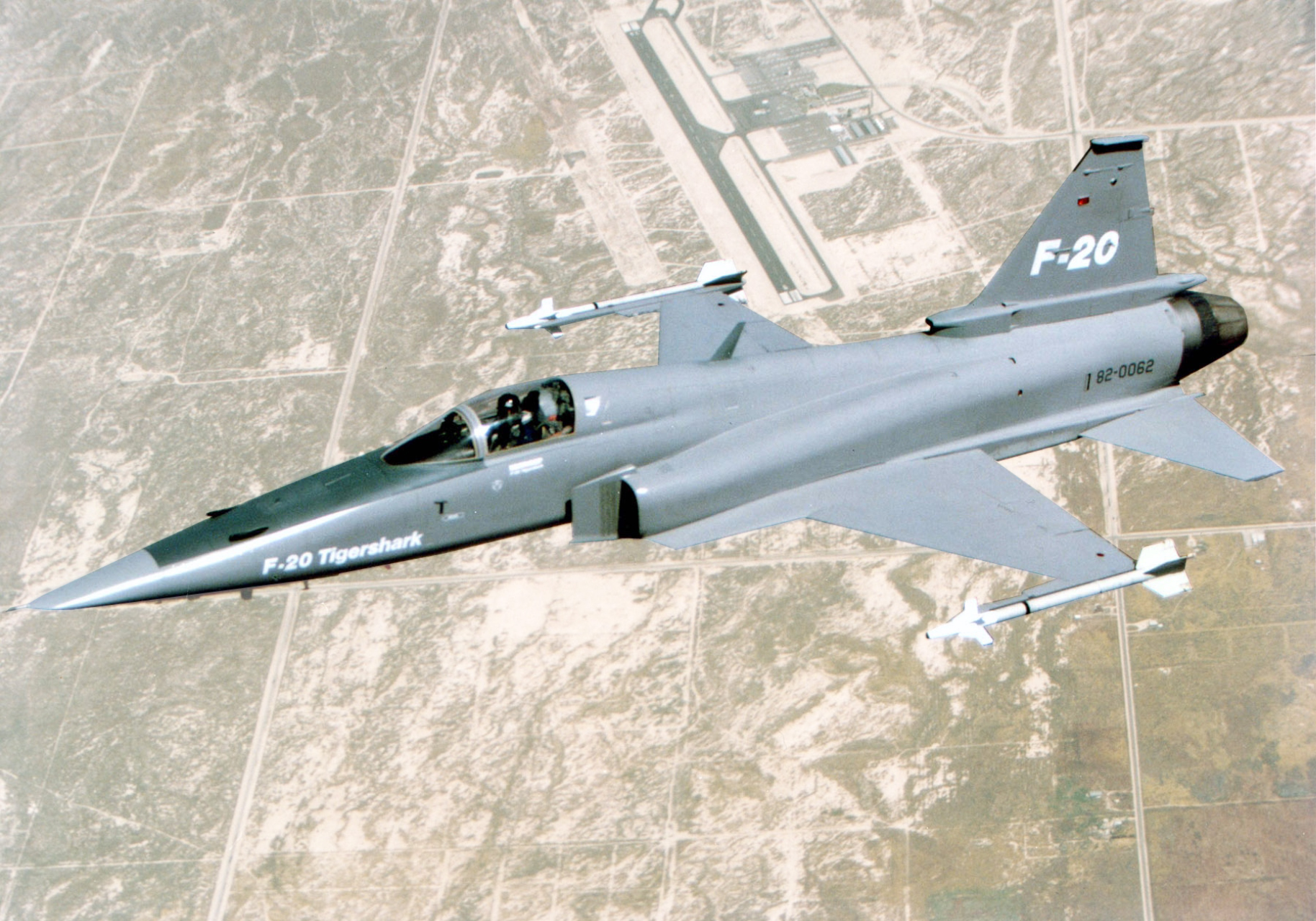
54. Northrop F-20 Tigershark (1980)

F-20 flying.jpg

Mach 2

53. Sukhoi Su-57 (2010)

Mach 2 (est)


52. North American A-5 Vigilante (1958)


Mach 2


51. Douglas D-558-II Skyrocket (1953)


Mach 2.005

50. Dassault Mirage IIIV (1965)

Mirage III V: origins, characteristics and performance data

Mach 2.04 (Fastest ever VTOL aircraft). Should also include the Grumman F11F-1F Super Tiger here at Mach 2.04.

F11F-1F NAN12-56.jpg


49. Tupolev Tu-160 (1981)

Tupolev Tu-160 RF-94109.jpg

Mach 2.05. (I should have also added the Eurofighter Typhoon here which has also gone M2.05)


48. General Dynamics F-16 (1974)

Mach 2.05


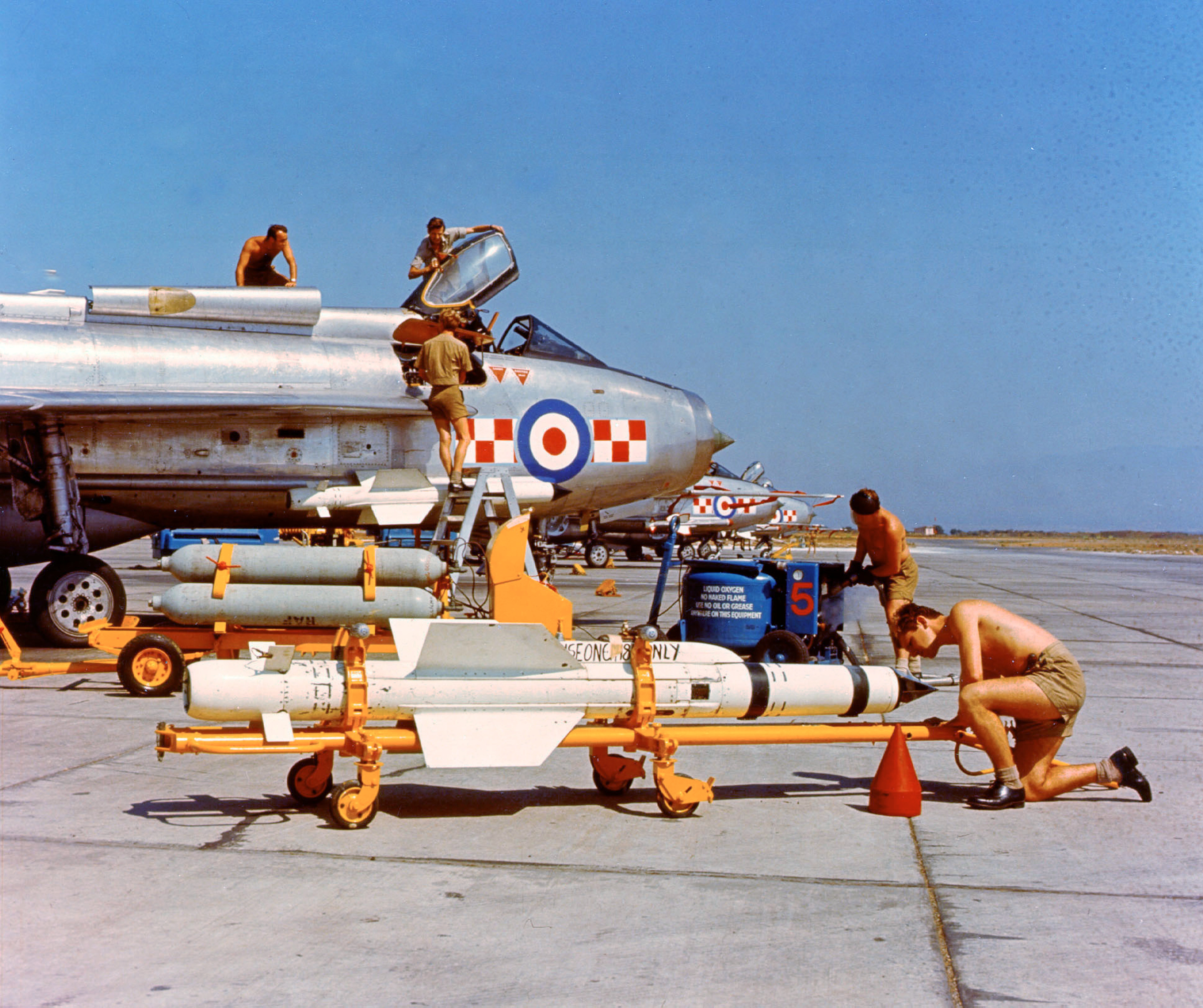
47. English Electric Lightning (1957)

Mach 2.1 (fastest British aeroplane)


46. Saab 37 Viggen (1967)

Mach 2.1 (fastest Swedish aeroplane)


45. Helwan HA-300 (1964)

Mach 2.1 (Fastest African aircraft)

(I should have added Chengdu J-10A here at Mach 2.1, awaiting verification)


44. Republic F-105 Thunderchief (1955)

Mach 2.1


43. Mikoyan-Gurevich MiG-21 (1955)

A MIG-21 aircraft flies past during the inauguration of the 12th edition of AERO India 2019 air show


Mach 2.1


42. Tupolev Tu-144 (1968)

Image

Mach 2.15


41. Mikoyan-Gurevich Ye-8 (1962)

Ron Eisele on Twitter: "29 June 1962. First flight of the Mikoyan/Gurevich  Ye-8/2. Second prototype supersonic jet fighter developed from and to  replace the MiG-21. Powered by a Tumansky R-21 turbojet.…  https://t.co/avU1sxtv1k"

Mach 2.15


40. Sukhoi Su-15 (1962)

Mach 2.16


39. Nord 1500-2 Griffon II (1957)

Nord 1500 Griffon II.jpg

Mach 2.19


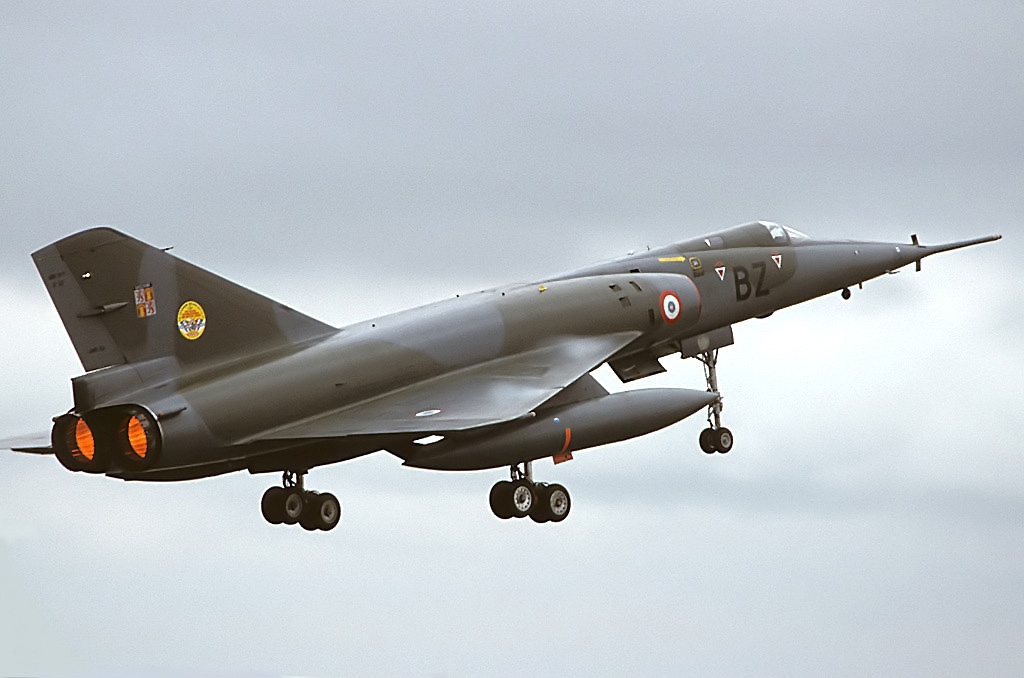
38. Mirage F1 (1966)

Mach 2.2


37. Mirage 2000 (1978)

French Mirage 2000 fighters kill 50 Islamic insurgents in Mali

Mach 2.2


36. Mirage IV (1959)

Dassault Mirage IVP, France - Air Force AN0758316.jpg

Mach 2.2


35. Dassault Mirage III (1956)

Mach 2.2


34. Dassault Mirage 5 (1967)

Mach 2.2

33. Dassault Mirage F2 (1966)

Mirage III F2 F3: origins, characteristics and performance data

Mach 2.2


32. McDonnell Douglas F-4 Phantom II (1958)

Why You Need to Respect the McDonnell Douglas F-4 Phantom II Fighter | The  National Interest

Mach 2.2. It is rumoured that the prototype XF4H-1 reached Mach 2.6 and that a special recon variant reached even greater speeds.


31.. Rockwell B-1A ‘Excalibur’ (1974)

Mach 2.22


30. Sukhoi Su-11 (1958)

Index of /image/idop/fighter/su11

Mach 2.2

Save the Hush-Kit blog. Our site is absolutely free. If you’ve enjoyed an article you can donate here. Your donations keep this going. Thank you. 


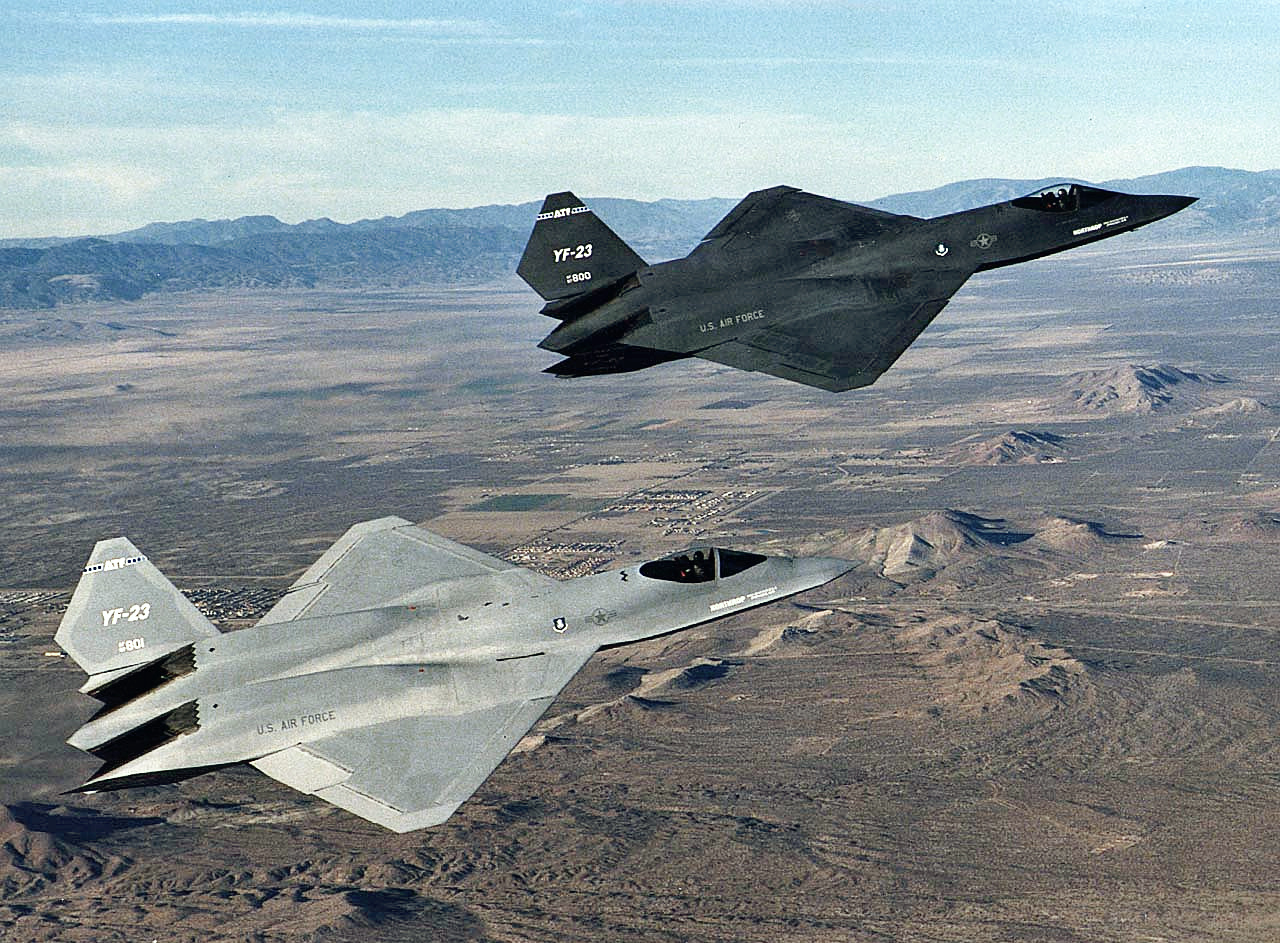
29. Northrop YF-23 (1990)


Mach 2.2 1990


28. Lockheed F-104 Starfighter (1954)

F-104 Starfighter | Lockheed Martin

Mach 2.2


27. Sukhoi Su-47 (1997)

Sukhoi Su-47 Berkut: an advanced Soviet fighter jet on a test flight

Mach 2.21


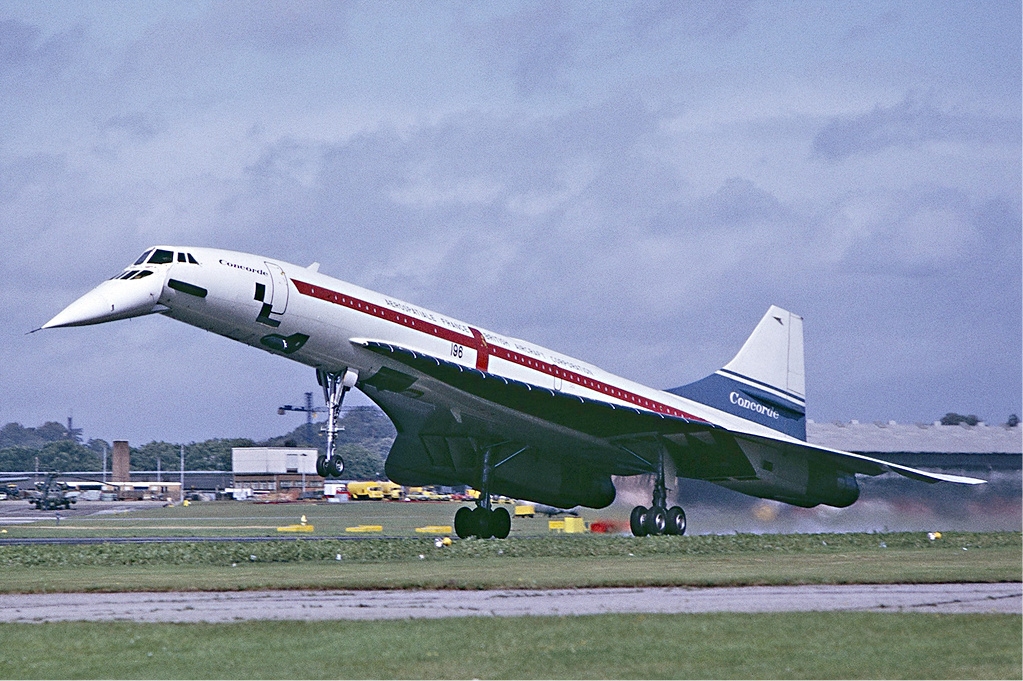
26. Aérospatiale/BAC Concorde

Max recorded 2.23 (Normal Mach 2)


25. Mikoyan Project 1.44 (2000)

MIG Project 1.44 MFI [HD] - YouTube


Mach 2.24


24. Mikoyan MiG-29 (1977)

Mach 2.25

23. Lockheed Martin F-22 Raptor (1997)

An F-22 Raptor flies over Kadena Air Base, Japan on a routine training mission in 2009.

Mach 2.25


22. Panavia Tornado ADV (1979)

Royal Air Force Panavia Tornado F3 Lofting-3.jpg

Mach 2.27


21. Dassault Mirage 4000 (1979)

Dessault Mirage 4000 - France | Fighter jets, Aircraft, Fighter aircraft

Mach 2.3

(The IAI Kfir is also quoted as Mach 2.3 though verification is sought)

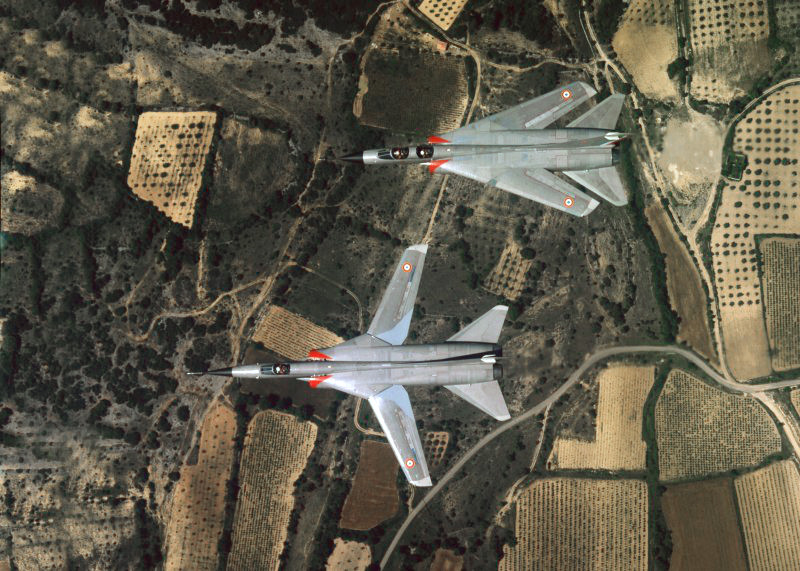
20. Dassault Mirage G (1967)

Mirage G: origins, characteristics and performance data

Mach 2.34 FASTEST EUROPEAN AIRCRAFT


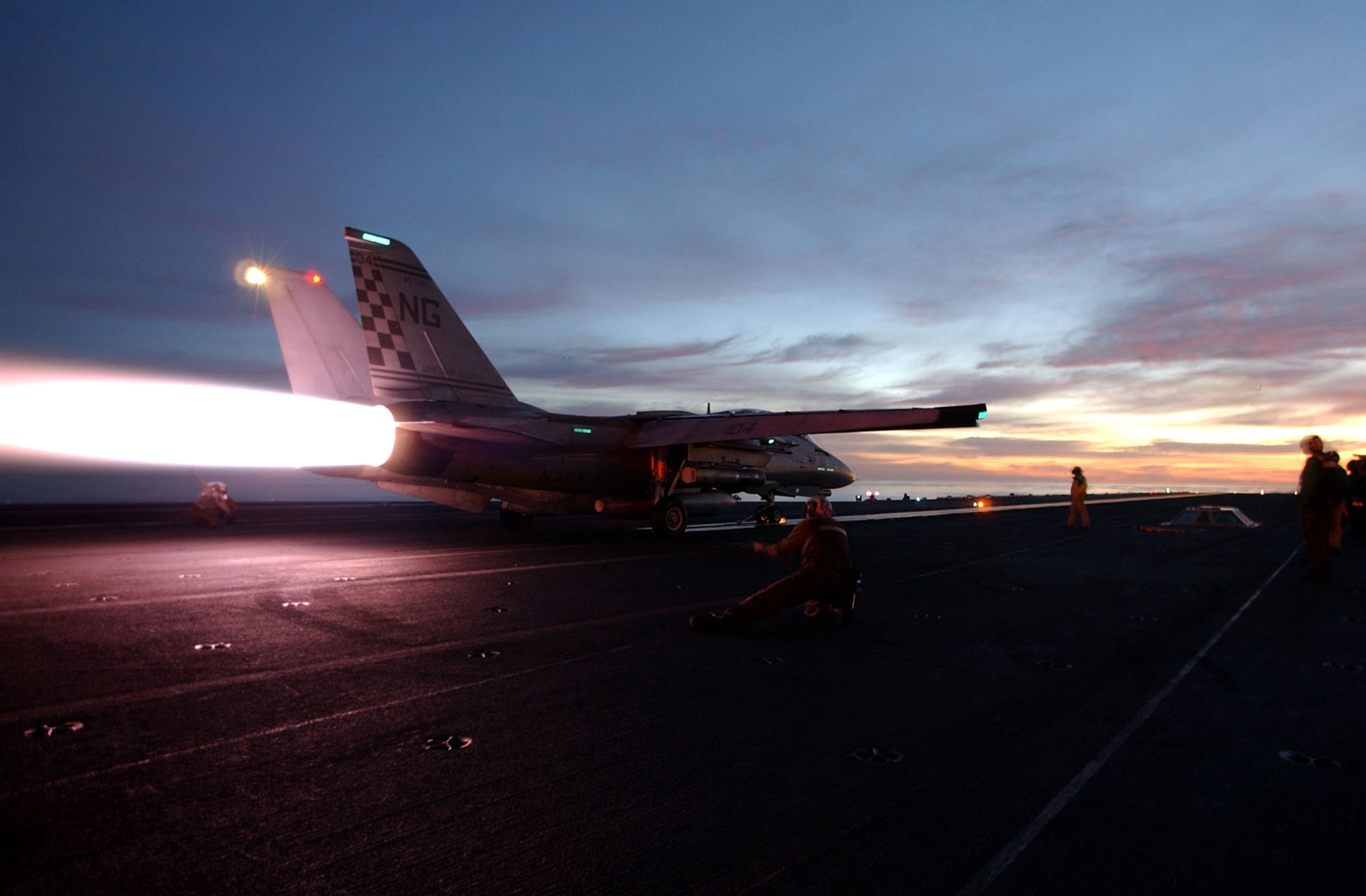
19. Grumman F-14 Tomcat (1968)

Mach 2.34


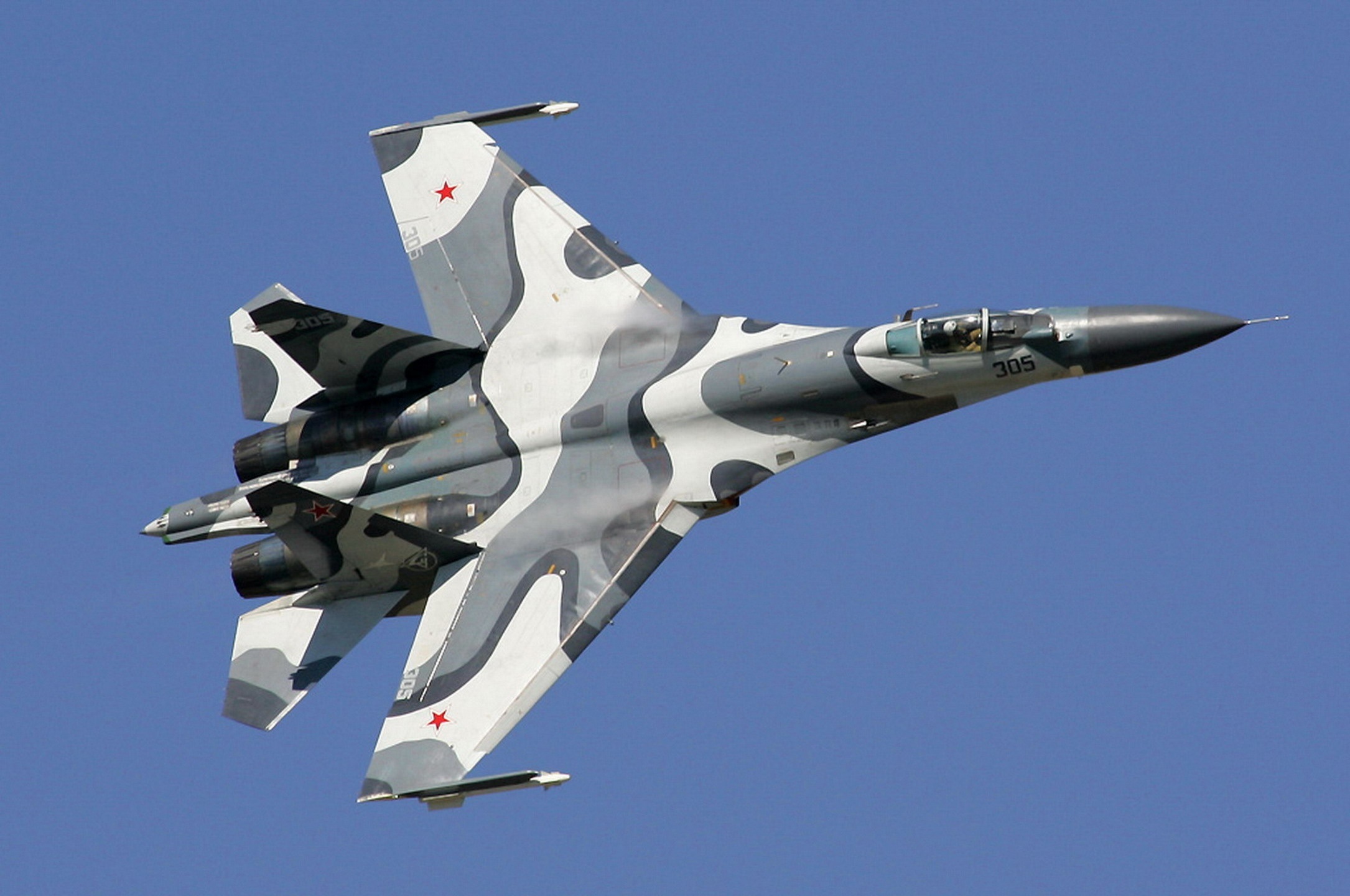
18. Sukhoi Su-27 (1977)

Mach 2.35


17. Mikoyan MiG-23 (1967)

Mach 2.35


16. Chengdu J-20

anil chopra, air power asia, J 20, Stealth, China


Estimated Mach 2.35 (Expected to get to 2.5 with future engines)

UPDATE: With divert-less bumps M1.6-2 seems more likely


15. Convair F-106 Delta Dart

Convair F-106: The Ultimate Interceptor

Mach 2.39


14. Vought XF8U-3 Crusader III (1958)


Mach 2.39


13. Shenyang J-8II (1984)

j8ii_01_large


Mach 2.4 (limited to 2.2 in peacetime)


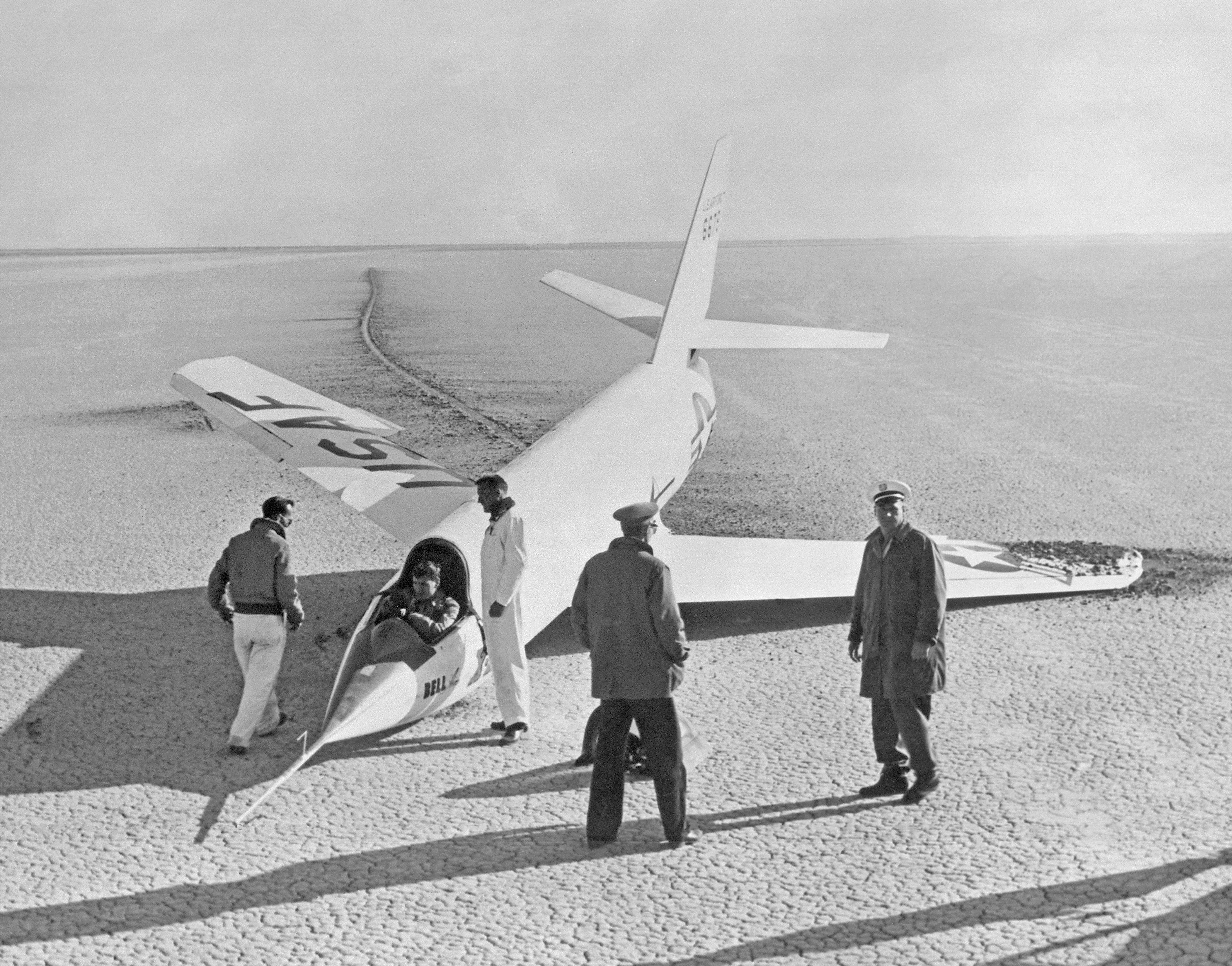
12. Bell X-1A (1953)

Bell X-1A Archives - This Day in Aviation

Mach 2.44


11. General Dynamics F-111 Aardvark (1964)

An air-to-air left front view of an F-111 aircraft during a refueling mission over the North Sea DF-ST-89-03609.jpg


Mach 2.5 (though some pilots have said it was actually lower, maybe 2.2-2.3). One pilot has claimed M2.91.


10. McDonnell Douglas F-15 Eagle

McDonnell Douglas F-15A Eagle (Fighter) - Pearl Harbor Aviation Museum

Mach 2.54 (Really prob 2.2 for in-service aircraft) 1972


9. Mikoyan MiG-31

Mach 2.83 (LIMITED TO M1.5 in peacetime)


8. Mikoyan-Gurevich Ye-152-1 (1961)

Mikoyan/Gurevich MiG Ye-150/-152('E-166')/-152A | Secret Projects Forum

Mach 2.85


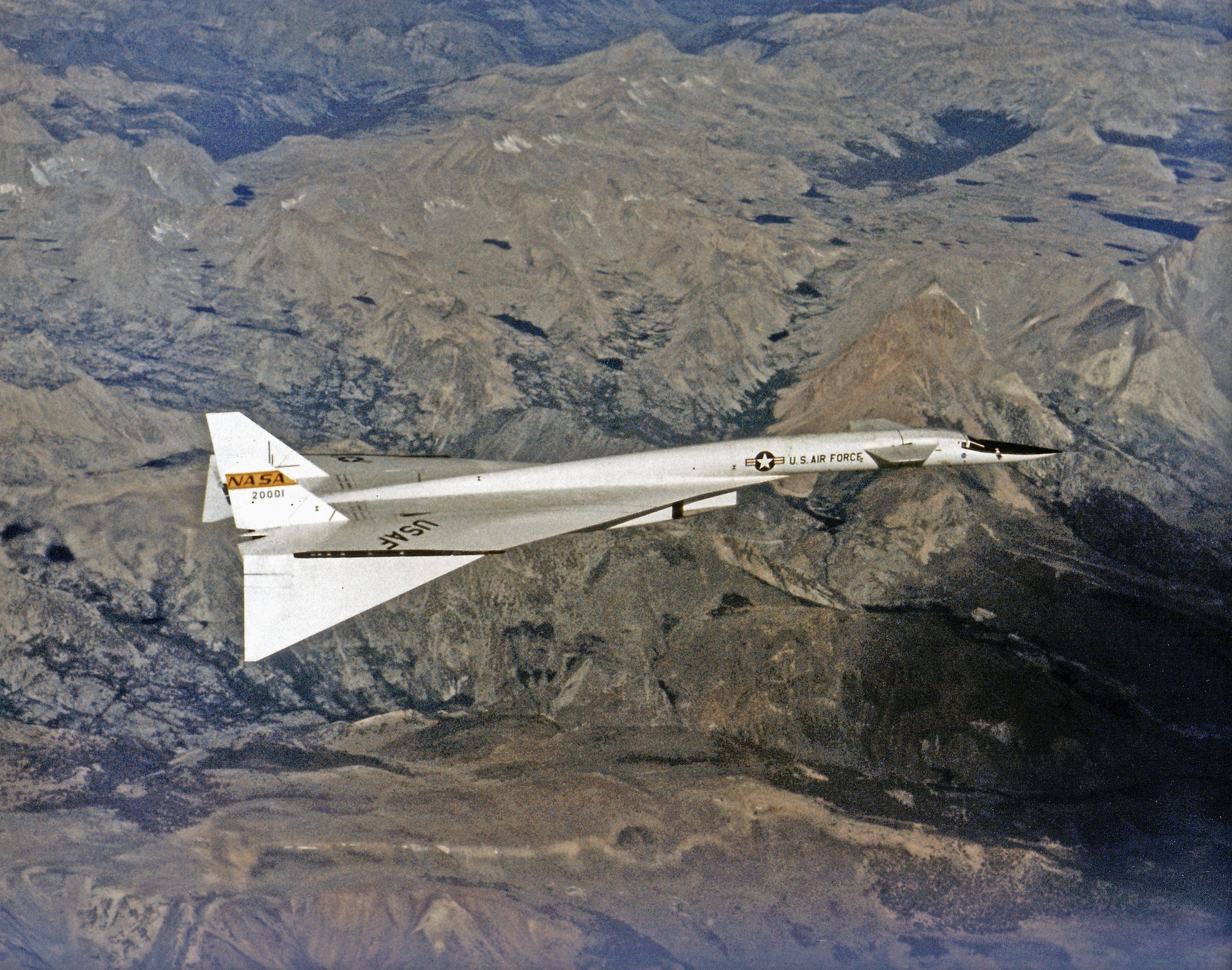
7. North American XB-70 Valkyrie (1964)

Mach 3.1

The Hush-Kit Book of Warplanes is incredible, come and check out its reviews here.


6. Bell X-2 (1955)

Mach 3.196 (air-launched)

Pre-order your copy of The Hush-Kit Book of Warplanes here


5. Mikoyan MiG-25 (1964)

Mach 3.2 (normal limits 2.83) (FASTEST NON US AIRCRAFT)


4. Lockheed SR-71 Blackbird (1964)

Mach 3.3


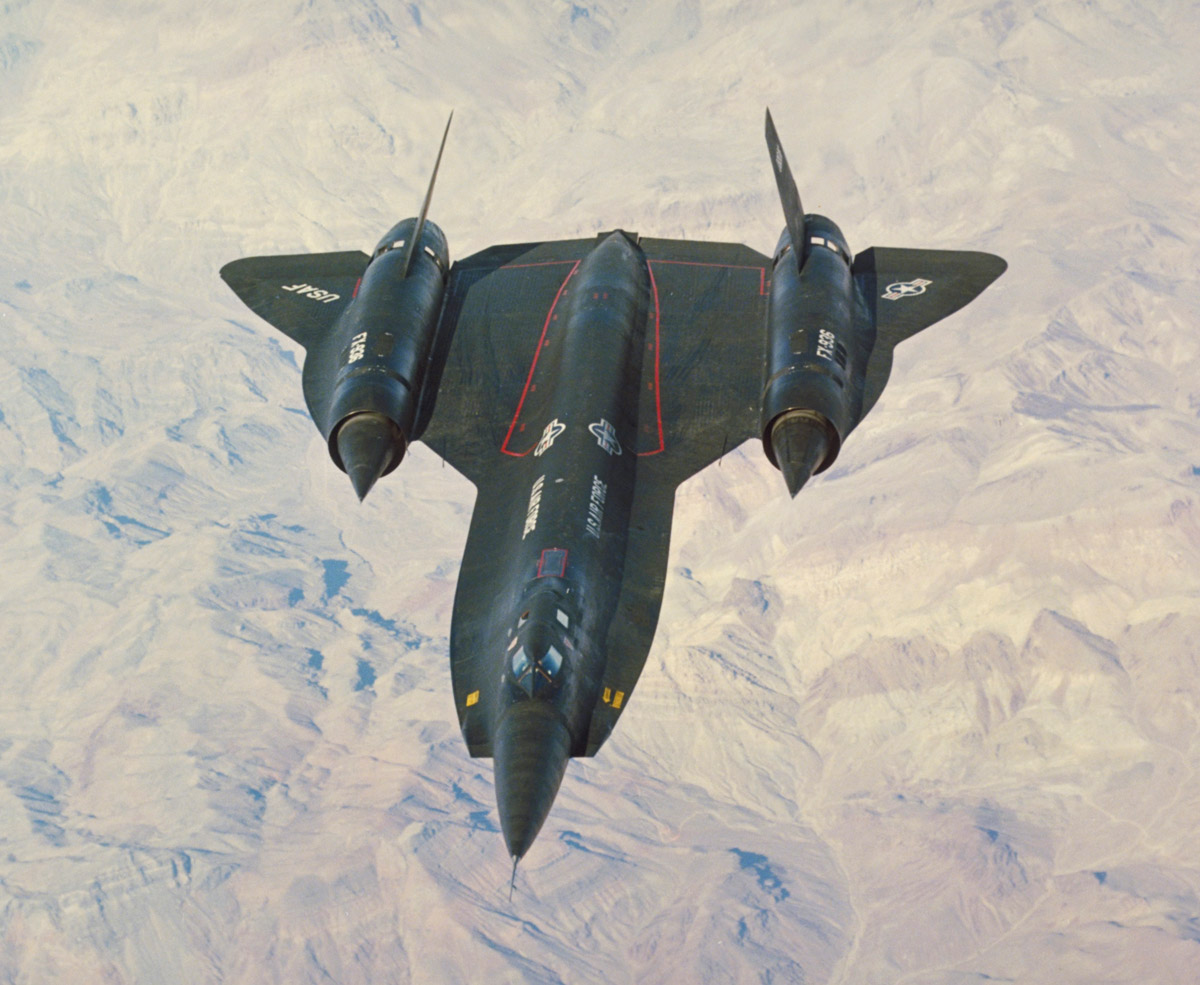
3. Lockheed YF-12 3.35 (1963)

YF-12A.jpg


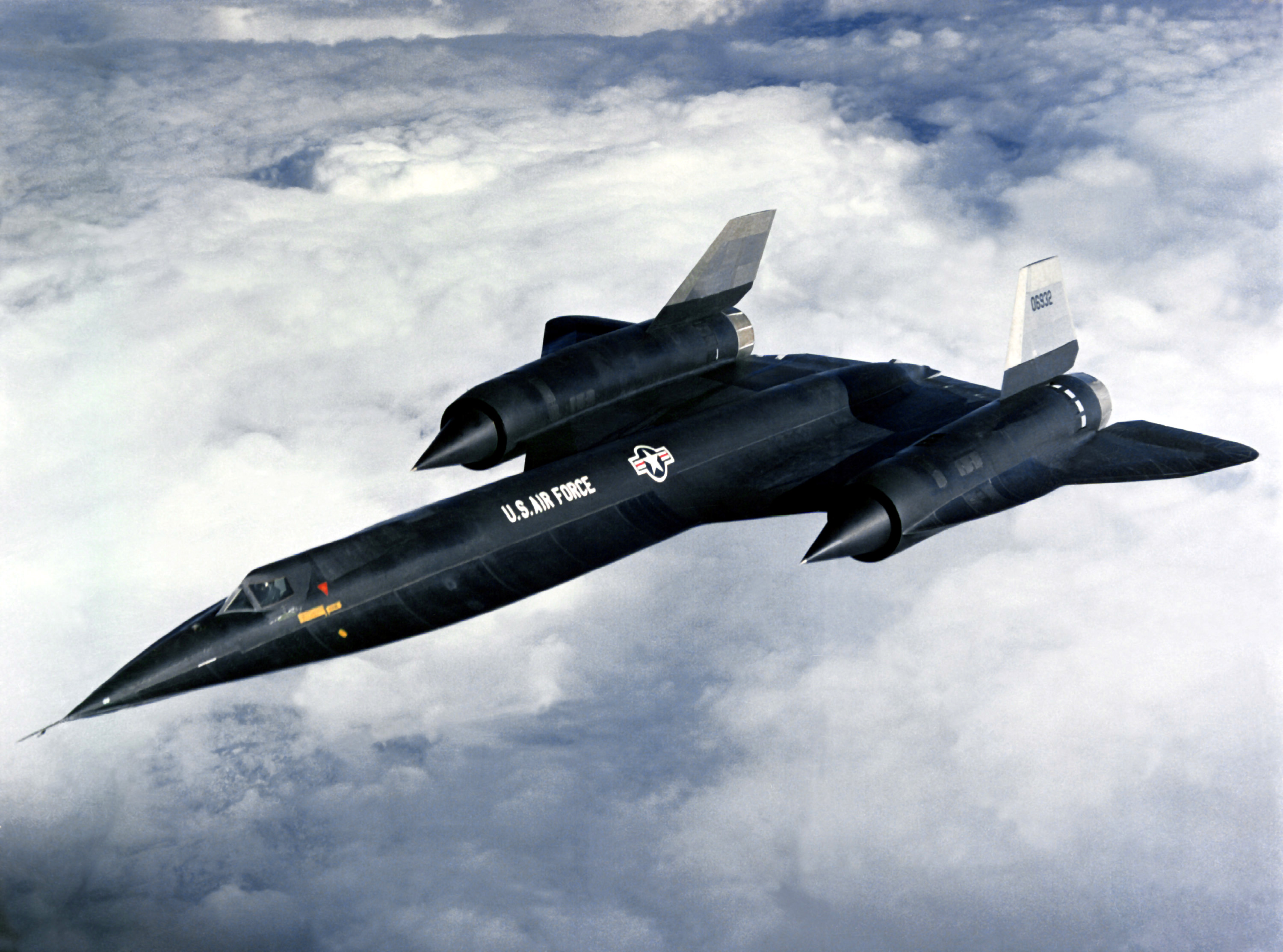
2. Lockheed A-12 3.35 1962

  1. North American X-15 (1959)

Mach 6.72

What made the Mosquito fighter-bomber so special? We spoke to Bill Ramsey from the People’s Mosquito

Loading "Cookie"
Armourers wheel a 4,000-lb HC bomb (‘Cookie’) for loading into a De Havilland Mosquito B Mark IV (modified). The specially-modified Mosquitos were fitted with bulged bomb-bays in order to accommodate ‘Cookies’. (IWM CH12621) via People’s Mosquito

The People’s Mosquito is a charity with the sole aim of restoring and returning a UK-based DH.98 Mosquito to British and European skies. We spoke to their Operations Director Bill Ramsey to find out what makes the ‘Wooden Wonder’ so special.

Describe the Mosquito in three words
“Fast, innovative and multi-role.”

What was unusual about the Mosquito’s construction? Were any aircraft made in similar ways?
“Wooden composite for the entire airframe, giving strength, light weight and streamlining (no rivets) – as others designed for combat operations then you are looking at the gliders such as the Horsa used for paratroops.”

How did its performance compare to other aircraft of the time?
“During its trials on 16 January 1941, W4050 outpaced a Spitfire at 6,000 ft (1,800 m). The original estimates were that as the Mosquito prototype had twice the surface area and over twice the weight of the Spitfire Mk II, but also with twice its power, the Mosquito would end up being 20 mph (30 km/h) faster.”

Image
Melancholy Atomic, 1945, Salvador Dali

What was best and worst about how the RAF operated the type in World War Two? What were the greatest triumphs and mistakes?
“The most famous action of the Mosquito was the Amiens Prison raid in February 1944, a precision strike which released captured resistance leaders who had knowledge on some plans for D-Day. The saddest raid by Mossies would be the successful strike on Gestapo HQ in Copenhagen, Denmark in March 1945, called Operation Carthage. The raid was successful in destroying records and preventing the collapse of the Danish resistance fighters, but tragically a Mosquito was lost and crashed near a school; other Mosquitos mistakenly then though the school was the target. Civilians, including many children, were killed.”

NF landing
The People’s Mosquito Ltd was formed around the remains of NF.36 RL249, one of the very last batch of Mosquito NF.36s to be built

What were the type’s biggest strengths and weaknesses?
“Speed, versatility, and the ability to outsource manufacturing to alternative industries e.g. cabinet makers, reliability, good range, and good survivability on raids compared to other types. Weaknesses, well very few, but one all pilots respected was that both engines props turn the same way and as you take off there was a vicious tendency for the aircraft to swing violently. Another would be that if a fully fuelled and loaded Mossie had an engine failure on take-off below 160 knots then the aircraft would not climb and your only course of action would be to belly-land the aircraft. This actually affected all aircraft fuelled and bombed up, but the Mossie needed a high rate of speed to then take-off on one engine fully armed.”

What are the advantages of twin-engines versus single or four engines? Depends on the mission type, for the Mossie she operated well in many roles whether bombing, intruding or photo-reconn at good speed, range and versatility versus some single engined types (range / mission) and four engined (size / weight and speed).  

In terms of survivability and carry a certain size bombload a certain distance hope how does a Mosquito compare to a B-17? “The Mossie had a higher survivability over all the four-engined bombers used by the allies. Its size, speed and manoeuvrability gave the allies the ability to do precision strikes and great close air support. But Mosquitos were used as an effective light bomber force, used very effectively to mark targets and aircraft were often detailed to do two Ops in an evening. The early Mosquito bomber versions could carry 2,000 lb of bombs, but the later B.XVI could carry 4,000 lbs in an enlarged bomb bay. It is a myth it carried the same as the B-17, this carried 6,000 lbs of bombs and was used in strategic bombing.”

487 FBIVs
Mosquito FB.VIs of No. 487 Sqn RNZAF (IWM) via People’s Mosquito


Could a Mosquito do well in a dogfight against a single-engine fighter? “Yes and no. If the single-seater engaged the Mosquito low level, with height and speed it (the single-seater) had tremendous advantage in a dogfight. The Mosquito’s strength was its ability to hit and run. Not to engage in twisting dog-fights, the Mossie crews would engage once with an advantage and speed off to fight another day.”

How many export operators did it have? Did Mosquitos perform in any wars in ways that we are unlikely to have heard of? “Circa 12, including Canada and Australia. It operated in the Chinese Civil War 1945-47 and was used by the Israelis in the early Arabic wars in the Middle East.”

What is the biggest myth about the Mosquito?
“It carried the same bomb weight as a B-17.”

What was the strangest role or mission that the Mosquito had? “Flying with a passenger in the bomb bay?”

Check out out new blog here.
Could it take a lot of gunfire and fly on compared with its contemporaries?
“Yes, and depending on damage, repairs could be done in service at the field.”

Complete this line, the Mosquito was the great because….
“It could do any mission you asked of it!”

Save the Hush-Kit blog. Our site is absolutely free. If you’ve enjoyed an article you can donate here. Your donations keep this going. Thank you. 

How dangerous was it being a pilot assigned to a Mosquito unit?
“Less dangerous operating the four-engined aircraft – as survivability was higher.”

Check out this design at the Hush-Kit shop

Which enemy aircraft was most comparable to it and how does it compare?
“None, in my opinion it was unique for its type and era.”

Which modern aircraft could you compare it to and why?
The F-35, as this is also a composite multi-role combat aircraft.”

How many are airworthy?
“Currently three and all in the USA. There is one in Canada requiring work to regain airworthiness”

Heinkel He 177: the Bomber that Won the War

Over the course of the 20th century there are very few aircraft that can claim to have been truly decisive, whether by accident or design. The list might Include such worthies as the P-51 Mustang or the Hurricane. It is doubtful that Heinkel’s much derided He 177 would be included in such a list but nonetheless the case can be made that it was one of the most influential aircraft on the course of the Second World War. Unfortunately for Germany it was influential in exactly the opposite direction they intended. Named the ‘Greif’ (Griffon) the mighty aircraft promised much and delivered considerably less. Unlike dragons, griffons do not breath fire but fire was to prove particularly pertinent to the He 177 programme.

The Nazis were a government of fantasists, they fantasised about a huge German Empire, arranged on strict psuedoscientific racial lines that rated hair colour over talent. They fantasised about enormous ugly buildings, so large they would experience internal weather conditions. They fantasised about murdering a large swathe of their population on the basis of who their grandparents were, and unfortunately for everyone else, many of their fantasies spilled over into reality. One thing that you can’t accuse them of is a failure to ‘think big’ and so it was, just as with big tanks and big trains, they fantasised about big aircraft. The origin of what would become the He 177 lay in a somewhat murky programme for a big aeroplane, developed by the Reichsluftfahrtministerium (RLM) under the leadership of Generalleutnant Walther Wever, impressively named the ‘Ural Bomber’. Wever envisioned a strategic bombing arm for the Luftwaffe and was closely aligned with the prevailing theories then governing the development of air power in the UK and USA. To that end he approached aircraft manufacturers Junkers and Dornier, in secret, that would be able to attack Soviet industry in the event they moved their factories eastwards during a future war. The Do 19 and Ju 89 produced for the Ural Bomber programme flew in 1936 and 37 respectively and were decidedly humdrum. Meanwhile Wever died in an air crash in 1936 leaving the Luftwaffe bereft of a strategic bombing proponent. Wever’s replacement was Albert Kesselring, a talented General who oversaw development of the Messerschmitt 109, but he was far more interested in medium bombers. Ernst Udet headed up the Luftwaffe’s technical division and was totally fixated on dive bombers (which was to prove significant to the He 177 down the line) inasmuch as he was fixated on anything other than partying with plenty of alcohol and attractive women. Erhard Milch, their superior, was fully aware that Germany lacked the industrial capacity at this point to produce strategic bombers in any meaningful quantities. Between them they persuaded Herman Goering to drop the Ural bomber programme and concentrate on tactical bombers, a strategy that was, initially at least, very successful but was to cost them dear later on. Goering is alleged to have stated, “The Führer will never ask me how big our bombers are, but how many we have.” Nonetheless, with the unfocussed strategy typical of the Nazi period, the idea of a strategic bomber was not completely quashed, indeed work on very large strategic aircraft was resuscitated with the requirement, issued in 1937, for an aircraft capable of carrying a five tonne bomb load to New York which really was in the realm of fantasy in the late 30s.

Out of all this muddled thinking and vacillation came the He 177: once the tepid performance of the Ural bomber contenders became known, a more modest requirement, named ‘Bomber A’ was issued by Wever on the very day of his death. The specification called for an aircraft to carry a tonne of bombs over a range of 5000 km at a speed not less than 500 km/h (311mph). This was an exceptionally challenging specification and the speed element alone put the bomber into territory beyond that of contemporary fighters, being known as the Schnellbomber concept, the same basic idea would result in the incredibly successful De Havilland Mosquito, but was to be the source of much heartache for the Luftwaffe.

Heinkel, well respected for the successful (and fast) He 111 that was then gainfully being employed laying waste to large areas of metropolitan Spain, responded to the tender with Projekt 1041, building a full scale mock-up by November 1937. Coincidentally Heinkel had been working on ways to wring the maximum speed out of aircraft design and had lighted on an almost pathological obsession with reducing drag – a process that resulted in the undeniably graceful He 119 which featured a smoothly tapering fuselage from nose to tail with no unsightly windscreens or other excrescences to spoil the streamlining. Significantly they had powered the He 119 with two Daimler Benz DB 601 engines mounted side by side in the fuselage and geared together to drive a single airscrew. Designated the DB 606 and known, rather grandiosely as a ‘power system’, the siamised engines had performed sufficiently well in the He 119 for Heinkel to propose two such ‘power systems’ for Projekt 1041, a decision that would see a significant reduction in drag over a similar aircraft with four separate engine nacelles but was to prove disastrous to the programme as a whole. But this would be only the most serious of the manifold problems of the He 177, virtually every major design decision Heinkel made was ill advised at best, as follows:

The DB 606 had caused no problems onto He 119 but in the He 177 the ‘power system’s were an incredibly tight fit in their cowlings. Both engines shared a common central exhaust manifold serving a total of 12 cylinders, the two inner cylinder banks of the component engines. This central exhaust system would often became extremely hot, causing oil and grease which routinely accumulated in the bottom of each engine cowling to catch fire. this problem was compounded by the fact that there was a tendency for the fuel injection pump on each engine to lag in their response to the pilot throttling back in such situations, deliver more fuel than was required and thus fuel the fire, in addition the fuel injection pump connections often leaked. Furthermore, to reduce the aircraft’s weight no firewall was provided, and the back of each engine was fitted so close to the main spar, with two-thirds of each engine being placed behind the wing’s leading edge, that fuel and oil fluid lines and electrical harnesses were crammed in with insufficient space and the engines were often covered with fuel and oil from leaking fuel lines and connections. At high altitude the poorly designed lubrication pump led to the oil foaming, reducing its lubricating qualities. Insufficient lubrication ultimately resulted in connecting rod bearings failing (which also befell the Avro Manchester but that aircraft was quickly altered into the superlative Lancaster), resulting in the conrods sometimes bursting through the crankcases and puncturing the oil tanks, the contents of which would then empty onto the white hot central exhaust manifold. The tightly packed nacelles in which the engines were installed on the He 177A, with many of the engine’s components buried within the wing led to very poor ventilation as well as poor maintenance access. In the words of one aviation historian, the engine accessories and cowling of the He 177 were ‘almost wilfully badly designed’. Essentially the He 177 was a fire waiting to happen.

But there was more. In an effort to fulfil their obsessive desire to reduce drag, Heinkel decided to use cutting edge technology to provide the aircraft’s defensive weaponry in three remotely controlled turrets. These offered other advantages such as reducing the vulnerability of the gunners and providing them with the best possible view. Unfortunately development of the remote turrets lagged behind the airframe and the aircraft had to be redesigned to allow manned gun position to be fitted, this required strengthening the aircraft in the affected areas and increased weight again. Eventually, later production He 177s got one remote turret at least. The manned tail gun position was always problematic, initially requiring the gunner to lay prone at his position, production aircraft at least gave him a seat but the field of fire was always very limited. 

Weight growth meant that the original single wheel undercarriage would be insufficient to handle the ever-enlarging He 177. The undercarriage legs needed to be long to allow ground clearance for the unusually large propellers (required for the mighty power of the DB 606). With limited room in the nacelle and wing for a larger undercarriage unit, Heinkel adopted the unique expedient of having two separate legs, each with its own wheel, that retracted in opposite directions up into the inner and outer wing simultaneously. Ironically, given that this system was adopted due to weight growth, the undercarriage design was very heavy and contributed to weight growth. Furthermore it added complexity for servicing, just changing a tyre required two hours of work and involved the use of a massive 12 tonne capacity jack.

As if this weren’t enough tests on the first A-1 production aircraft revealed that the wing had been improperly designed and would begin to fail after only 20 flights (provided the engines hadn’t caught fire by then) and extensive redesign and strengthening was undertaken requiring further time and increasing weight.

Meanwhile, the specification changed. After the death of Wever, the impetus for strategic bombing was lost. At the same time Ju 87 Stuka dive bombers were proving impressively successful in Spain. Contemporary German bombsights were pretty inaccurate (as were most bombsights at the time to be fair) and experience in Spain demonstrated that dive bombing was more effectively destructive than level bombing by conventional medium bombers. And thus, if a small aircraft could cause so much devastation by dive bombing, imagine how much potent that would be if the dive bomber were a large aircraft. On 5 November 1937 the RLM issued the stipulation that the He 177 should be capable of shallow angle dive bombing. Ernst Udet mentioned this to Ernst Heinkel when inspecting the He 177 mock-up on the same day. Heinkel stated that the 177 would ‘never’ be capable of dive bombing. 

Despite Heinkel’s response, the design was modified to possess the structural strength to safely pull out of shallow dives, thus beginning the aircraft’s inexorable increase in weight before it even existed, just in time for the requirement to be altered again to demand the He 177 be capable of 60 degree dive bombing. This is very steep, especially for such a large aircraft, the design was altered and strengthened again, this time causing a large jump in weight. If you are sniggering over the idea that such an obviously unsuitable aircraft as the 32 tonne, 100 foot wingspan, He 177 could be even considered for dive bombing, it is worth remembering that this wasn’t solely just some madcap Nazi scheme – the specification that called for the eminently sensible (ie dull) Handley-Page Halifax four engined heavy bomber of roughly the same dimensions and weight also stipulated that it be capable of dive bombing. Air forces across the world were painfully aware that the accuracy of level bombing was pretty woeful and were attempting to change that state of affairs. However, the British Air Ministry actually listened to Frederick Handley-Page when he told them the Halifax would never be capable of dive bombing. The RLM chose to ignore Ernst Heinkel to pursue their dive bombing dreams, which would never be realised, and paid for them with wasted time and weight growth 

The first He 177 flew on 9 November 1939 and all seemed broadly well despite its litany of questionable design choices and ongoing wrangling over its application. But then the engine temperatures soared and the aircraft had to return hurriedly to the ground, a fairly accurate premonition of what was to come. Similarly, the hopelessness of the dive bombing concept was made very apparent very quickly when the second prototype undertook the He 177’s first diving trials and promptly broke up in mid air, killing all on board. Just to make sure the point was adequately made though, during further diving trials the fourth prototype then dove straight into the Baltic Sea, killing all on board. The fifth prototype was the first to catch fire and was lost, followed by a further three.

The biggest myth about WW2 aviation is…

…that the Battle of Britain was a close run thing, won by a narrow margin.  It really wasn’t.  The Luftwaffe were whipped and whipped badly.  I can produce all number of stats to prove my point but perhaps this isn’t the place.

The Hush-Kit Book of Warplanes features the finest cuts from this site along with exclusive new articles, explosive photography and gorgeous bespoke illustrations. Buy The Hush-Kit Book of Warplanes here.

Thank you. Our merchandise shop is here and our Twitter account here @Hush_Kit. Sign up for our newsletter here

Nonetheless, when working properly the He 177 possessed a performance that could not be ignored and the aircraft entered production, beginning with 35 A-0 pre production models followed by 130 A-1s, the latter all built under subcontract by Arado. virtually all of these aircraft were kept in second line service due to ongoing teething troubles. KG 40 were the first unit to attempt to use the bomber operationally in the maritime role during the summer of 1942, but this proved premature and they reverted to their Fw 200 Condors. The A-3 was an improved version, though still problematic, 170 of which were built. Further effort yielded the A-5 with more powerful DB 610 ‘power systems’ and many of the problems ameliorated if not solved and some 350 of these left the factory. Further developments led to the A-6 and A-7 of which a handful were built by which time development had switched to the He 177B with four conventional separate engines (and which would never progress beyond the prototype stage).

In service the He 177 never served in the numbers required to really make a difference and only became a mature enough design to commit to mass usage at around the same time that Germany effectively ran out of fuel. It is not known what proportion of the 1169 produced saw service but estimates range as low as 200. What is known is that hundreds of He 177s appeared parked at bases on Allied reconnaissance photographs and contemporary photographic interpreters stated “absence of track activity suggests that these aircraft are not being worked on.” 

To be totally fair to the He 177 it should be pointed out that it could prove to be effective on operations, it had, for example, the lowest loss rate of any German bomber during the ‘Baby Blitz’ of 1944 though the overall loss rate of all types was an eye-watering 60%. It was also formidable as an anti-shipping platform equipped with the Fritz-X radio controlled glide bomb, though on its debut in this role, the captain of the ship being attacked noted that one of the aircraft appeared to burst spontaneously into flame, which may not come as a great surprise to those familiar with the aircraft. “For five or six seconds we saw a large flame coming from the port engine and then the aircraft was enveloped in a dense black cloud of smoke. When I last saw the aircraft it was at an angle, which may have been done deliberately to blow the flame away, or it may have been losing height. It went into cloud and I did not see it again.”
The facts were that the He 177 was too accident prone, too late and too resource heavy. It is difficult to quantify exactly how many manhours were expended on its development and production but as this was at exactly the same time Heinkel were developing the world’s first jet fighter (that would ultimately never see production due to inexplicable official indifference) it was obvious that there were more worthwhile things they could have been doing. As to how much material went its production, each He 177 consumed four DB 601 or DB 605 engines for its ‘power system’s. With 1169 built that’s enough for 4676 single engine fighters, all of which never existed to attack Allied aircraft or strafe Allied troops. The empty weight of each aircraft was 16.8 tonnes, that is a lot of aluminium and steel to not be made into other more useful, aircraft (for comparison, a BF 109G weighed about 2.2 tonnes).

But perhaps the timing was the worst of all. The He 177 could deliver the goods in terms of speed, range and payload, at least when everything was working. But the desultory expenditure of time on tinkering with the design to try and make it work properly, which it didn’t really do for about five years, meant that the bomber essentially joined a war already lost. To put this into perspective, the He 177 flew for the first time in November 1939, a month after the Handley page Halifax, yet the Halifax began operational service in late 1940 and contributed much to Bomber Command’s horrific campaign against German urban centres. If one were to imagine an He 177 force, and the 177 was arguably a more potentially formidable aircraft than the Halifax, available at the end of 1940 then the destruction meted out to British cities would have been an order of magnitude higher than it transpired to be. The He 177 could carry more than any other German bomber and was extremely difficult to intercept by 1940/41 standards, even more so by night when it would have been effectively immune to night fighters, at least until the advent of the Mosquito.

Thus the badly designed large aircraft that, unavailable at the right time, built to a requirement its operators found uninteresting, consumed much industrial effort and material and required many trained aircrew who could have been flying something else. 

Did the He 177 cause the Allies to win the war? In reality, almost definitely not, Hitler’s decision to invade the Soviet Union basically sealed the fate of Germany in June 1941. But it is not hard to imagine that a combat capable He 177, available in numbers in 1940, would have had a tremendous effect on the UK which could have adversely affected US commitments to its ally. Meanwhile a force of He 177s in the maritime role could have caused havoc with British naval operations. All of which does rather presuppose a massive production effort on the big Heinkel, which may have been beyond Germany’s ability to supply at that time. Nonetheless Goering summed up the effect of Germany’s fixation on the tactical medium bomber fleet in 1943, ”Well, those inferior heavy bombers of the other side are doing a wonderful job of wrecking Germany from end to end”, had the Greif been the priority earlier perhaps it would have been Luftwaffe heavy bombers wrecking Britain from end to end. It’s absence, whilst probably not decisive, was colossally influential.

He 177 engine run

This is the helicopter we need for the most dangerous threat we face

A Helicopter the World Needs

Dr Ron Smith joined the British helicopter company Westland in 1975, working in Research Aerodynamics, remotely piloted helicopters, before becoming Head of Future Projects. He had a strong influence on the design of the NH90, and was involved in the assessment of the Apache for Britain. We asked him what to consider what helicopter the world most needs.

The Problem

Having been asked the question “what helicopter does the world need?”, I am thrown back to a query raised with me a couple of years ago. “Could you develop a fire-fighting or crane helicopter with a water / fire suppression load of 20 tonnes or more?”

With climate change, there is an increasing wildfire risk worldwide. There is a very good discussion of this at www.carbonbrief.org/explainer-how-climate-change-is-affecting-wildfires-around-the-world

In recent years there have been significant fires affecting Australia, the Amazon region, the US West coast from Washington State down to California, Indonesia, southern Europe and Central and Southern Africa. With climate change in the far north, significant fires have also broken out in both Alaska and Siberia.

Given this wide geographic spread, fire seasons are now occurring pretty much throughout the year, and indeed seasons are beginning to overlap in geographically dispersed locations such as those listed above.

The US Forest Service’s Aerial Firefighting Helicopters

Notable on the above figure is the markedly increased risk of severe fire risk weather conditions in Southern Europe and Southern Africa in addition to significant percentage increases in many of the current high-risk locations.

Solutions?

So, what do we need and how do we get it?

I see this as having some parallel with the difficulties currently being experienced in dealing with the present COVID-19 pandemic.

One’s first reaction is – well, fix the emissions and it will go away. However, the world’s scientists and governments have known about climate change for decades and (despite some encouraging changes in direction in the US Administration) there is a lack of effective global coordinated action. Nowhere is this more evident than in Australia, where the Government seems more focussed on maintaining its coal exports to China than on reducing emissions.

In the case of the pandemic, the World Health Organisation has said that effective vaccination is needed world-wide, but many wealthy nations are taking the ‘after we’ve looked after ourselves’ approach. This despite the acknowledged rationale that any pool of unvaccinated populations will provide a source of mutated variants that could stretch the crisis out for years.

So past and current behaviours tell us that there isn’t going to be a magic reduction in world-wide emissions (and even if there was, the path is already set for significant climate change).

There does not seem to be a military need for large crane helicopters and the largest helicopter available today originates from Russia, which is currently something of a problem child in terms of global diplomacy, and this type is not available in a fire-fighting variant.

The largest lifting capability currently in servie is the Erickson CH-54B / S-64K Skycrane fleet operating at up to 47,000 lb max weight and the Billings and Columbia CH-47 adaptations at around 50,000 lb max weight. Some 31 Erickson Skycrane have been built.

Mil Mi-26 helicopter - development history, photos, technical data

A high-capacity fire-fighting crane could potentially be generated using a Mil Mi-26 dynamic system (rather like the Mil Mi-10K derived from the Mil Mi6) but this note examines what a new-build aircraft for the role might look like.

A helicopter makes a night water drop on the leading edge of the Lake fire which has burned more than 10,000 acres near Lake Hughes north of
Los Angeles. (Photo by David Crane)

How would it be Funded?

With no military need, could funding be raised from concerned nations? Europe, the United States and Australia might head that list, but past and present behaviours suggest that those, with existing helicopter design and manufacturing capability, would lobby to have any such work placed with their own domestic industries.

The future wildfire risk forecast suggests European nations, particularly Italy and France, which have significant land areas near the Mediterranean, and strong helicopter industries; and the US, which has been having significant fire problems, particularly in the West, might be best to develop this capability.

While noting these countries as having the greatest need and the requisite capabilities, in the absence of any current project activity, I am forced to leave the question of funding and acquisition management on one side for the moment.

What is the operational vision? There probably needs to be around 60 – 80 aircraft allocated to this task, with greater numbers concentrated where there is the greatest risk to human life and economic impact. The fleet would be dispersed with perhaps 10 in southern Europe, 20 on the west coast of the United States, 15 in Australia, 10 in South America and a reserve fleet to respond to emergencies elsewhere and to provide a surge capability when required.

The climate data indicates that additional capability might be required in Southern Africa and in Russia, should funding become available. In view of the global nature of the problem, consideration should be given as to whether there might be support available from the UN, as well as an assessment of the level of interest in countries such as Russia and China, both of which are likely to have future need for such a helicopter.

The Air Vehicle and Equipment

Drawing on my thirty-year old experience of helicopter preliminary design, I will outline some very basic rule-of-thumb thoughts on what a new fire-fighting crane might look like.

The discussion will necessarily be highly simplified at this stage but will give some idea of how to get into the ‘right ballpark’. From there, we can evaluate what other areas would need to be investigated to harden up the design.

The Mil Mi26 will give some idea of the size of helicopter required. The quoted figures for this type include an empty weight of around 62,000 lb, a ‘gross weight’ of 109,000 lb and a maximum take-off weight of 123,000 lb. The aircraft has an eight-bladed rotor of 105 ft diameter and is powered by two ZMKB Progress D-136 engines, each rated at 11,400 shp.

Where to Start?

We start with some ground rules for the new design:

  • The helicopter must use engines that are already certified and in production in the west. The parallel development of a new powerplant would result in excessive risk to the project.
  • The target payload is 20 tonnes (roughly 45,000 lb)
  • Design ambient conditions should reflect those in typical fire risk regions – perhaps 2,000 ft and ISA +30C (although this aspect can be subject to confirmation).
  • The aircraft needs to be capable of regional self-ferry operations. Possibly three hours endurance at 125 kt+. In actual use, most drop operations are likely to be between hover and minimum power speed. Modular arrangements to allow long range tanks to be fitted should be investigated.
  • The rotor should be optimised for hover and low speed operation, thereby maximising payload and endurance. This implies composite blades with modern aerofoils and a non-linear blade twist of perhaps -14 degrees, probably with an anhedral tip. Between six and eight blades would be used and, for hover efficiency, the rotor tip speed would probably be around 660 ft/sec (similar to that of the Sea King and AW101).

Where do these assumptions lead us?

The above constraints allow us to make the following decisions:

(i) The aircraft is likely to be in the same weight class as the Mil 26 and therefore we are looking for an in-service powerplant in the 11,000 shp class if two engines are to be used. The only candidate currently available is the Europrop TP400-D6 used on the Airbus A400M aircraft. Basic information has been drawn from the EASA Type Certificate Data Sheet (TCDS) for this engine. The 5 minute take off rating of this engine is 8,251 kw (11,000 hp).

(ii) The likely payload fraction of the helicopter is estimated at 45%, although 50% may be achievable for a crane configuration. This implies a maximum weight of around 100,000 lb. Taking a hint from the Mil Mi-26, we will assume a rotor diameter of 100 ft.

(iii) Will the power be sufficient? Our data suggests that two of the TP400-D6 engines used on the A400M, coupled with an appropriate main rotor gearbox, would be likely to be sufficient.

Clearly, a proper design with detailed weight estimation and specific attention to both engine and gearbox rating structures would be required to firm up the figures suggested in the text box. A key question in respect of the Europrop engine would concern the implications of providing a short duration contingency rating to be used to fly-away following an engine failure.

Gearbox Requirements

Mi-26 helicopter firefighters

The existing TP400 engine comes with a propeller reduction gearbox that reduces the take-off prop rpm to 864, from an output shaft speed of 8580 rpm. For the helicopter, the proposed tip speed of 660 ft/sec on a 100 ft diameter rotor implies a nominal rotor rotational speed of 126 rpm.

The helicopter gearbox is likely to be lighter if the A400M propeller reduction gearboxes are not used and the overall reduction is accomplished within the main gearbox. This implies an overall ratio of around 68:1 between the engine output shaft and the main rotor drive.

The TP400 engine would need to be certificated for helicopter applications, whether or not the existing reduction gearbox was retained. One specific consideration would be the vibration environment to which the engine would be exposed in any helicopter application.

Notionally each engine would be spaced outboard of the helicopter main gearbox. A bevel gear would redirect the drives toward the gearbox. A further bevel gear would turn the drives vertically into two planetary (or epicyclic) stages to drive the main rotor shaft. A tail rotor drive would be provided to the rear, with an accessory gearbox mounted forward.

This arrangement provides four reduction stages (two bevel stages and two planetary stages). The overall 68:1 ratio would be provided using an average reduction of around 2.8:1 per stage.

Other aspects of the airframe design would broadly be similar to an enlarged version of the Sikorsky S-64.

Sikorsky S-64 Sky Crane | Aircraft |

Fire-fighting equipment

Delivery of water, fire suppressant chemicals, or a mix of the two is anticipated to be through the use of a fire-fighting turret, as this provides an opportunity for greater precision in application than a simple water drop system, The directional fire-fighting turret could be mounted on a suspended water tank arrangement. Arrangements to stabilise the position of the turret with respect to the helicopter are likely to be required. (This would be needed to control the cg position of the heavy load and should also lower operator workload and ease the design of the helicopter Flight Control System.)

The operator could use sensors to define the jet aim point(s) and an active control system could then adjust the fire suppression jet onto the target, or along a defined line. An increased payload (longer delivery time) and targeted delivery should significantly increase efficiency and reduce operator workload.

Provision will also be required to allow the helicopter to take on water through a suction pump arrangement similar to that used by many other fire-fighting helicopters. This will allow flexible operation, particularly where lake, dam or oceanic water is available close to the location of fires.

Unanswered Questions and Risks

Identification of funding and commercial principles.

Market analysis and solicitation of government, national park agencies, fire services and end-user opinions.

Selection of helicopter manufacturer based on facilities, experience, capacity, etc. Almost certainly an existing helicopter manufacturer.

Allocation of sub-contract and supplier elements. This to include selection criteria and sub-contractor qualification and management.

Powerplant development and certification for helicopter applications.

Understanding of powerplant constraints, including physical, electrical, electronic / digital interfaces, engine vibration and other environmental clearances.

General engine performance characteristics – power / fuel flows vs altitude & temperature; intake and exhaust constraints; particle separation.

Definition of engine and gearbox rating structures (including contingency rating(s) and one engine inoperative operation). Possibly linked to dynamic simulation of post-engine failure fly-away manoeuvres.

Mass estimation and loads modelling including crashworthiness

Flight performance modelling

Manufacturing tooling of 50 ft composite blades (tape laying, autoclaves, etc). There are likely to be significant non-recurring costs for such items, to be amortised over a relatively short production run.

Main gearbox test facility compatible with engine power available, another significant non-recurring cost to be amortised.

Structural static and fatigue test rigs

Rotor head and blade design. Control power when operating high inertia system in turbulence?

Fatigue life of critical components (and their validation / verification)

Digital architecture and flight control system design (hardware & software)

FADEC responsiveness (taking into account the fluctuating power requirements likely to be found in the turbulent conditions encountered in the vicinity of large fires).

Failure modes and effects analysis, Health & Usage Monitoring Systems

Cockpit design / human factors – for both pilot and fire suppression system operation

Design and development (hardware and software) of fire suppression stabilised turret

Vibration control and structural dynamics

Flight test and certification

In service support

The overall task would be managed with a defined work breakdown structure (WBS) such as Mil Std 881D:

This would typically include

a. Integration, Assembly, Test, and Checkout

b. Systems Engineering

c. Program Management

d. System Test and Evaluation

e. Training

f. Data

g. Peculiar Support Equipment

h. Common Support Equipment

i. Operational/Site Activation

j. Industrial Facilities

k. Initial Spares and Repair Parts

Included within item (a) above is the design, integration, assembly, test and certification of all Air Vehicle elements and systems / sub-systems.

Planning (including taking account of long lead items) for all the above activities will be required to generate an overall development programme. This plan, with suitably realistic contingency allowances, will be required to establish programme costs and the associated spend (and investment) profile.

Overall Conclusion

A new large crane helicopter could feasibly be developed based on the use of a pair of Europrop TP400-D6 engines adapted for helicopter use.

There is a clear need for a helicopter of this type based on current experience and projected increases in wildfire events worldwide.

Bringing such a project to fruition requires a significant effort on a number of fronts. Not the least of the challenges is the raising of investment funds (possibly on an international or global basis) to see the project through to completion.

Without the availability of a significantly increased fire-fighting capability, there is likely to be a severe penalty in terms of the loss of property, livelihoods and lives, in a number of the widespread regions that are at risk. The potential economic damage of future wildfires is such that investment in the development of a modern, capable, helicopter system to fight these fires appears not merely prudent, but essential.

RV Smith

May 2021

Quickfire World War II combat aircraft Q&A with author James Holland

The Spitfire was…

…my first love.  I had been interested in the Second World War as a boy, then it all rather went out the window in my teens.  Then, in my late twenties, I was playing cricket and while I was batting a roaring, pirouetting vision appeared far over mid-wicket.  Turning to the umpire, I said, ‘What is that??’ And he replied solemnly, ‘That’s a Spitfire.’  It was a massive Damascene moment.  The following weekend was Flying Legends at Duxford, so I took myself off, drooled over the warbirds and especially Spitfires and bought a first edition of David Crook’s ‘Spitfire Pilot’ about his time in 609 Squadron in the Battle of Britain.  It was the kickstart of my enduring fascination with the war and, as it turned out, my career.  I absolutely love the Spitfire – who doesn’t? – and have loved watching them, flying in one, writing about them and getting a little thrill every time I see one.  As I’ve got older and learned more, I’ve learned a bit about some shortcomings but there’s no denying what a fabulous aircraft it was and remains.  I love the Mk I because it was there in 1940 and it’s what David Crook flew, I love the Mk V because it was flying in Malta in 1942 and I wrote my first history book on the subject, I love the Mk VIII because they were sent to Bengal and Burma in 1943 and turned things around there, I love the Mk IX because it was the fighter pilot’s favourite, and I love the Mk XIV because it was Griffon-powered and simply amazing.  But I love them all, really.

The P-51 Mustang was…

“…the most decisive aircraft ever built – or, at least, I think it can be quite convincingly argued.  The Merlin-powered P-51B onwards transformed the air war, allowing daylight bombing deep into Nazi Germany, which in turn meant hammering their aircraft industry.  This materially helped the Allies win air superiority over all of North-West Europe, a non-negotiable pre-requisite for any Allied invasion on D-Day.  This was because to destroy the enemy’s lines of communications – bridges, railway marshalling yards, locomotives, roads and so  on – they had to attack low-level and the only way that could be done was by having skies clear of marauding Luftwaffe fighters.  It was achieved just a few months after the Merlin-powered Mustang’s arrival into the fray.  And what an aircraft!  The look of it, the speed of it, the ridiculous range, the rate of roll, of dive and frankly, its modernity.  I absolutely LOVE the Mustang.”

The RAF was ____________ compared to the Luftwaffe?

The RAF was vastly superior compared to the Luftwaffe for much of the war.  OK, so Bomber Command was a bit rubbish early on, and the RAF didn’t have enough aircraft in 1939-40, but the RAF gave the Luftwaffe a bloody nose over Dunkirk, then comprehensively won the Battle of Britain, which was one of the main turning points in the entire war.  By not defeating Britain in 1940, Hitler was forced, through lack of resources, to turn to the Soviet Union far earlier than he had planned – and with catastrophic consequences.  In the summer of 1940, the RAF – and I include Bomber and Coastal Commands as well as Fighter Command in this – were the first line of defence, not the last as is so often portrayed, but they were none the less the ones who destroyed Hitler’s hopes for a swift end to the war – and without a swift end it was very unlikely Nazi Germany could ever win.  The RAF made mistakes – the disastrous rhubarbs over France in 1941, the abject failure to send Spitfires to Malta and the Middle East in 1941, for eg – but by 1942, the RAF was pioneering new methods of tactical air power – doctrine still used to this day, incidentally – and growing air power in all its many facets into a war-winning a decisive weapon.  As the RAF grew in size, stature, performance and capability, so the Luftwaffe diminished.  One can argue the toss about the morality of such overwhelming air power – and of strategic bombing – but no-one can deny its impact or that it saved lives of Allied servicemen.

A cliche or oft-repeated quote that drives me mad…

“…that Hurricanes shot down more aircraft in the Battle of Britain than Spitfires.  Yes, of course, because there loads more of them and for the most part they were going for bombers, which were a bigger target, slower and easier to shoot down.  It doesn’t mean the Hurricane was better, though.”

World War II would have been very different without…

“…the Battle of Britain.”

What was the most important aerial contribution to the war? 

“I’m going to top and tail this.  Probably the Battle of Britain to begin with because of reasons listed above, but I’ve always thought the single most important theatre of the war was the Atlantic – without it, Britain, Canada and the USA would not have been able to prosecute the war against Nazi Germany and the Axis powers, and without the closing of the air gap, it would have taken longer to defeat the U-boats.  One can’t underestimate the importance of the Very Long Range Liberators flying anti-shipping patrols across the Atlantic.  Then finally, the war would have very probably gone on into 1946, had the B-29s not dropped the two atomic bombs on Japan.  Not sure which is the most important – probably, because of what followed, the Battle of Britain, but all three really very, very significant.”

The biggest myth about WW2 aviation is…

…that the Battle of Britain was a close run thing, won by a narrow margin.  It really wasn’t.  The Luftwaffe were whipped and whipped badly.  I can produce all number of stats to prove my point but perhaps this isn’t the place.

The Hush-Kit Book of Warplanes will feature the finest cuts from this site along with exclusive new articles, explosive photography and gorgeous bespoke illustrations. Pre-order The Hush-Kit Book of Warplanes hereThank you. Our merchandise shop is here and our Twitter account here @Hush_Kit. Sign up for our newsletter here. The Hush-Kit Book of Warplanes will feature the finest cuts from this site along with exclusive new articles, explosive photography and gorgeous bespoke illustrations. Pre-order The Hush-Kit Book of Warplanes here.

The most overrated warplane of the conflict was the…

…the Mitsubishi A6M Zero.  I’ve never really understood why it prompts such hushed gasps of awe when people talk about it.  Sure, it had range, but it wasn’t brilliant in a dive and although manoeuvrable, wasn’t particularly so at high speed.  Sleek and refined, it did have a phenomenal rate of turn, and shocked the Allies when it first appeared against them in 1941-42 but then flat-lined.  The Spitfire, the Mustang and other US Navy fighters were dramatically developed and improved or replaced, but the Zero rather stuck where it was and that’s no good.  In the Second World War, the ability for combatant nations to rapidly progress technologically was vital.  I’ve also started to think the Zero flattered to deceive in the early years, despite obvious plus points.  The reason was largely down to the quality of the Japanese naval pilots.  If anyone has read Samurai! By Saburo Sakai, they’ll get what I’m driving at here.  His training was immense – physically, technically, mentally.  Those pilots were the best of the best, to quote from Top Gun.  I was talking to some of the Red Arrows the other day and was struck by the similarity of the intensity of their training compared with that of the IJN fighter pilots at the early part of the war.  And, of course, that gave them a massive edge and sheer pilot skill overcame many of the Zero’s shortcomings and so helped put it on a pedestal I’m not sure it quite deserves.   Inevitably, though, as the war progressed, training standards fell off for the Japanese while the Zero stood still.

And the most underrated? 

“What about the Heinkel 112?  This was developed in the early 1930s in tandem with the legendary Messerschmitt 109, but was shelved in favour of the twin-engine Me 110, partly because Willi Messerschmitt was an appalling arse-licking Nazi and partly because Göring simply liked the look of it and named it the ‘Zerstörer’ (the Destroyer).  But the He 112 V9 was properly classy and in 1937 could fly faster than the Bf109.  It had elliptical wings very like those of the Spitfire, a wide undercarriage with inward retraction, which gave it a firm platform and would have saved the lives of countless trainee fighter pilots who died horribly on landing and take-off in their 109s, it had decent rate of climb, was highly manoeuvrable, a bubble canopy and low-back fuselage and looked absolutely stunning.  Perhaps more importantly, it had phenomenal range – nearly 700 miles, which was extraordinary for a single-engine fighter at that time.  It’s fascinating to ponder what might have been in 1940, for example, had the Luftwaffe had a stack of these instead of the Messerschmitts.  I would also tentatively suggest that its innate design was so good it had plenty of room for development, which is more than can be said for the Me109.  I remember talking to Eric ‘Winkle’ Brown about it and he much preferred it to the 109.  Thank goodness Göring was such a rubbish commander-in-chief of the Luftwaffe!

Do you think there is any national bias in how we talk about aircraft from different countries?

“I like to think I’m impeccably impartial and one can’t argue that the Axis forces lost, but anyone reading the above answers might think I was a teeny bit biased towards the RAF…”

Which aircraft is most like you and why?

“Maybe the Hawker Typhoon.  It operates quickly, is like a bull in a china shop, and leaves carnage in its wake.”

Hawker Typhoon

Tell me something I don’t know about WW2 aviation? 

“By the summer of 1942, Air Vice Marshal Arthur ‘Mary’ Coningham, an Aussie-born New Zealander, and his British sidekick, Air Commodore Tommy Elmhirst, had developed the RAF Middle East’s Desert Air Force into a very slick fighting machine.  Coningham had the vision and ideas, supported by his RAF Middle East C-in-C, (then) Air Marshal Arthur Tedder, while Elmhirst had the operational skill, reworking the structural organisation brilliantly.  The RAF had begun the war with little concept of a tactical air support – that is, operating to provide close air support to ground troops – so Coningham and Co really were pioneers and the Desert Air Force developed purely for that role.  When increased US Army Air Forces joined the British war effort in North Africa, mainly from November 1942 onwards, they soon decided to pool resources and create the first specific Allied NorthWest African Tactical Air Force.  Coningham was appointed its first commander, and Brigadier-General Larry Kuter, an American, its deputy.  Elmhirst remained in an administrative role.  These were exciting times as Allied air forces in theatre swelled and they gradually and increasingly successfully turned the screws on both the Italian and German air forces over Tunisia, and senior commanders both got on and worked well together, conscious they were paving the way for new techniques in air power.  Coningham and Kuter were especially tight.  Later, Kuter returned to Washington and post-war was responsible for writing the tactical doctrine of the new US Air Force.  Much of this doctrine remains in place today – but its origins can be directly traced back to the heat and sand of the Western Desert of 1942.”

James Holland FRHistS is an author and broadcaster who specialises in the history of World War II. He is the co-host of the We Have Ways of Making You Talk podcast

.

“Fuck stealth!” An F-15 pilot opines on why the Eagle II is needed (and the story of the ‘Eagle Eye’ hunter scope)


My friend Joe Coles, who publishes the excellent Hush-Kit aviation blog, asked for my thoughts on the USAF’s new version of its legacy fighter, the F-15EX Eagle II. This is my short response:

Joe, I can’t speak much to the aircraft itself, but I started pushing the idea of buying some of the advanced versions being built for allied nations years ago, prompted by the aging of F-15s still in USAF service and the far smaller buy of F-22s than originally planned. At the time no one in any official position would even broach the subject, because to do so would threaten the F-35 buy. Now, USAF leaders are openly talking about a “future without the F-22” and even more cutbacks in the total F-35 buy … the good old F-15 has range the F-22 and F-35 don’t, a robust airframe you can hang the most powerful radar on, and the ability to carry up to 22 air-to-air missiles. All you give up is stealth. And as I also said years ago, “fuck stealth.” I’ll see what I can work up.

By way of backup, I first wrote about buying new F-15s in July 2015. In that post I cited three ‘legacy’ fighters the U.S. military was no longer buying, but which were still being built for foreign sales: the F-15 Eagle, F-16 Fighting Falcon, and F/A-18 Hornet. At the time, no one in the military or defence contractor community would openly discuss the idea. Surely the thought had occurred to many, but to speak of it might threaten the military’s most sacred cow: the F-35 Lightning II. Here’s some of what I said then:

All of these current and proven fighters share the advantages attributed to the F-35: they are true multirole aircraft, they are highly manoeuvrable, they use advanced digital array radars, they can employ everything in the modern air-to-air and air-to-ground armament inventory, they have helmet-mounted displays with off-boresight missile cueing, they have datalink for information sharing. The only thing they don’t have is stealth.

Fuck stealth. There isn’t an air force in the world that won’t turn tail and run from a wall of Eagles coming its way.

[…]

To be fair, there is also this: the success of the F-35 programme depends on American and allied countries standing firm on buying it in the numbers projected. If one or two allies back away from their commitments to buy the F-35, costs will go up dramatically and other allies may get wobbly knees. And if American military services start buying new versions of legacy fighters, they’re going to want fewer F-35s.

A lot has happened since 2015. Buying new versions of legacy fighters is no longer a taboo topic but an established reality. The USAF is buying 144 F-15EX Eagle II aircraft, an advanced version of the F-15QA being built for Qatar. The first two USAF F-15EXs are now undergoing testing at Eglin AFB, Florida. The added capability they’ll give the USAF, in both air-to-air and air-to-ground roles, is already affecting the F-35 programme, with reduced numbers of aircraft being budgeted for and purchased each year.

A more direct threat to the F-35 programme is the USAF purchase of new F-16s (also still in production for foreign customers), since unlike the F-15, the F-16 is the fighter the F-35 was meant to replace. In fact there is now high-level talk of buying new F-16s and capping USAF F-35 purchases at 1,050 versus the 1,763 originally planned. This isn’t a done deal, but it’s looking likely. As for the Navy, it too is buying new versions of a legacy fighter, the F/A-18 Hornet. I don’t have numbers, but the decision is bound to affect the number of F-35s that service will eventually buy.

Under the Obama administration, production of the F-22 Raptor, the stealth air superiority fighter meant to replace the F-15 Eagle, was capped at 187 aircraft, far short of the 750 the USAF said it needed. It made sense then to keep a number of existing F-15Cs flying to supplement the few F-22s in service. Now that those remaining F-15Cs are facing retirement, it makes sense to replace them with new F-15EXs. The same logic applies to the idea of supplementing USAF F-35s with existing F-16s, then purchasing new versions of the F-16 as the existing fleet is retired. In both cases, new versions of legacy fighters are cheaper to buy and operate than the aircraft that were meant to replace them, and in some specific areas (range and weapons-carrying capabilities, for example) better as well. Yes, we sacrifice stealth. You already know what I think of that.

I recently wrote about the Eagle Eye, the rifle scope F-15 pilots once used to see and identify target aircraft at longer ranges. You can see one mounted to the head-up display bracket behind the windscreen of this F-15:

I remembered that my operations officer at Soesterberg Air Base, one of the original cadre of pilots selected to fly the F-15, had been one of the movers behind the Eagle Eye. I contacted him to see if what I’d written was anywhere close to the truth. Here’s his response:

Skid, Great to hear from you and that you are both hale and hearty. Re Eagle Eye … as I recall the impetus was a 2-year mid-70s test called AIMVAL/ACEVAL, during which VID was required. The little airplane mafia wanted to cancel the F-15 buy and purchase a bunch of F-5s. VID meant the all aspect AIM-7 was almost ineffective. We chatted with our AF and McAir engineers and had them design and produce the gun scope mounting brackets, bought 7 scopes for our test aircraft, and tried them out. They got our VID range outside of min range. The things we did for our country! Cheers, Jeff

To flesh that out:

VID is visual identification, the ability to see an adversary aircraft and determine what it is: friend or foe, aircraft type, national markings, etc.

AIMVAL/ACEVAL: Air Intercept Missile Evaluation/Air Combat Evaluation, a mid-1970s test conducted primarily at Nellis AFB, Nevada with a fleet of F-15s, F-14s, and F-5s.

The “little airplane mafia” were reformers in DoD and the defense industry opposed to the Air Force and Navy’s large, expensive, and complex F-15 Eagle and F-14 Tomcat, who argued instead for purchasing large numbers of smaller, less capable fighters like the F-5E Tiger II. Their influence led to the AIMVAL/ACEVAL tests at Nellis, and later to the Air Force and Navy’s decision to buy “high/low” mixes of fighters (F-15s and F-16s, F-14s and F/A-18s).

The AIMVAL/ACEVAL test was “rigged” to skew results in the little airplane mafia’s favor with the imposition of VID requirements imposed on F-15 and F-14 crews, preventing them from employing their long-range weapon, the all-aspect AIM-7 Sparrow missile, against the F-5s (which were not equipped with long-range radars or missiles).

The Eagle Eye, developed by AIMVAL/ACEVAL F-15 pilots, allowed them to VID F-5s coming at them in time to take head-on AIM-7 shots before minimum range.

In the end, despite rules designed to even things out for the little planes, it was clear to military leadership that the F-15 and F-14, with their long-range radars and missiles, gave more bang for the buck. The F-15 in particular turned out to be its own best proponent, with a combat record of 104 air-to-air kills and not a single loss. The small airplane mafia did get something out of the deal, though: USAF F-5 aggressor squadrons were established in the U.S., Europe, and the Pacific (today the USAF’s aggressor role is performed by civilian contractors, but the Navy and Marines still have a few F-5s at China Lake and Yuma).

In my personal experience (I came into the F-15 in 1978, not long after the AIMVAL/ACEVAL tests concluded), artificial training limitations on the F-15’s long range and all aspect missiles persisted well into the 1980s. It was routine, when setting up dissimilar air combat training with units operating older and lesser-capable fighters, for them to demand we not score (or even take) long range head-on radar missile shots, or even close-range head-on shots with our all-aspect heatseeking missiles, the idea being to force us into turning visual dogfights where many of the Eagle’s advantages were eliminated. It was done for fairness, of course, and even though we weren’t allowed to call kills with them, we took those long- and close-range head-on shots anyway, and knew we’d taken our adversaries out prior to the merge … just the way the designers of the Eagle intended.

Today, everyone has all-aspect radar and heatseeking missiles, and is equipped with sophisticated electronic equipment for identifying enemy aircraft at distances outside of visual range. The Eagle Eye, as far as I know, is an obsolete piece of gear. But damn, when you saw F-15 pilots stepping to their jets with a helmet bag in one hand and a mean-looking rifle scope in the other, you knew they meant business!

  • By Paul ‘Skid’ Woodford, We strongly recommend you check out his excellent blog.

Thank you for reading Hush-Kit. Our site is absolutely free and we have no advertisements. If you’ve enjoyed an article you can donate here. At the moment our contributors do not receive any payment but we’re hoping to reward them for their fascinating stories in the future.

The Hush-Kit Book of Warplanes will feature the finest cuts from this site along with exclusive new articles, explosive photography and gorgeous bespoke illustrations. Pre-order The Hush-Kit Book of Warplanes here. Thank you. Our merchandise shop is here and our Twitter account here @Hush_Kit. Sign up for our newsletter here. The Hush-Kit Book of Warplanes will feature the finest cuts from this site along with exclusive new articles, explosive photography and gorgeous bespoke illustrations. Pre-order The Hush-Kit Book of Warplanes here.

(U.S. Air Force photo by Staff Sgt. Matthew B. Fredericks)

High times: A speedy history of drugs in aviation

Let’s get fucked up and fly a plane! Everyone likes to unwind now and again, and pilots are no exception. Join us on a brief high history of flying as we explore the uppers and downers of aviation.

Amphetamines

Everyone’s favourite late-night chatting, penis-shrinking, madness-inducing drug, speed, was until recently a fav with the USAF. Amphetamines were given to Allied bomber pilots during World War II to stave off fatigue and enhance focus during long missions. During the Persian Gulf War, amphetamines were super popular with American bomber pilots, and were taken (on a voluntary basis) by roughly 50% of USAF pilots. Until 2017, the US Air Force had been happily handing out amphetamines—dubbed ‘go pills’— to keep pilots perky during long flights. In 2002, two Air National Guard F-16 pilots, under the influence of Dexedrine (the air force’s ‘speed’ of choice) pilots bombed and killed four friendly soldiers in Afghanistan. In the inquiry it was revealed that the pilots (Schmidt and Umbach) were advised by their superiors to take “go pills“, and the airmen cited this as part of their defence.

The German, British, American, and Japanese armed forces hoofed down hefty amounts of amphetamines during World War II. An extremely popular methamphetamine in Germany marketed as Pervitin, were known informally as Stuka pills due to their popularity with the Luftwaffe. The Japanese imperial government distributed pills to pilots for long missions under the trade name Philopon (also known as Hiropin). The Japanese pilots used the term “senryoku zokyo zai” or “drug to inspire the fighting spirits.” Though it is sometimes said that Kamikaze pilots took large doses of methamphetamine (via injection) before their suicide missions, this is much debated and it may have been merely ritual sake and a crushing sense of duty that sent them to their cockpits.

We asked a Cold War fighter pilot if he was encouraged to take speed for long flights, he replied, “Oh, yes. Go pills. We’d save ’em for when we got there so we could stay up all night running the local girls. There wasn’t any kind of a rush. They must have worked, though … either that or the stamina I had after 8- to 10-hour ocean crossings was due to my youth!”

The Hush-Kit Book of Warplanes will feature the finest cuts from this site along with exclusive new articles, explosive photography and gorgeous bespoke illustrations. Pre-order The Hush-Kit Book of Warplanes here

Modafinil

Dexedrine is gone and the new upper of choice for long USAF missions is Modafinil. Shame that “Between 5% to 10% of users may be affected with anxiety, insomnia, dizziness, diarrhoea, and rhinitis”.

Cocaine

Though more popular with infantrymen than pilots in World War I, cocaine was taken by some early aviators (both military and civil). Use of the then widespread confidence-boosting drug is understandable considering the huge risks involved in early aviation (French records reveal cocaine was beloved by many early aviators). To be a fighter pilot in this time was to have one of the most dangerous jobs in all of history. Cocaine was issued by superiors and self-prescribed by airmen themselves. It was taken during long-distance flights by Imperial German military pilots.

According to a 1931 book:

“Cocaine infused into the few duelists of the air who made use of that cold and thoroughly lucid exaltation which – alone among drugs – it can produce … at the same time it left intact their control over their actions. It fortified them, one might say, by abolishing the idea of risk.”

Alcohol

Sadaaki Akamatsu (赤松 貞明, Akamatsu Sadaaki, 30 July 1910 – 22 February 1980) was an ace fighter pilot in the Imperial Japanese Navy during the Second Sino-Japanese War and World War II famed for his mischievous behaviour. He was officially credited with destroying 27 enemy aircraft. This is pretty impressive considering much of his flying was done drunk.

Alcohol and flying have long gone dangerous hand-in-hand. A report from 1963 stated over 35% of fatal general aviation accidents that year involved pilots with measurable amounts of alcohol in their blood.

Tobacco

A man who doesn’t give a shit about mortality Via @GB_Drone

We asked former F-15 pilot Paul Woodford if in-cockpit smoking happened during his time, “When I flew for the 32nd TFS in the Netherlands, one squadronmate, smoked in the cockpit. He carried a screwtop 35-mm film canister in his sleeve pocket and used it as an ashtray. This was in the late 70s/early 80s. I suppose there were others throughout my career, but he is the only one I can say for sure did it. I flew on his wing often and could see him light up in the cockpit. Even though few smoke these days, I bet it’s still done, and actually electric vape cigarettes would make it even easier to smoke in the cockpit, leaving no evidence behind.” Former Lightning pilot Ian Black when asked if recalled smoking replied, “I do – especially in Vietnam era – not sure RAF did it in fighters but pretty sure the VC10 had an ashtray – I know the F-4 did.”

Thank you. Our aviation shop is here and our Twitter account here @Hush_Kit. Sign up for our newsletter here. The Hush-Kit Book of Warplanes will feature the finest cuts from this site along with exclusive new articles, explosive photography and gorgeous bespoke illustrations. Pre-order The Hush-Kit Book of Warplanes here.

Galland had a cigarette (cigar) lighter installed in his Bf 109

Would the Captain Scarlet Angel interceptor have worked in real life? We ask an expert

Jim Smith had significant technical roles in the development of the UK’s leading military aviation programmes from ASRAAM and Nimrod, to the JSF and Eurofighter Typhoon. He was also Britain’s technical liaison to the British Embassy in Washington, covering several projects including the Advanced Tactical Fighter contest. His latest book is available here. We asked him if the Angel Interceptor from the much loved 1960s children’s puppet TV show Capatin Scarlet would have worked in real life.

A while ago now, Hush-Kit asked me to have a look at the Angel Interceptor to see if it was a plausible aircraft. I had a quick look, not knowing anything about the design, or the Captain Scarlet series it came from, and my immediate reaction was favourable, but qualified, along the lines of “Generally looks surprisingly OK, as long as they’re not claiming to do anything silly like hypersonics or STOVL, for example”.

 Well, I don’t need to say any more really, but here goes.

Configuration and stated performance

There is a useful amount of information available on the Angel Interceptor, which is helpful, even though much of it is in old-fashioned colonial units. Noting this, rather than make my comparisons with the Typhoon, I’ll use the F-22 as a comparator.

The Angel Interceptor is a three-surface configuration with a small forward canard, cranked delta wing with turned-down wing tips, and a large tailplane with turned-up tips. Although appearing to be a single-engine aircraft, it has a propulsion system described as “twin turbojet compressors serve the rear-mounted ramjet”. There are some technical issues with this description, but for the moment we’ll assume that we effectively have twin turbofan engines, effectively feeding a common afterburner unit. The F-22, of course, has twin turbofan engines (or given the by-pass ratio of 0.45, these could perhaps be better described as ‘leaky turbojets’) each with its own afterburner and thrust vectoring nozzle.

Among other details, we are told that the weight is 40,000 lb, span 35 ft and length 60 ft. Fuel volume is stated to be 500 gallons, and assuming these are Imperial gallons, this would translate to about 4000 lb fuel weight. The aircraft range is stated to be 25,675 miles, and maximum speed is said to be Mach 3.9. Ceiling is quoted as a surprisingly low 40,000 ft, which makes no sense, considering this is the height quoted for its operating base.

The Angel interceptor is launched from its Cloudbase (flying aircraft carrier) operating base by catapult, and recovered by a pitch-up manoeuvre on to an inclined ramp.

For comparison, the empty weight of the F-22 is about 32,000 lb, and its internal fuel capacity is 18,000 lb. The F-22 has a span of about 45 ft and length of about 60 ft. F-22 ferry range with two external fuel tanks is stated to be 1800 miles, maximum speed is Mach 2.25 (Wikipedia), and ceiling is 50,000 ft.

Angel in a speculative 263 Sqn RAF scheme, profile artworks by Andy Godfrey from the Teasel Studios

Performance Issues

From this very quick and limited comparison we can observe some obvious problems. The Angel is, in a very broad sense, comparable with the F-22, having similar operational empty weight of around 35,000 lb, and broadly similar size, although the different planform of the F-22 has greater span. Given this rather broad resemblance, we can see that both the quoted range and the maximum speed of the Angel interceptor look utterly implausible.

Now, it might be argued that there is some magic in the unusual turbo-compressor/ramjet propulsion system, resulting in very high thrust and low fuel consumption. The nearest aircraft in performance terms to the claims of the Angel would be the SR-71, which uses a variable-cycle turbine engine that has been described as operating like a ramjet at high speed. The overall length of the SR-71 engine, intake and nozzle system is about 45 ft, which is somewhat longer that the engine installation on the Angel. The thrust of each engine is 32,500 lb with afterburning, and the unrefuelled range of the SR-71 is stated to be 2982 miles at Mach 3. To achieve this requires ‘more than 80000 lb’ of fuel (Janes all the Worlds Aircraft 1974-5). From this, we can only describe the stated range performance of the Angel as unachievable.

The Hush-Kit Book of Warplanes will feature the finest cuts from this site along with exclusive new articles, explosive photography and gorgeous bespoke illustrations. Pre-order The Hush-Kit Book of Warplanes here. 

Even were a ‘magic’ fuel to be available – stated to be ‘coboltide’, it seems implausible that the stated 50+ mile per gallon fuel consumption could be achieved, particularly at high speed. SR-71 data suggests that at Mach 3, that aircraft consumes 27 lb (say 3.35 imp gal) of fuel per mile.  The Angel Interceptor is assuming more than 150 times the fuel efficiency of the SR-71.

The maximum speed quoted is Mach 3.9, which raises real issues for both aerodynamic and thermal heating, particularly since the wing tip pods, the tips of the canards and the outer wings would all lie outside the Mach cone from the aircraft nose at that speed. Essentially, this means that they would experience greater aerodynamic heating and wave drag.

Likely ‘real world’ performance

No thrust rating is quoted for the unusual propulsion system, although one of the internet sources suggests perhaps 50000 lb thrust. If we take this as a working assumption, given the weight and the broad configuration, and assume fairly conventional materials are used, a maximum speed of perhaps M 2.5 might be achievable, but for some very draggy features – particularly the fuselage rocket batteries. Internal carriage of the rockets might be a modification worth examining. The forward canard surface might also be better if relocated to a position on the intakes, like the Mirage 4000.

With these changes, quite respectable speed and manoeuvre performance should be achievable, although a ferry range of perhaps 1500 miles is more likely than the stated 25,000 miles. Very much in line with my initial reaction – quite a decent design assuming no attempt at hypersonics or VSTOL.

Take-Off and Landing

The aircraft is depicted in the show as using a catapult-assisted take-off, and this seems to be a reasonable approach, given it is supposed to be operating from a ‘base’ maintained at 40000 ft altitude. Cutaway drawings show no means of achieving thrust-assisted flight, let alone either STO or a vertical landing.

The landing is not vertical, but instead is as a pull up to a stalling attitude, with forward momentum taking the aircraft on to land on an inclined ramp. While it might be possible to maintain controlled flight in a high-powered jet aircraft with a high nose-up angle – this is, after all, a party piece at many airshows – we should not forget that those are at low altitude, not the 40000 ft of the Cloudbase.

The stalling speed of an aircraft in level flight is given by the expression:

Vstall =17.2 x Square Root (Weight/(CLmax x Sigma x Wing Area))

Where Vstall is in knots, weight is in pounds, sigma is the ratio of the air density to the density at sea level, and the wing area is in square feet. (Aerodynamics for Naval aviators). CLmax is the maximum lift coefficient.

From this useful equation, and making a few assumptions about weight, wing area and CLmax, we find that in level flight, at sea level, and assuming a landing weight of 35000 lbs, and a CLmax of 1.8, we get

Vstall = 91 kt

Which is reassuring as it suggests an approach speed of about 118 kt, which appears reasonable.

However, at 40000 ft, Sigma = 0.25, and repeating the calculation, we find the straight and level stall occurs at 181 kt, suggesting an approach speed of about 235 kt, which is clearly untenable.

But, I hear the reader say, what about landing in a stalled condition on to a 30 degree ramp, with the engine thrust offsetting the weight.  

At 30 degrees incidence, using full thrust (assumed to be 50000lb), the wing only has to provide 10000 lb lift, the remainder being balanced by the engine in the high alpha approach. In these circumstances

Vstall = 97 kt

If we make a small allowance for controllability, the approach speed might be 120 kt, and the controlled crash would still be at an unmanageable 100 kts or so.

My advice would be “Don’t try this at home, folks!” unless Cloudbase is not only sustaining itself at 40,000 ft, but also cruising at about 100 kt.

Looking at one of the relevant episodes, it is apparent that while Coudbase does have engines for changing its location, it does not appear to be in motion during the landing sequence. Operating from a static Cloudbase simply makes no sense, because you won’t be able to land back on board. A conventional carrier landing from an approach speed of 200 kt+ is not going to work. The alternative of pitching up to 30 deg to land on a ramp at 100 kt will not work either.

If Cloudbase were moving at 100 kt or so during the landing sequence, then a conventional carrier landing using arrester wires would be possible, and would be a more flexible and less dangerous solution than the inclined ramp. It would, however, require a very different undercarriage arrangement.

Other Aspects

The Angel Interceptor is supposed to use long-range radar-guided air-to-air missiles as a primary weapon, and also to have a gun, or a directed energy weapon. No issues in principle with the choice of weapons, except to note that the physical space available for a radar to detect and track targets is entirely inadequate, and the extremely finely tapered nose has a shape which would not provide a suitable radome either.

One thing the extremely tapered nose would be good for is in reducing wave drag. The pointed nose acts as an Aerospike, forcing the conical shockwave from its tip forward, and largely keeping it from intersecting other aircraft components, at least up to approximately Mach 2.0 . Aerospikes are not often used, but an example can be seen on the nose of the Trident nuclear missile.

The undercarriage of the Angel Interceptor is located in pods on the tips of the sharply down-swept wings. Although one is tempted to wonder whether this is all done for visual effect, and whether a conventional retractable undercarriage would be a lower drag solution, the down-swept wings might actually be useful.

Coupling between the lateral (roll) and directional (yaw) dynamic behaviour can be problematic in relatively slender aircraft at high speed and high altitude. Otherwise known as ‘inertia coupling’, managing this behaviour requires careful attention to lateral and directional stability, and additional fin area below the axis of the aircraft, or reducing the dihedral effect of the wing has been found to be helpful.  So, the down-swept wing tips, used to carry the undercarriage pods, are likely also to be useful in managing ‘inertia coupling’.

The pilot is ‘loaded’ into the aircraft from below, pre-connected to her seat, with a transparent shield arrangement presumably ensuring protection from the low temperature and low-pressure environment at 40000 ft. The seat arrangement is ejected upwards in the event of an emergency. Perhaps a lost opportunity to feature a downward ejector seat, as used on the Vultee XP-54 ‘Swoose Goose’, which also used this cockpit access method.

A lighter solution would surely be to run up steps to enter the cockpit in the normal way, but this would have to take place on the maintenance deck, which would greatly increase the time taken to launch the aircraft.

Angel Interceptor – Good or Bad?

Judged as a conventional Mach 2.2-ish fighter, operating from land or from an aircraft carrier (with modified undercarriage) – not at all bad. Reasonable credible performance and manoeuvrability, moderate range, and a number of interesting features. The radar would be hopeless; the missile installation looks draggy, and the undercarriage somewhat suspect.

Judged as a system with the full claimed capabilities – hopeless. Basing at 40000 ft simply makes landing arrangements implausible, The claims for range, and the use of the exotic ‘coboltide’ fuel, leave the design open to ridicule, as does the claim to be able to fly at Mach 3.9, and to have any kind of STOVL capability.

Save the Hush-Kit blog. Our site is absolutely free. If you’ve enjoyed an article you can donate here. Your donations keep this going. Thank you. 

The propulsion system description is sketchy, but, if considered as two military jet engines feeding a single afterburner might be workable. The alternative approach of switching from gas turbine thrust to ramjet thrust is another possibility, but the internal layout is not set up for that approach.

My verdict – Good fun; interesting original features. Given some modifications, such as a decent radar and internal weapons bays, potentially a good conventional fighter, but unable to operate as depicted in the show, or deliver the claimed range and maximum speed.”

Thank you. Our aviation shop is here and our Twitter account here @Hush_Kit. Sign up for our newsletter here. The Hush-Kit Book of Warplanes will feature the finest cuts from this site along with exclusive new articles, explosive photography and gorgeous bespoke illustrations. Pre-order The Hush-Kit Book of Warplanes here.