
Tagged: funny
We’ve just written far more than you need to know about the Westland Wyvern, you can’t resist
Prepare for contra-rotating madness on the deck!

The weight of a Dakota, the rampant good looks (and handling) of a rhino on heat, with more horsepower than Genghis Khan, the Westland Wyvern was a thug. This Fleet Air Arm monster was a strike aircraft for a dying empire wishing to administer a little more pain before it bowed out.
Teddy Petter was a complicated man. He gave the world the Whirlwind fighter, the Canberra, and the Gnat* In January 1960, Petter left the aircraft industry forever to become a holy man. He joined the religious commune of ‘Father Forget’ in Switzerland. Years before this, he had started work on one of the most unholy machines in history, the truly wild Westland Wyvern.

*The intakes were designed by Michal Giedroyc, father of British TV presenter Mel Giedroyc from Mel & Sue fame
8. Where should the engines go?
Though the Wyvern looked sensational, it was obsolescent when it finally entered service in 1953. It had first flown in 1946. Its decade-long development essentially condemned it to relative obscurity. This was not the fault of the intrinsic design, which was basically sound, but because the aircraft had to be redesigned not once, but twice, to accept a different engine when the preferred choice became unavailable. Frankly, it’s remarkable that the Wyvern made it into service at all.

When Teddy Petter designed the aircraft in the mid-forties, the intention was to fit a turboprop engine when one became available. The fact that a turboprop engine had not even been flown at this stage shows just how forward-thinking this was. In the meantime, the Air Ministry suggested using the new Rolls-Royce Eagle piston engine, which would be run for the first time in March 1944. However, before this occurred, the Wyvern, as it existed on paper, was a very different creature. Part of the naval requirement was that the new aircraft should boast an excellent view for landing on a carrier deck. However, with conventional single-engined aircraft at the time, this view was impaired by an enormous aero engine placed directly in front of the pilot. Petter initially decided the best way around this was to remove the view-obscuring engine and put it elsewhere.

His first proposal, influenced by discussions with Commodore (later Rear Admiral and chairman of BOAC) Matthew Slattery, Head of the Naval Aircraft and Production Department, featured two Merlin engines mounted in tandem with a drive shaft to rear-mounted contra-rotating propellers. This configuration was (unsurprisingly perhaps) deemed too complex and too much of a risk in the event of a ‘waved-off’ carrier landing, quite apart from risking a diced pilot in the event of bailing out.

Undeterred, Petter decided the Wyvern should instead place a single Eagle (engine, not bird) behind the pilot and drive the propeller by a shaft a la Bell P-39 Airacobra, allowing a good view over the nose for carrier operations and a configuration Westland already had experience with after building the experimental F.7/30 fighter of 1934, designed by Arthur Davenport, then chief designer at Westland. However, others felt that this configuration was too complex and took matters into their own hands. While Petter was away in London, Harald Penrose, Westland’s chief test pilot (who, as well as being an amateur aircraft and yacht designer, would survive four forced landings whilst flight testing the Wyvern), set about modifying the Wyvern mock-up: he cut a cockpit hole in the fuselage above the wing and raised the top line of the fuselage with curved battens until the same view over the nose could be obtained with the engine in the nose as with the rear-mounted engine. Arthur Davenport, still at Westland but now Petter’s deputy, liked the simplicity of this solution. The design was subsequently approved at a mock-up conference with officials, and the rear-mounted engine was discarded.


Now located in the nose, the engine was a complete departure from previous Rolls-Royce products. The sleeve valve Eagle featured a 24-cylinder H-form layout with two horizontally opposed flat 12-cylinder engines driving two crankshafts geared together to power the airscrew. This was precisely the same layout as the wartime Napier Sabre, but imitation is the sincerest form of flattery, and it seems that Rolls-Royce had realised that Napier were building a better-designed engine than their own Merlin and Griffon. The Eagle delivered a whopping 3500 hp and bid fair to endow the Wyvern with a decent enough performance (notwithstanding the Wyvern’s incredible heft), but sadly for Westland, Rolls-Royce decided the future lay with jets (correctly as it turned out) and the Eagle was abandoned.
“I thought the Wyvern was a beautifully built aircraft, but engine and airframe were both new and this is usually a drawback. Taking over 813 Squadron in December 1954, and wishing to arrive in style, I got a Wyvern from Lee-on-Solent to fly out to Malta to join the ship. This particular one had the very latest cartridge starter, two immense cartridges inserted just behind the main air intake. By the time I was ready to start I was expecting something really exciting. It was a few days before November 5.
When I pressed the starter button, the cartridge gases ignited in the engine compressor and blew the spinner backplate into the front propeller, the whole thing flew to pieces and the odds and sods went into the engine and wrecked it. I got to Malta a week later, by Dakota.” – Commander Mike Crosley DSC,
Fly Navy (Pen & Sword Books)
Hush-Kit Aviation Newsletter is a reader-supported publication. To receive new posts and support my work, consider becoming a free or paid subscriber.
The Wyvern was duly reworked to accept a very promising turboprop engine, the Rolls-Royce Clyde. This engine was lighter than the Eagle but was rated at an impressive 4030 hp, exactly the sort of power the Wyvern needed. Sadly for Westland (again), Rolls-Royce felt the future lay with pure turbojets, not turboprops (incorrectly this time). Hedging their bets somewhat, development of the (ultimately very successful) Dart continued, but the Clyde was abandoned. This left very few options for the Wyvern and Westland alighted on the best of what was left, the Armstrong Siddeley Python. This was not an ideal engine for a carrier fighter and was more challenging to integrate with the airframe. Subsequent testing revealed that the Python did not like the sudden acceleration of a catapult-assisted takeoff and had a tendency to flame out immediately after launch. This very problem led to the most famous Wyvern escape, described further down. It also suffered from a prolonged spool-up time, meaning that speed changes, such as might be needed in a go-around, were far less rapid than desired. These issues were improved over time, but never entirely eradicated and most of the operational accidents of the Wyvern could be ascribed to the unfortunate Python.

As for visibility, Georges Barras of 813 Squadron noted, “..the long nose totally obscured the landing area of the deck, leaving the pilot to find the centre line by keeping in the middle between the mirror landing sight on the left and the island and the island superstructure on the right. It was a bit hit and miss as to which wire, if any, were caught, and there was a high proportion of ‘bolters’ (missed all the wires, go round again.”


7. Wyvern Tail

The Wyvern is named for a type of dragon with two legs, two wings, which often has a pointed tail. Presumably as a nod to this mythical beast, Petter gave the aircraft a massive….read the rest of the exciting Wyvern story on our Substack here.
Read the rest of the exciting Wyvern story on our Substack here.
Once upon a time, a story in no way about the F-35…
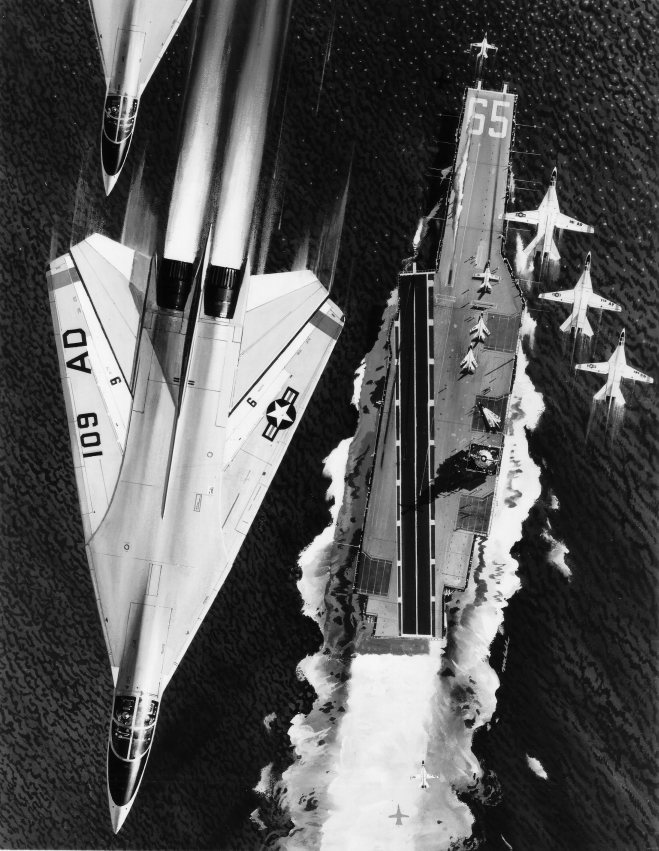
Once upon a time a new fighter was planned. It would be a great fighter. It would push the boundaries of technology and it would be all things to all air forces – and navies.
The military knew that it had to ask for every piece of technology and every capability it could think of. It knew this because a responsible government keeps a check on defence procurement, making sure that the military doesn’t spend all the treasure. So the military asked for all the toys it could ever want, expecting that it’d actually get only the toys it needed. That was usually the way of things. It also decided that it’d be really smart to ask for just one type of fighter, but have it built in really different versions.
So the military sat down and made a list of all the magic it wanted in its new fighter. The list said: stealth; a new radar and sensor suite; a helmet-mounted sight that did away with the traditional HUD; a single, widescreen cockpit display; advanced sensor and data fusion; a new propulsion system; the ability to operate from land bases without compromise; the ability to operate from aircraft carriers without compromise; the ability to operate from smaller ships without compromise; weapon bays; supersonic performance; a brand new logistics and maintenance system; world-beating air-to-ground capability; and world-beating air-to-air capability.

It also made a list of all the aeroplanes it wanted to replace. On the list it wrote F-16, F/A-18, A-10, Harrier, Tornado, F-4 and EA-6B, a long list of very different aeroplanes with diverse capabilities. Could the new fighter really take-off like a Harrier, kill tanks like an A-10 and jam mobile phone signals before they could trigger an IED?
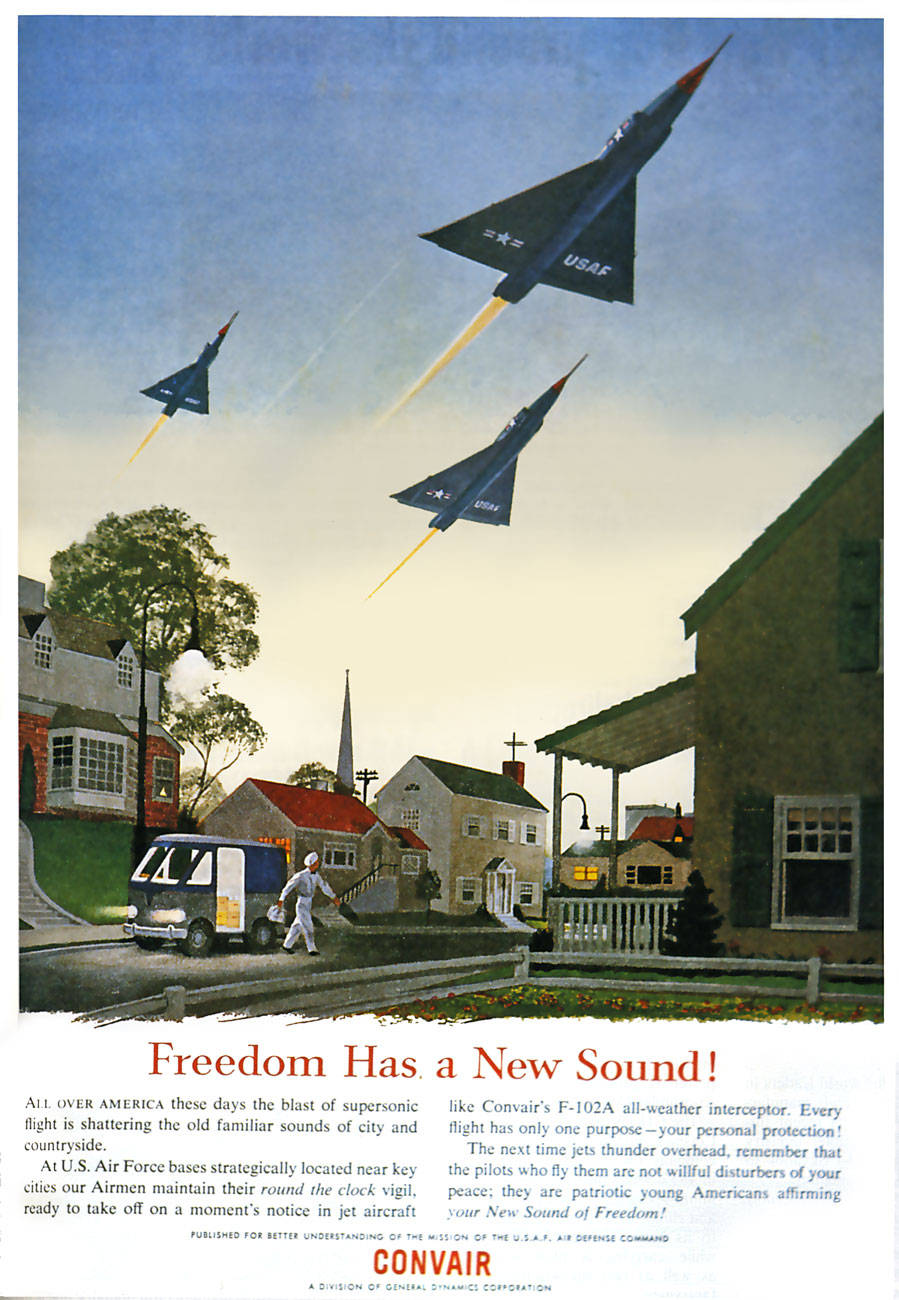
Airframe Wizards
Now the aircraft and engine manufacturers, high-tech wizards with great magic in their wands, looked at what the military was asking for and saw treasure. They saw the chance to develop technology beyond their wildest dreams and, if everything went well, to make billions of money from all the fighter jets they would sell to air forces and navies of the world.

It all seemed so possible and soon they were busily at work, crafting and concocting. Each piece of technology was possible, given enough time and resource, but no one stopped to ask if all the technology was possible at the same time and for the same machine. No one stopped to ask if so much technology could be adapted to fit the requirements of the very different versions of that machine. And no one stopped and said to the government, or the military, ‘Yes, we can do all these things, but probably, if we’re entirely honest, not in a useful timescale, certainly not on budget, and maybe not all for just one airframe design.’ Worse still, everybody became so engrossed in trying to make it all work, that nobody thought to ask if they really should be trying to make it all work.

Problems, problems
Many years passed. A great deal of treasure was made and a huge amount lost. Wizards came and went. Dates and deadlines came and went. Some aeroplanes were built while the wizards were still working their magic and although these aeroplanes were upgraded, they were never as good as the aeroplanes that were made years later, when all the magic was finally working.
The problem was that none of the wizards ever lay down his wand and said: ‘What are we doing? This is all going horribly wrong and we should admit that we’re all wrong and fix it.’
The problem was also that the military saw all its wildest dreams coming true and didn’t want to admit that it had set off the wizards on a quest that would stretch their magic so far that it’d keep breaking. It had been allowed almost all of the toys that it had wished for, even though, in the real world, most of those toys were pure luxury most of the time.
The government simply didn’t understand and it didn’t think to ask anybody who did. It started out with a big chest of treasure and although it added a little bit of extra gold, it still wasn’t enough to pay for the fighter programme as it struggled along. So it decided to buy fewer aeroplanes, but it was the development costs using all the treasure up, not the production, so the government actually paid for fewer, much, much, much, much more expensive aeroplanes.

Happily Ever Afters
There were several possible endings to the Fighter Fairy Tail. In one, the whole programme was stopped and the wizards put all their magic and their clever spells into the aeroplanes that the new fighter was supposed to replace, and into much more modern aeroplanes that were already in production, but still evolving. Legend has it that this had been done once before, long, long ago, when a very clever helicopter gave away all its magic. It worked out quite well.
In another ending, the programme was cancelled and the military made do with the fighters it already had in production. This seemed like a very silly ending, because it wasted so much magic and most of the very, very clever wizards disappeared.
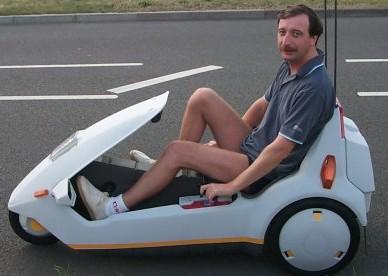
Ending number three saw some of the magic requirements relaxed. This meant that the remaining magic could be made to work much better, much more quickly. One of the fighter variants was abandoned, which allowed the others to be much less compromised. The wizards managed to get really, really good aeroplanes to the military without too much more delay. By the time the military got its hands on the jets it had forgotten about all the problems and the aeroplanes worked so well that everyone, even the government, was delighted.
In the final ending, the wizards carried on as they were. The military wriggled and jiggled and although some changes were made, it pretty much got what it wanted. At first the government made the military order far fewer jets, but the aeroplane remained in production for 30 years and because orders kept being added, in the end the military got all its aeroplanes and the wizards made lots and lots of treasure.
The problem was that the first aeroplanes were delivered when their magic was immature. They all needed new spells and some of them had lots of their magic missing for many years. By the time it was ready, they were worn out.
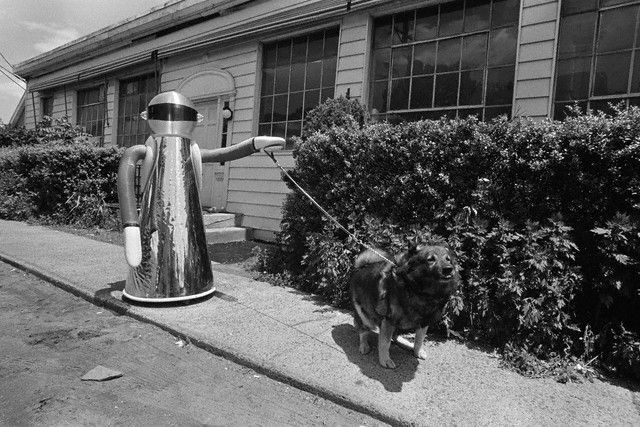
But finally, the military got all the variants of the new fighter into service. Eventually they all worked. All the magic did what it was supposed to do and because the magic was clever, the wizards could keep writing new spells that kept the aeroplanes on top of the world.
But there was a snag. The ending was not entirely happy, although it did take forever after. Almost two decades passed from the time when the wizards delivered the first aeroplanes until all the variants were in service and doing all the things that the wizards had promised and that the military wanted. This was always going to be the ending. The aeroplane was superb. Its technology was superb. Its powerplant was superb. But in combination, they were just too much for the wizards to make quickly and at the same time. For a truly happy ending, somebody should have realised that.
This is a work of fiction. Any similarity to militaries, governments, wizards or fighters, living or dead, is purely coincidental.
Follow the author on @twodrones
Confessions of a pteromerhanophobic
 I maintain a fear of flying is normal and anyone who claims to enjoy it is lying. Virgin’s choc-ices aren’t that great. Aerodynamics isn’t that fascinating. I mean, please: sitting up in a truly weighty metal tube thousands of feet up in the sky being driven by someone you’ve never met? Jesus.
The irony is, from the age of 16 to 21, I lived in Chard, a small town in Somerset which happens to be the birthplace of powered flight after inventor, John Stringfellow, flew a model plane in a disused lace mill in 1848. Whoopydoo, Icarus, because having lived there, I can safely say that Chard is crap and ugly and nothing good came of it. Not even planes.
I haven’t always been afraid of flying. As a child, sure. I would hysterically sniff Chanel no 5 from a hankie for entire flights. But as a teenager, I was fine. So fine in fact that in my early twenties, when I lived in Italy, I virtually commuted from London to Turin on a monthly basis. Then, 9/11 happened (see above), I went to Morocco, and, like a nostalgic dormant STD, my fear re-found me
My symptoms are similar to those experienced during a panic attack. Heavy heart thumping, fast, hard, tight breathing, a dry mouth and a general sense of impending doom during which I whine like a small dog. Suffice to say; I know my fears are illogical. It’s not the claustrophobia, the vertigo (two very real fears which make sense), which scares me. It’s not even the lack of control – I’m a trusting person. It’s the FEAR that I fear. A mid-air explosion? What can you do? One engine failing when three will more than efficiently get us to B and then being told this? Fuck Me.
My fear pans out fivefold. Firstly, for around 48 hours before departure. To wit: I recently fainted in Clarins and sicked up some French toast out of pure terror. Then, en plane, as we journey from the slow runway to the fast runway. Then, as we begin our super fast runway bit (the WORST), followed by takeoff and finally throughout turbulence, a vile, vile thing, which usually makes me cry.
Naturally I turned to Dr Alan Carr, a man who really gave it his all in helping me overcome my fear, and who rather romantically calls turbulence ‘the potholes of the skies.’ (I try to remind myself but more often forget).
I maintain a fear of flying is normal and anyone who claims to enjoy it is lying. Virgin’s choc-ices aren’t that great. Aerodynamics isn’t that fascinating. I mean, please: sitting up in a truly weighty metal tube thousands of feet up in the sky being driven by someone you’ve never met? Jesus.
The irony is, from the age of 16 to 21, I lived in Chard, a small town in Somerset which happens to be the birthplace of powered flight after inventor, John Stringfellow, flew a model plane in a disused lace mill in 1848. Whoopydoo, Icarus, because having lived there, I can safely say that Chard is crap and ugly and nothing good came of it. Not even planes.
I haven’t always been afraid of flying. As a child, sure. I would hysterically sniff Chanel no 5 from a hankie for entire flights. But as a teenager, I was fine. So fine in fact that in my early twenties, when I lived in Italy, I virtually commuted from London to Turin on a monthly basis. Then, 9/11 happened (see above), I went to Morocco, and, like a nostalgic dormant STD, my fear re-found me
My symptoms are similar to those experienced during a panic attack. Heavy heart thumping, fast, hard, tight breathing, a dry mouth and a general sense of impending doom during which I whine like a small dog. Suffice to say; I know my fears are illogical. It’s not the claustrophobia, the vertigo (two very real fears which make sense), which scares me. It’s not even the lack of control – I’m a trusting person. It’s the FEAR that I fear. A mid-air explosion? What can you do? One engine failing when three will more than efficiently get us to B and then being told this? Fuck Me.
My fear pans out fivefold. Firstly, for around 48 hours before departure. To wit: I recently fainted in Clarins and sicked up some French toast out of pure terror. Then, en plane, as we journey from the slow runway to the fast runway. Then, as we begin our super fast runway bit (the WORST), followed by takeoff and finally throughout turbulence, a vile, vile thing, which usually makes me cry.
Naturally I turned to Dr Alan Carr, a man who really gave it his all in helping me overcome my fear, and who rather romantically calls turbulence ‘the potholes of the skies.’ (I try to remind myself but more often forget). Alan wrote a very good book – much better than the smoking one – about flying. He aims to make you not only NOT fear flying, but actually enjoy it. A little optimistic, Alan, but still, there are some great facts (and I paraphrase): ‘there are half a million planes in the sky at any one time and none of them have crashed to earth’, and, some woefully ineffective ones: ‘Lockerbie was a one-off’.
We sell fantastic high quality aviation-themed gifts here
Alan wrote a very good book – much better than the smoking one – about flying. He aims to make you not only NOT fear flying, but actually enjoy it. A little optimistic, Alan, but still, there are some great facts (and I paraphrase): ‘there are half a million planes in the sky at any one time and none of them have crashed to earth’, and, some woefully ineffective ones: ‘Lockerbie was a one-off’.
We sell fantastic high quality aviation-themed gifts here

