
Category: Uncategorized
Top 10 Things that made the P-51 Mustang fighter aircraft so outstanding

Aerospace Engineer Joe Wilding examines why the Mustang was so good.
“I want to start with an embarrassing confession. With a lifelong obsession with aircraft and a few decades of experience engineering them, you might think I’d have an insightful and obscure favourite airplane (or ‘aeroplane’ as Hush-Kit would have me say). But the answer will disappoint you. Like many, I absolutely love the P-51 Mustang. I have tried hard to come up with a more sophisticated answer.

Despite some strong contenders, I keep coming back to the Mustang. The Mustang is the Jimmy Stewart of airplanes. Both are solid performers with dashing good looks, and few have a negative comment for either one. The Mustang’s graceful curves draw you in. The performance and technical details are what keep me coming back. It’s the best of both worlds: a stunning piece of art and a technical marvel. While the art claim is uncontestable, let’s dive a little deeper into the technical claim.
10. The Wing is the Thing

Almost any discussion about the Mustang starts with its wing. But the real advantage of this wing might be different from what you’ve heard. Because of its mid-war development timing, the Mustang was the first aircraft to implement a new aerodynamic theory called “laminar flow”. This effect, contrasted to turbulent flow, is an elusive condition that is possible with the right wing shaping and attention to detail. All wings have a small amount of laminar flow at their leading edges. A laminar flow design extends this region to a majority of the wing surface and can reduce the wing drag by an incredible 25%-50%. Unfortunately, the practical application usually falls short of the theoretical promise. Manufacturing flaws, battle damage, hangar rash, and bug guts alter the surface of a wing, and the laminar flow benefits fade away when the shape is not pristine.
The extraordinary beautiful Hush-Kit Book of Volume 2 will begin when funding reaches 100%. To support it simply pre-order your copy here. Save the Hush-Kit blog. Our site is absolutely free and we want to keep it that way. If you’ve enjoyed an article you can donate here. Your donations keep this going. Treat yourself to something from our shop here. Thank you.

However, the Mustang wing has another aerodynamic trick up its sleeve. By complete serendipity, the shaping of a laminar flow airfoil is also very good for low drag at high speeds due to Mach effects. The airflow over a wing accelerates even faster than the airspeed of the aircraft. At high enough aircraft speed, this local wing airflow will exceed the speed of sound. When this happens, drag increases to really high levels, really fast. To keep accelerating you need a lot more engine power. The shaping of the Mustang wing lessened this airflow acceleration and allowed it to fly a little faster before this drag started its dramatic rise. In modern terminology, the Mustang had a great transonic wing. This effect was not fully understood in the early 1940s, but the science quickly followed up. Nearly all jet aircraft that followed (and a few piston-engined fighters) capitalized on this idea.

A final note about wing design relates to its size. Going fast and far generally favors a small wing. Maneuvering and turning hard favors a larger wing. If you look at the wing loading (aircraft weight divided by its wing area) of various contemporary fighters, you’ll find that the Mustang was in the middle of the pack. This was the perfect choice given its balanced mission of dog fighting performance, at long range.
9. Very Low Drag

In addition to the great wing design, the Mustang also had a remarkably low overall drag. The performance of the airplane is the summation of many little things and a close attention to detail. A close inspection of the Mustang will show its remarkable cleanliness. There are virtually no bumps, bulges, or inlet scoops anywhere on the plane. Most other planes of the era have a multitude of these to address various cooling or system details. The landing gear is a great example. The main gear is fully enclosed by gear doors that fit well. The tailwheel is also retractable, unlike most aircraft of this era.

Cooling drag is another area of excellence for the Mustang. Many sources will talk about the belly radiator system producing thrust by adding heat energy to the airflow. The test data shows that very little positive thrust is ever produced. However, in most high-speed conditions, the system is producing no net drag (i.e. the thrust produced is offsetting the drag of the scoop and the airflow through the radiator). This effect is important, as cooling drag at high power can be quite large. Several clever details contribute to this high-efficiency cooling system. First, the cooling duct contains the combined heat exchangers for the engine cooling, the aftercooler, and the oil cooler. This maximizes the energy transfer with minimal impact to the aircraft. Secondly, the installation of the cooling system is nearly perfect. The inlet is below the wing, maximizing the inlet air pressure. It is also offset from the wing surface which bypasses the low energy boundary layer airflow, which would decrease efficiency. The aft fuselage allowed for a large radiator, which reduces internal flow losses. The airflow exit is behind the wing where the fuselage starts to taper back, placing it in a region of low local air pressure. Finally, the system has variable outlet doors, controlled by an automated system in all phases of flight. Together all these details promote ideal flow through the system and maximize efficiency.
One last detail which results in low drag / increased thrust is optimal shaping of the engine exhaust stacks such that the exhaust airflow produces net positive thrust. Test data shows that at high-speed cruise, this effect increases the net thrust by 20% or more.
Low drag is not just about going fast. At any speed, lower drag means lower engine power, and lower fuel burn. This translates into an increase in aircraft range, which we will talk about next.
8. It Goes the Distance

Most fighters before the Mustang were not designed for significant range. Early in the war, fighters were used mostly as bomber interceptors and the air battles would take place near the fighter’s home airfield. The exception to this was fighters that were used in a ground attack role or for other missions such as photo-reconnaissance. This was the initial design mission for the Mustang, and hence the aircraft was designed for greater range. As the Mustang was entering service in 1943, the US Army Air Corps was executing a daylight bombing strategy and was starting to suffer heavy bomber losses to enemy fighters. It began using the Mustang for long-range bomber escort. The Mustang’s low drag meant it could cruise with lower fuel burn than other contemporary fighters, and thus fly even further on the same fuel. Range was further increased with an additional fuselage tank and wing drop tanks All of this gave the Mustang sufficient range to escort bombers round trip anywhere in Germany and even into Eastern Europe. Several other long-range fighters like the P-38 and P-47 approached this capability. Although the Mustang has less maneuverability compared to some of the lighter fighters, like the Spitfire and Bf 109, it was superior to the P-38 and P-47 which were larger and heavier. The Mustang had the right balance.
7. Amazing Development Story
The Mustang has a great origin story. Prior to World War Two, North American Aviation had developed a family of successful training aircraft. They desperately wanted to get into the lucrative fighter business, so they started building a team to accomplish that. At the outbreak of the war, they had the early concepts for a fighter that incorporated much of the latest thinking in fighter optimization, including the radical new wing concept. In early 1940, with the war starting to heat up, the British urgently wanted more fighter aircraft, and asked North American to build P-40’s under license. North American, seeing this as the chance to finish their original fighter design and have an immediate customer, essentially told the British, “Hold my beer.” The British took a gamble on the offer, and magic ensued. There are three common ingredients for a successful rapid aircraft development program: a team with the right expertise, the necessary funding and tools, and a challenging but realistic deadline. The North American team had all three and it was off to the races! Based on the team’s prior research and design work, they rolled out the prototype aircraft in an unprecedented three and a half months, and it flew a few months later. To be clear, the design wasn’t perfect, including an early crash of the prototype. But it was very good. The team was able to work out the bugs and was delivering the initial aircraft to the British in October 1941, roughly 18 months after the contract was signed.

- 6. The Merlin!

If the Mustang is Jimmy Stewart, then the Merlin engine is June Allyson. A match made in heaven! (And yes, I get the irony in that analogy.) It is an engine that is loved by everyone, and for good reason. Don’t worry Allison fans (the engine, not the actress), you’ll get your due credit shortly. As the Mustang entered service, everyone was impressed with its solid performance, particularly at low altitudes. However, the original Allison engine had a single-speed, single-stage supercharger, and its power output dropped off quickly above 15,000 feet. The most recently upgraded Merlin engine had a two-speed, two-stage supercharger that could shift gears and continue producing high levels of power through much higher altitudes. Both the British and Americans started speculating on what the aircraft could do with the Merlin engine, and teams in both countries started projects to retrofit a Mustang with the engine. The British were slightly ahead, and their prototype flew a month before the Americans in October of 1942. Both teams quickly realized it was the right combination, with high-altitude performance that exceeded any other fighter of the day. A vast majority of the Mustangs built used the Merlin engine, and its amazing success as a high-altitude bomber escort is because of this engine pairing.
- 5. The Allison!

I don’t know the best comparison for the Allison engine, but maybe Cinderella? It certainly gets overshadowed by its boosted step-sister, the Merlin. The base engines are remarkably similar, with the later Merlin supercharger being the primary difference. And the Merlin did have a truly world-class supercharger design that the Allison lacked. However, the benefits of the Merlin supercharger are best at higher altitudes. For any missions where low altitude was required, the Allison was a worthy contender. In fact, at lower altitudes, the Allison was slightly superior, due to the pressure mapping of the supercharger. For missions like ground attack (the original role for the early Mustangs), the Allison was a nearly perfect engine and the aircraft operated exceedingly well in that role. This is reflected in low-altitude speed and climb rate data. Although, these comparisons are hard because some later Merlin-powered Mustangs with higher boost could beat the Allison at all altitudes.
The Allison probably doesn’t get proper credit because the P-47 entered service soon after the Mustang and, with more armament, it was an even better ground attack aircraft. (The-P-47 was also an effective high-altitude aircraft with its unique engine / turbocharger installation.) Due to the urgent need for long-range, high-altitude fighters, most Mustang production transitioned over to the Merlin-powered model which quickly eclipsed the Allison-powered Mustang. And that is a shame. I am a fan of both aircraft, for different reasons, and I wish the Allison got a little more love.
- 4. Bubble canopy

The Mustang was one of the first aircraft to sport a fully unobstructed bubble canopy. This innovation came to reality mid-war as polymer plastic material science matured. One of the first iterations of this technology pioneered on the Spitfire, was called the “Malcolm hood.” This was a hybrid solution that replaced the centre canopy section with a slight bubble Perspex canopy that contained no obstructions. This gave better visibility both laterally and vertically. But since the basic airframe was not modified, the aft view still suffered. This Malcolm canopy was retrofitted to B and C model Mustangs soon after the Spitfire. Both aircraft were going through a rapid evolutionary cycle and the next version of each aircraft (the Spitfire Mk VIII and the P-51D) took this idea a step further. In both cases, the canopy was enlarged, and the aft fuselage lowered to give an unobstructed view in nearly all directions. This idea did increase aircraft drag slightly. (Test data shows an increase of roughly 2%.) But that is a small trade for better pilot situational awareness. This canopy design became the norm for nearly all fighter aircraft that came afterwards and remains the standard today. The clean bubble canopy strongly contributed the P-51D’s “modern” look as compared to the razorback fuselage and glazed canopy design of previous fighters.


- 3. Designed for Mass Production
Often engineering marvels are the equivalent of a Swiss watch. They might exhibit extreme performance, but they give up practicality in the process. They are either prohibitively expensive, difficult to maintain, or they compromise useability to maximize their primary performance metric. An example of this type of design philosophy would be a racing vehicle. They are typically hand-built in low volumes, expected to last for just a few races, and are expertly maintained, often by their creators. The Mustang is the opposite of this. It was designed for profitable mass production and operational effectiveness from the beginning. An example of this philosophy is the wing and the tail. Despite the Mustang arguably having the best performing wing of the war, it was also amongst the simplest. It had a trapezoidal planform with straight leading and trailing edges. This not only is simple and cost-effective to build, but it contributes to the higher manufacturing accuracy needed to achieve its aerodynamic efficiency. Straight lines are easier to align when building tooling, especially in the 1940s without the use of modern laser projection and measurement tools.
Is it possible to quantify this design emphasis for production? Comparing aircraft production costs is challenging, especially between different countries. Labor hours per aircraft is more comparable, but the data is mostly anecdotal. Production efficiency also evolved drastically during the war, with hours per plane in 1945 being much lower than in 1940. All of that considered, most data shows the Mustang as having one of the lowest hours to build, in some cases by as much as half when compared to comparable fighters.
2. Landing gear

There were several arrangements for main landing gear on fighters of this era. Most were conventional taildraggers, with a few tricycle exceptions like the P-38 and P-39. The primary design difference between the taildragger aircraft is the direction of gear retraction: inward, outward, or aft. Each layout has pros and cons.
Landing gear generates high loads and outward retracting gear connects to the wing inboard, where it is stronger. This offers weight savings and was used on the Spitfire and Me-109. This layout also has a compromise: it tends to make the gear width somewhat narrow, which can lead to stability issues when landing. The mustang had inward retracting gear which allows for a wider gear stance. If a pilot lands with a wing low, a wider stance gear has a better ability to correct the roll angle on touchdown, without over-turning. Additionally, a wider stance gear allows for higher turning forces on the ground before the aircraft pivots on the outer gear and drags a wingtip. Spitfire pilots tended to cope well with its gear arrangement, probably due to superior training. However, more than 10% of all Me-109s were lost in landing and takeoff accidents. This landing gear likely has a strong influence on this statistic.
A final advantage of inward retracting gear is it places the retracted wheel in the center portion of the wing where it is thickest. This allows the wheel to be fully enclosed within the wing surface with no drag-producing bumps or blisters. Many contemporary fighters contained these (or exposed wheels), including the Spitfire and the Me-109.
- Conical Lofting

This might be the most obscure detail that contributes to the Mustang’s greatness. As an aircraft designer though, it is one of my favourites. The Mustang was one of the first aircraft to use a geometric design process referred to as “Conic Lofting.” Before we get into why this matters, let’s start with some definitions. “Lofting” is the process of creating the external shape of the aircraft, and the “Loft” refers to this final shape. The term loft comes from the shipbuilding industry where the shapes of ship hulls were drafted (often at full scale) in a loft above the shipyard. Early aircraft development borrowed much from shipbuilding, including this term. In more modern language, the loft represents the collection of external aircraft surfaces.
“Conic” refers to a type of mathematically defined curve. A conic curve is generated by slicing a plane through a cone, hence the name. A circle and an ellipse are both conic curves, among others. The advantage of a conic curve is that it can be described with high mathematical precision, and it is guaranteed to be a smooth curve with no reversal of curvature (assuming it is built per the definition). This type of lofting provides two related advantages. First, it tends to produce aircraft surfaces that are very smooth and continuous, and thus promotes low drag. Secondly, these surfaces tend to look really pleasing to the eye. If you look at a Mustang fuselage closely, you can see evidence of this. The forward cowling is an exceptionally well-designed shape in both cross section and the way the shapes flow from spinner to canopy. The aft fuselage between the canopy and tail is similar.
Conic lofting is a minor detail on a practical level, but it is one more feature that puts the Mustang on a different level. As a footnote, modern lofts are generated by computer aided design (CAD) programs and conic lofting is one of several techniques still implemented today.
Bonus: It Just Looks Freakin’ Amazing.

There are exceptions to the endlessly repeated adage noting the correlation between good looks and good handling qualities. For instance, the American century series fighters were stunning, yet most had questionable handling characteristics. In the other direction, some would say that two aircraft named ‘Thunderbolt’ have questionable looks, yet no one would question their incredible effectiveness as combat aircraft. Few would argue that the Mustang is questionable in either its style or its performance.
In summary, the Mustang stood out in its performance, its practicality, and its design. It was the right airplane at the right time. The incorporation of the best ideas from several decades of fighter evolution allowed it to become the pinnacle of piston-engine fighter design. Very few of its individual features are exceptional by themselves. But the Mustang brings them together in a very balanced and effective way. And it doesn’t hurt that the designers had an eye for good aesthetic design as well. This formula describes most of the greatest aircraft ever built.
Joe Wilding was the co-founder of Boom Supersonic, an independent company attempting to build a supersonic transport aircraft.
References:
Mustang, The Story of the P-51 Fighter, by Robert Gruenhagen
Mustang, the Untold Story, by Matthew Willis
Aircraft Design, a Conceptual Approach, by Daniel Raymer
The Secret Horsepower Race, by Calum Douglas
A History of Aerodynamics, by John D. Anderson
Various performance papers from the 1940s authored by North American Aviation and N.A.C.A
Smile with the X-32!
10 Terrible Aircraft That First Flew In 1951

1951 brought the world a horrid bestiary of diabolic aeroplanes. Across the world, aeronautical engineers sought to make the new generation of aircraft more dangerous than the last. Safety culture was for cowards, everyone was drunk and fighters looked incredible. Slick your hair with Brylcream, light up a cigarette, pop a pack of diet pills and join us on a lethal saunter along the flightline of the damned…
![McDonnell F3H “Demon” aircraft are catapulted from the aircraft deck of USS Forrestal (CVA 59) for night interception training mission in the Eastern Mediterranean. July 1957. [3001x2284] : r/Warthunder](https://i0.wp.com/i.redd.it/3evfyf6aijp71.jpg?w=830&ssl=1)
10. de Havilland Sea Vixen ‘Booms to the tombs’

The Royal Navy’s long running fascination with sadistically punishing Navigators reached its zenith (or nadir) with the Sea Vixen. Trapped in a claustrophobic ‘coalhole’, the Navigator was mercifully blind to the fact he was flying in one of the most dangerous aircraft in the world. Around half the top speed of its American rivals, the Sea Vixen was the sickening burp that followed the fine meal that was the Mosquito.
9. Douglas F4D Skyray ‘The Flaming Ford’

The remarkable Skyray first flew in 1951 and entered service in 1956. The Skyrays had the worst accident rate of anything in the US Navy at a sobering 34.78 per 10,000 flying hours during its troublesome first operational year. This calmed down with time but is still utterly terrifying. Still, it was the most stylish aircraft ever created.
8. McDonnell F3H Demon ‘The Lead Sled’

It took a long time to tame the jet for life at sea. Added to the usual perils of carrier operations were the insufficient power, unresponsiveness and terrible reliability of early jet engines. The Demon was a carrier-based all-weather interceptor particularly cursed by the teething problems of 1950s jet engines. The Demon was plagued with engine development issues throughout its testing and short operational career. The Westinghouse J40 engine programme was a nightmare of development problems. The electronic control system didn’t work, the afterburner was dangerous. As the McDonnell F3H-1N Demon’s weight dramatically increased across its development, the original J40 couldn’t keep up with the corresponding requested thrust increases. A souped-up J40 with a 13-stage compressor and greater airflow was a flop, and Demon turned to the Allison J71. The J40 was terminated in 1955 and Westinghouse closed down in 1960.
The extraordinary beautiful Hush-Kit Book of Volume 2 will begin when funding reaches 100%. To support it simply pre-order your copy here. Save the Hush-Kit blog. Our site is absolutely free and we want to keep it that way. If you’ve enjoyed an article you can donate here. Your donations keep this going. Treat yourself to something from our shop here. Thank you.
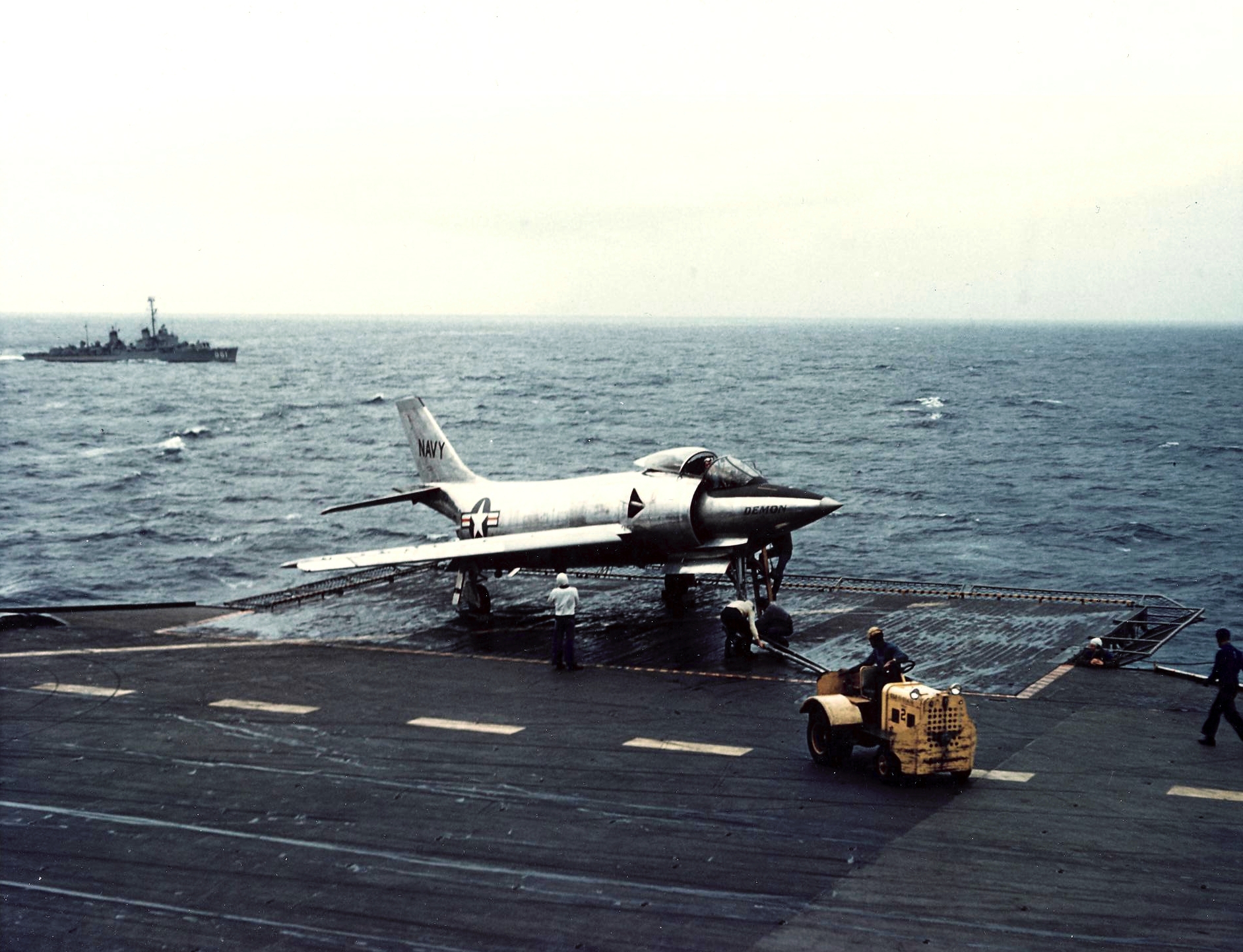
The F3H-1N (the initial production version powered by the 7,200 lbf thrust J40-WE-22 turbojet) was particularly diabolical, in one particular week the type was involved in 11 accidents, some resulting in the death of pilots. The F3H-1N was canned after only 58 were produced.
Due to delays in afterburner development on the J71, initial production of the hugely delayed F3H-2N featured the J40 as an interim engine. This was a disaster and both engine and aircraft were grounded after a number of a series of highly publicised accidents.
7. Yakovlev Yak-1000 ‘The slack Yak’

Mach 1.7, 1,122mph at the expected operating altitude, would have been a very impressive speed for an aircraft to reach in 1951, and that was the original design target for the Yak-1000. It would have smashed the contemporary airspeed record held by the US F-86 at 670mph. The 1000 was a technology testbed intended to reach incredible speeds by combining an advanced cropped delta wing derived from German wartime research, with the terrible AL-5 turbojet. Delays in the AL-5 meant it was fitted with a far weedier engine, a pirated adaption of the Rolls-Royce Derwent V, the Klimov RD-500. The target for the new airframe-engine combination was a far less ambitious, but still world-beating, 680mph. But even this proved unattainable, as did flight.

During pre-maiden-flight taxiing trials, the aircraft proved unable to counter strong crosswinds and was blown off the runway and damaged. Yakovlev was lukewarm about the design but this time and the project was quietly dropped.
6. Lavochkin La-190 ‘Next of Kin’

The horrible Lyulka AL-5 turbojet also scuppered the potentially fantastic Lavochkin La-190. As well as good handling qualities, it was probably the fastest aircraft in the world. But not even Stalin’s USSR was willing to support an aircraft with an engine as unreliable as the AL-5.
6. Tupolev Tu-85 ‘Barge Poleaxed’
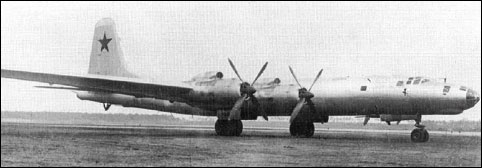
Looking for a bomber with the range to hit mainland America the Soviet Union developed the Tu-85. It was based on the Tu-80 which in turn was based on the Tu-4, a brilliantly reverse-engineered B-29. The Tu-85 was the ultimate manifestation of the Superfortress, and was more than 50% heavier than with almost double the range and a top speed of almost 400mph. Its failing was its choice of engine, it utilised the Dobrynin VD-4K, a vast complicated six-bank 24-cylinder turbo-compound inline engine. This was understandable as neither the pure jet or turboprop were fully mature, especially in the Soviet Union, and ultra powerful piston engines were complicated. However, a year later the vastly superior turboprop Tu-95 would fly, soundly demonstrating the future of Soviet bombers did not belong to piston engines.
5. Supermarine Swift

Though the similar Type 535 had already flown, the Type 541 was the true production prototype of the lamentable Swift, and that is nothing to be proud of. Britain was determined to fail at the jet age, and despite the obstacle of producing by far the best jet engines in the world, it was doing well at this task in 1951. The Swift was dangerous, with poor medium- and high-altitude performance and haunted by a host of aerodynamic issues throughout its short career. Always up for a giggle, Britain had already played around with a fighter-interceptor with poor medium-high altitude performance with the Hawker Typhoon in the 1940s and would later return to this comic conceit with the 1980s Tornado ADV.
4. Fokker S.14 Machtrainer
Not terrible as an aircraft, just unlucky in entering an oversaturated market and not being American, the Dutch S.14 Machtrainer was also rather slow. Though a useful transition to higher-performance jet aircraft, at 450mph it was a little slower than the competition, namely the cheap and plentiful T-33 and Vampire trainers.
3. Partenavia Aeroscooter ‘Pooper-scooter’

Sorry, but this is number 3 based on looks alone.
2. Gloster Javelin ‘The Tripe Triangle’
“The worst things about the Javelin? 1950s design e.g. Sapphire engine, a quaint starting system of electrically fired cartridge initiated AVPIN, Wellington ‘bomb slips’ as undercarriage uplocks, the relative inaccessibility of most aircraft components – Gloster must have had shares in the panel-screw makers. Finally there were flight envelope peculiarities due to the ‘delta’ configuration.” Peter Day, Javelin pilot, full interview here.

The Javelin got so much right and yet was so wrong. While many of the general ideas were good: a twin engines, tailed delta, a large radome containing a large radar, a crew of two, and (in later variants) missile armament and afterburners, many of the specifics were wrong. The aircraft’s biggest failing was an overly thick wing combined with a huge t-tail, which heavily penalised the Javelin’s performance and resulted in many dangerous quirks in its flight characteristics. It was also extremely difficult to maintain. The Javelin was painfully close to being brilliant and that is why it ranks so highly in this list.
1. Mikoyan-Gurevich I-350 ‘MiG’s pig’

As likely to flame out as a Christmas day gas boiler, the Lyulka AL-5 mentioned above gets yet another mention. The list of aircraft that used the cursed engine is a veritable who’s-not-who of Soviet aircraft. Not all the blame can be put on the engine, as the I-350 had rather unpleasant and extremely heavy controls. Still, it was the first Soviet aircraft to be able to sustain supersonic flight (when the engine was working).
The 450+ Club: Piston-engined warplanes (and one racer) that went beyond 450 miles per hour

Whether by massive brute force, beautifully sleek aerodynamic form or a combination of both, a small number of piston-engined aircraft achieved flight speeds of over 450mph. These speeding monsters were the ultimate expression of the high-performance piston aircraft.
Hughes XF-11 (1946)

Top speed: 450mph
Mikoyan-Gurevich I-225 (1944)

Top speed: 451mph
Supermarine Spitfire F Mk 24 (1946)

Top speed: 454 mph
Martin-Baker MB 5 (1944)

Top speed: 460 mph
Grumman F7F Tigercat (1943)

Normal top speed: 460 mph
Messerchmitt Me 209 (1938)
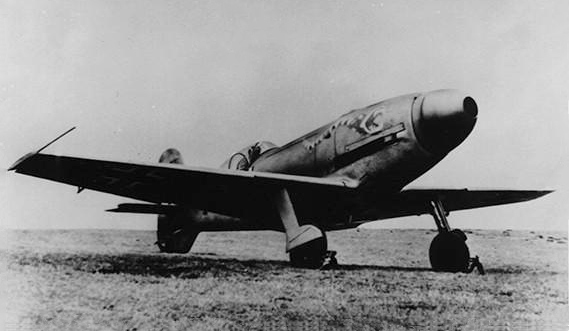
Top speed: 469mph
Focke-Wulf Ta 152H (1944)
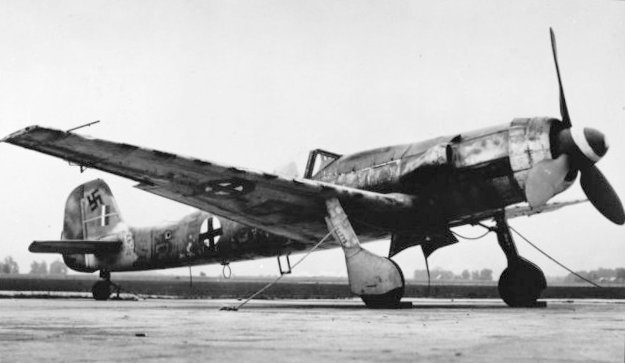
472 mph with nitrous oxide boost
De Havilland Hornet (1944)
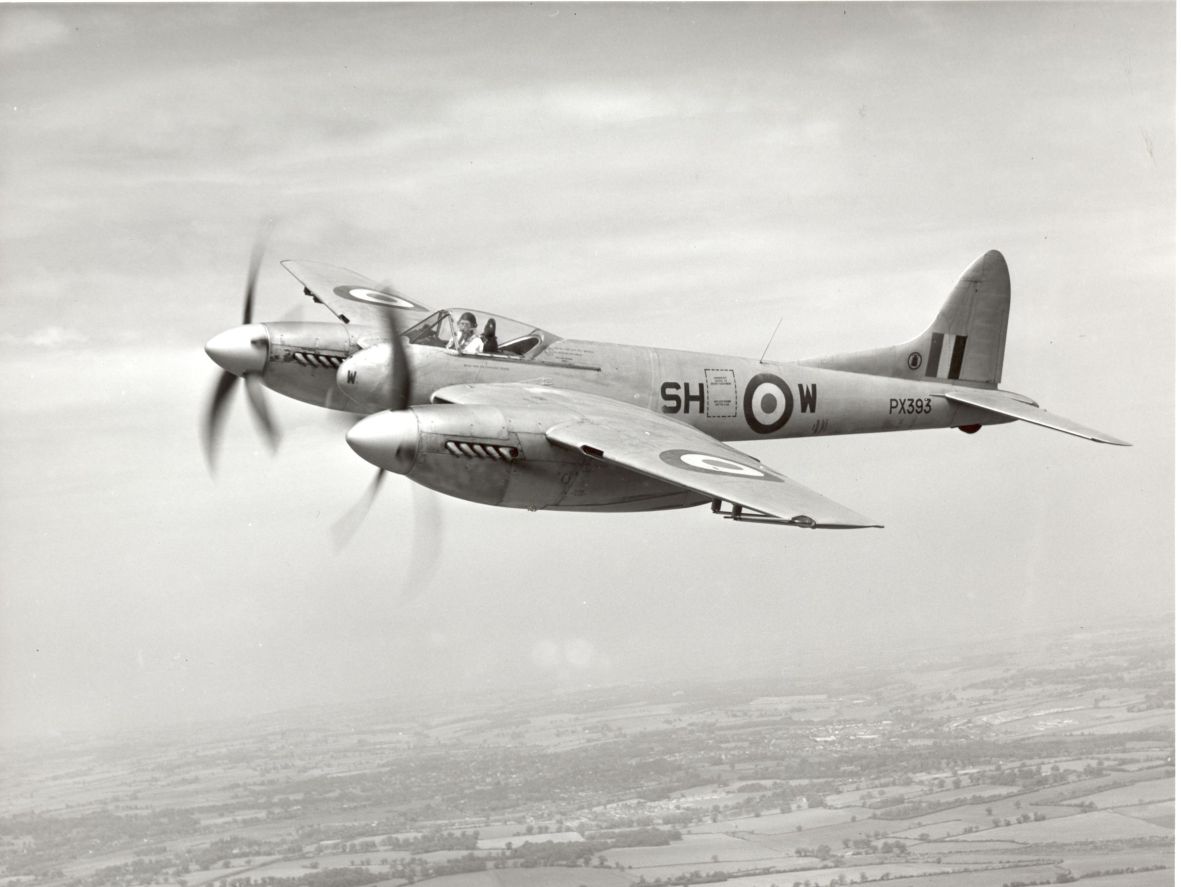
472 mph
Dornier Do 335 (1943)

Top speed: 474mph
Heinkel He 100 (1938)
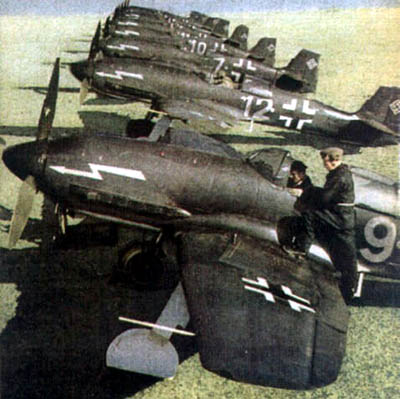
Normal top speed: 420 mph
Maximum achieved: 466 mph
Did it enter service? No
Republic XF-12 Rainbow (1946)

Top speed: 470 mph
The extraordinary beautiful Hush-Kit Book of Volume 2 will begin when funding reaches 100%. To support it simply pre-order your copy here. Save the Hush-Kit blog. Our site is absolutely free and we want to keep it that way. If you’ve enjoyed an article you can donate here. Your donations keep this going. Treat yourself to something from our shop here. Thank you.
North American XP-82 Twin Mustang (1945)
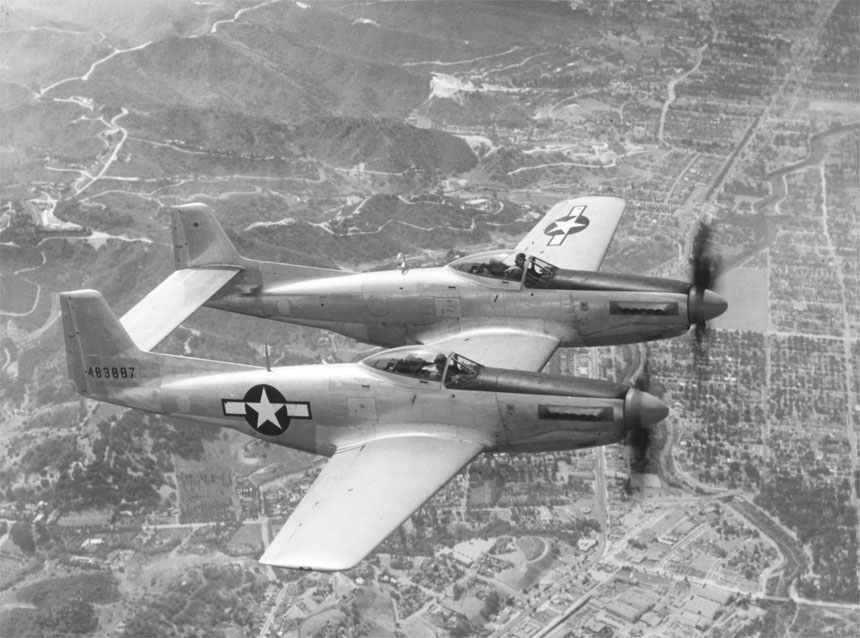
Top speed: 482 mph
Hawker Fury/Sea Fury (1944/45)

Top speed: 483mph (Sabre Fury)
(Centaurus Sea Fury – in race mod, 510+ mph)
Supermarine Spiteful (1944)

Normal top speed: 483 mph (Seafang naval variant 475 mph)
Republic XP-72 (1944)

Normal top speed: 490 mph
Maximum achieved: 494 mph
Republic XP-47J Superbolt (1944)

Top speed: 504mph
Grumman Bearcat (1944)

Normal top speed: 455 mph
Maximum achieved: (Rare Bear racer) 528.315 mph
North American P-51 Mustang (1940)

Normal top speed: 440mph
P-51H: 487mph
Maximum achieved: average speed of 554.69 mph+ for Voodoo racer derivative
_________________________
Notes
Northrop XP-56 Black Bullet
465 mph – probably not tested to this speed
Kyushu J7W Shinden
470 mph often quoted (probably an unofficial estimate)
Hongdu K-8: Pilot review of China’s Kick-ass Karakorum jet trainer

We spoke to former PAF Mirage pilot Fahad Mahsood about flying China’s superb K-8 advanced trainer with the Pakistan Air Force.
Describe the K-8 in three words…
Energetic – Powerful – Sustained
What was its role and was it successful?
It is still in used in the PAF and a few countries in the world like Pakistan Air Force, PLA Air Force, Egyptian Air Force, Myanmar Air Force. Extremely successful in the role it plays in transitional training from slow-speed trainers to high-speed fighter aircraft.
What’s the best thing about it?
Its thrust-to-weight ratio is excellent due to its turbofan engine. Engine response is also comparatively a lot better than a lot of jets due to its axial flow compressor.
…and the worst?
Its landing gear lever is too ‘light’ for military standards
What is the cockpit like?
Ergonomically sound and comfortable.
How would you rate it in the following:
A. Instantaneous turn
8
B. Sustained turn
10 😉
C. Climb rate
10 – Excellent!
D. Ease to fly
10
E. Performance
10 – Does extremely well for the purpose of advanced jet training in both air-to-air and air-to-ground capacity

What are the biggest myths about the K-8?
Relatively new aircraft, hence no myths… an open and shut case!
Tell me something I don’t know about the K-8
Its Chinese name is Hongdu JL-8 (Nanchang JL-8)
What should I have asked you?
About its tailslide manuever. Used to go vertical till 0 knots and then let the jet fall on one side, build speed and recover.

How well equipped is it? What avionics does it have?
For training and introductory purpose to air combat and air to ground weapon delivery, very well equipped. Two CFDs (MFDs) give a valid introduction to the student pilots as a pre-LIFT profile.
What was it like to fly the first time?
Fast! Transitioning from a T-37 to this. Mark difference in engine and platform performance.
What systems did it lack?
Airborne intercept radar. Can make a mark difference for getting student pilots hands on to what’s to come next.

The impossibility of choosing a favourite World War II aircraft

There are millions of World War IIs, and some are more fun than others. The one your grand – or great grandparent –fought or endured was probably the least fun, though a period of (say) six years always holds countless contradictions. The most enjoyable ‘version’ of World War II was the retelling that was born as propaganda and became cemented to the public psyche through model kits, Commando comics, 1960s cinema and other appealingly celebratory channels. With its moral certainty, sexy machines and thrilling destruction it was utterly appealing to children, and those children became adults.
Wherever a favourite or loved aeroplane is mentioned a person’s character is being judged – and along with it what they stand for. This is a terrifying situation so let us consider the matter. Here are some considerations when one attempts to answer the hardest question of all: ‘what is your favourite aeroplane of World War II?’
The Spitfire
Loving the Spitfire is like loving The Beatles. It is like loving coffee or beer, it is ubiquitous to the point of pointlessness. It seems to say little about who you are to love the Spitfire, especially if you are British. On the other hand, the Spitfire is utterly wonderful. Despite what contrarians so tiresomely insist, the Beatles wrote great songs and the Spitfire is stunningly beautiful. And it was a miracle of engineering. And it did have a part in saving many countries in World War II. But then again…

Military history, as an account looking at ‘things’ more than ‘people’, will always have a right-wing, left-brained bent, something not to everyone’s taste. The Spitfire, as known in Britain, is warm ale, clacking cricket bats and Conservative. This is at odds with the actual Spitfire pilots who spanned the entire political spectrum.
What about the Hurricane?
You can spend about ten seconds on Twitter talking about Spitfires before someone will tell you the Hurricane was more important in the Battle of Britain. Vital yet underrated, the Hurricane is the Ringo Starr to the Spitfire’s John Lennon (to further confuse our Beatles’ analogy).
Oh wait, so which aircraft is Paul McCartney and George Harrison? Answers in the comments section, please. And do I have to stick to the Battle of Britain in this game?
What now?
Then it gets even more complicated as you wonder if celebrating the aeroplane of a particular culture means consciously or unconsciously espousing something of that culture’s beliefs. It certainly makes things a little less comfortable when you spot a load of Wunderwaffe titles on someone’s bookshelf (though these have entered the mainstream recently). But that judgement is probably silly in some ways. Which War World II is this imagined lover of German WW2 aircraft living in anyway? Perhaps they are baddies in a sixties film in this person’s head.
Bombers

The phenomenon of the ever-popular Lancaster Christmas cards shows the bizarre degree to which bombers have become cosy. As engineering, a Lancaster is amazing, a B-29 even more so. If one can look at them with a child’s eye we can enjoy the gun turrets, the quartet of roaring engines and the fraternal teamwork of the unlucky crews. Still, if fighters can be likened to flying knights, bombers seem more akin to flying human abattoirs. (note to self: may pitch flying abattoirs on Dragon’s Den).
Radial or inline?
Single-engine World War Two fighters either looked like barrels or dogs. The inline fighters had lovely noble snouts like hunting hounds, whereas the radial fighters looked like barrels. More than that the radials looked like butch brawlers. Essentially, the inlines were flamboyant cavaliers and the radials hard-drinking rough and ready roundheads. There are exceptions to this rule, the inline Hawker Typhoon, for example, was an absolute fucking bruiser. This brings us neatly to the next quandary.
Big or small?

Most of the Soviet fighters (and I make no apologies for being fighter-centric) were tiny, whereas many of the US types, especially later ones, were huge. A P-47 (see early wind tunnel model above) was more than twice the weight of a Yak-9: at around 17,000Ib all-up compared to a mere 7,500Ib for the Soviet machine. Do you support the plucky underdog or the muscleman? And what does that say about you?
Wilfully obscure

Any self-respecting muso appreciates the cachet of a working knowledge of Hungarian Witch House or West African Trumpetcore – knowing stuff others don’t can be an enjoyable (if unstable) source of self-esteem. This elitism happily fits into av-geekery: ‘what do you mean you’ve never heard of the Bichel-Zagnetova BZ-104?’. The problem with choosing these rare types is often there is a reason they are rare, and you are missing out on appreciating something magnificently capable and beautiful just because it is common.
Update on the Hush-Kit Book of Warplanes
We’re now at the final design stages! I’ll share some pages with you at the first opportunity. CAN’T WAIT for the book to come out this year, all thanks to you. I want the production of the 2nd volume to be far swifter, which will be dependent on it reaching full funding in a decent timeframe (it’s currently at 31%). If you’re cautiously awaiting volume 1 before committing to the second I’d encourage you to take the plunge to ensure the fast arrival of the sequel. If you wish to support this and make it happen you can do it here.
Happy New Year and a huge thank you for your support Xx

Flying & Fighting in the Nimrod: Interview with RAF Nimrod pilot

The world’s first jet airliner, the Comet, was converted to fight submarines. The result was the Nimrod. We spoke to Squadron Leader Stuart ‘Roxy‘ Roxburgh about flying the famous Nimrod for the Royal Air Force.
Describe the Nimrod in three words…
The Mighty Hunter
What is the hardest thing about the Nimrod maritime role?
Lots of relative quiet, followed by frenzied activity on the detection of a submarine
What were its primary duties and well suited was it for these missions?
Anti Submarine Warfare; Anti Surface Unit Warfare; Search and Rescue
The Nimrod was quite well suited for its task – particularly during its time in Service. Although it was the development of an airliner (the Comet) it had a good sensor suite (radar, acoustics, electronic surveillance and communications) especially at the end of its life. It had a massive bomb bay (9 x Stingray torpedos or 2 x Harpoon Anti Ship Missiles) or Search and Rescue equipment, reasonable speed and, particularly with air-to-air refuelling, great range. Finally, the crews were fantastic!
How good was the MR2 and how did it compare to rival aircraft?
Great! I can’t really compare it to our competitors; however, we regularly held our own in routine competitions and exercises with our Allies.
How do you catch a submarine and is it easy?
Not particularly easy: the oceans are vast. How we look for, and hopefully find them depends on what type and task they have; however, we used a range of above the water sensors – radar and electronic surveillance measures – and below the water sensors – active and passive sonobuoys.
MRA4, what was it?
The Nimrod MRA4 was the last development of the Nimrod MPA. It had updated sensor suite, more modern engines and could carry more fuel and weaponry.

Why was it cancelled and should it have been?
The government of the day wanted to save money. The project was late and over budget (not that unusual, to be fair) and it was cancelled. It’s probably too early to tell if that decision was correct.
What were your impressions of the MRA4?
I was only part of the programme for a short time. It had teething trouble – what new project doesn’t? However, the sensor suite was good and I’m sure that we would have made the best of it.
ENJOYING THIS? THEN YOU’LL LOVE THE HUSH-KIT BOOK OF WARPLANES Vol 2! Pre-order your copy here of this beautiful coffee-table book made from the choicest cuts of Hush-Kit with a generous slab of new unpublished material, magnificent unseen illustrations and other wonders from the thrilling world of military aviation.
Tell me something I don’t know about the Nimrod?
The procedure for opening the bomb doors was based on the Second World War Sunderland long range maritime patrol aircraft.
What was your most notable mission?
I’ve had a fair few notable missions – not all I can talk about! I flew the last Nimrod MR2 sortie when XV229 left RAF Kinloss for Manston in Kent on 26 May 2010; that was quite an emotional sortie. I flew a SAR sortie in support of the MV Christinaki which sank with all hands on 3 Feb 1994 in a Force 10 gale; we remained on task for as long as possible – dropping all our dinghies to what we thought may be survivors in the water. We didn’t have enough fuel to get home, so we landed in Eire. They’re not used to British military personnel there and things were a little tense until they discovered our mission – we were on the BBC News. We were well looked after following that. I’ve also had some good ASW sorties: it’s good when you have tracked an adversary (or an ally) for a whole sortie and handed the contact to your relief.

What were the best and worst things about the Nimrod?
Best – the crews.
Worst – crewing in at 2000 on a Friday on a Bank Holiday weekend!
Do you miss flying it? How did you feel about its retirement?
A little; but I’m now flying its replacement! It served the country well for over 40 years!
What equipment did it lack?
Not much for its time; however, the more modern MPA have access to better comms and much more computing power.
What should I have asked you?
Why do they call orange jam marmalade?
How does the Nimrod compare with the Poseidon?

The extraordinary beautiful Hush-Kit Book of Volume 2 will begin when funding reaches 100%. To support it simply pre-order your copy here. Save the Hush-Kit blog. Our site is absolutely free and we want to keep it that way. If you’ve enjoyed an article you can donate here. Your donations keep this going. Treat yourself to something from our shop here. Thank you.
Flying & Fighting in the Mirage III/V: interview with Mirage pilot

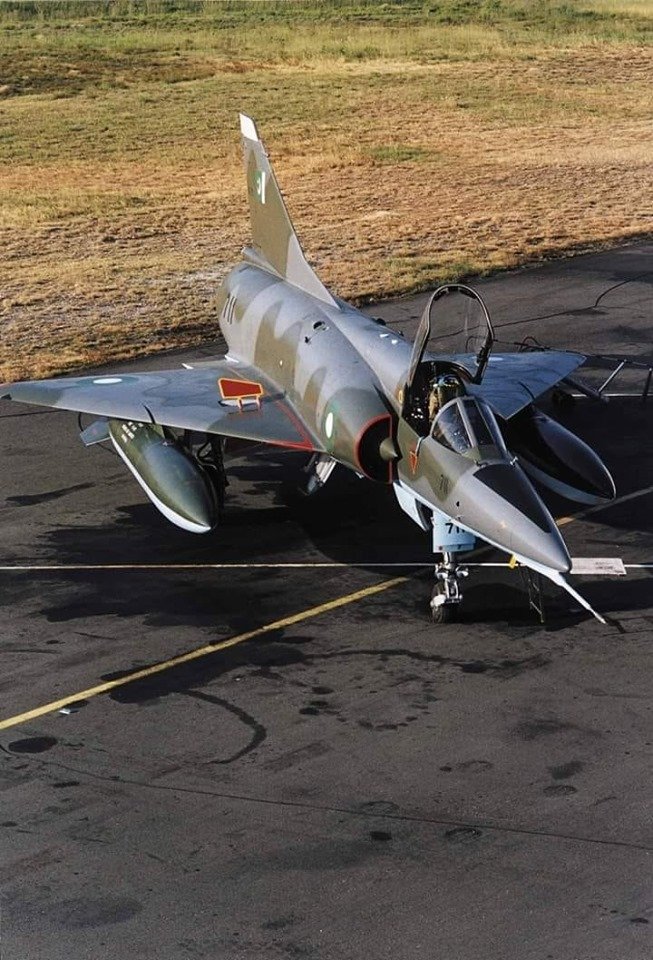
Conceived as a Cold War interceptor for France, the Mirage has fought with the Pakistan Air Force for half a century. We spoke to former PAF Mirage pilot Fahad Mahsood about flying and fighting in what is now one of the oldest fighter-bombers in frontline service.
Describe the Mirage in three words...
Gorgeous, Lethal, Challenging
What was its role, and was it successful?
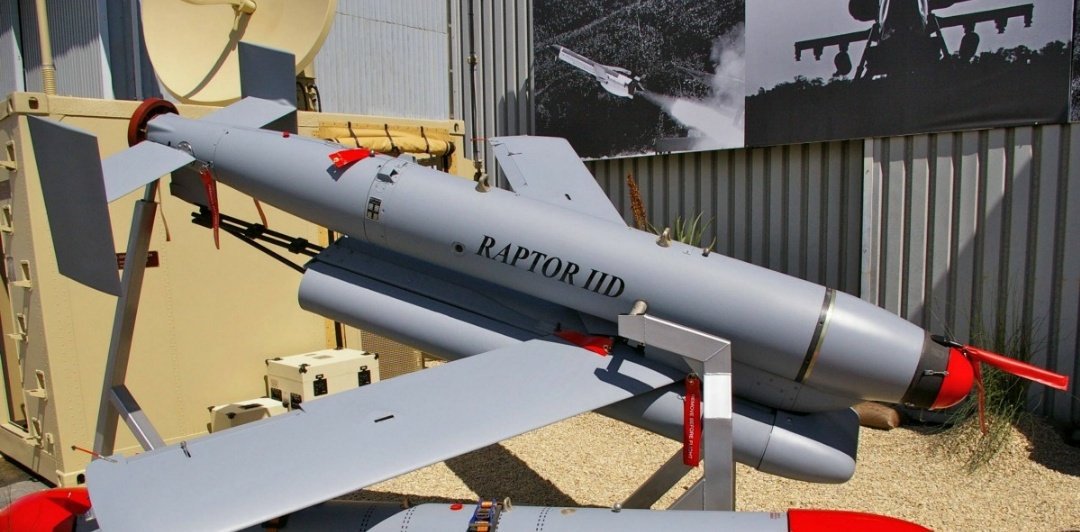
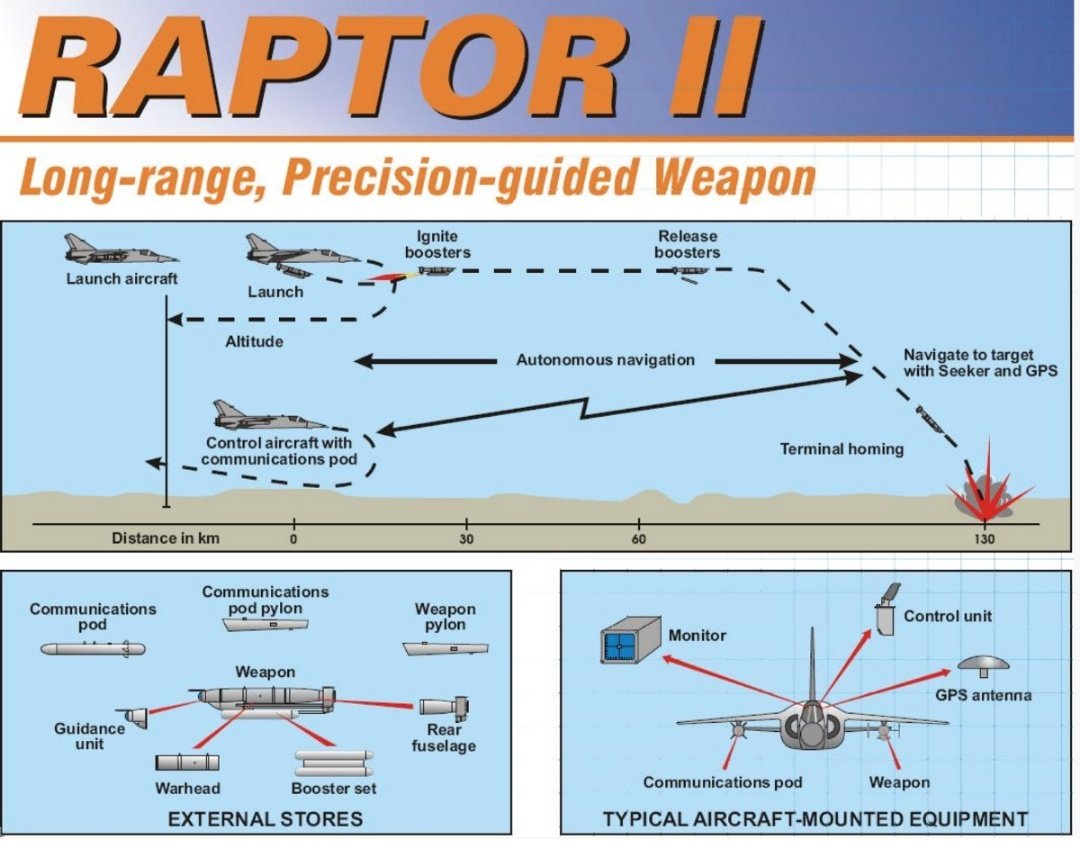
In the Pakistan Air Force, it has had a diversified role from Mach 2.0 air-to-air intercept fighter to air-to-ground bombing. It has shown its prowess in all roles, the event of note being its role in Operation Swift Retort of 27th February 2019 when it successfully delivered a H-4 SOW (Stand-off Weapon) against Pakistan’s eastern neighbour.
What’s the best thing about it?
Tactically, its innate ability to fly steady at extremely low altitude, at high speeds even with ground-based thermal currents in hot summers. In the long term, with correct maintenance practices, its airframe has unlimited life. So, it can fly ’till one wants it to fly. The PAF recently celebrated its fiftieth anniversary in service since 1967.
...and the worst?
Lacks slow-speed manoeuvring capability, dog-fighting, vis-à-vis contemporary fighter aircraft. Well, it was never made to be in a turning battle anyways. ‘Energy Maneuverability’ is its forte’ in air-to-air engagements and its good at what it does. Come in fast, point & shoot with high instantaneous turn rate capability, if no joy/unable, extend maintaining speed, gain separation/distance from the adversary, pitch back in oblique, re-enter the fight!
What was its biggest achievement?
The Mirage III/V, being a design of the 50s has stood the test of time. Not to mention the excellence poured in by engineers and technicians in keeping this beast alive and kicking. It has been the backbone of PAF for more than half a century. From strategic to tactical operations, you name it, it has done it for the Force… and done it well!

How would you rate it in the following
A. Instantaneous turn
Best in 30 to 40 degrees turn from linear flight path due high wing loading.
B. Sustained turn
Same reason as above, ‘high wing loading’ meaning increased induced drag generation with even small control surface deflection as well as relatively low thrust-to-weight ratio does not enable to it be a good dog-fighter in a turning battle.
C. Climb rate
Depends on the load carried. In the air-to-air configuration, it is ‘decent’ but cannot match present-day fighter jets.
D. Ride at low-level
This is where it beats everyone, IMHO!… The jet just doesn’t pay heed to any updrafts nor downdrafts… smooth as silk over land… and over water, even better! 😉
E. Crew comfort
Mirage is an ‘old-skool’ jet. Crew-comfort in dreary humid monsoon months did not mean a lot to designers in France in the 1950s. So air-conditioning is negligible on the tarmac during the summer, but in winters it is as cosy as sitting by a fire in a log cabin. I’ve performed ADA (Air Defense Alert) when the weather and the geopolitical situation were as hot it gets.
What are the biggest myths about the aircraft?

Until the end of the 1973 Arab-Israel War, the gleaming ‘David-Star’ Mirage-IIICJ had been considered unbeatable’ by middle-eastern Islamic countries. In came Flight Lieutenant Sattar Alvi (Retired Air Commodore) – a PAF member who flew for the Syrian Air Force with callsign Golan-8 on his MiG-21 – and shot Captain M Lutz of the Israeli Air Force out of the sky. The myth of the invincibility of Israeli Mirages was broken then and there. It only goes going to prove the old adage, ‘the gun matters, but the man behind the gun matters more!’
Tell me something I don’t know about the Mirage…
A smart, sleek and slender technician is always kept in the maintenance team by engineering officers to physically enter shock-cone laden, side-intakes of the Mirage to witness and identify the condition of the first few compressor blade stages for any cracks, bird hits or IOD (Internal Object Damage). I could not believe it till I saw it with my own eyes! 😊
What should I have asked you?
Until when is the PAF going to fly this ‘hunk of junk’? Honestly! I cannot say because it is playing some vital roles in the National Security matrix. That being said, the up-and-coming JF-17 Thunder is rather quickly taking over those duties with the correct amount of en vogue (and necessary) risk management. So, maybe another few decades, give or take a few! 😉
Advice to potential Mirage pilots?
- Completely comprehend slow-speed handling characteristics of the weapon system.
- Never-ever leave things to chance. Prepare missions well by reasoning through information on the jet ‘dog-houses’. Synthesize whole sortie into a mental model.
- Never go below the ‘magic number’ of 300 knots in combat. Backside of the power curve is a no-no.
- When in doubt, DECIDE and ABORT!
Which other types have you flown?
Short diversification. MFI-17 Mushak, MFI-395 Super Mushak, T-37 Tweety Bird, K-8 Karakoram-8, T-38C Talon (with USAF), Cessna 150, Cessna 172 to mention a few.

Is the Mirage still a viable warplane today?
It is very much a ‘player’ in the doctrine of the PAF as it was demonstrated on Swift Retort ops of 27th February 2019 skirmish with India. In air-to-ground role… YES! In air-to-air role… NO!
ENJOYING THIS? THEN YOU’LL LOVE THE HUSH-KIT BOOK OF WARPLANES Vol 2! Pre-order your copy here of this beautiful coffee-table book made from the choicest cuts of Hush-Kit with a generous slab of new unpublished material, magnificent unseen illustrations and other wonders from the thrilling world of military aviation.

What was your most notable mission?
That’s a very good question! Next question?!… ‘I-can-tell-you-but-then-I-would-have-to-kill-you!’ sort of a query… Let’s just say I have had my fair share of ‘exhilarations’ & ‘experiences’ that any Mirage operator can dream of doing.
What enemy aircraft types would it likely face in war and how would it fare against them?
My threat perception is based on the deep study of regional geo-politics & air power milieu. I would say stand-off weapon capability is the Mirage’s ‘go-to’ role for PAF, maybe it will be for tactical or strategic effect. Hence, the Force will not be willing to enter the hornet’s nest with this trusty ol’ steed and expose it to HIMAD (HIgh to Medium Air Defense), SHORAD (Short Range Air Defense) nor THAAD (Terminal High Altitude Area Defense).
16. What systems or weapons did it lack?
Contemporarily, ‘avionics’ is the biggest difference amongst various generations of fighter jets. Mirage is rather rudimentary a machine that does not hold too much gadgetry under its hood. This has its plus side, no EMP (Electro Magnetic Pulse) bomb nor emanator can disrupt its operations. But it does make it a more challenging fighter to fly for the pilot in the hot seat.
Arsenal-wise, the obvious choice of weapon is first-shot capability BVRAAM (Beyond Visual Range Air-to-Air Missile). With it, the ‘first-see’ competency is a pre-requisite. Hence, a pulse doppler, PESA (Passive Electronically Scanned Array) or better yet an AESA (Active Electronically Scanned Array) radar would be nice! I know it’s going a bit overboard, but for the glory of the Mirage… ANYTHING IS POSSIBLE! 😉
The extraordinary beautiful Hush-Kit Book of Volume 2 will begin when funding reaches 100%. To support it simply pre-order your copy here. Save the Hush-Kit blog. Our site is absolutely free and we want to keep it that way. If you’ve enjoyed an article you can donate here. Your donations keep this going. Treat yourself to something from our shop here. Thank you.
Describe life on ADA
We were doing ADA (Air Defense Alert) duties from a Main Operating Base in central Pakistan in 2008 after the infamous Mumbai attacks. Some Indians had proclaimed that Pakistan was involved. It was the month of October and dense fog had settled over the whole area. There was near-zero visibility. We were always keeping an alternate base for recovery because our then base commander (now a retired three-star) had said, ‘I won’t stop you from taking-off but do not come back to land due to the bad visibility conditions. So, we were always keeping another base in the north as an alternate for recovery. The plan was simple, whoever gets to the runway first liaises with ATC, lines-up single ship and take-off. The others will follow. There were many cockpit standby’s, even start-ups but alas! No scrambles. There were eight jets doing ADA. Good Times!

How do you rate the cockpit?
For a conventional cockpit, ergonomics was never the strong point. But all ‘information’ was within reach and dials well-placed. The ‘kidney-pad’ was always a relief and needed to be settled well while strapping up especially for the ‘long’ sortie.
What were the weapons and what was it like firing each? Were they effective?
It is safe to say, they were not ‘Smart’. So, it was a lot of pilot ability at play, rather rudimentary firing cues enable a little to use gadgetry on-board to engage the bull’s-eye.
General-purpose bombs, Durandals, CBU’s etc. But the best of the lot was the H-4. It was accurate yet the man behind the gun was literally flying the stand-off weapon to the target.
Should the Mirage be retired?
With the JF-17 Thunder taking-over responsibilities and over-taking the Mirage technologically, it is inevitable but a specific timeline cannot be given. In my personal opinion, it has paid for its money’s worth.
What do the F-16 pilots think of the Mirage community?
Both have their specific roles to play in their own arena. That does not mean there is no rivalry amongst the Viper and Mirage clan. It is always a ‘healthy’ competition between the two when in Dissimilar Air Combat Training. But on the ground, we are all on the same team.
Did the aircraft have a nickname?
No… Mirage is a Mirage!… The oldest one was nicknamed ‘Baba’ (Tail Number 101)
How reliable are the aircraft?
The reliability rate varies with Mirage’s version-to-version but engineers and technicians from the maintenance team have done a bang-up job keeping these birds airworthy even in this day and age.
What should I have asked you?
What is the FCF (Functional Check Flight) profile for the Mirage?
Highest of altitudes at highest of speeds to slowest of speeds to mid-air engine switch-off and relights in the air… One of the most demanding yet enthralling missions in the long list of profiles it conducts.
Which Allied Fighter scored the most victories in World War Two? I believe I know the answer

There is a popular idea that the P-51 or Hellcat scored the most victories of all the Allied fighter aircraft. What is the truth? Edward Rippeth believes he knows the answer to what many would consider an impossible question to answer.
By Edward Rippeth
For whatever reason, there is no published Spitfire count of victories – or at least not one I could find. It is in this apparent absence of this vital information, people have laid claim that the better documented Mustang (attributed 5599 kills) and the Hellcat (a very precise 5173 kills) are the top-scoring aircraft. However, it is my view that there is enough evidence to prove that the Spitfire achieved the edge in terms of total victories in World War II. And please note, this article is based on confirmed claims, not admitted losses by the Axis. Perhaps the real figures are lower, maybe by 25- to 30%, but that applies to both US air forces as well as the RAF. But my base assumption is that neither the RAF nor US Air Forces were more or less prone to over-claiming.
So the case for the Spitfire rests on four key elements.
1. The diminution of the Battle of Britain

Firstly, the Battle of Britain effect serves to negate the Spitfire’s overall contribution. The combination of the Spitfire’s apparently low and second-place tally (behind the Hawker Hurricane), combining with the unique importance of the Battle has overshadowed the Spitfire’s incredible overall contribution to the war. No air battle has been studied so intensely, and at no other point have victory claims been so thoroughly dissected. They were even the subject of UK Parliamentary debate in 1947, with full ‘official’ figures matched to German records published in the permanent Parliamentary record Hansard. This has inevitably brought the number down – with 2600+ claims whittled down to 1733, even though Luftwaffe records also record over 600 damaged aircraft. This means that the Battle history is based on documented Luftwaffe losses – and not confirmed pilot claims, unlike the big scores of the Mustang and the Hellcat. In addition, the more numerous Hurricane scored more kills in the Battle (with over 50% of kills to the Spitfire’s 42%), putting a question mark next to how effective the Spitfire could be. And finally, most tallies use an arbitrary cut-off at the end of the battle which reduces the number of kills significantly.
Sadly, this site will pause operations in December if it does not hit its funding targets. If you’ve enjoyed an article you can donate here.
One measure counts the battle as the intensive period between 8 August and 30 September – during which time the Spitfire scored 529 kills confirmed against Luftwaffe losses, i.e. not a huge number. In fact, for the pilots involved, German raids over Britain started over the Channel convoys immediately following the fall of France towards the end of June, and continued to the end of the year (interestingly, the 1947 Hansard record shows that in the preliminary period and after the start of October, RAF claims were significantly less than Luftwaffe losses). Therefore, in terms of confirmed pilot claims, the Spitfire in fact should be credited with about 1,400 victories for this campaign. This, though, is only the start of the Spitfire’s stellar career, and indeed the major role that RAF and Commonwealth fighters played in the war. Just 23% of RAF fighter victories occurred during the Battle of Britain.
2. The Spitfire fought the whole war

It is a rarely acknowledged fact that uniquely, the Spitfire both started and finished the war as a front-line fighter; only its great rival the Messerschmitt Bf 109 comes close. While the only aircraft the Spit shot down in the first month of the war were Hurricanes in the unfortunate Battle of Barking Creek, it was off the mark within six weeks of World War II starting, with its final kill in its naval Seafire guise out in the Pacific on VJ-Day – six years in which it was, if not always the most numerous, always the pre-eminent fighter plane of the Royal Air Force. In that time the Spitfire fought at Dunkirk, the Battle of Britain, had two years of battling over France before providing escort to the early USAAF raids; it also fought and won in North Africa, Malta, Italy, the reconquest of Burma, not to mention continuing to fight in western Europe until VE-Day. Spitfires had likely claimed over 3,000 victories before the Mustang or Hellcat even opened their accounts.
It’s probably fair to say wherever it turned up, the Spitfire won; it is perhaps no coincidence that Spitfires were not present during defeats like France, Greece, Crete, Singapore and the retreat from Burma. It couldn’t have served as the RAF’s number one fighter for so long, without knocking down lots of aircraft – and did so to decisive effect most notably in Malta and North Africa, where the course of the entire war changed dramatically. The pity is that the Spitfire hadn’t been deployed here sooner, which leads us to the one blemish on the record. The Spitfire’s bone-headed deployment in Sholto Douglas / Leigh Mallory’s Circus and Rhubarb raids of 1941 and 1942 with an unflattering loss ratio, due to using this brilliant short-range interceptor in large-formation fighter sweeps and strafing missions.
The extraordinary beautiful Hush-Kit Book of Volume 2 will begin when funding reaches 100%. To support it simply pre-order your copy here. Save the Hush-Kit blog. Our site is absolutely free and we want to keep it that way. If you’ve enjoyed an article you can donate here. Your donations keep this going. Treat yourself to something from our shop here. Thank you.
By contrast, the Hellcat and the Merlin-engined Mustang both served for less than two years and joined the war when in both Eastern and Western theatres, the early offensive onslaught of the Japanese and the Luftwaffe had been blunted, defeated and put on the defensive – thanks to aircraft such as the Spitfire, the Hurricane, the P40 and the Wildcat. In both cases, these two aircraft were not the only widespread and high-scoring US fighters – the Mustang was sharing its kills with the Thunderbolt and Lightning during the Defence of the Reich, while the Hellcat was sharing with the Wildcat, Corsair and Lightning in the Pacific. Nonetheless, it needs stating – both Hellcat and Mustang ran up massive totals very quickly and achieved a level of dominance over enemy fighters which the Spitfire seldom managed. The Spitfire of course shared its early glories with the Hawker Hurricane, but by April 1942 onwards was replacing it and for the last three years of the war, the Hurricane was very rarely used other than as a fighter-bomber. Thereafter the Spitfire was the key RAF day fighter in all theatres except the open oceans and after nightfall.

A lazy assumption I expected to see proven was that from the end of 1943, all the shooting down was being done over Germany by P51s and some by P47s, with Spitfires scarcely getting a look in. Undoubtedly the carnage inflicted by the US fighters was the major factor in the defeat of the Luftwaffe – but it doesn’t cover the whole story. It is clear from the scores of major aces (i.e. those with 12 or more kills) the Spitfire was a significant contributor, with 26% of the aerial kills in this group (the Mustang scores 39%). This was in the main due to the major role Spitfires played in clearing the skies of the Luftwaffe above the battlefields of western Europe post-D-Day. On the 29th June, 1944, the Canadian Fighter Wing led by Johnny Johnson destroyed 26 of the 34 aircraft shot down over the Normandy battle area that day. Further evidence is provided by the impressive number of Spitfire aces in the Northern European theatre between 1943 and 1945 – with Johnny Johnson himself claiming more kills than any other allied pilot (30 of his 38 total) in this campaign, with a pack of others including Canadians Don Laubman and William Kersley, Frenchman Pierre Clostermann, Englishman Stephen Daniel and Kiwi Johnny Checketts all achieving dozens of kills in Spitfires.
‘Defence of the Reich’ aces
Johnny Johnson (Eng, Spitfire) 30
Francis Gabreski (US P47) 28
Robert S.Johnson (US P47) 27
George Preddy (US P51) 26.83
John C.Meyer (US P51 / P47) 25
Pierre Clostermann (Spitfire / Tempest) 23.5
3. Statistics and more statistics – the scores of aces

While there isn’t a definitive ‘score’ for the Spitfire, the available statistical evidence points to the Spitfire shooting down more planes than its rivals. There are several ways to look at this. One available source is the scores of significant aces. While the top positions are broadly shared, significantly more RAF and Commonwealth aces than US aces have achieved more than 12 or more kills – 164 to just 125; a breakdown of totals for each of the aircraft types among these aces sees the Spitfire strikingly far ahead in terms of victories with the Hurricane in second. The Hellcat scores notably less on this measure, and is in fifth place behind the Mustang and Thunderbolt. Why the advantage to the RAF planes here? This is probably due to RAF aces being more likely to return to the fray than US aces and doing two or more tours over the course of a longer war. A lot of US pilots had only a short period of a few months to get their scoring in; this is reflected in the mission counts – for example, Robert S.Johnson flew 89 missions for his 27 kills – compared to Johnny Johnson’s 515 for 38 kills.
Total scores for 12-plus aces by aircraft type
| Supermarine Spitfire | 1272.7 |
| Hawker Hurricane | 919 |
| North American P51 Mustang | 651.5 |
| Republic P47 Thunderbolt | 375.2 |
| Grumman F6F Hellcat | 328 |
| Lockheed P38 Lightning | 293 |
Overall, the combined RAF total of aces is behind the US total (918 against 1,234). This is using the strictest criteria for RAF aces – i.e. at least five confirmed kills, with shared kills aggregated. However, the split by different aircraft types shows the Spitfire is top of the pile by number of aces, with the Hellcat ahead of the Mustang on this measure, the Hurricane and the Thunderbolt a little way behind. Another very telling split is that of the US aces, just 476 aced in the west; against 891 for the RAF. The Pacific was a much bigger theatre for US fighter aces.
Fighters listed by number of aces and their total kills
| Aircraft | Aces | Ace Kills |
| Supermarine Spitfire | 341 | 2967 |
| Grumman Hellcat | 305 | 2185 |
| Mustang | 274 | 2116 |
| Hawker Hurricane | 261 | 2230.5 |
If the victory totals of all aces are counted up, the Spitfire’s lead holds, but it’s closer. Thanks to the detailed breakdowns of individual ace scores in Shore / Williams Aces High, it is possible to very precise about the RAF ace scores and which aircraft the aces scored in which plane. This makes it very clear that one popular claim, that the Hurricane outscored the Spitfire, is incorrect. I’ve also added ace totals for the Mustang and the Hellcat, and this shows the Spitfire remains very clearly out in front on this measure – because more pilots became aces in the Spitfire, and of these aces, many more were high scorers. As you’d expect given the US has more aces, the combined total score of all RAF and Commonwealth aces is 7,983, significantly less than the US total – 9,341.
What the research also shows is that RAF pilots tended to switch their aircraft type more often than US pilots. A lot of Hurricane pilots from the Battle of Britain converted to Spitfires, or in the Mediterranean campaign, moved from Gladiators to Hurricanes and / or Tomahawks, and in plenty of cases moved from day fighter squadrons to night fighter squadrons where they ended up in twin-engine Beaufighters and Mosquitos. So aces in other planes may also have scored in Spitfires. The Williams and Shore record doesn’t stop with aces, they also include ‘near’ aces or pilots with some kind of claim on five aircraft, including probables and shared victories. Counting the scores of aces in other planes and ‘near’ aces, the Spitfire’s score moves up to 3,593, with the Hurricane on 2,730. And that’s the limit for logged confirmed RAF claims in the public domain for these two aircraft without having to dig through gazillions of archives.
4. The missing statistic – the non-ace scores

The ‘known known’ is the aces’ scores and for the Spitfire, the near aces’ scores; the unknown is a number for those under the waterline – all those hundreds, possibly thousands of pilots who shot down aircraft but not enough to achieve ace status. During the Battle of Britain, 2,937 pilots flew at least one sortie during the battle. Of these 178 were aces in the battle, and over 400 of these would become aces at some stage of World War 2, compiling over 3,500 kills. What of the other 2,500 pilots? What we do know is that 2,741 claims were registered up to October 31st, with about 400 more up to the end of the year. The Battle’s 178 aces scored 1,386 of these, and by my count, Shore and Williams logged 1,967 kills by WW2 aces and near aces. Therefore about 1,170 kills were claimed by non-WW2 aces – or 37% of the total. Is this ratio typical? Possibly not – very different circumstances may lead to a different ratio; pilots in a theatre like China-Burma-India with relatively little air combat (it saw just 20 RAF and C’wealth aces) are likely to see a proportionately much higher contribution by non-aces. But by getting to the non-ace percentage across the whole war, we can make an accurate estimate of all kills by the RAF and Commonwealth, including by plane type – and get to our Spitfire total.
ENJOYING THIS? THEN YOU’LL LOVE THE HUSH-KIT BOOK OF WARPLANES Vol 2! Pre-order your copy here of this beautiful coffee-table book made from the choicest cuts of Hush-Kit with a generous slab of new unpublished material, magnificent unseen illustrations and other wonders from the thrilling world of military aviation.
To do this, there is one further set of data. Squadron total claims, which are also available for many but not all RAF, RCAF, RAAF and SAAF squadrons. For example, the RAF’s second-highest scoring squadron, 92 Squadron, has 317.5 claimed scores, of which 204 are listed as by aces or near aces, i.e. 36% are ‘unknown’, i.e. very close to the Battle of Britain. However, some squadrons, like the South African 1 Squadron which fought primarily in North Africa, have over 50% unknown. A sample of ten squadrons shows well over 40% of kills are unlisted. Assuming this proportion is not affected by fighter type (and only two of the sampled squadrons did not use Spitfires at some time), this means that we can produce a final total for the Spitfire and Hurricane.
The victory totals of the US fighters accords with non-ace data for the USAAF Fighter groups and USN and USMC fighter squadrons. These show that non-aces for each squadron amount to about 62% of total kills – so the Mustang’s ace total of 2117 becomes 5570 – almost identical to the published number of kills for the Mustang (5599). So the squadron information effectively confirms the published numbers for US aircraft: the large gap between ace kills and total kills for the Mustang and the Hellcat has an explanation. The information on US aces doesn’t consistently include breakdown by aircraft type, and there’s no handy list of ‘near aces’, but I’ve put together a table including examples of US squadrons and fighter groups and RAF squadrons – including just the squadron ace totals, so it compares like with like. What it shows is that USAAF Fighter Groups tend to have higher non-ace scoring proportions than the RAF, which nonetheless tend to be greater than 50% of a squadron’s kills. What is also very clear is that high-scoring squadrons in all the air forces have a much lower percentage of kills by non-aces – notably David McCampbell’s high-scoring VF-15 US Navy squadron where they rack up just 31% of kills, even lower than the RAF’s 92 Squadron.
| Squadron | Total | Aces total | Non-aces total | Non-aces % | Notes |
| 1 SAAF | 165.5 | 60.83 | 104 | 63.3% | Fought mainly North Africa, top ace Kenneth Driver |
| 92 ‘East India’ RAF | 317.5 | 154 | 163.5 | 51.5% | 17 aces headed by Kingaby, Duke, Tuck and Bartley |
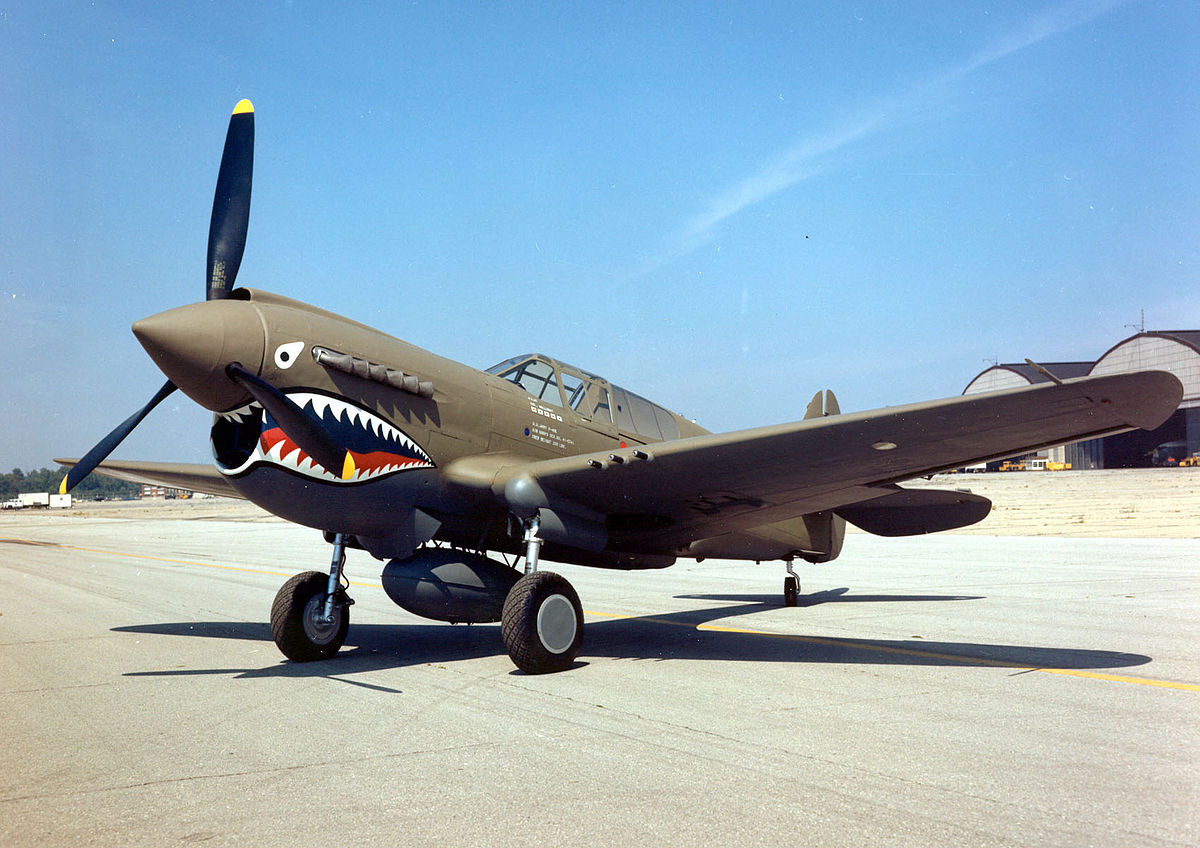
| 112 RAF | 206 | 88 | 118 | 57.3% | Shark’s teeth motif. 12 aces headed by Billy Drake. |
| 264 RAF | 138 | 75.33 | 62.66 | 45.4% | First Defiant squadron; nightfighters from 1941.10 aces headed by Thorn, Cook and Young |
| 331 RAF (Norway) | 114 | 65 | 49 | 42.7% | All-Norwegian; 9 aces headed by Svein Heglund |
| 23 Fighter Group | 621 | 220 | 401 | 64.6% | Top Asia-Pacific fighter group. Formed from Flying Tigers, China-Burma-India. 30 aces including Herbst, McComas, Older and ‘Tex’ Hill. |
| 325 Fighter Group | 520 | 185 | 335 | 64.4% | North African and Mediterranean fighter group, headed by Herschel ‘Herky’ Green. |
| 354 Fighter Group | 701 | 320 | 381 | 54.4% | Top European fighter group. 40 aces headed by Eagleston and Beerbower. |
| US Navy VF-14 | 146 | 51 | 95 | 65.1% | 8 aces headed by William Knight (7.5k) |
| US Navy VF-15 | 310 | 214.5 | 95.5 | 30.8% | Top-scoring US Navy squadron, headed by McCampbell (34), Chamberlain (13.5) |
| US Marines VMF-121 | 208 | 114 | 94 | 45.2% | US Navy squadron, 22 aces |
So how many victories did the Spitfire get? By adding the uncounted scores, the RAF and Commonwealth Spitfires scored 5,988 kills. This puts the aircraft just ahead of the Mustang on 5599.
However, there is one further set of scores that I could factor in, which is scores of the fighter types with other air forces. The Spitfire was flown by the USAAF, the Mustang by the RAF (as was the P47), and the Hellcat by the Royal Navy. Hurricanes were flown quite extensively by the Russians. Figures given for the USAAF Spitfire is 350, and the Royal Navy Hellcat 50. The Mustang has 110 kills listed for eight RAF aces and near aces (mainly Polish pilots but headed by the Greek pilot Bassilios Vassiliados with 5.83 kills), which translates into 185 kills using the 40% for unlisted kills. One last note – the Red Air Force flew Hurricanes in combat, although they weren’t popular. They had 17 aces, which suggests about 300 kills, not enough to close the gap (Red Air Force figures are very sketchy indeed, hence I’ve not included in this analysis). So the final listing is as follows – the Spitfire heading the Mustang and Hellcat. Hence my declaration that the Supermarine Spitfire is the highest-scoring Allied fighter type of World War II.
| Aircraft type | Kills |
| Supermarine Spitfire | 6,338 |
| North American P51 Mustang | 5,784 |
| Grumman F6F Hellcat | 5,223 |
| Hawker Hurricane | 4,850 |
| Republic P47 Thunderbolt | 3,786 |
Sources: Aces High Christopher Shore / Clive Williams (Grub Street); American Fighter Aces Association website; Stephen Sherman’s Acepilots.com; Aces of WW2.com; Wikipedia; Most Dangerous Enemy Stephen Bungay.
Edward Rippeth
Head of Primary Publishing, International schools
Cambridge University Press
The extraordinary beautiful Hush-Kit Book of Volume 2 will begin when funding reaches 100%. To support it simply pre-order your copy here. Save the Hush-Kit blog. Our site is absolutely free and we want to keep it that way. If you’ve enjoyed an article you can donate here. Your donations keep this going. Treat yourself to something from our shop here. Thank you.
Hush-Kit gives its readers a lot, if you feel this massive effort deserves support then head over to Patreon and subscribe.
The Hush-Kit Book of Warplanes Vol 1 here and Vol 2 here
It is time you ordered The Hush-Kit Book of Warplanes Vol 1. Vol 2 can be pre-ordered here.
The Top Ten US Navy Aircraft of World War II

It is striking both how few different types the US Navy operated during World War II, particularly from carriers, and how nearly all of them were either totally brilliant or just awful. Inconveniently, for lists such as these, the war ended just as some very impressive types were happening along: the excellent F8F Bearcat and AD-1 Skyraider were both flying by VJ day but neither had entered service, likewise the FD-1 Phantom, the first jet designed from scratch for carrier use. Most frustrating of all was the spectacular F7F Tigercat, it became operational the day before Japan surrendered so its contribution to the war effort was, understandably, limited. It is virtually impossible to make any left-field choices for USN aircraft during the war because, frankly, there weren’t any.
Shhh, here’s a secret link to the Hush-Kit Substack which has a load of very cool aviation articles.
So let’s take a look at the ones that did make it – hopefully one or two of them are slightly surprising and at least four made it into Steven Spielberg films, here are the top ten WWII USN aircraft:
10. Martin PBM Mariner

Better than the Catalina in every regard (except, initially at least, reliability) the Mariner is nonetheless fairly obscure today. Despite being the second most numerous flying boat ever built (with 1366 produced, just one more example was built than the next most numerous – the Beriev MBR-2), it never fully escaped from the PBY’s slow-moving shadow but the PBM deserves more recognition for it was an excellent flying boat that enjoyed lengthy service from before America’s entry into the war until the 1950s. One of several large aircraft to be tested by a piloted scale model (powered by two Chevrolet car engines, it was christened the ‘Tadpole Clipper’ and survives in the collection of the National Air and Space Museum), the first PBM flew with a flat tail but aerodynamic concerns led to the tail being given the same dihedral as the inner wing and resulted in the aircraft’s distinctive inward canted tailfins.

Entering service with VP-55 in September 1940 the Mariner, whilst generally successful, was considered somewhat underpowered and control in the event of an engine failure was marginal at best. A later switch to the Pratt & Whitney R-2800 solved that particular issue but the change came about relatively late in the war and the Wright R-2600s fitted to earlier aircraft were neither powerful nor reliable enough for a maritime patrol aircraft. Nonetheless, PBMs sank at least ten (some sources say 12) U-boats and were widely used in the Pacific, including in the nocturnal interdiction role. For operations at night, the Mariners were painted all over black and known as ‘Nightmares’ but never gained the same sort of notoriety as the PBY ‘Black Cats’ that undertook the same role.

Later PBMs carried an impressive array of electronic equipment, for example the PBM-5S2 carried the AN/APS-15 radar, the AN/ARR-31 sonar buoy signal receiver, an L-11 searchlight, and an AN/ASQ magnetic anomaly detector. The Mariner was an extremely well-armed flying boat, with nose, tail and dorsal turrets mounting two .50-cal machine guns apiece and a single hand-held weapon in each beam position. Later examples could carry 8000lb of bombs or depth charges, double that of the PBY.
ENJOYING THIS? THEN YOU’LL LOVE THE HUSH-KIT BOOK OF WARPLANES Vol 2! Pre-order your copy here of this beautiful coffee-table book made from the choicest cuts of Hush-Kit with a generous slab of new unpublished material, magnificent unseen illustrations and other wonders from the thrilling world of military aviation.
The PBM remained in frontline service during the Korean war and undertook patrols and ASR duties. One example was attacked by Chinese MiG-15s whilst on radar monitoring duties during July 1952 but managed to escape. The last examples served with the Coast Guard until 1958. The Mariner was also the direct basis for the Martin Marlin, the last and best flying boat produced in the US.
9. Lockheed PV-1 Ventura

Due to the fact that the US Navy quite famously fought the Japanese and Germans in World War II it is easy to forget now that their real enemy was always the US Army. Much as with their Japanese foes, interservice rivalry was (and remains) rife in the American armed forces, how else can one explain the existence of the Navy’s Army’s Air Force (or the Marine Air Corps Aviation as it is sometimes known) when the US possesses a perfectly good Army and Air Force already? Before (and indeed during) the Second World War the USAAF attempted to stymie the effectiveness of Naval aviation by demanding a monopoly on land-based heavy bombers and patrol aircraft and then, just to rub salt in the wound, using their spiffy new B-17s to intercept USN ships at sea (tee hee). As a result an affronted USN successfully demanded the War Department prevent any Army Air Force aircraft patrolling further than 100 miles from shore. All this went out the window when German U-boats started exacting a heavy toll on transatlantic shipping. The Navy, logically, saw the use of aircraft against maritime targets as their domain but were compelled to use flying boats and floatplanes but really wanted to use long-range, land-based patrol and reconnaissance aircraft with a large bomb load.
Luckily for the Navy, the USAAF wanted their Renton plant to build B-29s and they cunningly wangled permission to operate land-based bombers as a condition of the agreement. Not only that but they also managed to bag for their exclusive use a reliable but slightly obscure land-based medium bomber then in production, the B-34 Lexington, which would become the PV-1 and adopt the British name Ventura in Naval hands. RAF Venturas had not been particularly successful in the crowded skies of mainland Europe and were being discarded in favour of the Mosquito by the time the PV-1 was making its debut but over the ocean things were somewhat less demanding in terms of aerial opposition and the disappointing bomber became, through politics, chance, and interservice bickering rather than by design, an excellent patrol aircraft.

Like the visually similar Lockheed Hudson that preceded it, which had proved highly successful as a maritime patrol aircraft in British service, the Ventura was a derivative of an airliner, in this case the Lockheed Model 18 Lodestar. Although it didn’t have the range capability of the PB4Y Liberator, the PV-1 was well-armed, fairly manoeuvrable and quite fast. As such it was able to attack enemy shipping and submarines in a more aggressive fashion than the somewhat ponderous Liberator or the terrifically slow Catalina. Being essentially a medium bomber, the Ventura was able to carry depth charges, mines, a torpedo or regular bombs and could attack shore installations and land targets just as effectively as enemy shipping. It was also one of the first US aircraft to regularly carry radar and Venturas often acted as ‘lead-ships’ for non-radar equipped Liberator units, as well as conducting its own strikes. The most surprising usage it was put to was as a night fighter. The Marine corps, always at the bottom of the chain when it came to aircraft procurement, were casting around for a suitable radar-equipped night fighter, hoping for something along the lines of the Army’s P-70 Havoc or P-61 Black Widow, or the British Beaufighter or Mosquito (both of which had been procured for USAAF use). The only remotely suitable aircraft available was the PV-1 and sure enough it went into action as the Marines’ first radar equipped aircraft. Despite being a naval offshoot of a bomber with relatively limited performance, the Ventura did surprisingly well, claiming its first kill, a Mitsubishi G4M bomber, in the early hours of 13 November 1943. Subsequently, an improved variant with longer range, the PV-2 Harpoon, was developed towards the end of the war but a problem with its wing required a major redesign and this, the best version of this highly versatile aircraft saw only brief service before VJ day.

The political machinations that gave rise to use of the PV-1 as a maritime patrol craft are long gone but the Navy still uses many long range land-based patrol aircraft in the form of the Orion and Poseidon as a direct result of those machinations, and the Ventura was the granddaddy of them all.
8. Curtiss SB2C Helldiver

Aviation history is littered with examples of potentially world-beating aircraft that through bad luck or bad timing failed to achieve anything much, the Helldiver is an example of that much rarer breed: an aircraft that was unpopular, unpleasant and (initially at least) dangerous, yet delivered an outstanding service record. Widely criticised for its problematic development and unfortunate flying characteristics, as a case in point the Helldiver was rejected for British service due to ‘appalling handling’, the SB2C was nonetheless a spectacularly successful anti-shipping aircraft and (allegedly) accounted for a greater tonnage of enemy shipping sunk than any other US aircraft, of which more later. First flown in 1940, the SB2C was supposed to replace Douglas’s SBD Dauntless, which had always been regarded as something of a stop-gap, in the dive bomber role. Problems arose from the very beginning: the prototype exhibited structural weaknesses, poor handling, directional instability, and stall characteristics, pretty much all of which were derived from its limited dimensions, particularly its abbreviated fuselage length – dictated by the size of Essex class carrier deck lifts. The aircraft was simply too small for its weight. There were also problems with its Wright R-2600 Twin-Cyclone engine. Although this engine matured into a reliable power unit it is notable that around this time Grumman dropped it for the Hellcat and went with the R-2800 Twin Wasp instead.

Added to all this the Navy demanded nearly 900 changes to the design which seriously delayed the start of production and added greatly to the weight of the aircraft, exacerbating its handling woes. The aircraft was extremely difficult to control below 100mph yet the approach to the carrier was supposed to be flown at 98mph so deck landing was problematic at best. Arguably worst of all, the SB2C wasn’t even particularly good at dive-bombing, the controls became heavy in the dive and the dive brakes caused severe tail buffeting, both of which reduced accuracy. Throughout its career, though particularly at the start, the SB2C would be compared unfavourably against the Dauntless, an aircraft that was easy to fly, a supremely accurate dive bomber, and possessed greater range. The Helldiver’s reputation improved as its career progressed but it would never entirely escape the shadow of its illustrious predecessor.

Initial SB2C-1s were regarded as basically unfit for combat and nearly all were retained in the US for training (with the exception of those of a single Marine Corps unit operating from Enewetak Atoll). The SB2C-1C was the first model to serve aboard a carrier, going into action for the first time with an attack on Rabaul on 11 November 1943. The new aircraft was thoroughly disliked by crews who joked that SB2C stood for Son of a Bitch 2nd Class and nicknamed it ‘The Beast’. Later models massively improved handling and dive accuracy, especially after the introduction of the SB2C-3 which featured a more powerful Twin-Cyclone engine. During the last two years of the war Helldivers sunk over 300 Japanese ships (including, in concert with torpedo bombers, the magnificent battleships Yamato and Musashi) and attacked countless targets on shore. Helldivers officially accounted for 44 Japanese fighters shot down (almost certainly an inflated figure) and only 19 were ever lost to enemy aircraft though this says more about the parlous state of Japanese naval aviation than any particular quality of the aircraft itself, had it not appeared two years late that number would be much greater. Having said that it cannot be denied the Helldiver was tough (though early examples displayed suspect build quality): an abrupt pull out in a dive-bombing attack could lead to a 13G load on the airframe which the SB2C could, and did, absorb. Later models also engendered considerable affection from their crews: Helldiver pilot Bob Barnes for example stated that it was “a great dive bomber”.

By 1945 it was clear that single seat fighters could carry the same amount of ordnance as the Helldiver and weapon improvements meant that dive-bombing was no longer the sole means to achieve acceptable accuracy. Furthermore a fighter was far less vulnerable to enemy aircraft than a big heavy two-seater. As such the SB2C was the last purpose-built dive bomber in USN service, withdrawn from the active inventory during 1948. Surprisingly, given its less than stellar reputation, the SB2C found ready acceptance in foreign navies, seeing combat both during the Greek Civil war in the late 1940s and with France in French Indochina (Vietnam) as late as 1954.
Curtiss produced a training film in an attempt to dispel the bad vibes attendant on the Helldiver in which a ‘pilot’ rather unconvincingly claims “I think it’s a darn good plane myself” near the end. You can watch it here and see if you believe him.
7. Consolidated PB4Y-2 Privateer

The USN used many B-24 Liberators with great success for long-range patrol and anti-submarine warfare, designating them the PB4Y. The PB4Y-2 Privateer represented the ultimate Naval Liberator model: stretched, improved and optimised for maritime requirements. The finest land-based long-range maritime aircraft of the war, the Privateer was instantly distinguishable from its Liberator ancestors by its truly enormous single tailfin in place of the much more modest twin tails of the earlier aircraft. A slightly more detailed inspection would reveal that the forward fuselage was significantly lengthened and the oval-shaped engine nacelles were switched for circular units. The Liberator’s slightly awkward front turret arrangement had been cleaned up, a process made easier by the adoption of a spherical Emerson 128 turret for the nose position whereas on the rear fuselage, two large and distinctive teardrop blisters contained the positions for the waist gunners. The huge tail transformed the capricious handling of the B-24 and was to have become a standard fit on the standard Liberator bomber (as the B-24N) but only seven were produced before all outstanding Liberator contracts were cancelled at the end of the war, though there is some evidence that Consolidated themselves connived to have the B-24N contract quashed, the new variant had been designed by Ford and management at Consolidated were allegedly furious that a car factory might have developed a superior aircraft than they could manage.


Meanwhile, the Privateer had begun to show off its spectacular capabilities on operations. The first units became operational during late 1944 and arrived in theatre only during early 1945 so the Privateer’s WWII service life was relatively brief though quite intense. By this stage of the war advances in electronics meant that the Privateer possessed a versatile electronic suite (by 1940s standards anyway) that could be tailored to suit a variety of given missions. Thus Privateers acted as anti-shipping search and destroy units, airborne communication platforms, radar and radio-station hunter-killers, weather reconnaissance planes, or search and rescue aircraft to find downed airmen with their radio direction finders. They could even act as their own standoff anti-radar jamming unit. Privateers also managed to make history by becoming the first aircraft to take a fully automated guided missile into action in the form of the ASM-N-2 ‘Bat’ radar-guided glide bomb. Several ships were sunk by Privateers with this revolutionary weapon and several others put out of action, most notably the coastal defence ship Akugi.

After the war, its roomy fuselage and great endurance rendered the Privateer ideal for further usage as an ELINT platform and spy plane as the Cold war became more serious: a PB4Y-2 was shot down over the Baltic by Soviet La-11 fighters in April 1950 and several more operated by Taiwan were destroyed by Chinese fighters. Mothballed Privateers were reactivated for use in Korea where their air to ground radar was used to detect coastal incursions by North Korean vessels. By 1954 all had been replaced in USN service by the P2V Neptune, several Privateers enjoyed a second career with the Coast Guard whilst others served as highly effective firefighting aircraft until 2002. The Privateer was an aircraft ahead of its time that paved the way for a whole swathe of very long-range patrol aircraft packed with ever more sophisticated and powerful electronics.
Support The Hush-Kit Book of Warplanes: Volume 3 here

6. Grumman F6F Hellcat

A profoundly sensible update to the Wildcat, the Hellcat took the same basic formula of a nice handling, easy to fly airframe of immense strength and mated it to an engine producing nearly double the horsepower of the Wildcat’s Twin Wasp. The result was arguably the most competent carrier fighter of the war, equal or superior to virtually every enemy it faced and possessing none of the handling foibles of its great rival, the Corsair. On the other hand, although powered by the same engine, the Hellcat could never match the outright speed of the Vought aircraft. However, in action against the Japanese, absolute speed, though desirable, was not the most important quality a fighter could possess and the Hellcat enjoyed a healthy performance advantage over its primary opponent, the A6M Zero.

Developed in record time, the F6F was initially perceived as little more than a low risk back-up should F4U development go awry. Grumman only received a contract to build the prototype (as an ‘improved F4F’) on 30 June 1941. This was over two years after the first flight of the Corsair, this was a lifetime in aviation development terms at the end of the 1930s, yet the first production Hellcat rolled off the line only four months after the first production Corsair, and despite the head start of the Vought team, the F6F would make up the primary equipment of the USN fighter squadrons throughout 1944 and 45. By the time the Hellcat entered combat in August 1943, it was clear that US forces were on the ascendant in the Pacific and the relative quality of Japan’s aviators and equipment was definitely, in the main, diminishing. Nonetheless, the F6F’s claimed victory to loss ratio of 19 to 1 (5156 kills against 270 losses), whilst definitely (and innocently) inflated, is undeniably impressive.
ENJOYING THIS? THEN YOU’LL LOVE THE HUSH-KIT BOOK OF WARPLANES Vol 2! Pre-order your copy here of this beautiful coffee-table book made from the choicest cuts of Hush-Kit with a generous slab of new unpublished material, magnificent unseen illustrations and other wonders from the thrilling world of military aviation.

The Hellcats’ greatest moment was probably the Battle of the Philippine Sea in June 1944, the largest carrier battle in history, when US carrier aircraft destroyed around 750 Japanese aircraft for the loss of less than two dozen Hellcats. The F6F was the sole US fighter type involved in this action, which destroyed 90% of the aircraft available to Japanese carrier air groups in just two days and effectively destroyed the Japanese Navy’s ability to operate aircraft at sea. A truly superb fighter aircraft, the Hellcat was available in numbers exactly when it was needed and remains inextricably linked with the next aircraft on this list:
5. Chance Vought F4U Corsair

An aesthetically striking aircraft, the Corsair managed to weather a painful introduction to carrier operations to emerge not only as one of the finest aircraft of the conflict and but also as one of the most successful combat aircraft of all time. The first American single-engine fighter to exceed 400mph ended up becoming the last piston engine fighter to score an air to air victory (in 1969) but had it not been for the exigencies of war it is likely that the F4U would never have served from a carrier deck at all. The prototype first flew in November 1940 and, although possessed of excellent performance, the Navy wanted changes. Top of their list (due to information being gleaned from air combat in Europe) was an increase in armament from the two .30 cals in the nose and two .50 cals in the wings to a more viable six .50 cals in the wings. This modification required the deletion of the wing fuel tanks and for the aircraft to maintain any kind of range ability an alternative placement for the fuel had to be found. Centre of gravity issues meant the fuel had to be stored either in or directly above the wing and that’s where it went, a large fuel tank was inserted into the fuselage, over the wing. This in turn necessitated moving the cockpit backwards to allow room for the fuel and this was the origin of the F4U’s most problematic feature for deck landing – the pilot was unable to see over the nose. This issue was compounded by unfortunately stiff shock absorbers in the undercarriage which resulted in the aircraft bouncing back up after the wheels touched the carrier deck, leading potentially to the hook missing all the arrestor wires and an inevitable crash.

It is often stated that the Corsair failed its carrier qualification tests and that it took the British Fleet Air Arm to develop landing techniques for it but this is a myth. Three USN units had carrier-qualified before the FAA even started to receive Corsairs. Nonetheless, the fact that the F4U was acknowledged to be a difficult aircraft to deck land, particularly when compared to the docile Hellcat, undoubtedly contributed to the decision, taken to simplify logistics of spare parts supply, to equip land-based Marine-corps units with Corsairs and operate Hellcats from carriers. The Navy’s loss was the Marine Corps gain, accustomed to receiving the Navy’s cast-offs the Marines found themselves in possession of arguably the finest naval fighter in the world (though most Hellcat pilots would likely disagree) and proceeded to utilise it to great effect. It is notable that the highest-scoring Corsair ace of the war was a Marine Corps pilot: Robert M Hanson with 25 victories. With improvements to the airframe and handling techniques worked out, the F4U returned to US carrier decks permanently in December 1944.

The Corsair’s official tally is 2140 aircraft shot down against 189 combat losses, a ratio of 11.3 to 1. This number (like that of the Hellcat) was undoubtedly an overestimate but its record in air combat was astoundingly good. Although the Hellcat shot down more aircraft during World War II and was described by many pilots as a superior dogfighter, the Corsair rates a higher spot due to the fact that it was replacing Hellcats in carrier units by 1945, its greater ultimate development potential, and its astounding longevity: the Corsair flew on in combat service through Korea (scoring 12 kills) and beyond, the Hellcat didn’t. And the Corsair scored the last piston engine air to air kill in history, 17 years after the last Hellcats were expended as radio-controlled bombs.
Also it looks more exciting. Unlike:
4. Grumman TBF Avenger

When the Avenger first went into action, five of the six aircraft committed to combat were destroyed. Hardly an auspicious start but the Avenger would ultimately reverse its reputation from this bloody baptism.
A popular myth surrounds the name ‘Avenger’ in which the name is said to have been chosen because the TBF was going to avenge Pearl Harbor. In reality the name had already been picked two months before the attack but the TBF was the first new American aircraft to enter service after the US entry into the war so it’s easy to see how that story gained credibility. Despite looking about as sleek as a washing machine and being the heaviest single-engine aircraft of the entire war, and being saddled with the nickname ‘Turkey’, the chunky TBF was surprisingly sprightly in the air (though could never be described as agile) and proved extremely effective. It also had some star quality – Paul Newman was an Avenger gunner (he wanted to be a pilot but was ruled out due to colour blindness) and George HW Bush, the youngest Naval aviator of the war, piloted a TBF in combat (and was shot down for his trouble).

Unlike its dive bombing partner, the SB2C, the torpedo bomber Avenger enjoyed a remarkably trouble free introduction to service, being a simple aircraft to fly and deck land, the worst criticism levelled at being that it was a little underpowered and difficult to get out of in an emergency. Like all Grumman products it was possessed of amazing strength and could be operated even from small escort carriers with relative ease. Its combat record speaks for itself, kicking off with the destruction of the battleship Hiei in November 1942 and following it up with numerous other vessels culminating in the shared destruction, in concert with the Helldiver, of the super-battleships Yamato and Musashi.

Over the course of the war the primary function of the TBF switched from anti-shipping missions to ever more commonplace attacks on land targets and the Navy’s premier torpedo aircraft saw much more action as a conventional bomber.But arguably the most important contribution the TBF made to the war was as an anti-submarine aircraft, second only to the Liberator for the number of submarines it sunk. The Avenger was able to make use of the new technology of sonobuoys and the Mark 24 ‘mine’ (or Fido) which was actually an acoustic homing torpedo. Its most impressive victim with this weapon was the Japanese cargo submarine I-52, which was carrying, amongst other things, over two tons of gold and three tons of opium(!) to Germany and intending to return with various high-value items such as bombsights, aircraft components, and, worryingly, 800kg of uranium oxide. I-52 was sunk, gold, opium and all, by a pair of ASW Avengers from escort carrier USS Bogue in June 1944 before it ever made it to Europe.

Postwar the Avenger served on as an ASW and AEW asset for many years before enjoying a lengthy civilian career as a firefighting aircraft, a role to which its sturdy construction, a hallmark of its naval heritage, made it well suited. The last operational firefighting Avenger was retired as late as 2012. During its busy career, as well as spoiling that prime opium, the TBF managed to shoot down a V-1 ‘doodlebug’ and was the surprising victor in a dogfight with a Nakajima Ki-44 at low level. Most famously perhaps the Avenger is inextricably woven into the legend of the Bermuda Triangle following the infamous disappearance of ‘Flight 19’, five TBFs on a training exercise which vanished in December 1945. An event which led to this scene in Spielberg’s mashed potato sculpting classic ‘Close Encounters of the Third Kind’ (which also features a sneaky Hellcat getting in on the action).
3. Grumman F4F Wildcat

Despite losing out to the Brewster F2A Buffalo to be the US Navy’s first carrier borne monoplane fighter, the pugnacious Wildcat became the finest carrier fighter of its generation and essentially won the air war over the Pacific whereas the poor old Buffalo was consigned to obscurity and inclusion in many ‘world’s worst aircraft’ books and articles (notwithstanding insane levels of success in Finland). Originally designed as a biplane (the unbuilt F4F-1) the Wildcat was hastily altered into a monoplane (F4F-2) when it became clear that the biplane was yesterday’s news, even in an operating environment that required good low-speed controllability and a strong structure – such as a carrier deck – all of which played to the biplane’s strengths. Never particularly fast, the F4F was manoeuvrable (though not in the same league as the A6M Zero, its primary opponent), well-armed, immensely strong and a profoundly good deck landing aircraft and this, as it turned out, was what the Allies desperately required. The Wildcat first saw service with the Royal Navy, becoming the first US aircraft in British service ever to claim a victory in combat when two shot down a Ju 88 on Christmas Day 1940 – oddly the final RN ‘kill’ of a Luftwaffe aircraft was also achieved by Wildcat on 26 March 1945 when four(!) Bf 109Gs were shot down over Norway.

Meanwhile, in USN service, after the Brewster F2A was withdrawn from carrier operations in late December 1941, the F4F became the only operational fighter on US carriers until the first Hellcats entered the fray in September 1943. As such it was the F4F that provided a fighter presence throughout all the Navy actions for the first year and a half of the conflict and it was during this period that the truly decisive battles of the Pacific war (Midway, Guadalcanal, Santa cruz etc) were fought when the Imperial Japanese Navy was at the peak of its power and that the ultimate outcome of the conflict was less certain. By the time the Hellcat and Corsair appeared in any numbers the war in the Pacific was effectively won. Against the Zero the Wildcat was at a distinct disadvantage, on paper at least, being slower, less manoeuvrable and (sort of) outgunned by the Japanese aircraft. It more than made up for these deficiencies with the superior tactics employed by the US aviators, aided massively by their reliable radio equipment (by contrast the Zero’s radio was described as “useless” by ace Saburo Sakai), and its incredible toughness. Sakai described the Wildcat’s remarkable sturdiness as follows: “For some strange reason, even after I had poured about five or six hundred rounds of ammunition directly into the Grumman, the airplane did not fall, but kept on flying. I thought this very odd—it had never happened before” Meanwhile in the Atlantic the F4F, operating from tiny escort carriers helped to end the threat posed by the Focke Wulf Condor: the ‘Scourge of the Atlantic’ which attacked merchant shipping and passed on convoy details to U-boats. Both RN and USN F4Fs supported the landings of Operation Torch, shooting down several Vichy French aircraft in the process, which is somewhat ironic as France was the first overseas customer for the Wildcat (the F4Fs they ordered were not delivered by the fall of France so the order was taken on by the UK instead).

Even after being supplanted on the decks of the fleet carriers, Wildcats remained an important presence on escort carriers, too small for the Corsair or Hellcat, until the end of the war in both the Atlantic and Pacific, production (latterly by General Motors) only ceasing in August of 1945. The Wildcat proved that reliability, toughness and ease of use were qualities that should not be underestimated, especially at sea. The US Navy fielded two better fighters but due to the battles it fought and when it fought them but the Wildcat was the most important US naval fighter of the war.
Here’s a new thing! An exclusive Hush-Kit newsletter delivered straight to your inbox. Hot aviation gossip, opinion, warplane technology updates, madcap history and other insights from the world of aviation by @Hush_Kit Sign up here:
2. Consolidated PBY Catalina

Memorably namechecked, along with the Ventura, by Quint in Spielberg’s 1977 angling classic ‘Jaws’, the ‘big fat PBY’ was a sight that meant the difference between life and death for thousands of downed aircrew and shipwrecked sailors. It is therefore one of very few combat aircraft that may have directly saved more people during the war than it killed, though it’s impossible to know for sure. And that’s even before you take into account its many years of firefighting service postwar. It was, by virtually any standard you care to apply (apart from maximum speed), the most successful flying boat of the Second World War and arguably in all aviation history.

Despite being jokingly referred to as the slowest combat aircraft of the war, the Catalina achieved an amazing amount in US Navy service. As well as being the foremost Allied air-sea rescue aircraft of the conflict (in which role it was invariably referred to as ‘Dumbo’). It was second only to the Liberator (coincidentally designed by the same man: Isaac M Laddon), and tied with the Avenger, as a submarine-destroying aircraft and thus demonstrably helped keep the critical merchant convoys sailing to the UK. Its exceptional endurance made it an outstanding maritime patrol platform, convoy escort and long-range reconnaissance asset. It performed spectacular and highly effective low-level nocturnal interdiction, resulting in the sinking of thousands of tons of Japanese shipping. Yet the PBY could also be utilised as a straightforward cargo transport.

The ‘Cat’ also made history by (surprisingly) being the first USN aircraft to score a confirmed air to air victory in World War Two. On 10 December 1941, a PBY flying off the Philippines was intercepted by three A6M2 Zeroes and the bow gunner succeeded in shooting down one of the attacking fighters. Later a Catalina crew famously spotted the Japanese task force on its way to Midway Island, thus beginning the decisive Battle of Midway which represented the turning point of the Pacific war. It was the first operational USN aircraft to carry radar and the first to utilise MAD gear in combat.

One of the most important aircraft of the war, the Catalina was built in greater numbers than any other flying boat in history and served with the armed forces of an astounding 31(!) nations, the last being retired in 1982 by Brazil. The earliest surviving airworthy Catalina, of around 20 currently flying worldwide, is a 1941-built PBY-5A now operated by the American Heritage Museum. This aircraft is significant as it is the single most successful anti-submarine airframe in history, having accounted for 3.5 U-boats during the Battle of the Atlantic.
1. Douglas SBD Dauntless

A good contender for the single most genuinely decisive combat aircraft in history, the Dauntless delivered the killer blow at the Battle of Midway, a blow from which the Imperial Japanese Navy never recovered and which marked the turning point of the Pacific War. Noted aviation author Bill Gunston wrote “It is remarkable that the SBD, so similar to Britain’s disastrous Battle, should have turned the whole tide of war in the Pacific” which is kind of true in that their performance and offensive armament were eerily similar but of course the SBD was a dive bomber and as such an order of magnitude more accurate than the Battle could ever be.

Designed by the brilliant Ed Heinemann, the SBD was originally a Northrop aircraft, being an improved version of Northrop’s BT-1, by the time an improved version appeared Northrop had become the El-Segundo division of Douglas so the BT became the SBD, standing for Scout Bomber Douglas, though crews would joke it stood for Slow But Deadly. This nickname aptly illustrates the affection in which the Dauntless was held by its crews for as well as being a terrifically accurate dive bomber, the SBD was an easy aircraft to fly and deck land, which counts for a very great deal amongst carrier aircrews, and the SBD was always the standard by which its problematic replacement the SB2C was judged – and found wanting.

But the fact remains that the slow and cumbersome SBD should have been terrifically vulnerable when it wasn’t committed to its dive bombing attack. The Royal Navy rejected it: RN test pilot Eric Brown wrote that it was “a decidedly pre-war aeroplane of obsolescent design and certainly overdue for replacement” (which is a bit rich coming from an air arm still happily operating the open cockpit biplane Fairey Swordfish) yet the Dauntless destroyed more Japanese shipping than any other Allied aircraft… possibly – the same claim is made for the SB2C. Significantly however, the Dauntless sank capital ships in the early war period, when the Japanese navy still possessed a formidable aviation component, making such a feat extremely difficult and dangerous to achieve.

Six carriers were lost to Dauntlesses, three of them in the space of six minutes at Midway. It seems that the SBD was also a bizarrely lucky aircraft – the carrier Akagi was sunk by a mere three aircraft, each armed with just one 1000lb bomb, and it was also difficult to shoot down: for reasons that remain slightly unclear the SBD suffered the lowest loss rate of any US Navy aircraft in the Pacific War. Which is odd as the Army version, the A-24 Banshee, received such a severe mauling by Japanese fighters over New Guinea that it was relegated to non-combat duties during 1942. Unbelievably SBD crews were also officially credited with 138 aircraft shot down, 106 of these victories being over Zero fighters, and in this case it really is unbelievable because this was an overclaim of staggering proportions. The highest scoring SBD ‘ace’ crew was pilot John Leppla and gunner John Liska who were gained seven kills during the Battle of the Coral Sea. In reality no Zeros were lost to SBDs during this action.

The SBD sank the first of many vessels when Dauntlesses from USS Enterprise sent Japanese submarine I-70 to the bottom on 10 December 1941, a mere three days after the Pearl Harbor attack. The SBD then proceeded to see more action than any other US type during 1942, winning the Battle of Midway in the process, before following it up with some impressive anti-shipping work at Guadalcanal and elsewhere throughout 1943. Just to prove its effectiveness was not limited to the Pacific, the Dauntless also saw action in Operation Torch and sank five German ships in Bodø harbour, Norway, during Operation Leader in October 1943. They remained in service on carriers until mid 1944, the final major engagement in which carrier SBDs saw action being the Battle of the Philippine Sea in June of that year where three Japanese carriers were lost. Meanwhile, in Marine Corps service the Dauntless served on until the end of the war.
Ultimately, though others helped (a lot in some cases), this was the weapon that won the Pacific war at sea.

Hush-Kit needs your donations to carry on! This site is absolutely free, to remain so it needs your donations. If you can afford it and wish to, hit the donations buttons on this page. Our supporters are everything! Thank you.
Buy The Hush-Kit Book of Warplanes today

______________________________________________________________________________________________________________