
The Top 10 Fighter Aircraft of 1942
We Rank The Ten Best Fighter Aircraft of 1942

1942 was absolute carnage. A fighter aircraft was destroyed, on average, every 38 minutes – around 38 a day. Approximately 14,000 fighters were lost across the year, making it one of the bloodiest years in fighter history.

From the Russian steppes to the skies above occupied France and the Pacific islands, 1942 saw some of the fiercest and most consequential air battles of the Second World War. On the Eastern Front, the Luftwaffe and Soviet Air Force fought enormous aerial campaigns as German forces drove towards Stalingrad and the Caucasus. In Western Europe, the arrival of the formidable Fw 190 in numbers exposed the Spitfire V’s vulnerabilities, prompting an urgent RAF response. On 19 August 1942, above Dieppe, more than 150 Allied and German aircraft were destroyed in the air; the RAF lost 106 aircraft and 62 airmen were killed in this, its highest single-day aircraft losses.
Meanwhile, in the Pacific, Zeros initially dominated, but the Battles of the Coral Sea and Midway inflicted devastating losses on Japan’s carrier aviation and its irreplaceable veteran pilots. Over Guadalcanal, American and Japanese fighters fought an exhausting campaign for air superiority.

In just three years since the outbreak of war, fighter performance had advanced dramatically. Top speeds had climbed from around 350 mph to more than 400 mph for the best fighters, while engine power had increased by roughly a third, adding around 500 horsepower. Rifle-calibre machine guns were increasingly giving way to heavy machine guns and 20mm cannon, whose individual projectiles carried several times the energy and, in the case of explosive shells, could inflict orders of magnitude more damage with a single hit.

Aerial combat itself was evolving. High-speed, vertical tactics such as ‘boom-and-zoom’ had long been around, but increasingly powerful engines and faster aircraft made them more effective than ever. The ability to build and conserve energy, exploit altitude and deliver a devastating firing pass before escaping was becoming increasingly important. The traditional turning dogfight remained a feature of aerial combat, but speed, altitude and the ability to dictate an engagement were becoming ever more decisive.
While other top-ten lists focus on the war overall and miss the real story, we want to zoom in on one pivotal year and compare the fighters to their true peers. To get to our results, we had many heated debates, three weeks of research, around forty coffees, a few hundred grams of Elvanse, and three bottles of wine. We are finally ready to share our results, so strap in! Here are the ten most formidable fighter aircraft in combat in 1942.
By Joe Coles and Edward Ward
10: Mitsubishi A6M Zero ‘Zero Hour Contract Killer’

The A6M was at the absolute zenith of its operational career in 1942, proving dominant wherever it was encountered. The world’s best carrier fighter on its debut, the Zero’s excellence had apparently been missed or ignored by Allied intelligence, and its performance came as a rude shock to opposing pilots.

The Zero’s agility is legendary, but in 1942 it also had a respectable turn of speed by contemporary standards; at 338mph, it was likely the third-fastest carrier fighter in the world, though slower than the best land fighters. It also possessed both 20mm cannon and machine guns. Its range was astonishing and let it appear at distances considered beyond the reach of fighters.
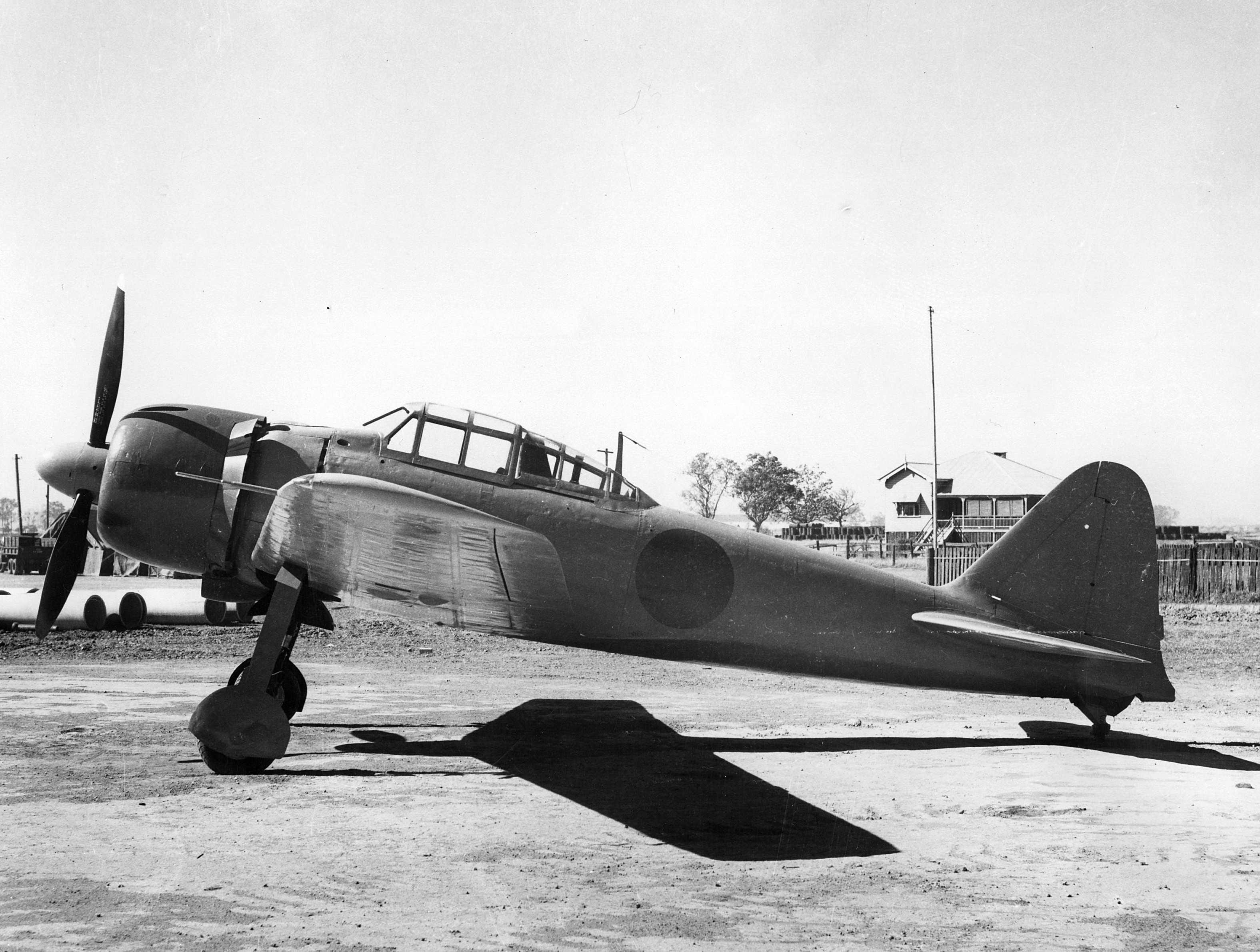

The Zero was not flawless: its large fuel capacity required weight savings elsewhere, and its lightweight structure was vulnerable to gunfire. But in 1942 this wasn’t widely known and the Zero’s abilities assumed near mythic status. To give just one example of its prowess, in April 1942, thirty-five Hawker Hurricanes intercepted thirty-six Zeroes over Colombo. Twenty-one Hurricanes were shot down in exchange for just one Zero.
Development proved difficult. The A6M3, introduced in mid-1942, featured a more powerful but heavier engine and gained just 11km/h over the A6M2 while sacrificing 620 miles (1000km) of range. From mid-1943, Allied fighters began to claw back supremacy, but throughout 1942 the Zero was unbeatable in Asia and the Pacific.
9: Curtiss P-40 Warhawk ‘Curtiss LeDefinitely’

Despite being staggeringly important to the war effort, as well as sporting shark’s mouth nose art better than any other aircraft, the P-40 Warhawk has been somewhat overlooked in the popular imagination. Generally remembered (if at all) as the fighter of the volunteer “Flying Tigers” in China, this was just a tiny fraction of the P-40’s overall operational usage.
By the time the Flying Tigers entered combat, P-40s had achieved considerable success with Commonwealth squadrons in Africa and with Soviet units over Russia. Indeed, the Warhawk had quietly established air superiority over the Western Desert during 1942/42.

Spitfires weren’t available, and the P–40 was superior to the Hawker Hurricane, progressively replacing it to become the premier Allied fighter in the desert. Despite its lack of performance at high altitude, most combat over the desert was fought at lower levels, which played to the P-40’s strengths and in 1942, the Merlin-powered P-40F Kittyhawk II was the best variant in service.
Extremely strong, reliable, fairly fast (the P-40F reaching 364mph), and highly manoeuvrable, the P-40 was easy to fly and proved highly effective. It could tackle the Zero if its speed was kept fairly high, and was never outclassed by the Bf 109 at lower altitudes. Ultimately, over 200 pilots achieved “ace” status with the P-40.
8: Bell P-39 Airacobra ‘A Tricycle Made To Screw’

The P-39 is the odd man out. Whereas the engine of every other fighter was mounted at the front, the Airacobra’s engine was mid-mounted in the fuselage behind the cockpit; whereas other aircraft had a taildragger configuration, the P-39 had a tricycle undercarriage; and the reason for both was to allow for a big gun; whereas all other Allied fighters’ biggest guns were 20mm, the P-39 had a massive 37mm autocannon that weighed twice as much as a Hispano.
Originally designed as a high-altitude interceptor, the P-39 had a turbo-supercharger to maintain engine power at altitude. However, in 1939, Bell and the US Army removed it over concerns about weight, drag and mechanical complexity, severely limiting high-altitude performance. This made it unpopular with American and British pilots, but proved no handicap on the Eastern Front, where most combat occurred at low and medium altitudes. Soviet pilots used it to devastating effect; five of the ten highest-scoring Soviet aces achieved most of their victories flying the ‘Kobrushka’.

The P-39 was impressively manoeuvrable; a 1941 British report noted, “The ME.109 would not compete with the Airacobra in a turn, and even if the ME.109 was behind at the start, the Airacobra should be able to outmanoeuvre and get on the tail of the ME.109 within two complete turns.” It was also fast, with the D model reaching up to 373mph in 1942.

American P-39s and P-400s saw fierce combat across the Pacific, fighting Zeros over New Guinea from April, defending Port Moresby and joining the desperate struggle for Guadalcanal from August. They also attacked Japanese positions in the Aleutians. Although faster, especially in a dive and more heavily armed, even the agile Airacobra struggled against the exceptionally manoeuvrable Mitsubishi A6M Zero, which could comfortably out-climb and out-turn it in a dogfight. Some pilots adored the P-39, finding it more enjoyable to fly than the P-51.

7: Yakovlev Yak-9 «Акробат смерти»

The Yak-9 was the most versatile Soviet fighter of the war and the most widely produced, with 16,769 units pouring off the line despite the privations of invasion. It was a member of the Yakovlev fighter series, of which over 35,000 were produced in total. Yaks were famous for their lightweight design, excellent climb rate and superb manoeuvrability.
The Yak-9 replaced the Yak-7B’s wooden main wing spars with lighter duralumin H-section spars, reducing structural weight by approximately 150 kg and allowing greater fuel capacity and range. It also inherited the improved canopy of later 7Bs for better rear visibility, although it remained a mixed wood-and-metal aircraft rather than an all-metal fighter.

The Yak-9 arrived just as the Battle of Stalingrad was turning in the Soviets’ favour in late 1942. Soviet forces had completed the encirclement of the German Sixth Army, and the Yak-9’s arrival was another encouraging development. With a solid top speed of 373 mph, firepower from a 20 mm cannon and a 12.7 mm machine gun, and superb turning performance at low and medium altitudes, the Yak-9 was a good fighter. It had an impressive power-to-weight ratio at combat weight, outperforming the Macchi C.202 Folgore, P-40, and especially the P-39 Airacobra.
The Soviets had yet to fully match German fighters (that would happen the next year with the La-5FN), but the Yak-9 was not totally outmatched and could even outturn the Fw 190s and Bf 109s under certain conditions. It was tough enough to endure winter fighting, and relatively simple to maintain. Importantly, it could also be made easily and cheaply. Arriving late in the year, it would not see its greatest success in ’42, but by ’43 it was proving formidable. Marcel Albert, France’s highest-scoring fighter ace on the Russian Front, scored 23 aerial victories in total, including several while flying a Yak-9.
6: Macchi C.202 Folgore «La folgore non avverte»

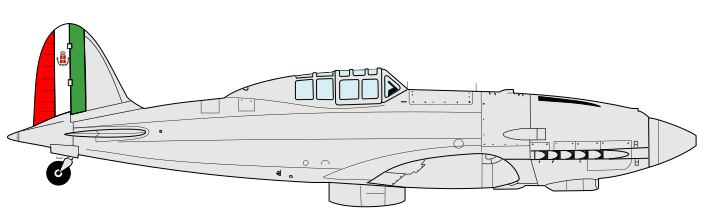
The rather handsome C.202 Folgore dominated the Tomahawks, Kittyhawks, Hurricanes, and Fulmars it faced across North Africa and the Mediterranean theatres in early 1942. By fitting the German DB 601 engine (licensed and produced by Alfa Romeo as the Monsone) to the obsolete C.200, Italy had created an extremely potent fighter. During the desperate fighting over Malta, the Macchi C.202 Folgore proved a formidable opponent for the Spitfire V, with some accounts crediting it with superior acceleration and turning ability. Overall, the two fighters were closely matched. Italian fighters were now a serious threat.
Designed by engineer Mario Castoldi, the ‘new’ fighter was 60 mph faster than the C.200, thanks to increased power from the DB 601, improved streamlining, and a smaller frontal area. Aside from boasting a top speed of 372 mph, the aircraft could also climb to 20,000 ft in around six minutes and reach higher than 34,000 ft – the C.200 could not exceed 29,200 ft. The Folgore, meaning ‘Lightning’, was superbly manoeuvrable with lovely handling. All performance metrics were top tier.
The C.202 enjoyed a superior kill-to-loss ratio to even the Bf 109 in North Africa, and some observers believed it handled better. The C.202 may have been among the best airframe/engine combinations of its time, but it was not the greatest fighter. Armament was limited to two jam-prone heavy machine guns in the nose, with two light machine guns sometimes carried in the wings; the radio was abysmal (hand signals becoming the preferred communication method), and the undercarriage often flopped out under positive G (think signing for a package in only your dressing gown).
However, from the Autumn of 1942, Italian fighter units increasingly faced squadrons flying Spitfire IXs, P-38 Lightnings, and P-40K Warhawks. All three types performed as well as or better than the Folgore, carried far heavier armament, and were in service in appreciably larger numbers. More potent Italian fighters, including the upgunned and upengined Macchi 205 Veltro, were flying in 1942, but had yet to enter service.
*From March, two wing-mounted LMGs could also be carried, but some pilots chose to remove them, favouring performance over the limited firepower increase. The 12.7mm machines were carried in the nose with a synchroniser gear that reduced max fire rate by 25%.
5: Nakajima Ki-44 Shōki ‘Itokawa’s Insane Devil-Master’

In Taoism, Shōki is a fearsome demon-queller, a towering, black-bearded man with bulging eyes and a wrathful expression. Shōki commands 80,000 demons and relentlessly hunts evil spirits, accompanied by five bats. This awe-inspiring name suits the formidable Ki-44, the most interesting contender on this list and a radical departure from the traditional Japanese fighter. The 1939 defeat against the Soviets at Nomonhan shattered the illusion that manoeuvrability alone mattered. The result was a hunger for a very different kind of machine; fortunately, one was already in development: the Ki-44. While aircraft such as the Zero and Ki-43 prioritised the almost holy Japanese traits of manoeuvrability and fine handling, the Nakajima Ki-44 Shoki interceptor sacrilegiously

Subscribe to continue reading
Become a paid subscriber to get access to the rest of this post and other exclusive content.