Indian Air Force air strikes have been followed by claims of a downed IAF Rafale and evidence of the combat debut of the Chinese PL-15 long-range air-to-air missile.
In a dramatic escalation of cross-border tensions, the Indian Air Force (IAF) has carried out a wave of airstrikes targeting multiple locations within Pakistan and Pakistan-administered Kashmir. The offensive comes just two weeks after a deadly terrorist attack in Pahalgam, located in Indian-administered Kashmir, which left 25 Indian nationals and one Nepali tourist dead. The Indian government has attributed the attack to militants operating from across the border and has vowed a firm military response.
The Indian Defence Ministry officially confirmed the operation, codenamed Operation Sindoor, emphasising that the strikes are part of a broader strategy to dismantle terrorist infrastructure and hold perpetrators accountable. Indian officials described the campaign as a calibrated yet resolute message to those enabling cross-border terrorism.
Hush-Kit Aviation Newsletter is a reader-supported publication. To receive new posts and support my work, consider becoming a free or paid subscriber.
Meanwhile, Pakistani authorities have claimed that in the course of retaliatory actions, multiple Indian aircraft were shot down. According to Pakistan’s military spokesperson, at least five IAF jets were downed during the engagement. However, independent verification of this claim remains elusive, and Indian officials have neither confirmed nor denied the losses, maintaining a deliberate silence.
In the contested airspace high above the India-Pakistan border, what was once a standoff has erupted into the most intense aerial conflict between the two countries in decades. Reports suggest that Pakistan may have deployed its most advanced air-to-air missile, the PL-15, a Chinese-designed system known for its long range. Analysts believe this marks one of the first combat uses of the PL-15. The PL-15 missile is equipped with active radar guidance, and is comparable to Western systems such as the AIM-120D AMRAAM and the MBDA Meteor.
The missile’s seeker head (possibly photographed on the ground) is believed to utilise Active Electronically Scanned Array (AESA) radar technology, giving it superior resistance to electronic warfare and enhanced target acquisition range. Some sources also suggest it can engage targets at over 200 kilometres under ideal conditions, giving it a formidable edge in beyond-visual-range combat. India also has long-range air-to-air missiles, in the form of Meteors, on its Rafale (though delivered it is not known whether the Meteor are operational). Whether long-range engagements will be seen remains unknown. Such long-range shots require strong situational awareness to avoid the risk of friendly fire, and so far there have been no known examples in air warfare, though last year a Ukrainian surface-to-air missile used shoot-and-scoot tactics to down a Russian Air Force aircraft at an extreme range.
The age of ultra-long-range missiles started with the US Grumman F-14 Tomcat, which entered service in 1974, and the Soviet MiG-31 of 1981. But these heavyweight specialists interceptors were unusual. It was not until the 2010s that longer-range missiles, like the AIM-120D, MBDA Meteor, R-37, and PL-15, began being carried by smaller aircraft.
On-the-ground images and unverified footage have emerged showing wreckage consistent with PL-15 missile components. Debris reportedly discovered in Punjab’s..
The weight of a Dakota, the rampant good looks (and handling) of a rhino on heat, with more horsepower than Genghis Khan, the Westland Wyvern was a thug. This Fleet Air Arm monster was a strike aircraft for a dying empire wishing to administer a little more pain before it bowed out.
Teddy Petter was a complicated man. He gave the world the Whirlwind fighter, the Canberra, and the Gnat* In January 1960, Petter left the aircraft industry forever to become a holy man. He joined the religious commune of ‘Father Forget’ in Switzerland. Years before this, he had started work on one of the most unholy machines in history, the truly wild Westland Wyvern.
*The intakes were designed by Michal Giedroyc, father of British TV presenter Mel Giedroyc from Mel & Sue fame
8. Where should the engines go?
Though the Wyvern looked sensational, it was obsolescent when it finally entered service in 1953. It had first flown in 1946. Its decade-long development essentially condemned it to relative obscurity. This was not the fault of the intrinsic design, which was basically sound, but because the aircraft had to be redesigned not once, but twice, to accept a different engine when the preferred choice became unavailable. Frankly, it’s remarkable that the Wyvern made it into service at all.
When Teddy Petter designed the aircraft in the mid-forties, the intention was to fit a turboprop engine when one became available. The fact that a turboprop engine had not even been flown at this stage shows just how forward-thinking this was. In the meantime, the Air Ministry suggested using the new Rolls-Royce Eagle piston engine, which would be run for the first time in March 1944. However, before this occurred, the Wyvern, as it existed on paper, was a very different creature. Part of the naval requirement was that the new aircraft should boast an excellent view for landing on a carrier deck. However, with conventional single-engined aircraft at the time, this view was impaired by an enormous aero engine placed directly in front of the pilot. Petter initially decided the best way around this was to remove the view-obscuring engine and put it elsewhere.
His first proposal, influenced by discussions with Commodore (later Rear Admiral and chairman of BOAC) Matthew Slattery, Head of the Naval Aircraft and Production Department, featured two Merlin engines mounted in tandem with a drive shaft to rear-mounted contra-rotating propellers. This configuration was (unsurprisingly perhaps) deemed too complex and too much of a risk in the event of a ‘waved-off’ carrier landing, quite apart from risking a diced pilot in the event of bailing out.
Undeterred, Petter decided the Wyvern should instead place a single Eagle (engine, not bird) behind the pilot and drive the propeller by a shaft a la Bell P-39 Airacobra, allowing a good view over the nose for carrier operations and a configuration Westland already had experience with after building the experimental F.7/30 fighter of 1934, designed by Arthur Davenport, then chief designer at Westland. However, others felt that this configuration was too complex and took matters into their own hands. While Petter was away in London, Harald Penrose, Westland’s chief test pilot (who, as well as being an amateur aircraft and yacht designer, would survive four forced landings whilst flight testing the Wyvern), set about modifying the Wyvern mock-up: he cut a cockpit hole in the fuselage above the wing and raised the top line of the fuselage with curved battens until the same view over the nose could be obtained with the engine in the nose as with the rear-mounted engine. Arthur Davenport, still at Westland but now Petter’s deputy, liked the simplicity of this solution. The design was subsequently approved at a mock-up conference with officials, and the rear-mounted engine was discarded.
Now located in the nose, the engine was a complete departure from previous Rolls-Royce products. The sleeve valve Eagle featured a 24-cylinder H-form layout with two horizontally opposed flat 12-cylinder engines driving two crankshafts geared together to power the airscrew. This was precisely the same layout as the wartime Napier Sabre, but imitation is the sincerest form of flattery, and it seems that Rolls-Royce had realised that Napier were building a better-designed engine than their own Merlin and Griffon. The Eagle delivered a whopping 3500 hp and bid fair to endow the Wyvern with a decent enough performance (notwithstanding the Wyvern’s incredible heft), but sadly for Westland, Rolls-Royce decided the future lay with jets (correctly as it turned out) and the Eagle was abandoned.
“I thought the Wyvern was a beautifully built aircraft, but engine and airframe were both new and this is usually a drawback. Taking over 813 Squadron in December 1954, and wishing to arrive in style, I got a Wyvern from Lee-on-Solent to fly out to Malta to join the ship. This particular one had the very latest cartridge starter, two immense cartridges inserted just behind the main air intake. By the time I was ready to start I was expecting something really exciting. It was a few days before November 5.
When I pressed the starter button, the cartridge gases ignited in the engine compressor and blew the spinner backplate into the front propeller, the whole thing flew to pieces and the odds and sods went into the engine and wrecked it. I got to Malta a week later, by Dakota.” – Commander Mike Crosley DSC,
Fly Navy (Pen & Sword Books)
Hush-Kit Aviation Newsletter is a reader-supported publication. To receive new posts and support my work, consider becoming a free or paid subscriber.
The Wyvern was duly reworked to accept a very promising turboprop engine, the Rolls-Royce Clyde. This engine was lighter than the Eagle but was rated at an impressive 4030 hp, exactly the sort of power the Wyvern needed. Sadly for Westland (again), Rolls-Royce felt the future lay with pure turbojets, not turboprops (incorrectly this time). Hedging their bets somewhat, development of the (ultimately very successful) Dart continued, but the Clyde was abandoned. This left very few options for the Wyvern and Westland alighted on the best of what was left, the Armstrong Siddeley Python. This was not an ideal engine for a carrier fighter and was more challenging to integrate with the airframe. Subsequent testing revealed that the Python did not like the sudden acceleration of a catapult-assisted takeoff and had a tendency to flame out immediately after launch. This very problem led to the most famous Wyvern escape, described further down. It also suffered from a prolonged spool-up time, meaning that speed changes, such as might be needed in a go-around, were far less rapid than desired. These issues were improved over time, but never entirely eradicated and most of the operational accidents of the Wyvern could be ascribed to the unfortunate Python.
As for visibility, Georges Barras of 813 Squadron noted, “..the long nose totally obscured the landing area of the deck, leaving the pilot to find the centre line by keeping in the middle between the mirror landing sight on the left and the island and the island superstructure on the right. It was a bit hit and miss as to which wire, if any, were caught, and there was a high proportion of ‘bolters’ (missed all the wires, go round again.”
7. Wyvern Tail
The Wyvern is named for a type of dragon with two legs, two wings, which often has a pointed tail. Presumably as a nod to this mythical beast, Petter gave the aircraft a massive….read the rest of the exciting Wyvern story on our Substack here.
Read the rest of the exciting Wyvern story on our Substack here.
In researching this article, I spoke to crews of B-52s, B-47s and Vulcans and even chatted on a train with a nuclear scientist. The scientist was more alarmed by the risks of an accidentally dropped nuke than were the Air Force people, so make of that what you will.
WARNING: Do not read this article if you are alarmed by accounts of nuclear accidents
“Broken Arrow is a code phrase that refers to an accidental event that involves nuclear weapons, warheads or components”
A honeybee typically dies after stinging because its barbed stinger gets lodged in the skin of its opponent. When the honeybee tries to fly away, it ruptures its abdomen and internal organs, killing it. Not to be outdone, humans developed a form of self-defence that could potentially kill all humans and make entire regions or even the whole planet uninhabitable. So far, so spicy, but not spicy enough.
To make this enterprise even more exciting, nukes were carried by utterly inappropriate aircraft with deeply concerning crash rates. With 32known Broken Arrow incidents, each with the risk of accidental detonation (see below), contamination or theft of nuclear devices, the apocalypse almost came to town riding a flaming clown car. Here are 10 of those clown cars.
10. Boeing B-47 Stratojet
I asked former B-47 pilot Colonel G. Alan Dugard (Retired) what B-47 pilots were most afraid of “Loss of an outboard engine on take off. This caused a number of take-off accidents. Two at my home base in New Hampshire and others at other locations. It was discovered that the pilots’ reaction to this was to use aileron movement to correct the loss of direction control. Photos later discovered the problem was exacerbated by the use of aileron and resulted in a situation called “Roll due to Yaw”. Correction of only rudder would correct the roll.”
Then, there were the cataclysmic structural problems. 58 B-47s were lost in only two years, 27 in 1958 alone. Over its lifetime, 203 B-47s were lost in crashes, resulting in 464 deaths. Across 3,725,585 flying hours, 288 aircraft were involved in Class A mishaps. Which, as abysmal as it sounds, is pretty much the gold standard for safety for a first-generation jet aircraft. Unfortunately, a big chunk of the ten per cent of the fleet that did meet fiery ends carried nukes. On 10 March 1956, one just disappeared in the Med. It wasn’t carrying a bomb, but was carrying ‘nuclear capsules’. A nuclear capsule is a small, sealed container holding a radioactive material, which can be dangerous if handled improperly (like being dropped into the sea in a bomber, for example).
Around five months later, on 27 July 1956, a B-47 slid off the runway during a touch-and-go landing and smashed into an igloo full of nuclear weapons.
Losing a nuke in the sea is one thing, but in 1958, a USAF B-47 dropped a nuclear weapon on South Carolina. It started 25 minutes after takeoff. Captain Bruce Kulka, was ordered to the bomb bay area after the captain of the aircraft, Captain Earl Koehler, noticed a fault light indicating that the bomb harness locking pin had not engaged. As Navigator and Bombrdier, Kulka was sent into the bomb bay to insert a locking pin into the bomb shackle to prevent accidental release. The bomb bay and its access were so confined that the Navigator had to take off his parachute. After climbing onto the bomb while trying to locate the right place to put the pin, he accidentally released it. This left him and the bomb on the sheet metal bomb bay doors, which opened almost immediately after. Although the bomb dropped, the Navigator somehow found his way back into the cockpit. The bomb hit the ground, and its conventional high explosives detonated, damaging buildings and killing six people. The Air Force was sued by the victims, who received US$54,000 (600,000 in 2025 dollars). The lead-up to what became known as the 1958 Mars Bluff tragedy inspired the penultimate scene in Dr Stranglove.
Hush-Kit Aviation Newsletter is a reader-supported publication. To receive new posts and support my work, consider becoming a free or paid subscriber.
During a night practice exercise in 1958, an F-86 fighter collided with a B-47 carrying a 7,600-pound (3,400 kg) Mark 15 nuclear bomb. Fearing a crash, the B-47 crew jettisoned the bomb off the coast of Tybee Island, Georgia. The B-47 recovered back to base. After unsuccessful searches, the weapon was declared lost. Later investigations found freakishly high radiation levels in the Wassaw Sound bay area.
9: Boeing B-52 Stratofortress
Operation Chrome Dome (1961 to 1968) was akin to a man protecting his garden from his neighbour by walking around with a rucksack full of TNT, smoking a cigar, 24 hours a day, drunk, and hoping nothing went wrong. Except instead of a man with a sack of TNT, it involved actual B-52s loaded with thermonuclear bombs on continuous airborne alert. The United States Air Force maintained up to 12 nuclear-armed bombers airborne 24 hours a day. In a move that almost anyone could have predicted, it went horribly. It took a mere five Broken Arrow events to kill the operation.
On October 15, 1959 Sarah Ferguson, former wife of disgraced British Prince Andrew and author of Budgy the Helicopter, was born. Ukrainian nationalist Stepan Bandera was murdered in Munich by Soviet KGB agent Bogdan Stashinsky with a hydrogen cyanide gas gun shot into Bandera’s face. Meanwhile..
“On 9/11, I told the Chief of the Guards that if my guys were not allowed in when they came, not only would they have to answer to the President of the United States, but I will personally come over there and shit down his neck…”
Retired SMSgt TJ NIZNIK was a U-2 Crew Chief
Everything about the U-2 is unique. The U-2 was designed for a very specific mission, and the designer of the U-2, Kelly Johnson, once said, and I paraphrase, “If you want this aircraft to go high, I cannot design it to military specification”. The U-2 is known to save weight. For instance, there are very limited access panels. The requirement of having 2-3 threads of a screw protruding past the nut plate was reduced to being flush with the nut plate. Every pound of weight saved is a foot higher in altitude, and altitude is survivability. There are no self-sealing fuel cells on this jet. The U-2 is a wet wing, meaning the entire wing, from the wing tip to the fuselage, is all fuel. No single point refueling for this jet, nope it’s all over the wing refueling. There are 6-8 Crew Chiefs assigned to the aircraft, which is very unlike the rest of the Air Force, where 2-3 are typical.
“The biggest difference between the U-2 and A-10 pilots is that one thought their shit didn’t stink, and the other group knew their shit didn’t stink.”
The U-2 is a groundcrew nightmare. This is the only aircraft in my career where there is a file system of manufactured blueprints on hand because the tech data may only say remove and replace item X. Well, in any other military standard aircraft the tech data will be step-by-step how to remove and reinstall a part, with pictures and part numbers for consumable items. Not this jet.
The tech data will tell you what to do, but to find out the list of consumables, the ‘angle to the dangle’ of each fitting to be installed, etc, you will have to pull the blueprint and take all of the references from that. Now, I left the program in 2002, and they have been diligently working on changing the tech data to become more to standards. Another unique item is that this is the last taildragger in the inventory. With a bicycle landing gear and outboard wing pogo to prop up the wing during ground movement, this aircraft cannot turn on a dime.
TJ NIZNIK (on left)
It needs space, and some pilots misjudge their turn and get stuck on a taxiway, only to be rescued by a bunch of Crew Chiefs who will push back the jet and manually realign him. To fix a hydraulic leak in the engine bay, the jet has to be placed on a fuselage dolly, the tail section is removed, the engine is removed, and then one can tighten the fitting. Then it’s a 23-36 hour job to reinspect the entire inside and have Quality Assurance Inspections performed after you just inspected it before you can begin reinstalling everything. This is a time-consuming jet. However, every effort to eliminate this jet from the inventory has met in disaster because no other platform can do what this aircraft can.
Read the rest of this enthralling U-2 article here.
The A-10 Thunderbolt II is a giant flying rotary cannon, wrapped in armor and looking for trouble. Former USAF Staff Sergeant TJ NIZNIK cared for this ugly death machine at the height of its potency. Here, he reveals all about the A-10’s needs, the danger of ‘Hawg Bites’, and what he loved and hated about keeping the A-10 alive.
“Only a Crew Chief will know the harshness, sadness and feelings when their jet fails to return home. Even worse is when the aircrew died. Thousands of thoughts rush through our minds like, ‘did I do this or that correctly’, ‘what did I miss?’ Some may even be blamed for the mishap, and that is very hard to recover from.”
The A-10 is famously robust. Was there anything unusual about the design or construction from a Crew Chief’s perspective?
Oh yes, the A-10 was designed with maintenance personnel in mind. Large access panels have smaller access panels. The design of separating the engines on pylons off the fuselage increased survivability, which means engines were interchangeable. Every hydraulic part has a primary and a secondary system. This is the double in triple redundancy of system power. Of course, twice the systems also mean twice the tubing, fittings, reservoirs, and accumulators. The third part of the triple redundancy is the cable and pulley system known as manual reversion. Large access panels help make maintenance easy by using high-torque Allen-head fasteners. The smaller access panels within are usually for inspection or servicing aircraft systems. The aircraft is tall, much larger than most people realize. One can walk under 70 percent of the jet without having to duck their heads. This leads to most of us have, Hawg Bites. Everyone has a scar on their head from hitting the corner of a weapons pylon or a protruding antenna. I would say that, as far as maintaining a tactical aircraft, the A-10 is the most friendly.
Did the A-10 require a lot of looking after? What were the common maintenance fixes it needed?
This is a great question. I worked on this aircraft all over from 1986 when I joined, and up to the time I retired in 2011. The hot, muggy weather of England AFB, Louisiana to the cold and damp RAF Alconbury (sorry guys but it’s true and you know it!), to the hot dry heat of Nellis AFB, Nevady to the very frozen Eielson AFB, Alaska, to my final assignment here at Moody AFB, Georgia. Each location had specific maintenance requirements that were unique to the location. For instance, at England AFB, hydroplaning was a factor, so the aircraft tires had an average 2/32 minimum depth to prevent the condition. Whereas, in Eielson AFB, we disassemble each landing gear and install new o-rings and packings each fall. This is needed because of the frozen temperatures that routine got down to -45 degree F, the older internal packings would roll and collapse the gear. Nobody likes a flat landing strut. The most common fixes were tyre changes, tightening and replacing screws, radio and comm/nav faults, and the never-ending hydraulic leak.
Most systems go until failure and consistently fail at the worst possible time. We do have time changes based upon the number of hours interval (every 100 flying hours) or a calendar interval (every 30 days). Major systems like engines, gun or actuators will have a much longer period between scheduled changes. We usually have more unscheduled failures that occur before the actual period ends, except for the gun system. That is extremely reliable.
Hush-Kit Aviation Newsletter is a reader-supported publication. To receive new posts and support my work, consider becoming a free or paid subscriber.Subscribed
How many hours of maintenance per flight hour did it need? What was most time-consuming?
Day shift usually had about 1.5 hours between flights to get it inspected, rearmed and ready for aircrew to show. Nights, however, had a much longer inspection that would take anywhere between 1-2 hours. This really depends upon whether or not the plane flew or not since the last preflight. Considering that everything went well between the mechanics, weapons and specialists and refueling, I’d say 3-4 hours per jet. If there were discrepancies, we’d work up to 12 hours and if not completed, we’d call in the day shift crew chief and specialist to complete the work to get it ready to fly for the next day. This is the best part of the swing shift. Swings were never routine and always different, especially when you have a fleet of 12-18 jets to get ready. The most time-consuming events were the operational checks. At times a 30-minute part replacement drove the aircraft to be jacked off the ground, landing gears swung up and down several times and every hydraulic system operated under power.
What do you love most about the A-10?
For the first aircraft in my career versus say an F-4, I’d say the A-10 was by far the easiest plane to work on. I spent a lot of time with my arms raised over my head, though, because it’s so big and roomy. Of course, the best thing about the A-10 is the..
You can read the rest of this thrilling A-10 article here.
Today, Boeing announced that it had won the multi-billion dollar contract (starting at around $20 billion) to develop and supply the Next Generation Air Dominance Fighter for USAF. The new aircraft will be designated F-47. Technology demonstrators for the aircraft have been flying since at least 2020. We take a look at this exciting news, the likely technologies, unusual features and possible names.
Announced at a White House press briefing, Trump noted, “An experimental version of the plane has secretly been flying for almost five years and we’re confident that it massively overpowers the capabilities of any other nation.” Within minutes of the announcement of the F-47 designation, wits online were wondering whether it was a discrete dig at the 47th President and whether it stood for ‘Fuck-47’. It is, in reality, more likely a sycophantic move. The designation F-47 had been previously used for some late and export models of the wartime P-47 Thunderbolt, though any thoughts that this could mean the aircraft could be called the Thunderbolt III are unlikely, as the Republic heritage is now within today’s Northrop Grumman. Artworks of what is suggested is the F-47 are hard to understand; they appear to show a conventional stealth fighter forward fuselage, with extended leading edge, canards or engine intake sections in the shoulder position and what looks like an odd anhedral angle on the inner wing section (more on that later).
Boeing created the Boeing Model 15 in 1923, followed by a series including the ‘Peashooter’. They specialised in bombers such as the B-17 and B-29 in the war. In the post-war years, they concentrated on airliners and bombers. The merger with McDonnell Douglas in 1997, who had a wealth of fighter experience with the F-4 and F-15, put Boeing in the fighter business again. Boeing was the company name when the Super Hornet, a radical reworking of the McDonnell Douglas F/A-18 Hornet (originally a Northrop design), first flew as a McDonnell Douglas aircraft but was carrying a Boeing badge by the time it entered service. Boeing worked on several advanced F-15s, notably the F-15EX for USAF. If the demo aircraft was the Voodoo II, as some have reported, then Voodoo is a possible name for the aircraft, Phantom III would also seem a contender. Generally, a US military aircraft is named in recent years, is a reused name of an aircraft with a good reputation that was created by the manufacturer or a company that the manufacturer has absorbed. Boeing contains McDonnell Douglas, and could fairly claim Phantom, Voodoo or Eagle III (or IV). some may fairly ask when they last ran a clean piece of paper combat aircraft design, though considering the massive development time of any combat aircraft, even Lockheed Martin contains few engineers or project managers present for the early years of the F-22 and F-35.
The teaser images obscured the wings, which may mean nothing or could point to an unorthodox wing configuration. The pronounced dihedral of the inner section is reminiscent of..
Last week, I got an email from the publisher Unbound saying they’d gone into administration and my books would be cancelled. After all the support from you, seven years of my and many others’ work on all three, and a vol 2 design that is 99% finished, I’m pretty devastated. I was told a few weeks ago that the release for volume 2 was delayed by a year, I am now told it is cancelled. I’m sad and bewildered, trying to comprehend what has happened.
Here’s the email I got:
I am in dozens of conversations (I have had little sleep this week) trying to make sense of this and ensure it resolves fairly.
I want to find a way to publish the books, and I’m talking to many people. It’s utterly frustrating to have a project that is hours away from completion (and features some mind-bending artworks of exotic amazing warplanes like cancelled Swedish warplanes) to meet cancellation. The Hush-Kit writers, photographers, artists and interview subjects are rightfully proud of this book and we want to find a way to share it. If there is anything positive in this horrible situation, it’s that I might find a way to publish Hush-Kit’s superb books in a much faster manner.
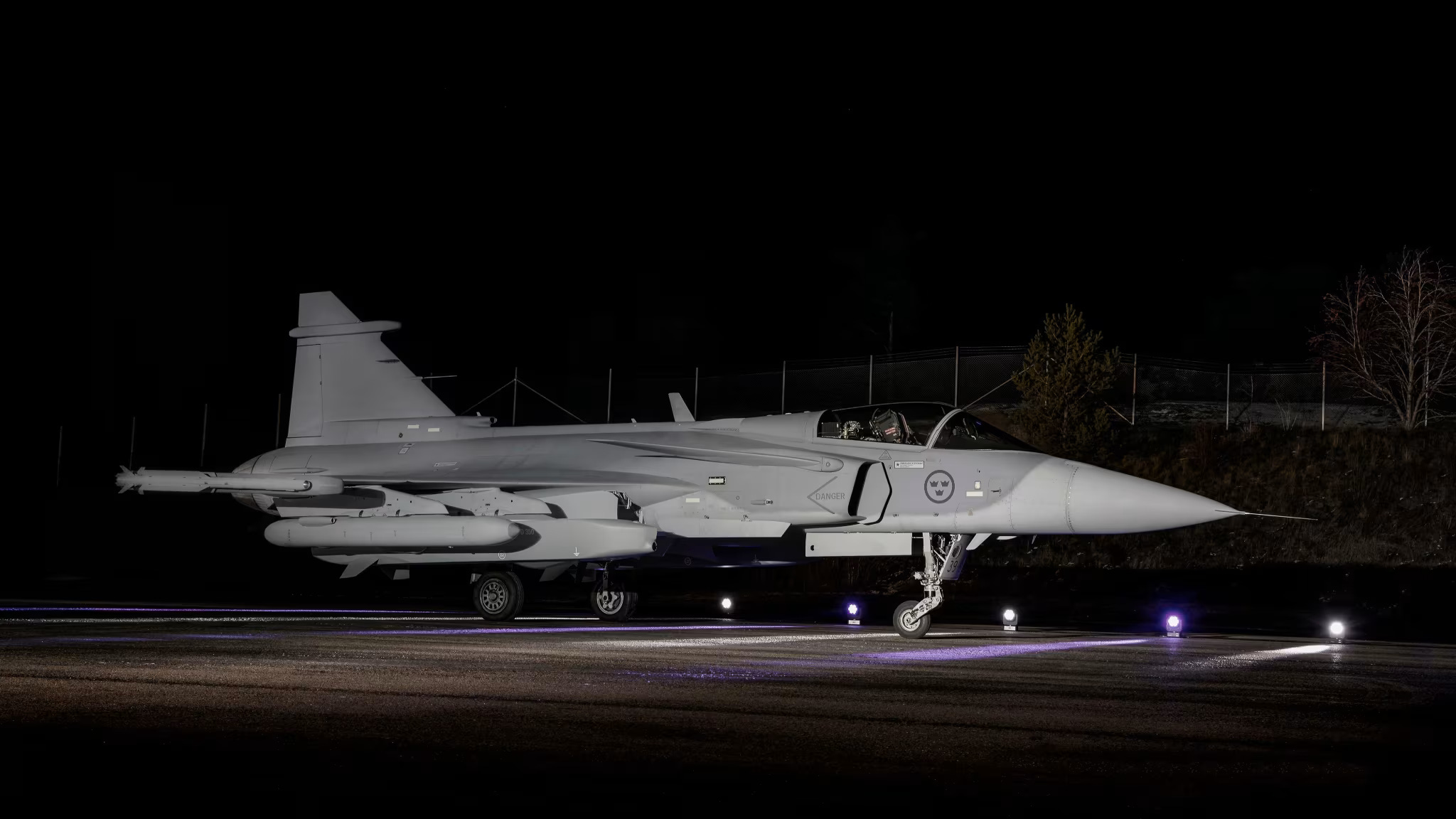
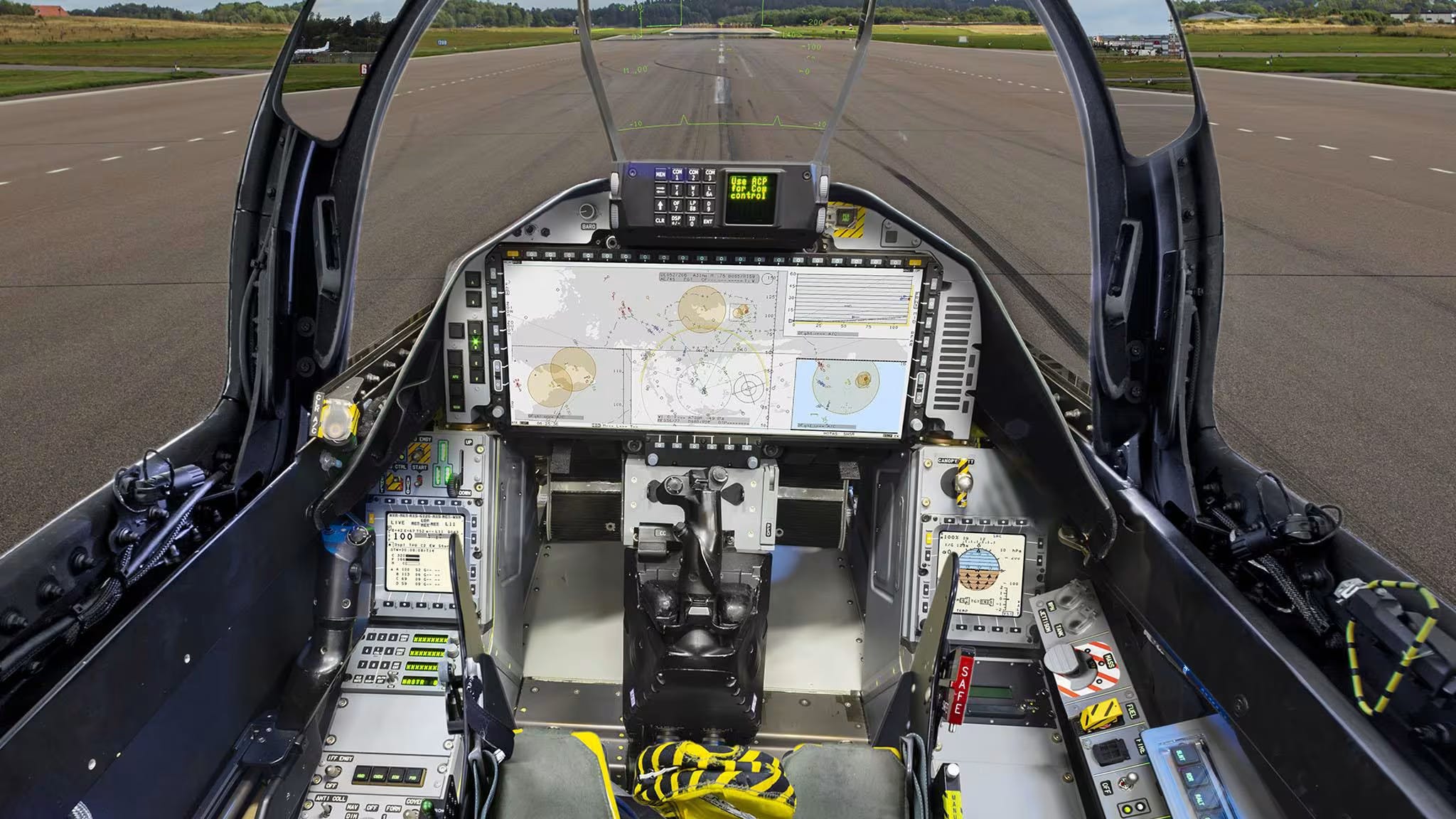
Unlikely as it is, the main competitor of the F-35 is the Saab Gripen-E. These two fighter types, are as different as they could get, one akin to a bulky people carrier, the other a stripped-down scrambler. The unlikely arch-rivals faced off in pitches for the Netherlands, Switzerland, and the Nordic countries, were proposed to Canada, and competed in the Czech Republic. We go even deeper into the unheimlich wizardry of Sweden’s new fighter with Jussi Halmetoja and find out how it compares to the F-35. This ain’t for the faint-hearted; it’s a detailed snoop into the world of the things that really count: exotic datalinks, sizzling electronic warfare and the vital need for technological sovereignty. Pour yourself a glass of wine and get comfortable; this is over 10,000 words long and reveals all you need to know about the F-35 versus the Gripen E.
“As a result, now that stealthy target is not so stealthy anymore. Now I can see you, and that means that you’re in trouble!”
Andy Tuma met Saab’s Jussi Halmetoja for an insightful tour of the magic of the Gripen E’s engineering and tactical systems, something that can be easily overlooked, and learned of the areas in which it matches, or even exceeds, the F-35’s capabilities.
“Hello. I’m Jussi Halmetoja, and I now work for Saab as an operational advisor for the Air Domain. I’ve had over 2,300 hours in the cockpit. Before joining Saab, I was a frontline squadron pilot on both Viggen and Gripen systems and a Weapons Instructor on the squadron. I was also on the operational test job. After that, I was also involved in some developmental and experimental flight testing with the Gripen C, and also when we started working with the Czech Republic and Hungary as the first export nations.
After my flying career, I’ve had staff positions at the Meteor missile programme office in the UK MOD and then at the Swedish procurement agency FMV as the head of the air-to-air missile capabilities. I was also the requirements manager for the Gripen E.
Over the years, I’ve had the privilege to fly in and with pretty much every Western fighter that you see in service today. My role today is to bring this experience into the Saab fighter domain business, where I get involved in system requirements and programme development. But I also do a lot of marketing and sales support across the whole Gripen programme domain.”
The F-35 pitches several key areas as gamechangers compared to the previous generation of fighter jets*. Let’s start with the advanced sensor fusion. Lockheed Martin boasts of the F-35’s autonomous fused sensors management, what they call ‘Active Sensor Management’. This refers to the way the aircraft itself manages, steers and tasks the various on-board sensors not just to correlate tracks from different sensors passively but to actively build the most accurate and reliable tactical picture by managing all sensors. Can Gripen E can do this?
“The mission to reliably detect, track and verify real objects in a complex battlespace using a lot of sensor input from multiple sources is one of the biggest challenges for fighter platforms today. To create full situational awareness, it demands fully fused data. This is a matter of life or death for any pilot.
Credit: Tibboh
At Saab, we’ve been working with this complex data fusion challenge or technology across our domains for probably at least 50 years, if not more. It is one of our core capabilities. We’ve realized long ago the necessity to implement sensor fusion throughout the entire command and control networks – not only on a singular aircraft, but also the entire networks such as aircraft, the early warning radars, other sensors. This development in the early sense of sensor fusion dates back to the Draken era in Sweden. It was, in fact, pioneered here in the 1980s, where we already deployed integrated, high-rate datalink systems on many platforms. And it’s fair to say that we’ve gathered a lot of experience over those decades, always prioritizing the mission the best way possible for the pilots.
In the Gripen E, the pilot is now assisted by a new, task-based high-level command structure. The sensors automatically steer and tune parameters to optimize their performance.
That task is done in a very similar way you mentioned that the F-35 allegedly does. No more frantic “switchology” and lists of complex routines for the pilot in the cockpit. That’s gone long ago now.
We’ve developed evolved automation – we even use aspects of things like AI and machine learning-based technology to help predict outcomes of events throughout the mission and offer the pilot advanced decision support to make the right actions at the right time in every moment. For example, how to launch a weapon and still maintain survivability against an enemy, complete situational awareness for when and how to act and when and how not to.
The ultimate point of Sensor Fusion, to sum it up, is to maintain a constant low workload for the pilots so they can entirely focus on the fight and the mission. And if you can’t do that, you’ve failed your pilots and your capability. This is a concept we call human-machine collaboration (Saab’s term).
This is what you need to fight and survive in today’s and tomorrow’s complex battle spaces against multiple threats.
You mentioned the active management or tasking of the sensors similarly to the way that the F-35 claims. So how does that work in more detail? Does it mean that, for example, on the tactical situation display, the pilot merely increases or decreases the range of the range circle, and he doesn’t have to set up the radar range or so forth manually anymore? Is it all of this done seamlessly in the background?
You can read the rest of this article here (we’re moving some of our articles to Substack to combat plagiarism issues).
“After an impressively short time, all their weapons systems lit up our warning receivers..”
Operation Friston was the UK response when Soviet ships passed through waters near the UK. It was regularly activated as Northern Fleet Soviet warships often transited the Iceland – Faroes gap en route to the Atlantic. The Operation Order, which we were regularly required to read and sign for, laid down very strict rules about how close, how fast and how often we could approach the Soviet ships. No rules in the entire RAF were so universally disregarded as those!
Hush-Kit Aviation Newsletter is a reader-supported publication. To receive new posts and support my work, consider becoming a free or paid subscriber.
One spring day in 1985, we were tasked against the Soviet aircraft carrier Kiev and her escorts transiting the gaps North of the UK. It may have been a period of tense relations because the decision was made to make our presence well and truly felt. An experienced four-ship was put together ( I was in number 4 – so no responsibilities!), and we planned to make a radio and radar silent approach and try and take them by surprise.
So, once we ditched UK Air Traffic Control we went silent – we met a VC10 tanker and refuelled – itself an achievement radio silent- and headed North. A Nimrod was on station broadcasting the task group’s position, and well outside their radar coverage, we let down to a low level – fifty feet over the sea where the Buccaneer was happiest. We headed in towards the targets listening to the Nimrod and watching the leader for his changes of heading and speed, and once close, we accelerated to 550knots, still at 50 feet!
“Scary? Night close formation over the sea at low level was very scary. I swear we went thirty minutes without daring to blink!”
We received no warning indications that they were aware of our approach, and sure enough, they appeared right on the nose.
As we went as low and as close as we dared past the Kiev, successive aircraft taking bow and stern below the level of their deck, we saw they were having a parade on the flight deck! It must have been quite a shock! They maintained their formation for the second pass, but they scattered during the third.
After an impressively short time all their weapons systems lit up our warning receivers, and we decided that enough fun had been had for one day, and we went home feeling very satisfied.
We did wonder whether we might have caused a diplomatic incident but no complaint came. I think the Soviet Navy saw it as “fair game”.
“The front cockpit was an absolute slum.”
CREDIT: Mike Looseley
What was the best thing about the Buccaneer? It can fly VERY….
THE REST OF THIS LONG, EXCITING BUCCANEER ARTICLE, FULL OF SALTY REVELATIONS, CAN BE READ HERE
When this popped up on a Facebook page (I think it was The Aviation Enthusiast Book Club), the aviation writer Bill Sweetman wryly replied that 384 pages devoted to the Cutlass were rather too generous a treatment and compared it to a boxset of the music of Yoko Ono. Now, as a fan of both Yoko Ono and the Cutlass, I must disagree. This book roundly avoids a plague that has affected some recent aircraft books, and that is filler. I get it, an author commits to X number of pages on a B or C-list aircraft and runs out of material, and suddenly, you have historical context going back to the Stone Age and 80 pages of serial numbers. There is absolutely no filler in this superb book; it is a lavishly illustrated, superbly researched celebration of one of the best-looking aircraft in history. Some of the reproduced documents of the time are a real treat.
When I asked Bill if I could feature his Yoko joke above, he said on condition I acknowledge that he agrees with the book’s authors that the Cutlass is often unfairly singled out for criticism when all early carrier jet operations were very hairy (and the Scimitar and Crusader sometimes do not get the criticism they deserve). This is a fair point, and one the authors attack with brilliant data, and one particularly revealing graph. This book is a gorgeous object and is the only Cutlass reference work you need. Essential reading for Cold War aircraft enthusiasts . I strongly recommend this book
Kawanishi H6K ‘Mavis’ and H8K ‘Emily’ Units
Edward M. Young
Osprey Publishing, 2024
A fascinating insight into Japanese air power in World War II, author Edward M Young has packed a mass of information into this 96-page book. No stone is left unturned in his dogged research into these rather elegant flying boats and their (often thwarted) operations. This serious reference book is backed up with high-quality digital artworks, which bring some welcome colour. Historical details bring the horrors of warfare to life, “During the attack on Cairns, a single H8K1 dropped bombs in error on the town of Mossman, north of Cairns, wounding a small child”. Something about the small scale of this event stuck with me in a way that bigger, more epic events do not, and this book, with its multiple references from war diaries, is full of these human moments. This useful, well-researched book contains facts that will educate and entertain the most seasoned aviation historian.