How British company Airspeed designed the Predator & Reaper

There are many things that the US Military Industrial Complex don’t want you to know. One of the things it doesn’t want you to know is that two of its much vaunted drones are developments of a rather peculiar line of British aircraft development dating from the late 1950s.
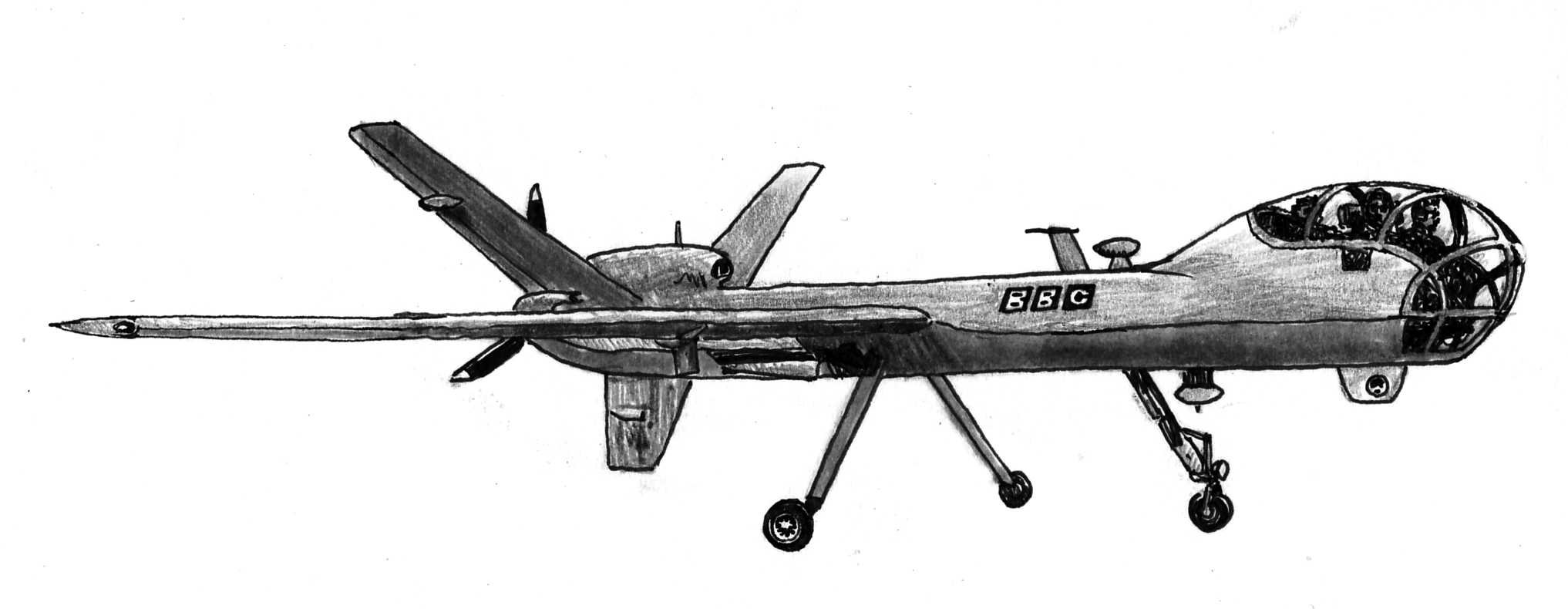
In 1955 the BBC approached the struggling aircraft company Airspeed Ltd to provide it with a dedicated aerial camera platform. It was to have excellent low speed handling and exceptional endurance to enable its crew to film sporting events or appropriate news items with maximum efficiency. A crew of three was envisaged: pilot, camera operator and director/producer. For such items as football matches it was intended that a commentator might be carried in the place of the director and the capability for live audio transfer from the aircraft was a requirement from the very beginning. A helicopter design was considered but rejected due to endurance and noise concerns.

Peeper
The Airspeed AS66 ‘Peeper’ was the result. Powered by a small and quiet Turbomeca turboprop derived from the Astazou, the Peeper made its first flight on the 6th July 1962 and proved an immediate success. BBC cutbacks meant that the initial order was cut from 126 to 4 but this quartet of aircraft would provide sterling service for the next forty years. Amazingly, according to a BBC correspondent, one is retained in mothballed condition at Brooklands aerodrome in Surrey ‘just in case’.
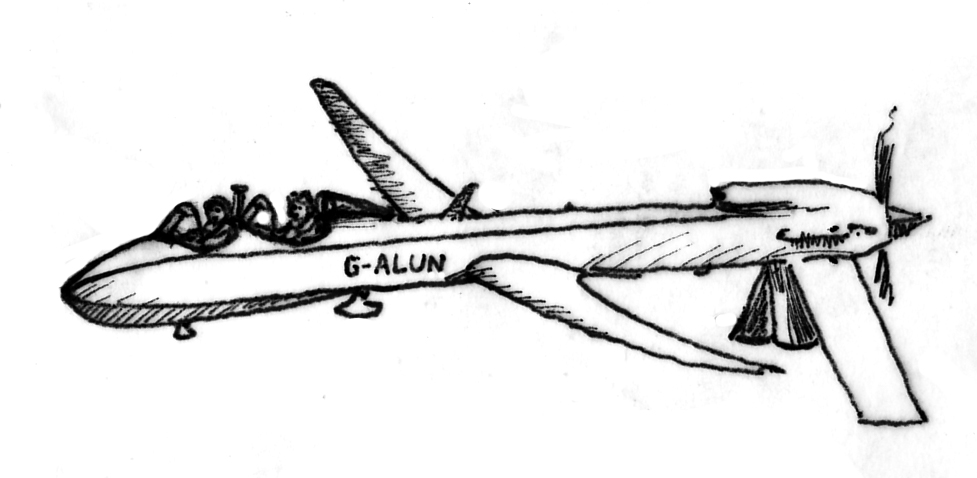
Despite its great success the Peeper did present its pilots with some rather peculiar handling characteristics so a training version was developed. This, the piston-engined AS67 ‘Editor’ was much cheaper to operate but effectively mimicked the larger aircraft’s characteristics. The economical Editor was a charming aircraft to fly and cheap to operate but the asking price was high and, despite a herculean sales effort, Airspeed managed to sell a mere five examples, two going to the BBC.

Looking back without a man

Fast forward thirty odd years and General Atomics is charged with developing a reliable, quiet unmanned aircraft with a good loiter time to spy on America’s enemies. Unwilling to bother developing a new airframe from scratch for a requirement that might turn out to be a dead end, General Atomics looked around for a suitable base airframe for its UAV. By this time Airspeed was long since defunct, having initially merged with de Havilland which in turn was absorbed into Hawker Siddeley and thus ultimately becoming part of British Aerospace. To cut a long story short General Atomics approached BAe with their requirements, BAe dug out Airspeed’s drawings for an aircraft designed to carry cameras with a great loiter time and the rest is history. The prototype General Atomics MQ-1 ‘Predator’, an unmanned Airspeed Editor took to the sky from Brooklands aerodrome in July 1994 followed by the larger turboprop MQ-9 ‘Reaper’ in 2001. Both have proved of great worth to US forces and are despised and feared by all manner of people the world over.

In a curious footnote to this tale it was discovered in 2005 that Neville Shute, Director of Airspeed, had postulated a radio controlled ‘Queen Peeper’ in 1961 when a lost notebook of the designer/author turned up at an auction in Devon. His idea was that it could be used to film newsworthy events where a human crew would be put at risk – his example being a tactical nuclear battlefield situation. Available technology at the time simply could not provide the necessary remote control for such a vehicle but thirty years of radio and TV improvement have resulted in the ‘Queen Peeper’ becoming a reality, though not (thankfully) in a nuclear war.

No. 39 Squadron RAF currently operates the MQ-9 Reaper in Afghanistan, they will be joined by No. 13 squadron during 2012.

If you enjoyed this, you may like our other ULTIMATE WHAT-IF AIRCRAFT, like this one: http://hushkit.net/2012/06/12/the-ultimate-what-if-fighter-the-griffon-powered-hawker-hurricane-mk-xiv/

EUROFIGHTER TYPHOON BOON! THE LUFTWAFFE TAKE ON THE F-22 RAPTOR AT RED FLAG

Eurofighter GmbH, producer of the Typhoon fighter, is beginning to emerge from a period of serious self-reflection. Recent sales campaigns have ended in bitter defeat. Eurofighter has watched big prized contracts being dished out to all of it rivals. It lost in Switzerland to the Swedes, in Japan to the United States and in India to the French. Rafale, Typhoon’s closest rival, had emerged victorious in India, the biggest fighter contest in the world. Future enhancements to Rafale are almost certain to be bank-rolled by India, as well as making sales to additional customer more likely for the French fighter. This was disastrous news as the Rafale is very similar in capability to the Typhoon. Could the shrinking fighter market support two such near rivals?

Added to this gloom was the F-35’s seeming invincibility to cancellation. The F-35 is set to become the first massed-produced stealth fighter, available to all (well, almost all). Many air forces have been envious of the US’ stealth technology since the F-117’s star-turn in the 1991 war with Iraq. As well as the promise of stealth, the F-35 has enormous political backing and Lockheed Martin’s incredible mastery of the black arts of military hardware promotion. Despite the F-35’s dire development problems, customers are still clinging to the notion that the F-35 will be the Model-T of stealth and will make ‘aluminum’ aeroplanes obsolete overnight. However, the F-35’s problems have given Eurofighter an extended time window in which large sales have been possible, but these opportunities have been repeatedly squandered. To many observers it was looking like Typhoon was a dead duck, that would fail to achieve any more significant export sales.

 Typhoon boon?

After several years of misery for Eurofighter, the last week has brought a little bit of sunshine. The most conspicuous piece of good news was from the Luftwaffe regarding Typhoon’s performance over in Alaska. A detachment of 8 German Typhoons from JG74 were deployed to Red Flag 2012 in Eielson AFB in June. During the exercise they took part in basic fighter manoeuvres (BFM) against the F-22. Now before I go any further, we all know the usual disclaimer: without details, and in particular without rules of engagement specifics, not much can be inferred from BFM anecdotes. But…the following exciting titbits did emerge-

  • According to the Col. Andreas Pfeiffer, commander of JG74 “Typhoon is a superior dogfighter” to the F-22 in within visual range combat.
  • Typhoon can out-climb the F-22
  • Typhoon can out-accelerate the F-22

These are all very interesting claims. The latter point reminds me of a conversation I had with a Eurofighter representative a few years ago. I asked him if Typhoon could out-climb the F-22. He replied it could. Two days later he withdrew this comment.

The confident statements by Pfieffer are significant for two reasons:

  1. The F-22 is the aircraft to beat

Of course the Raptor decimated the Typhoons at Beyond Visual Range, a domain where the F-22 is still peerless. But, the Raptor is also one of the very best close-in dogfighters, thanks partly to thrust vector control (TVC). Performing well against the F-22, even if just in the Within Visual Range domain is still a notable achievement. On the subject of TVC, Luftwaffe pilots noted the F-22’s tendency to sink when employing thrust-vectoring. This echoes the experience of the F-15C pilots who flew against India Su-30s in training exercises. The USAF Eagle pilots were quick to identify counter-tactics to the energy depleting TVC moves employed by IAF ‘Flanker’s, though admittedly the F-22 is probably far better at recovering energy than the Su-30.

2.  These were German Typhoons

Luftwaffe Typhoons (for the sake of clarity I will not refer to them as ‘Eurofighters’ as the Luftwaffe generally does) are the worst equipped of the partner nations (the RAF aircraft are the best). To put it simply, if the worst Typhoons can put up a decent fight against the F-22, what could the best Typhoons do?

The defensive systems are not to the same spec as the RAF, lacking several components and featuring a smaller amount of data about potential threats. They do not have an infra-red search and track device, possibly the best way to track a low Radar Cross Section (RCS) target like the F-22.

Importantly they didn’t have the Typhoon’s advanced helmet system. The helmet displays vital information to the pilot and allows weapons to be slewed onto targets very quickly indeed and at extreme angles.

RAF Typhoons took the helmet system to a multi-national exercise in Malaysia last year. The system was deemed to be a strong contributor to the Typhoon’s domination of air combat exercises against F/A-18s, F-16s, MiG-29s and advanced F-15 variants during this training event.

The JG74 aircraft sent to the US were upgraded examples. Changes included an upgrade to the aircraft’s radar software and new radio, mission data and countermeasures software system. Other modifications were classified.

Luftwaffe Typhoons are considered behind the curve in terms of tactics and equipment, especially when compared with RAF aircraft. This success in Red Flag is thus particularly good news. Especially as Germany is keen to offload as many of its older Typhoons to export nations as possible, offering these low-mileage, early Tranche aircraft at competitive rates.

The next piece of good news, is that Eurofighter is waking up to the basics of sales. Shockingly, it emerged that the company put little or no effort into reducing unit costs to potential buyers, instead relying on the weight of high-level governmental support. The obvious example must be India, where the Typhoon bid was supported by extravagant promises and visible efforts by heads of state, but ultimately lost on cost grounds.

Guiseppe Orsi, chairman and chief executive of Finmeccanica (one of Eurofighter’s main partners), acknowledged the lessons learnt in an interview with the Financial Times. He stated:

“We will all be around the table and start from what is the competitive price to win a competition, as we do in the commercial field, then we go back and see what each company has to do in order to get that competitive price.”

The partner companies must work together to achieve this for the greater good of Typhoon sales. Clearly the united ‘front’ of Eurofighter is a smokescreen for large defence contractors viewing their partners as rivals and being unwilling to share sensitive information on costs and margins. Sadly it seems Eurofighter represents a microcosm of the EU itself, its problems analogous to a failing Europe.

However, awareness and public admission of this is a sign that this culture may change.

The aircraft itself is by all accounts excellent, the missing piece to the puzzle of its failure to achieve greater export success may have been found.

If this interests you, support Hush-Kit.net with a donation (buttons above and below). If this goes well we’ll be able to give you much more! Recommended donation £10. Many thanks for helping to keep us impartial and independent.

You may also enjoy A B-52 pilot’s guide to modern fighters, Flying and fighting in the Lightning: a pilot’s guideInterview with a Super Hornet pilot, Trump’s Air Force Plan, 11 Worst Soviet Aircraft, 10 worst US aircraft, and 10 worst British aircraftMiG-21s, MC-21s and the overrated Typhoon: In conversation with FlightGlobal’s Stephen TrimbleThe F-35 will fail, until the US learns to shareAn air force of my own #1Top 8 Mach 3 fighters

The Twin Spitfire

Image

Save the Hush-Kit blog. This site is in peril, we are far behind our funding targets. If you enjoy our articles and want to see more please do help. You can donate using the buttons on the top and bottom this screen. Recommended donation £10. Many thanks for your help, it’s people like you that keep us going.

Want to see more stories like this: Follow my vapour trail on Twitter: @Hush_kit

Thank you for reading Hush-Kit. Our site is absolutely free and we have no advertisements. If you’ve enjoyed an article you can donate here. 

Initially intended as a very long-range escort fighter, the Twin Spitfire was designed to escort ‘Tiger Force’ Avro Lincoln bombers to Japan, missions beyond the range of any conventional RAF fighter. It was also seen as an alternative to the de Havilland Hornet should that aircraft prove unsatisfactory for its intended role in an ‘island-hopping’ campaign in the Pacific theatre.

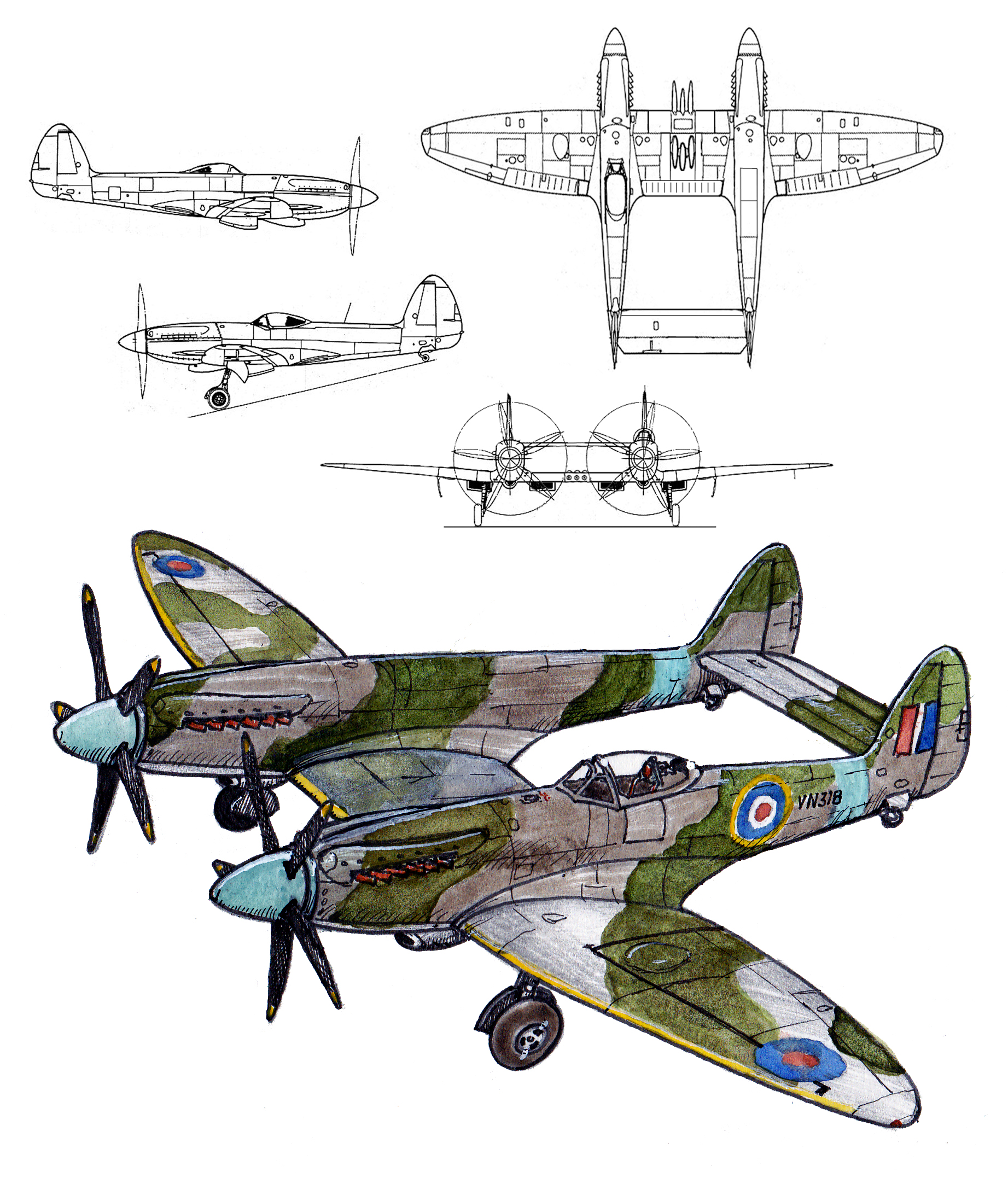
Supermarine’s design team under Joe Smith developed a remarkably simple conversion consisting of two standard late production Spitfire Mk 22 fuselages and wings joined by a constant chord centre section and tailplane and with the cockpit removed from the right hand fuselage. Unlike its American counterpart, the P-82 Twin Mustang, the Twin Spitfire was a single seat aircraft, reflecting a peculiar British meanness with personnel and maximisation of offensive potential. The absence of the second cockpit and associated equipment made for a very great increase in fuel capacity and the range capability of the new aircraft was unprecedented. When external fuel tanks were added (the wings were equipped for drop tanks) the aircraft’s endurance effectively exceeded that of the average pilot.

Performance

With double the available power of a standard late-model Spitfire but less drag and lighter weight the performance of the new aircraft was outstanding. Maximum speed was 495 mph at 21,000 feet and the rate of climb and acceleration were similarly impressive. Although agility was not in the same league as the standard Spitfire, the aircraft was considered nimble for its size. A less desirable quality was the amount of torque generated by the two Griffons. With less wing area per engine relative to a standard Spitfire; the Twin Spitfire was infamous for swing on take off. Both the F-82 and the Hornet were equipped with ‘handed’ engines to negate torque effects but the Twin Spitfire was never so-equipped and pilots were required to apply full opposite rudder (even with the larger vertical surfaces developed for the Spiteful) and refrain from using full throttle until the aircraft was safely in the air.

Armament

Armament was, surprisingly, reduced in comparison to the Mk 22 Spitfire. Three 20mm cannon were mounted in the centre section of the wing, it being considered that the concentration of these weapons on the centre line of the aircraft increased the effectiveness over the standard four cannon dispersed outboard in the wings. This also allowed for a useful increase in ammunition capacity for each weapon. Later marks were developed to carry underwing ordnance for the strike role.

Operational History

The atomic bombing of Nagasaki and Hiroshima occurred as the first two Twin Spitfire squadrons were working up. Tiger Force was never deployed and the aircraft did not see operational service during World War Two. Orders for the type were slashed, though its relative ease of production due to the large levels of commonality with the Spitfire combined with the obvious merits of its performance (the aircraft was superior in speed, range and disposable load to the Gloster Meteor) meant that production did go ahead though in relatively modest numbers. The first Twin Spitfire F.Mk 1 squadron, was declared operational on the 1st of December 1945 and was deployed to Germany as part of the occupation forces in the spring of 1946, two more squadrons working up on the type throughout that year. Notwithstanding its handling quirks, the aircraft was generally popular with pilots as its blistering performance made it more or less the most potent aircraft in service in the immediate post war era. It is said that ex-Beaufighter pilots were particularly fond of it as the handling problems of both aircraft were similar but the Twin Spitfire’s levels of performance and agility were markedly superior.

Later marks adapted for the night fighter, ground attack and reconnaissance roles were speedily developed and produced.

An early problem with regard to the operational employment of the aircraft was identified almost as soon as it entered service. The pilot, sat in the left hand fuselage, had a largely unobstructed view to the left but his view to the right was severely compromised by the second fuselage and broad chord centre section of the aircraft. A few individual aircraft were modified at unit level to swap the fuselages and produce a ‘right hand drive’ version, which would invariably be detailed to fly on the right flank of any formation. Eventually right handed Twin Spitfires entered series production alongside their left handed brethren, though they were always something of a rarity. Similarly aircraft with a cockpit in both fuselages were produced, allowing for a radar operator to be carried in the Night Fighter version, a student in the training variant, and a winch operator for the target tug.

 Korea

Seeking a presence for itself over Korea during the escalating conflict, the RAF deployed a squadron of Twin Spitfire FB Mk 2s to Kimpo airfield (shared with RAAF Meteors) in 1951. The spectacular range and loitering capability of the aircraft was intensely attractive for close air support purposes and though no longer competitive in pure speed terms when compared to the latest jet fighters, the Twin Spitfire could still compare fairly favourably with the F-80 Shooting Star and was expected to be able to outmaneouvre any North Korean fighters that might be encountered. As it turned out this was to be the Twin Spitfire’s moment of glory. On the 4th of August 1952, Twin Spitfires dove on two Mig-15s and destroyed them both. A fortnight later they repeated the feat and the Twin Spitfire became one of the very few piston engined types to destroy a jet fighter in air to air combat.

Later Service 

For most of its operational life the Twin Spitfire was regarded as a tactical aircraft for strike and ground attack tasks. It operated in concert with Hornets over Malaya and appeared briefly over Suez in a single photographic sortie from a base on Cyprus. Long after this the aircraft served as a target tug, the drogue and winch being carried in a large fairing under the centre section. A few drone controller aircraft were in use until 1962.

Hush-Kit is reminding the world of the beauty of flight.

follow my vapour trail on Twitter@Hush_kit.  If you enjoyed this, you may also enjoy ‘A pacifist’s guide to military aircraft

Do you have an idea for a Hush-Kit article you would like to write? Contact: hushkiteditorial@gmail.com

Variants

Supermarine Type 493:   Prototype, 2 constructed.

Twin Spitfire F Mk 1:  Initial production version, long range escort fighter, 134 built.

Twin Spitfire F Mk 1(r):  As above but produced with cockpit in right hand fuselage, 32 built.

Twin Spitfire FB Mk 2:  Equipped for underwing ordnance and epitomised for the ground attack role, 203 built.

Twin Spitfire PR 3:

Reconnaissance version, 8 built, 15 converted from F Mk 1.

Twin Spitfire NF 4:  Night fighter, 58 built.

Twin Spitfire TF Mk 5:

Trainer variant, 35 built, 30 conversions from FB Mk 2.

Twin Spitfire TT Mk 6:

Target tug, 90 produced – all conversions from FB Mk 2.

Save the Hush-Kit blog. This site is in peril, we are far behind our funding targets. If you enjoy our articles and want to see more please do help. You can donate using the buttons on the top and bottom this screen. Recommended donation £10. Many thanks for your help, it’s people like you that keep us going.

Want to see more stories like this: Follow my vapour trail on Twitter: @Hush_kit

Thank you for reading Hush-Kit. Our site is absolutely free and we have no advertisements. If you’ve enjoyed an article you can donate here. 

Have a look at How to kill a RaptorAn Idiot’s Guide to Chinese Flankers, the 10 worst British military aircraftThe 10 worst French aircraft,  Su-35 versus Typhoon10 Best fighters of World War II top WVR and BVR fighters of today, an interview with a Super Hornet pilot and a Pacifist’s Guide to Warplanes. Was the Spitfire overrated? Want something more bizarre? The Top Ten fictional aircraft is a fascinating read, as is The Strange Story and The Planet Satellite. The Fashion Versus Aircraft Camo is also a real cracker. Those interested in the Cold Way should read A pilot’s guide to flying and fighting in the Lightning. Those feeling less belligerent may enjoy A pilot’s farewell to the Airbus A340. Looking for something more humorous? Have a look at this F-35 satire and ‘Werner Herzog’s Guide to pusher bi-planes or the Ten most boring aircraft. In the mood for something more offensive? Try the NSFW 10 best looking American airplanes, or the same but for Canadians. 

THE ULTIMATE WHAT-IF: THE SUPERMARINE JETFIRE

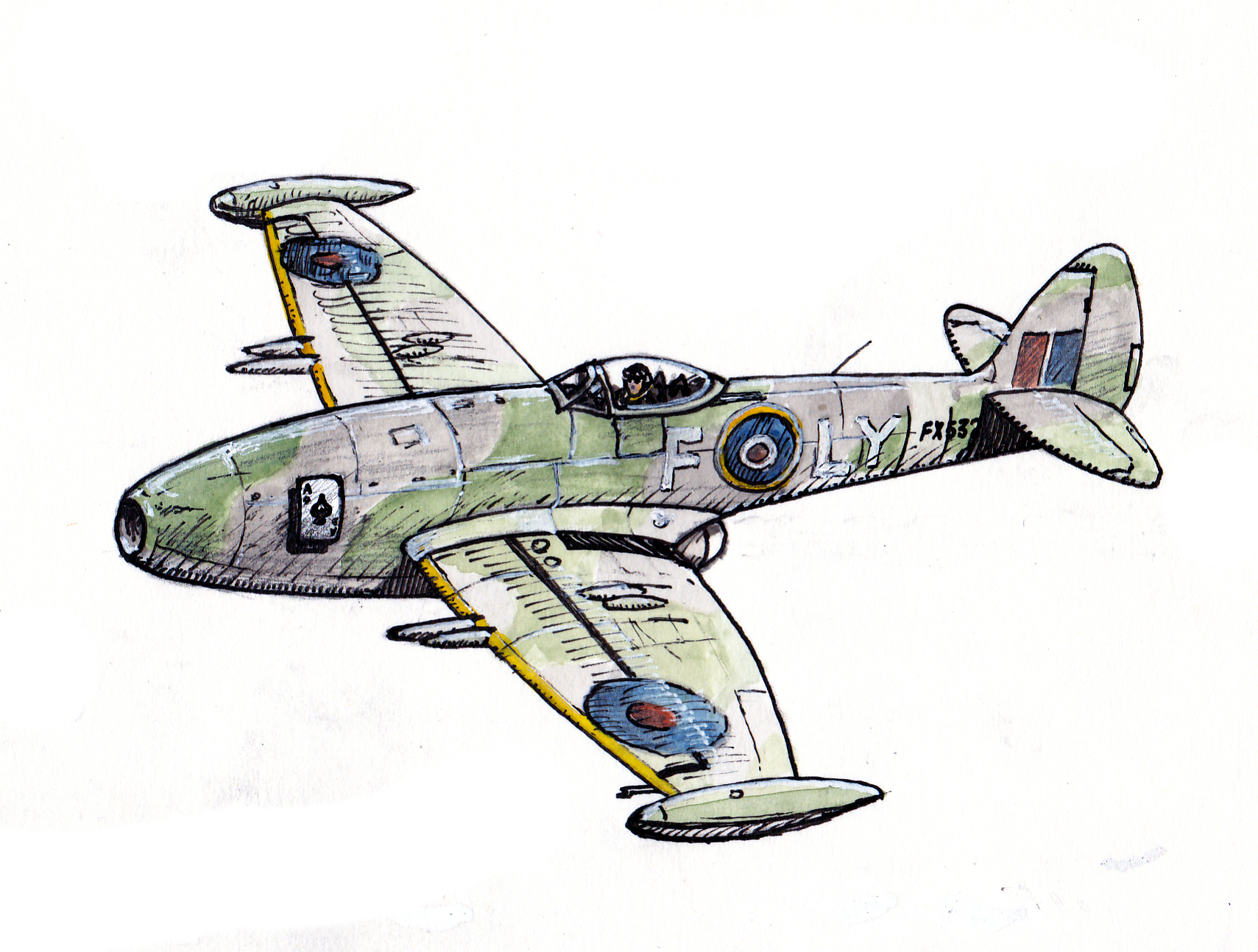
Following the lead of the Yakovlev Yak-15 (a delegation from Vickers Supermarine having visited Soviet aviation facilities in late 1945), the Spitfire F.Mk 25 was an attempt to obtain an effective jet fighter aircraft whilst avoiding the tiresome rigmarole of designing one from scratch. Shoehorning a bulky Derwent engine into the slender nose of the Spitfire did nothing for the aesthetic qualities of the aircraft, nor, as it proved, did it radically transform the performance. Despite its new powerplant the ‘Jetfire’ proved to be slower than its Griffon engined progenitor. It did, however, possess a superior rate of climb. Soon after the start of production its meagre range was improved by the addition of tip tanks. Although adequate as a first generation jet fighter the Jetfire offered only limited development potential and it was soon supplanted by true jet aircraft that had been designed as such from the start.

follow my vapour trail on Twitter@Hush_kit

Do you have an idea for a Hush-Kit article you would like to write? Contact: hushkiteditorial@gmail.com

HUSHKIT EXCLUSIVE: Shenyang Aircraft Corporation J-31 REVEALED- NEW CHINESE STEALTH FIGHTER SIGHTED

Image

BREAKING NEWS: The J-31 has flown

For latest analysis on this story see: http://hushkit.net/2012/09/16/china-shows-off-new-stealth-fighter/

This week a photograph emerged of what appears to be a new Chinese fighter. The mysterious aircraft wrapped in a camouflage tarpaulin was delivered from Shenyang by flat-bed lorry to a testing location. The shape (it is possible that it is a mock-up) appears to have no tail surfaces or canopy fitted. It is likely that this is the new Shenyang Aircraft Corporation J-21 (the designation J-60 has been used by some in connection with this aircraft), the Chinese equivalent to the US Lockheed Martin F-35 Lightning II. The shape is apparently similar to that of the F-35, with faceted low-RCS shaping and a conventional wing and tail. The aircraft seems to be somewhat smaller than the F-35 (which is 15.67 m long), with an estimated length of 14-15 m, though size estimates are notoriously difficult  to get right. A good example of this is the J-20; early guesstimates put the aircraft as long as 22 metres, whereas today many analysts believe it is not much bigger than than the 18.90 m long F-22 Raptor . There is some confusion about how many engines the new aircraft will have, but this shape appears to be twin-engined, unlike the single-engined F-35. It seems likely that the aircraft will be twin-tailed, with outward canted vertical fins.

That it was transported by road and allowed to be photographed suggests a staged leak.

Image

Alternatively, the aircraft could be the rejected XXJ contender that lost out to the J-20, this aircraft may carry the designation J-19. But, this seems unlikely as the airframe appears to small for this fighter class. It seems that Lockheed Martin have set a template for what a modern low-RCS fighter looks like, and the F-35 and F-22 are likely to influence most fighters now in development (though the Russian Sukhoi T-50 PAK FA with its wide-body shares something of the YF-23, and the J-20 is an altogether different concept). Several models and artist’s impressions (above and below) have been realised purporting to show the configuration of China’s next fighter.

If the new fighter has not yet been test flown it is unlikely to enter service before 2025.

New US Fighters

Meanwhile the USAF has announced a thirty year plan, which includes a 6th generation fighter to replace the F-22. Though many see China’s fighter developments as a threat to the US’ technological lead, it is still clearly around 20 years behind the US in this field. China does not appear close to having a 5th generation aircraft in service and both the USAF and USN have begun studies into their 6th generation.

It should be noted that many do not agree with the use of the popular Lockheed Martin-defined ‘5th Generation‘ term. Eurofighter have pointed out that Lockheed Martin have manipulated the term to fit their marketing needs. If used as originally defined by Lockheed Martin- as a supercruise capable, super-manouevrable, steathly fighter with sensor fusion- the F-22 is the only 5th Generation aircraft. The F-35, which lacks the first two capabilities, is not.

See also: http://hushkit.net/2012/07/13/hushkit-exclusive-interview-with-super-hornet-pilot-fa-18e-versus-fa-18c-the-final-word/

Export success

With Russia dedicating its future efforts to heavy fighters, (the PAK FA and Indo-Russia Sukhoi/HAL FGFA) there will be a strong market gap for a lighter stealth fighter for nations wishing to avoid the US sphere of influence. Perhaps the J-21 could prove an export success and end up as the MiG-21 of the future?

The sighting of the J-31 in September 2012 led many to believe that the aircraft on the truck was not fact the ‘J-21′ but the J’-31′.

If you enjoyed this, check out our exclusive article on Britain’s P.1154 STOVL fighter: http://hushkit.net/2012/07/20/the-hawker-p-1154-britains-supersonic-jumpjet/

Image

One Boeing concept for a 6th Generation fighter. The traditional vertical control surfaces are replaced with thrust vector control.

NAPALM BATS: THE BIZARRE TRUE STORY OF BAT BOMBS

Image

Animals have been a part of military organisations for about as long as human history. Horses revolutionized combat. Carrier pigeons provided a cheap and effective way to communicate during combat. Bomb-sniffing dogs continue to save lives. There are a few instances of attack animals, such as Hannibal’s use of war elephants and police attack dogs, but fortunately for the critters of the world, technology has progressed to a point that attack animals are essentially unnecessary.

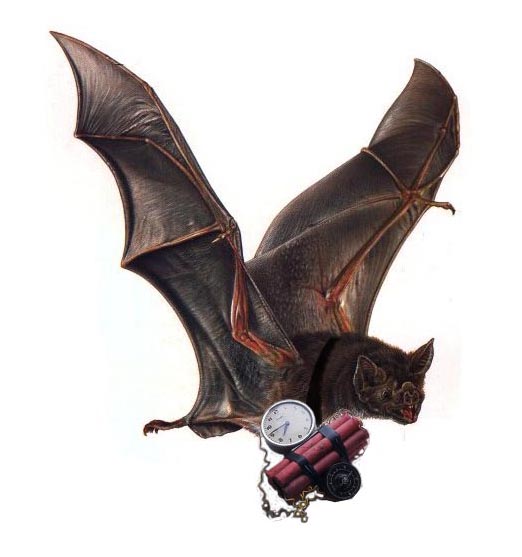
But did you know that the US military poured money into an actual ‘bat bomb’? Not bombs shaped like a bat, or a bomb that just had “bat” as part of a secret code name — actual bats carrying around incendiary devices. As bizarre as it may sound, it’s true. Not only was this top secret weapon on the verge of being deployed in combat, but initial testing suggested that the bat bomb would have been one of the most destructive weapons in the US military’s arsenal.

My dentist is always busy.

Shortly after Japan bombed Pearl Harbor, the military was inundated with ideas for new, ingenious, and often quirky weapon ideas. One such idea came from Dr. Lytle S. Adams, a dentist and inventor. Adams happened to be friends with First Lady Eleanor Roosevelt, which allowed him to submit a proposal to President Roosevelt.

Image

“Thanks, our reputation for being dark and evil has been helped no end.”

His idea was to attach incendiary devices to bats and drop them over Japan to create a widely effective firebomb. Four facts made this a tempting idea:

1. Bats can be induced to hibernate, which makes them easy to transport.

2. Millions upon millions of bats can be found in caves across the US, which means that they would be cheap to acquire.

3. Bats seek out dark areas during daylight, so there is a good chance that they would roost in the attics and cubbyholes of buildings.

4. Bats can carry several of their young at a time, so they can probably carry a bomb.

The project received funding, amazingly, and the US military set about experimenting with ways to equip bats with incendiary devices. After a few bungled prototypes, they eventually developed a napalm device that weighed less than an ounce and operated on a 30 minute timer.

Image

The bat bomb- the perfect weapon for biblical apocalypses.

Testing the bomb proved to be incredibly effective — even moreso than anybody had ever predicted. Several bats escaped from captivity at the Carlsbrad auxiliary airfield, and within a few minutes the entire base was up in flames. The military later performed another test in a mock Japanese village; the fake town was completely obliterated. The military wrote, “It is concluded that the bat bomb is an effective weapon.”

Image

“Several bats escaped from captivity at the Carlsbrad auxiliary airfield, and within a few minutes the entire base was up in flames.”

At that point, the only tricky part was figuring out how to deploy the bats. Bats cannot be dropped out of a plane like bombs, because they would simply crash into the ground. That’s where the bat bomb came in. The military created a bomb-shaped device that held hundreds of bats in stacked layers. The bomb would release a parachute after it was deployed and then open its stacks to give the bats a chance to wake up and take to the skies.

Unfortunately for the bat bomb project, another famous program, the Manhattan Project, had secretly rendered the bat bomb obsolete. Everything that the bat bomb could do, Fat Man and Little Boy could do a thousand times better. The nuclear era had just begun, and the age of the bat bomb was over before it even got started.

By Dabney B. http://strikefighterconsultinginc.com/blog/

THE ULTIMATE WHAT-IF: The cancelled SUPERMARINE SPITFIRE progenitor

Image

 Just as the Messerschmitt Bf 109 was derived from the civil Bf 108 Taifun so the Spitfire was derived from the four seat cabin monoplane Supermarine Typhoon. First flown in 1935 the Gypsy Major powered Typhoon achieved a remarkable performance due to its fine aerodynamics. The sole example was written off barely two months after the first flight when chief test pilot ‘Mutt’ Summers forgot to lower the undercarriage on landing. The projected high price and complicated construction coupled with Supermarine’s increasing preoccupation with Spitfire development doomed the project and the attractive Typhoon was destined to remain an intriguing example of what might have been had war clouds not threatened.

If you enjoyed this, you may also enjoyhttp://hushkit.net/2012/06/27/the-ultimate-what-if-the-supermarine-jetfire/

When jet fighters and cars meet: The story of the General Motors FIREBIRD hyper-car!

Firebird III..Holy Cow!

In his fascinating interview with Hush-Kit in May 2012, supercar designer Peter Stevens theorised on the often close relationship between aircraft and automobile design: “In aircraft terms all cars can be described as being reliant on ‘low speed aerodynamics’, but the actual shapes are often taken from very high speed aircraft”.

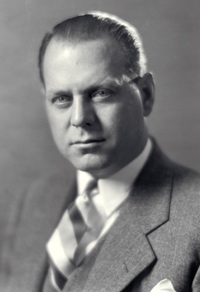
One of the most blatant examples of this idea at work was American car designer Harley Earl’s astonishing Firebird series of concept cars for General Motors (GM) during the 1950s. Powered by gas-turbine engines developed by Emmett Conklin and bristling with fins, bubble canopies and other aeronautically-inspired refinements, the Firebirds represented the high-point of America’s obsession with the jet age.

My other car is a P-38 Lightning!

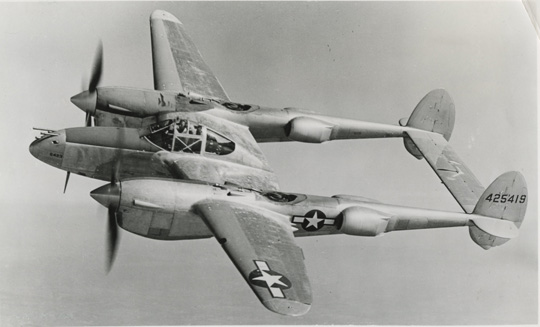
Earl was no stranger to using aircraft as inspiration — his Le Sabre concept car of 1951 was, as the name suggests, directly influenced by North American’s F-86 Sabre jet fighter, then fighting it out with Soviet MiGs over Korea. He had also long admired the unorthodox twin-boom layout of Lockheed’s World War Two-vintage P-38 Lightning, reflected in the designer’s fishtail fenders for later GM products. Earl was fascinated by the impression of speed that aircraft imparted, fighter aircraft in particular adhering to his concept of cars looking long and low, alert, ready to pounce.

“You ready Robin?” “Yes Batman” “Stick on some ragga and get the afterburner lit- we’re off to Nandos!”

Having introduced sharply-swept fins and wraparound windshields, both a prevalent part of contemporary fighter design, on the Le Sabre, Earl felt compelled to push further into the realms of the fantastic, often making almost impossible demands on his long-suffering technical team in the interests of pushing the envelope of American automobile design.

King of cool, Earl Harley

Reportedly, Earl was aboard an airliner during one of his frequent trips across the USA in the early 1950s when he read a short article in an in-flight magazine on the futuristic Douglas A4D Skyray, which made its first flight in January 1951. Earl was fascinated by the new Navy fighter and stared at the photographs in the article for more than an hour. Remarking that it was “a striking ship”, he tore the page from the magazine and put it in his inside pocket before settling into deep thought. When his travelling companion asked whether he was thinking of next year’s model and what it might be, Earl paused for a moment before slapping his breast pocket and saying “I have it right here”. Earl later recalled: “I was only answering the banter in kind. Then bingo, I decided I had kidded myself into something”.

“A striking ship”- The Douglas F4D Skyray

Design and construction of the first Firebird began in 1953, the idea being to create a complete rolling laboratory in which state-of-the-art technology could be tested in real road conditions. It was also a clear opportunity for GM to showcase the extremes in technology and design that it was capable of. Given the company designation XP-21, the single-seat Firebird I was the first American car to be powered by a gas turbine engine, in the form of the 370 h.p. Whirlfire GT-302. Arguably the single most impractical car ever devised, the Firebird I comprised a bullet-shaped fibreglass fuselage with a single fin and short rounded delta “wings” (as on the Skyray), the driver being accommodated in a fighter-style cockpit with a bubble canopy. Flaps were also incorporated for braking purposes — another lift from aeronautical design. The car was driven by Conklin and racing driver Mauri Rose and found to be largely satisfactory, despite issues with noise, exhaust overheating and, unsurprisingly, extremely high fuel consumption.

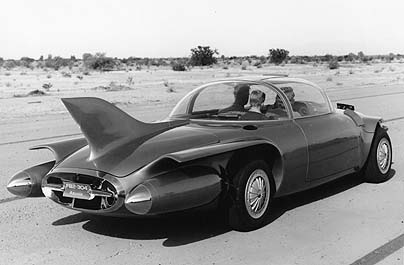
Earl’s second Firebird, designated XP-43, was intended to parlay the lessons learned with the Firebird I into a more practical four-seat family car. With its distinctive double air intakes at the front, high bubble canopy and fin, the Firebird II was intended to be a component of GM’s “Safety Autoway of Tomorrow”, a rapid transit system which would take advantage of an “electronic brain” in the car, which received signals from a metallic conductor buried in the road, the magnetic device creating a form of autopilot for cars. The boffins at GM worked hard to get the system working and eventually conducted successful tests of what the company dubbed the “dream highway”. The Firebird II was the first car to have its entire exterior bodywork constructed from titanium, then being used in the construction of the USA’s state-of-the-art fighters such as the McDonnell F-101 Voodoo and Lockheed’s F-104 Starfighter — another of Earl’s appropriations of contemporary aeronautical techniques.

The Republic F-105 Thunderchief. 1950s US design wasn’t good at ‘subtle’.

If the Firebird II reflected fighter aircraft design in the mid-1950s, the last  — and most extravagant — of the Firebirds anticipated the cutting edge of the next generation of American warplanes, typified by Republic’s super-sleek F-105 Thunderchief, which entered US Air Force service in mid-1958. While GM’s engineers were perfecting the “electronic chauffeur”, Earl and his team were going for broke with a design that incorporated no fewer than seven wings and fins protruding from a science-fictionesque wedge-shaped main body.

Build it, damn you!

Promotional material of the time dispensed with any pretence of subtlety and announced that the new Firebird would be “an entirely different kind of car, in which a person may drive to the launching site of a rocket to the moon”, the aeronautical terminology being supercharged to include the rapidly escalating space race. The new car, which incorporated double bubble canopies, cruise control and air-conditioning, was to be fitted with an extension of the Firebird II’s “ping-pong ball” control system, known as Unicontrol, in which steering, acceleration and braking would be performed by means of a single control stick, again echoing fighter cockpit design.

The initial tests of all three Firebirds were referred to as “first flights”, that of the Firebird III taking place at GM’s Desert Proving Ground in Phoenix, Arizona, in August 1958, the machine subsequently undergoing extensive trials in a windtunnel, as used for testing aircraft.

The Firebird III, one bad motherfucker.

Publicly unveiled at GM’s 1959 Motorama show in New York City and Boston (actually held in October 1958), the Firebird III was a hit; the two-seat rocket-ship of the road fired the imaginations of the young and old alike. As on the Firebird II, Earl had sought to exploit aerodynamic braking in the form of air brakes, which emerged from flat panels in the Firebird III’s main body. The 225 h.p. Whirlfire GT-305 engine provided propulsion power only, a separate 10 h.p. two-cylinder powerplant being installed to drive the electrical and hydraulic accessories.

The Firebird III was not just a hit at the car shows; in April 1959 it was exhibited at the World Congress of Flight in Las Vegas, its space-age looks fitting right in with the highly advanced military hardware on view at nearby Nellis AFB.

GM Modified!

The Firebirds were never seriously intended to be put into production, however earnest the brochures of the time were in suggesting otherwise, and although a Firebird IV ground-effect machine was built in mock-up form, GM decided that the III was the end of the line for the ambitious space-age Firebirds. The name, however, lived on in a series of Pontiac “ponycars” from 1967.

All three Firebirds still survive and have been acquired by GM, which aims to restore them to roadworthy status and possibly tour them at some stage. Happily, car designers are still very much taking cues from aeronautical developments, as Peter Stevens explained in his Hush-Kit interview: “I do think that designers are looking at things like the F-117 stealth fighter for inspiration; the Lamborghini Aventador is a good example of this trend”. Long may it continue.

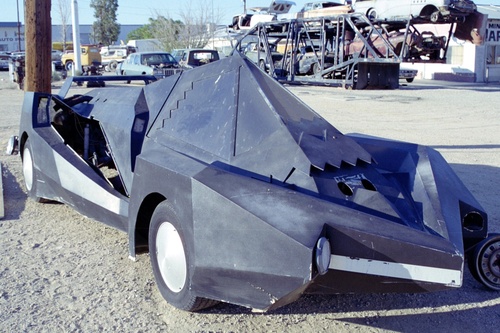
This Stealth Car can seen in Pearsonville, California. My guess is that it escaped from China Lake.

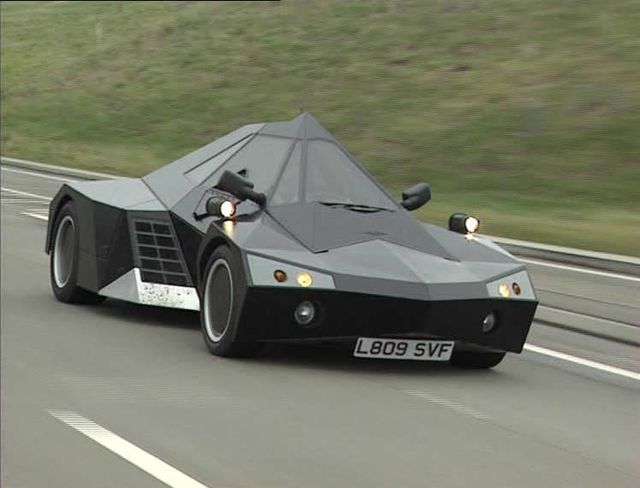
1993 custom car designed to defeat police speed radars. Designed by Jim Router (formerly of Lotus and Mclaren). Not in any way mental.

By Nick Stroud, Editor of The Aviation Historian

The interview of Peter Stevens by Joe Coles can be found here

Follow my vapour trail on Twitter@Hush_kit


Aircraft camouflage on the catwalk

The polychromatic Fred Butler.

For a fresh look at aircraft camouflage schemes, Hush-Kit got in touch with colour expert and accessories designer Fred Butler. Famed for her love and understanding of the relationships between intense colours, her accessories have been worn by the great and the good, including Lady Gaga.

Fred will be accompanied on her mission by Thomas Newdick. Thomas has almost twenty years of experience in aviation journalism and is one of the UK’s leading experts on Soviet & Russian aircraft. Today, he is the Assistant Editor of Combat Aircraft Monthly.

Thomas Newdick- the Jacques Brel of aviation journalism.
 
 
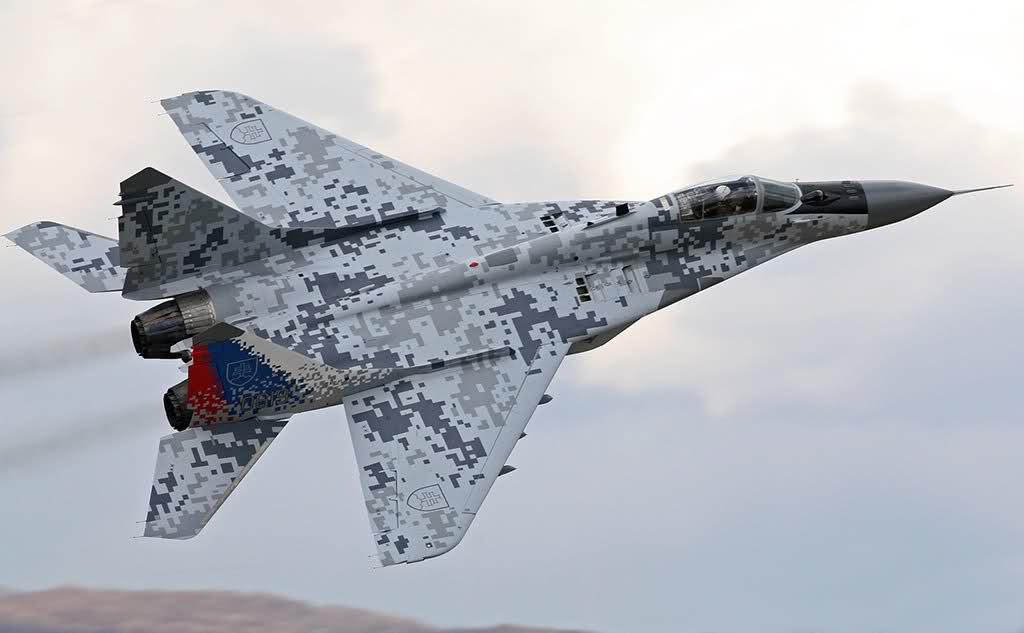
  1. Mikoyan MiG-29A Slovakian air force (Vzdušné sily Slovenskej republiky) in digital camouflage twinned with Preen’s pastel prints
 
 
g
Though the Slovakian air force only have ten MiG-29As, they receive plenty of media exposure due to their natty digital schemes.
Who’s afraid of a digital Wolfe? Certainly not Preen, with this radical new take on lace.
 

Fred says: “Preen’s digitised geometric square pastel prints came from an extreme close-up of a vase of peonies and lace in reference to looking at Virginia Wolfe and her lifestyle with the Bloomsbury set: ‘We loved various aspects from that period but felt to replicate them would be too retro, so we tried to take it to a new level by computerising everything. We took the lace from that period and digitised it so it became very geometric and black and white, almost to the point where it didn’t feel like lace any more.’ “

Thomas says: “Part of a recent trend for digital camouflage patterns that also extends to uniforms and land systems, the Slovakian scheme was once intended to adorn the entire fleet of these Soviet-built fighters. Known as Cloudcam, it was applied two single-seat MiG-29s (serials 0619 and 0921) as part of their part of the modernisation in 2008. The scheme was devised by HyperStealth Biotechnology Corp. of Canada. This scheme is a follow-on to the company’s Digital Thunder scheme previously painted on serial 0921. The use of Blue, Medium Gray and Light Blue Gray is intended to conceal the aircraft against the ground, sea, overcast and blue sky.”

Save the Hush-Kit blog. This site is in peril, we are still far behind our funding targets. Our site is absolutely free and we have no advertisements. If you’ve enjoyed an article you can donate here. 

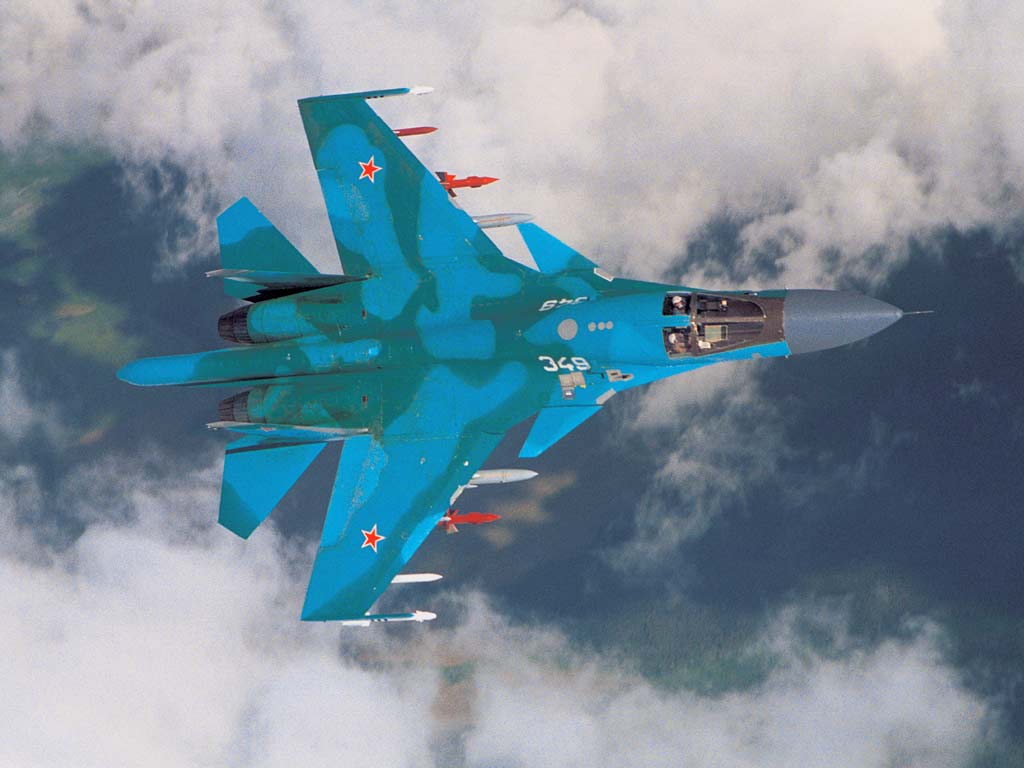
2. Prototype Sukhoi Su-32FN with bright ‘pop’ colour camo twinned with the Dior bag with camo print by Berlin artist Anselm Reyle.

The Su-32FN is a maritime strike aircraft with a very long range. The long endurance of the type necessitates the inclusion of toilets and a cooking galley. The camouflage scheme features gaudy clashing colours.
 
 
Anselm Reyle used high-intensity ‘camo’ styling for his Dior bag.


The shoe model that leapt from a Su-32 was found buried three feet deep near Murmansk. She said she was delighted by the Su-32 flight, but fancied ‘a quick dive’.


Fred says: “The Parisian House gave free reign to Berlin fine artist Anselm Reyle to shake up the codes of Couture, with his signature style inspired by the agitprop of eighties punk graphics. His prints for accessories reworked camo in bright, saturated hues & fluorescent colour ways. or as he puts it ‘I am interested in irritating the viewer’s eye’. “

Thomas says: “The three-tone camouflage scheme worn by this prototype Su-32FN maritime strike aircraft was likely intended to provide the aircraft with improved concealment over water, or at least in a littoral environment. The pattern is classic ‘Flanker’, but differs in its use of a deeper shade of blue and a blue-green color. Interestingly, the first Su-34s delivered to the Russian Air Force retained a very similar (if not the same) scheme, although this now seems to have given way to an unusual dark grey over pale blue scheme, presumably better adapted for use over land, or perhaps more suited to nocturnal operations.”


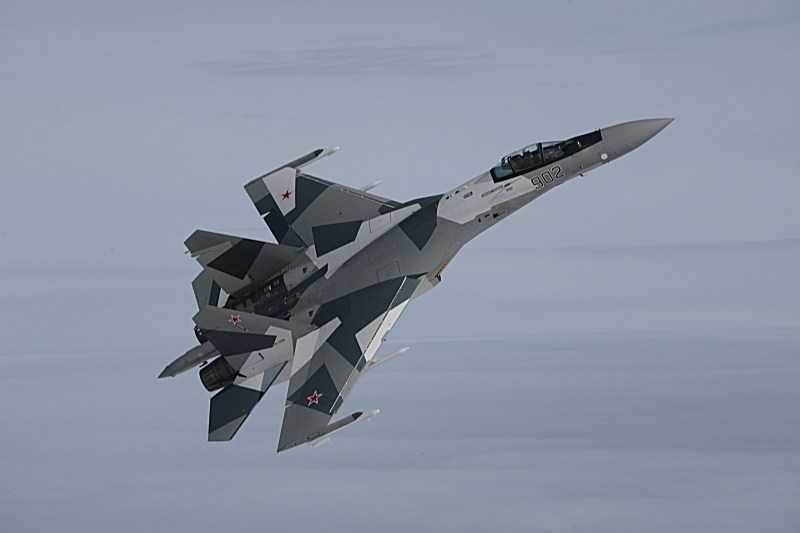
3. Sukhoi Su-35BM in splinter camouflage twinned with PRINGLE S/S 2012 designed by Alistair Carr

The Su-35BM fighter in a ‘splinter’ scheme of greys and white. Aircraft manufacturers are acutely aware of the aesthetic and connotative power of camouflage schemes. Company demonstration aircraft and prototypes often wear ‘attention-seeking’ schemes.
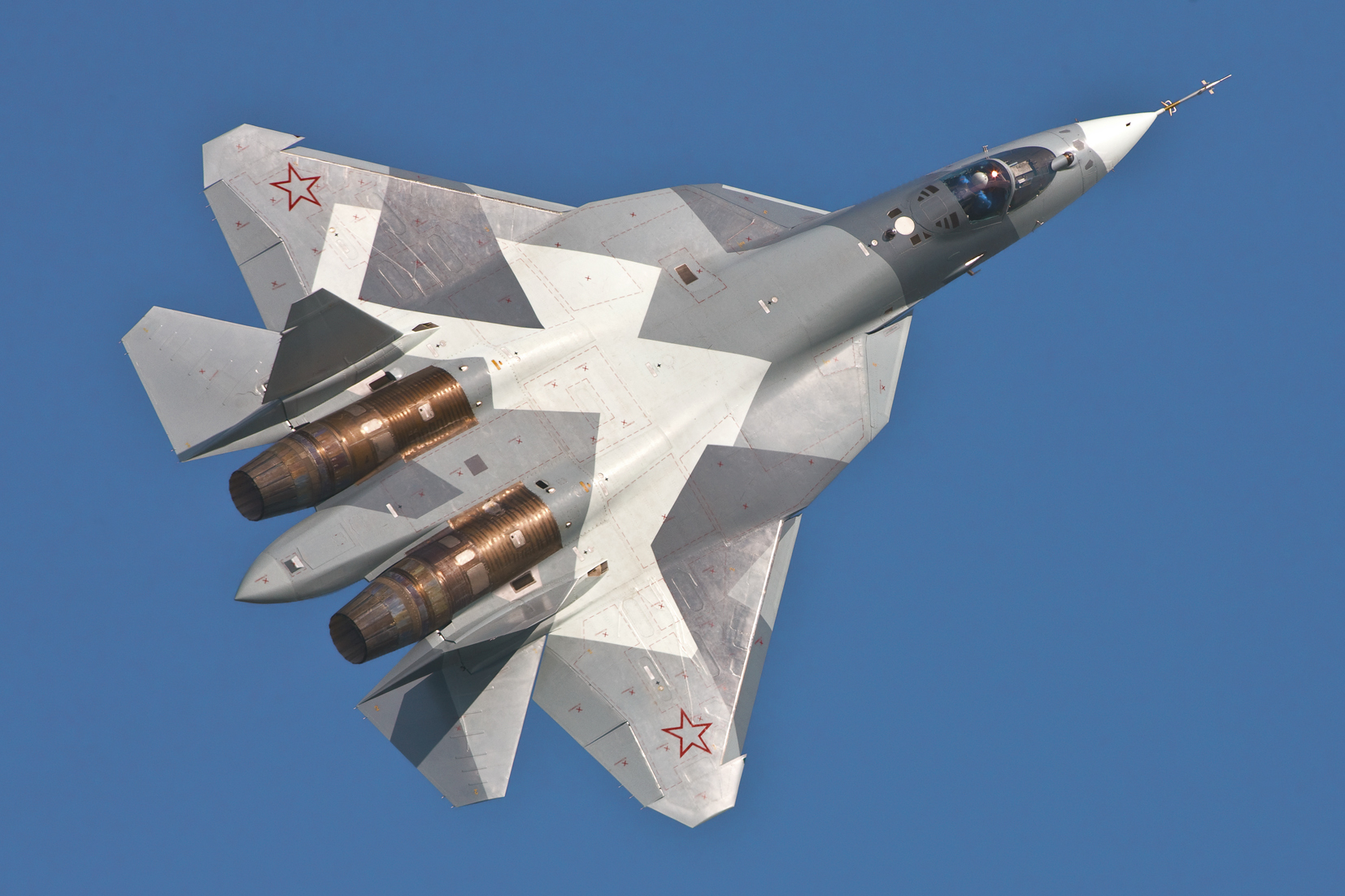
The most advanced Russian fighters, the fearsome PAK FA T-50 prototypes, are painted in a very similar scheme to the Su-35BM.
 
h
Geometric design knitted in the PRINGLE S/S 2012 designed by Alistair Carr. The design incorporates intarsia, a knitting technique used to create multicolour patterns.
 

Fred says: “Geometric design knitted in the PRINGLE S/S 2012 designed by Alistair Carr; Carr’s first collection designing for the British heritage brand updated their traditional argyle and jacquard patterns,  playing on the function of knit as a brilliant tool for colour, texture, and pattern.  The opening look of the show was this gray crewneck sweater with multi-coloured intarsia bands based on the patterned upholstery of London Underground tube seating.”

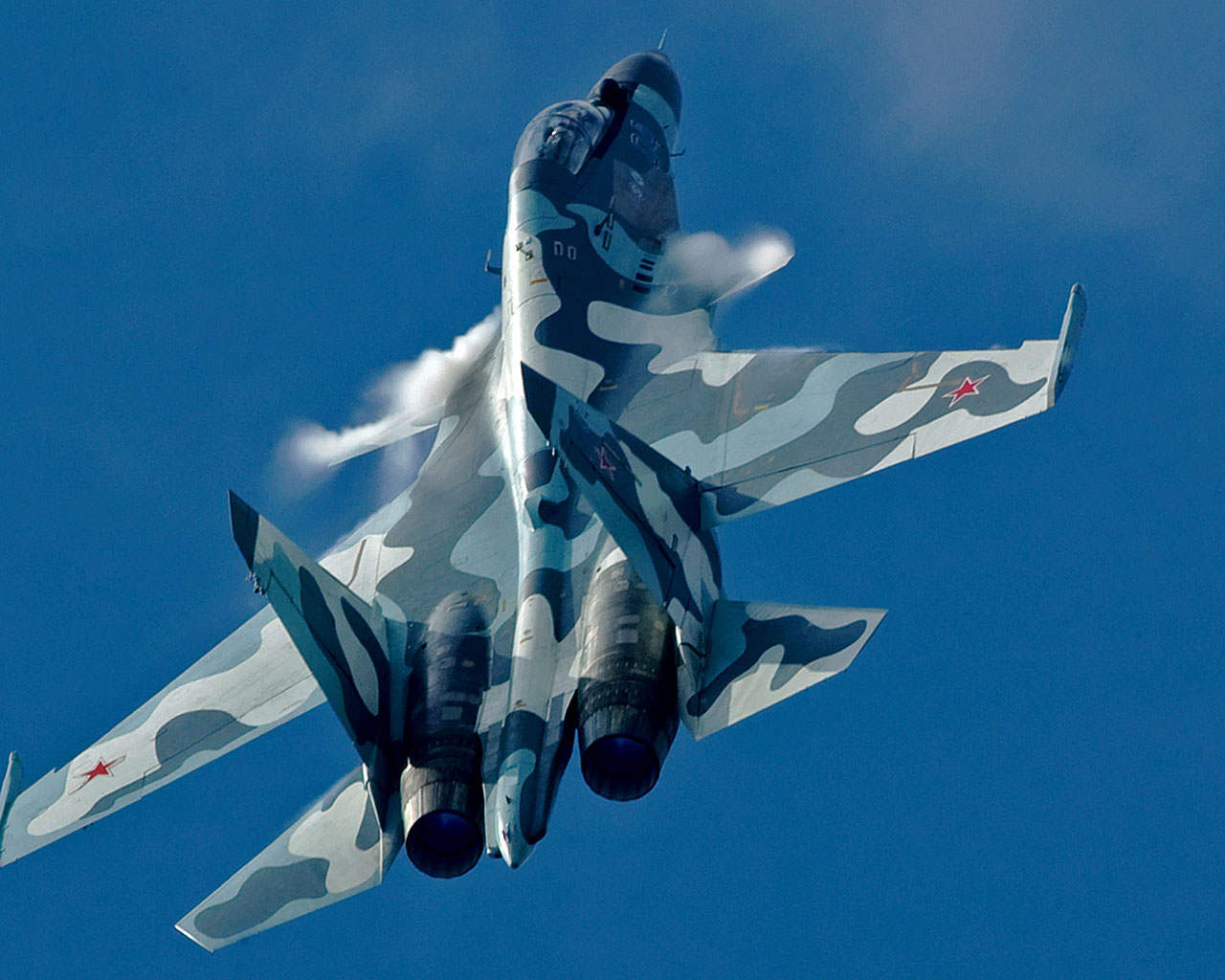
Thomas says: “For some time now, Sukhoi has been applying splinter camouflage schemes as an alternative to the more traditional patterns. In particular, they have been associated with advanced single-seat Su-35 fighters (including the latest Su-35BM model, as seen here). As well as two-tone blue/grey air defence schemes and a sand/brown/green ‘desert’ pattern, the latest offering is this, employing three shades of grey, and with the pattern extending to the undersides of the aircraft. Although it has yet to appear on in-service aircraft, this latest scheme has already been aped by the US Navy Aggressors of VFC-12 ‘Fighting Omars’ (adapted to the F/A-18). A similar (albeit somewhat less complex) scheme has also been used for Sukhoi’s next-generation T-50 fighter project. Up to now, however, the Russian Air Force has proven resistant to adopting the splinter scheme, with refurbished ‘Flankers’ instead receiving new variations on the traditional ‘wavy’ scheme.”

4. Sukhoi Su-30MKM twinned with Aqua colour camo print like Tommy Hilfiger S/S 2012

 
Malaysian daze! The Su-30MKM prototype in its distinctive wiggly scheme. Sadly, Royal Malaysian Air Force Su-30MKMs are far more drab.
 
The men behind the scenes of Hush-kit rocking a hoodie and shorts combo. The look is set to be all the rage at Farnborough 2012.


Fred says: “Hilfiger’s collections are always preppy, but this season he made preppy more modern, inspired by contemporary art. He chose the artists he collects himself and focused on Andy Warhol and Basquiat for this Warholesque camo print. He applied the pattern onto jackets and shorts in a red/purple/pink mix and a cropped jacket and sweater in blues and blacks seen here.”


Thomas says: “Classic camo print like Kenzo S/S 2010. Similar to the scheme above in terms of palette, this pattern substitutes a complex wavy pattern for the splinter scheme. Interestingly, the aircraft in question is a prototype Su-30MKM (previously a prototype Su-30MKI), a type developed for use by Malaysia (and India, in the case of the MKI). However, the Royal Malaysian Air Force operates the aircraft in a subdued overall dark grey scheme, while India also uses an overall grey scheme, although somewhat lighter. Clearly, the three-tone scheme is more eye-catching and therefore better suited for marketing purposes and air displays.”

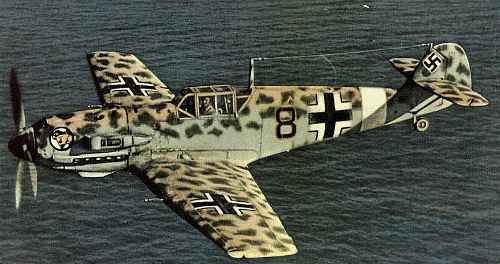
5. Messerschmitt Bf 109E-7/Trop twinned with Givenchy S/S 2011 jacket.

Givenchy Autumn 2007 couture pumps, perfect for dogfighting over Africa.

Fred says: “It’s the Couture shows this week, but back in 2007 the newly appointed designer at Givenchy, Riccardo Tisci made top-to-toe looks in dégradé cheetah check pattern. The way the dot print fades into the sand camel section really looks like this plane’s paintwork- like the body of a leopard print gecko.”

At this point, Hush-Kit wheeled in another expert, Ed Ward. Ed is an aviation illustrator and has studied the history of aircraft for over twenty-five years. He has given up smoking and plays the ukulele.

Ed Ward and Fiona Banner’s Sea Harrier both look down on you.

Ed says: “Any study of warplane camouflage is likely to feature the aircraft of the Luftwaffe’s Jagdgeschwader 27 in the Western Desert. Flown by Franz Elles, this Messerschmitt Bf 109E-7/Trop of 8./JG 27 was active in North Africa in the summer of 1941. Naturally, flying over the Mediterranean makes a mockery of this ingenious camouflage pattern, consisting of RLM 79 Sandgelb over RLM 78 Lichtblau, with patches of RLM 80 Olivgrün. The result provided a near-perfect match to the desert scrub encountered in North Africa.”

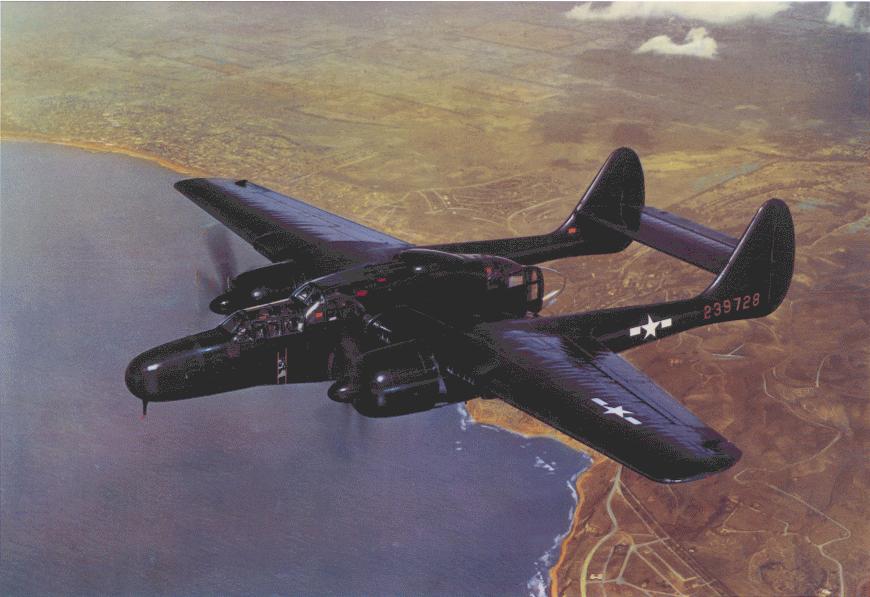
6. Northrop P-61 Black Widow twinned with Black patent sheen with spherical form like Giles PacMan Headwear by Stephen Jones from S/S 2009

 
The Northrop P-61 Black Widow was as mean it looked.
Tits and a space helmet- a winning combo.

Fred says: “Black patent sheen with spherical form like Giles Pac-Man Headwear from S/S 2009. To accessorise this 80’s theme collection Giles worked with milliner Stephen Jones on enormous Pac-Man metal helmets to complete a sci-fi sadomasochism scheme.

‘I was just looking at the graphic designers of the late eighties and early nineties who I grew up admiring: Ben Kelly, Peter Saville, Mark Farrow. Pet Shop Boys videos, The Hacienda club. What they did was ridiculously simple but incredibly graphic.’ Pac-Man dates from the same era”

Ed says: “A gloss finish replaced the matt black paint originally applied to the Northrop P-61 after it was discovered that gloss black rendered the aircraft less visible in a searchlight beam.”

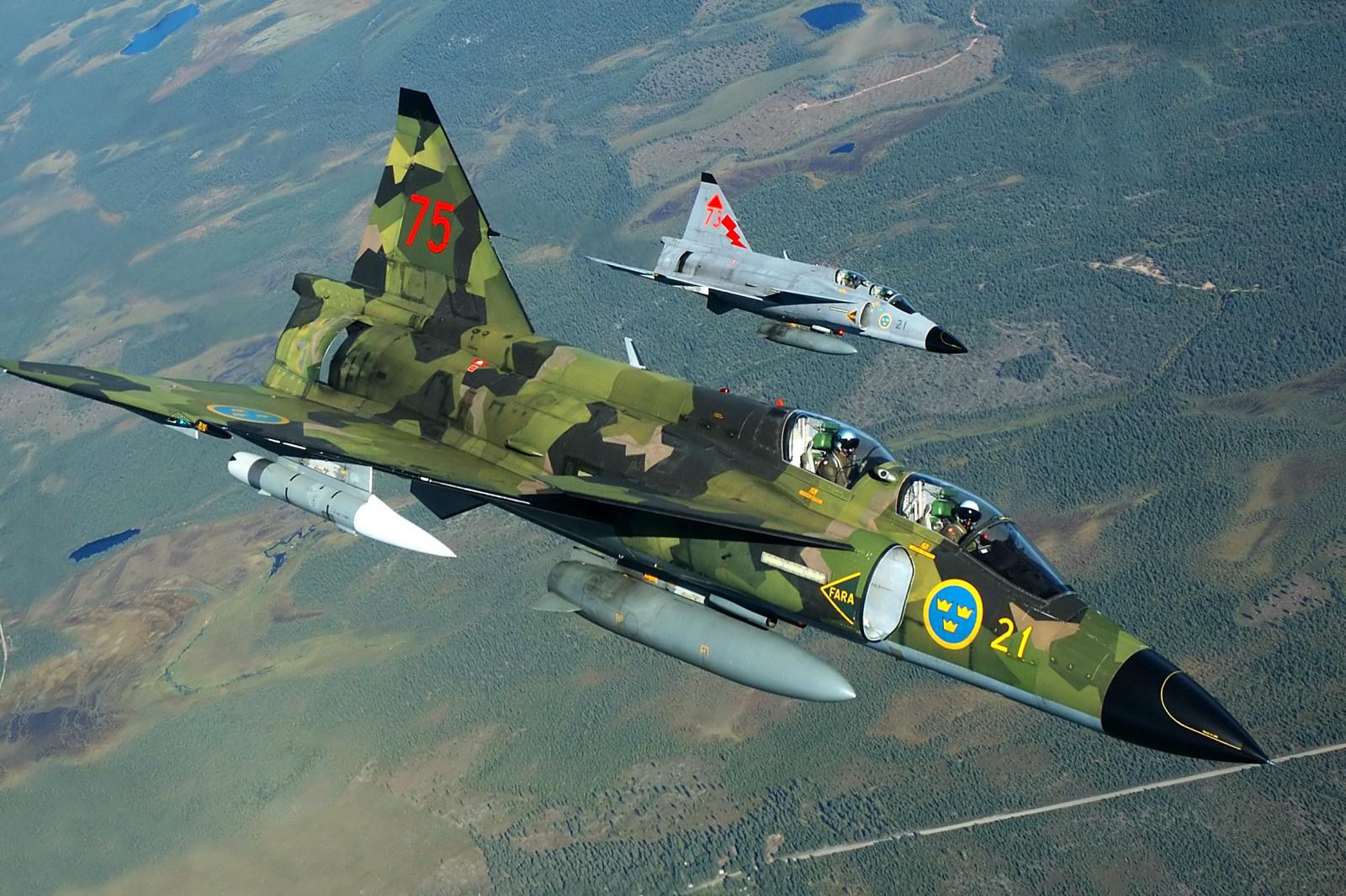
8. The SK-37 Viggen is twinned with Pattern like Jeremy Scott x Adidas Originals A/W 2011 camouflage sneakers………. with wings!

The Viggen first flew in 1967, the year Sgt. Pepper came out. The lovely camo scheme worn by the near aircraft is sometimes known as ‘Fields and meadows’.

Adidas Wings Camo Shoes by Jeremy Scott. Roman courier Mercury, the god of commerce and thieves, wore winged sandals.

Fred says:  “These military-inspired high top basketball JS Wings sneakers for the Adidas Originals by Original line, have dark woodland camo print and lined inside with a “Aviation” orange inner.   He has added to his signature wing motif  with the finishing touch of a dog tag including all his own essential information and even his blood type B+ !”

Ed says: “The splinter scheme applied to the Saab Viggen is a remarkable instance of camouflage standardisation. It had been used since the mid 1970s for aircraft, vehicles and ships. In scaled-down form the same pattern is used for Swedish field uniforms.”

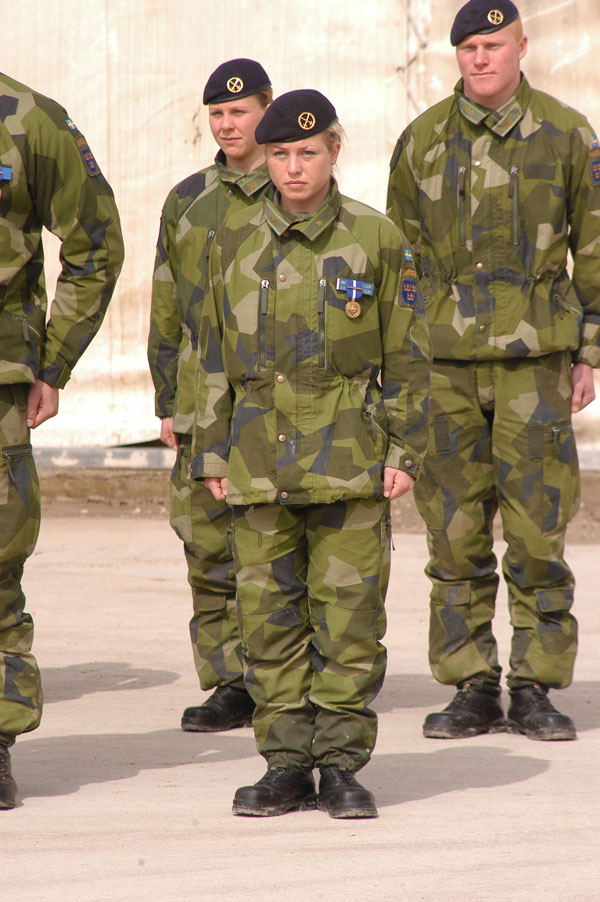
A bridge between aircraft camouflage and fashion. Swedish soldiers wearing a scheme essentially similar, but obviously scaled-down, to that worn by their nation’s aircraft. Today, Swedish aircraft, like those of most other air forces, are painted grey.

As we have seen, fashion is quick to jump on the stylings of the military’s disruptive camouflage patterns. Today, the latest digital schemes are echoed in the work of many fashion designers. Sadly, it appears that the golden era of aircraft camouflage, with bold contrasting colours may be over. But, as the fighters of the world become a washed-out tribute to the colour grey, with low-visibility markings, the fashion world is far from finished with what was described in the 1910’s as ‘the razzle-dazzle of camouflage’.

Thank you for reading Hush-Kit. Our site is absolutely free and we have no advertisements. If you’ve enjoyed an article you can donate here. At the moment our contributors do not receive any payment but we’re hoping to reward them for their fascinating stories in the future.


See Fred Butler’s work here.

If you enjoyed this article, we think you may enjoy this one by Vice magazine’s Bruno Bayley. 


Elsa Andersson: Sweden’s flying farm-girl

Image

“Our times may not understand the work you’ve now completed”

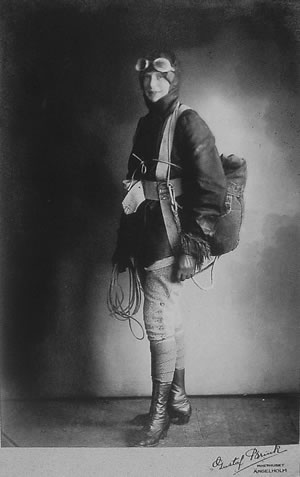
This line was spoken at the funeral of Elsa Andersson, who died at the age of twenty five. These words share something of the enigmatic quality that Elsa had, both in life and in death.  Her gravestone read ‘First and only female aviator in Scandinavia’.

A slender boy-girl Icarus, a Puck, an adventuress; a fatalist, a yearning, a sign of modernity…one can easily get lost in the mythology.  To find the real girl I had to peel away all these veils, added by writers, artists and gender theorists. Here I will add my own sketch of her- as a young woman fascinated by technology, an adrenalin junkie and a true artist, proud and dedicated to her craft.

On a cold January day in 1922, 4000 people gathered to watch an aerial show. This was a popular family entertainment, where all ages and social classes mixed. Picnic baskets were packed and Sunday best put on; it was an event to see and be seen at. It was a spectacular show, demonstrating the success of man in conquering the sky.

A yellow Albatros sails up to 2000 feet, a small figure climbs out onto the lower port wing and waves to the crowds below.

This is the highlight of the show, the famous girl who jumps.

Here she goes head first.

I know something about the capturing horizon of Skane, South Sweden. Like Elsa, I too grew up in this topsy-turvy medley of yellow fields, hills and a sky constantly changing like the sea. There’s a struggle between ground and heaven here. I know something about the longing it can instil in an impressionable child.

Growing up on a farm as the eldest child, Elsa became motherless at the age of six. She grew very close to her dad and his work with the land. It is a time where new technology is revolutionising the farming industry. From an early age Elsa studies the new equipment and techniques that her progressive father invests in.  He takes her shooting with the boys and she develops a taste for physical activity, innovation and adventures, preferably all together.

She learns how to drive, and must have cut the image of a pioneering flapper girl in her car, sailing through the Swedish landscape as a teenage girl…

Her brother is smitten by the America bug and leaves for an adventure overseas.  Elsa too dreams of America, but when she is 16 her life changes course.  She is taken to an aerial exhibition created by Enoch Thulin.

Image

Thulin was an early pioneer of flying in Sweden. He owned the Thulin Aeroplane Factory which was not too far from Elsa’s childhood home. This was a visit that seemed to distil Elsa’s passions.  Like a 1970s touring groupie, she chased Swedish air shows around the country, hungry for the thrill that aviation gave her.

It seems almost morbid that families would gather to watch such dangerous shows. The flying machines were rickety wooden structures, held together by little more than piano wires, sailing cloth, spit and hope.

Despite and (partly because) of the dangers involved, Elsa was determined to fly and her father supported her ambition.

At the age of 24, when most other girls were safely married off and busy breeding, Elsa got accepted into Thulin´s flying school.  It was an expensive venture, until then only accessible to well-to-do and middle-class men. The fee, roughly equivalent to £200 (and a further £200 deposit for possible repairs of equipment) was paid by her father.

She did not let anyone down.  Elsa was an embodiment of her own motto that ‘courage and determination are the best qualities in a human being’. She passed theoretical and technical tests with distinction and also found a social scene where she felt at home amongst the other (all male) aviators.

Elsa was to be Thulin´s last student when he died in a flying accident only a few months after enrolling her. Elsa was given her aviator diploma (now Flying Certificate).

An article from this time, describes how a group of young aviators from Thulin’s School take a journalist with them on a flight excursion up to Gothenburg.  They set off on a warm and clear summer’s day and navigate by tracking the railway line. After a while, encounter strong turbulence and the reporter fights a violent nausea and feels how his ears block. Lifting his gaze he describes the sight of Elsa seemingly in her own world engrossed in a book- “Such a curious woman; silent, serene and completely lacking of nerves!” – An interesting observation in a time where nerves and women were more or less synonymous.

Whether Elsa’s next decision is based on a career strategy or a craving for adventure we will never know. What were the prospects for a female pilot in 1921… in Sweden?  It seemed like there were none. So what’s a girl with an flying certificate to do? Adventure over, point proven; back to conformity? Not Elsa.

She decides to become a parachutist.

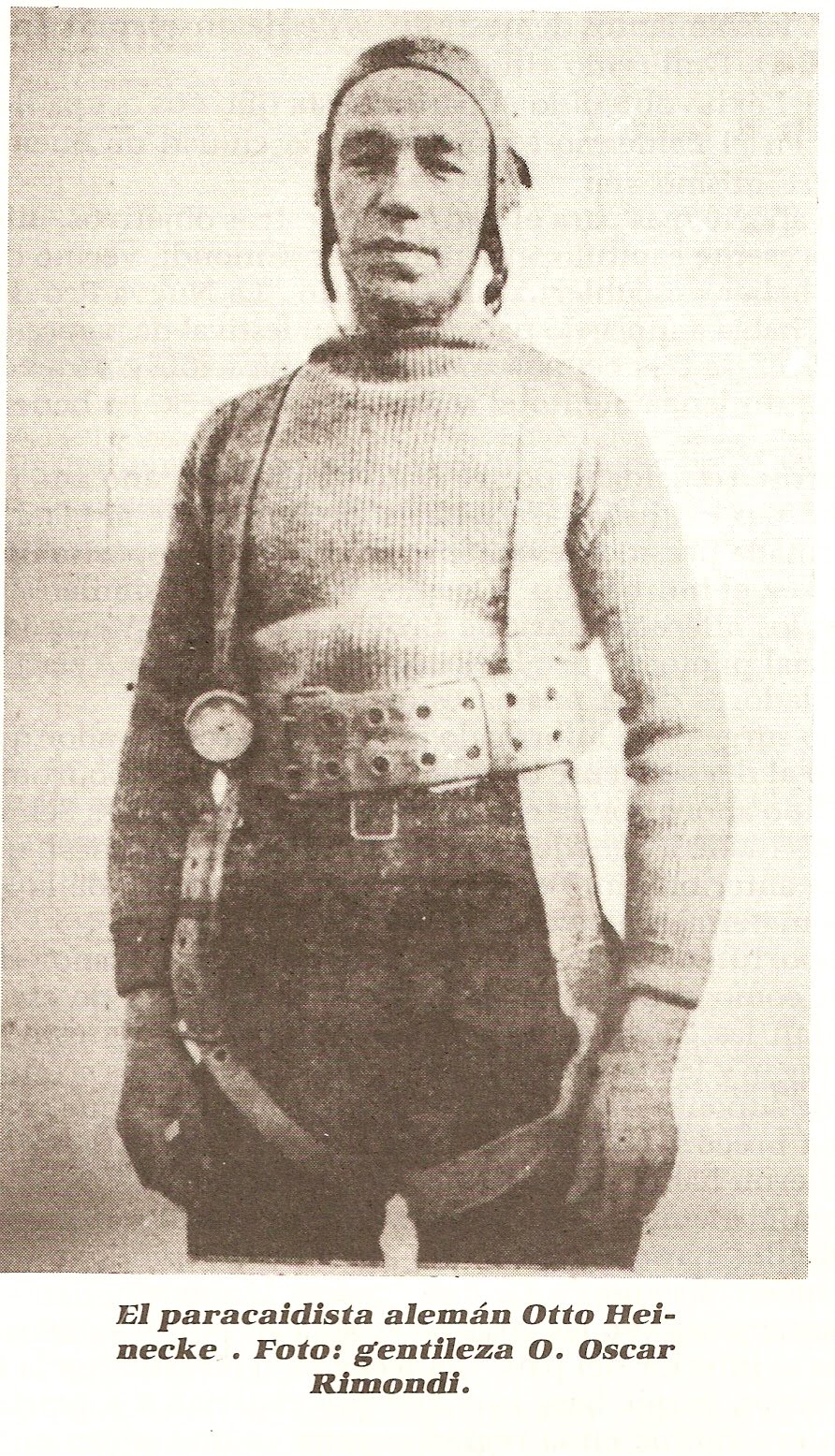
The only parachute expert in Sweden, Raoul Thornblad, is of the popular opinion that jumping is a man’s territory and he refuses to take on a female student. Therefore Elsa packs her bags and sets off to the wild excitement of  Weimar Berlin to train under Otto Heinecke, parachuting instructor. Parachuting from aeroplanes was in its infancy, and fatal jumps were far from rare.Image

The course only lasted a few weeks. In September 1921 Elsa had her parachuting certificate, despite not having actually done a real jump from an aeroplane. However, in typically dauntless act, she had already enrolled her virgin jump. The jump was to be mere days later during an aerial exhibition in South of Sweden. Elsa was far and away the most novel and titillating act on the bill.

It’s a glorious autumn day and 2000 spectators watch Elsa throw herself out head first (as one should at the height of 2000 feet). It’s a perfect jump and she lands gently amongst the lake grass, a bit wet, but one can assume pretty jubilant.

Perhaps still elated from her first success she returned the following Sunday to do it again.  Before her jump, she meets a fellow Swedish aviator, senior in both years and experience along with a German ex-fighter pilot. The men make fun of her choice of parachute, referring to it as a ‘Heinecke sack’.

“ You’d never get me in one of those… not for a million kronor!” exclaims the German.

The Swedish man said he would only use one of those in the face of imminent danger.

“It’s a piece of cake”  Elsa cuts back with a smile.

However just before jumping she gives instruction to return her bag to her father “Should I come down quicker than I ought to”

She does get to carry her own bag home, albeit with a twisted ankle that forces her into a short period of rest.

By now Elsa was living like a traveling circus artist. Far from sailing smoothly on her novelty status as Sweden’s only female aviator, not to mention show parachutist, she relentlessly pushed herself and her shows forward. Her performances become increasingly dare-devil. One can understand why many people ascribe her with a taste for self-destruction.

Many have questioned her motives, was it an eagerness to appease a sensation-hungry audience? Or was it, as many continue to speculate today, that she nursed a growing taste for danger, a heightened sense of life when faced with the very real possibility of sudden death?

Was she making a political act for gender equality?

Maybe the girl just liked to feel the wind in her hair…

She got signed up as a parachute performer with a new aerial company in Orebro, Sweden. Amongst fellow aviators she is known and appreciated for her sprightly and courageous nature and the passion that she invested in her art.

Cold Sunday in January 1922, 2000 feet in the air.

4000 people below, her biggest crowd yet. The jump she has planned is a new style, that she has never done before.  She has planned her boldest and most showy jump yet. She’s going to jump standing from the wing, rather than from the cockpit.

She is upbeat, excited and focused. Left hand holding onto a rail on the lower port wing. Wave to the crowd. Jump, head first.

A few somersaults, a black speck in the air. A figure that is meant to change shape into that of a jellyfish as the parachute folds out…

but doesn’t.

Those with binoculars have witnessed the struggle she had with a cord, that was stuck under her arm. Elsa is a heartbeat over the tree tops when the parachute finally begins to unfold.

And she crashes. But she will forever keep falling and flying in the imagination of the masses. With all the ballads, stories and films she continuously inspires, her story is more that of a momentarily arrested movement than a work completed.

By Cecilia Lundqvist artist and mask maker (currently learning the aerial hoop)

If you enjoyed this, you may get a thrill from this love letter to Swedish aeroplanes or this Viggen tribute.

Follow my vapour trail on Twitter@Hush_kit

Follow my vapour trail on Twitter@Hush_kit

You may also enjoy 11 Cancelled French aircraft or the 10 worst British military aircraftSu-35 versus Typhoon10 Best fighters of World War II , Su-35 versus Typhoontop WVR and BVR fighters of today, an interview with a Super Hornet pilot and a Pacifist’s Guide to Warplanes. Flying and fighting in the Tornado. Was the Spitfire overrated? Want something more bizarre? Try Sigmund Freud’s Guide to Spyplanes. The Top Ten fictional aircraft is a fascinating read, as is The Strange Story and The Planet Satellite. The Fashion Versus Aircraft Camo is also a real cracker. Those interested in the Cold Way should read A pilot’s guide to flying and fighting in the Lightning. Those feeling less belligerent may enjoy A pilot’s farewell to the Airbus A340. Looking for something more humorous? Have a look at this F-35 satire and ‘Werner Herzog’s Guide to pusher bi-planes or the Ten most boring aircraft. In the mood for something more offensive? Try the NSFW 10 best looking American airplanes, or the same but for Canadians. 10 great aircraft stymied by the US

You may also enjoy top WVR and BVR fighters of today, an interview with a Super Hornet pilot and a Pacifist’s Guide to Warplanes. Want something more bizarre? The Top Ten fictional aircraft is a fascinating read, as is The Strange Story of The Planet SatelliteFashion Versus Aircraft Camo is also a real cracker.