The ten best BVR fighters of 2013

FA-1877SQNAsraamAmraam

To excel in Beyond Visual Range air combat a fighter must be well-armed and equipped with capable avionics. It must be able to fly high and fast to impart the maximum range to its missiles, allowing them to hit the enemy before he is even aware of their presence. The aircraft must give its crews good enough situational awareness not to shoot their friends down, and be easy to operate so it can deploy its weapons quickly and accurately. The black magic of the aircraft’s electronic warfare suite can also come in to its own, reducing the opponent’s situation awareness.

Hardware is generally less important than training and tactics, but removing these human factors from the mix allows us to judge the most deadly long-range fighting machines currently in service. The exact ordering of this list is open to question, but all the types mentioned are extraordinarily potent killers. This list only includes currently active fighters (so no PAK FAs etc) and only includes weapons and sensors that are actually in service today (so no Meteor missiles etc).

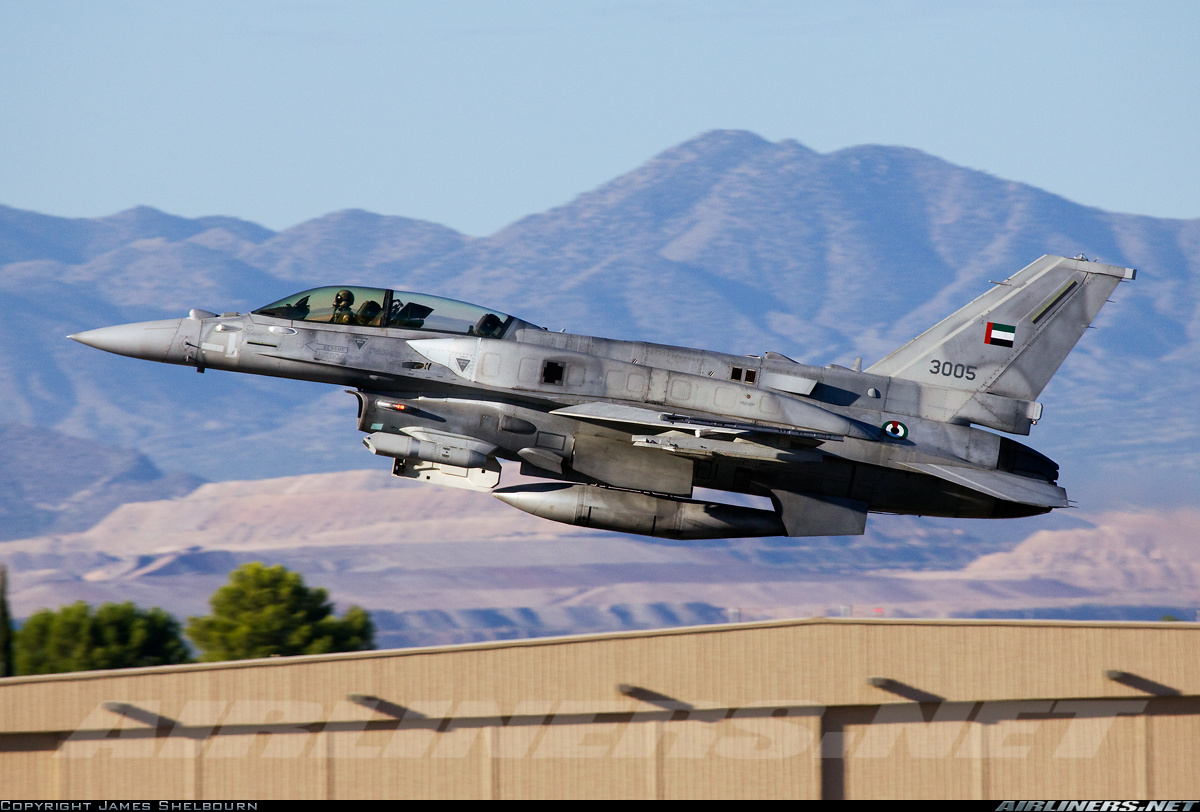
10. Lockheed Martin F-16E/F
1817480

A great sensor suite, including a modern AESA and comprehensive defensive aids systems is combined with advanced weapons and a proven platform; a small radar cross section also helps. However, the type is let down by mediocre ‘high and fast’ performance, fewer missiles than its rivals and a smaller detection range than some of its larger rivals. With Conformal Fuel Tanks its agility is severely limited.

Armament for A2A mission: 4 x AIM-120C-7, 2 x AIM-9X (1 x 20-mm cannon.).

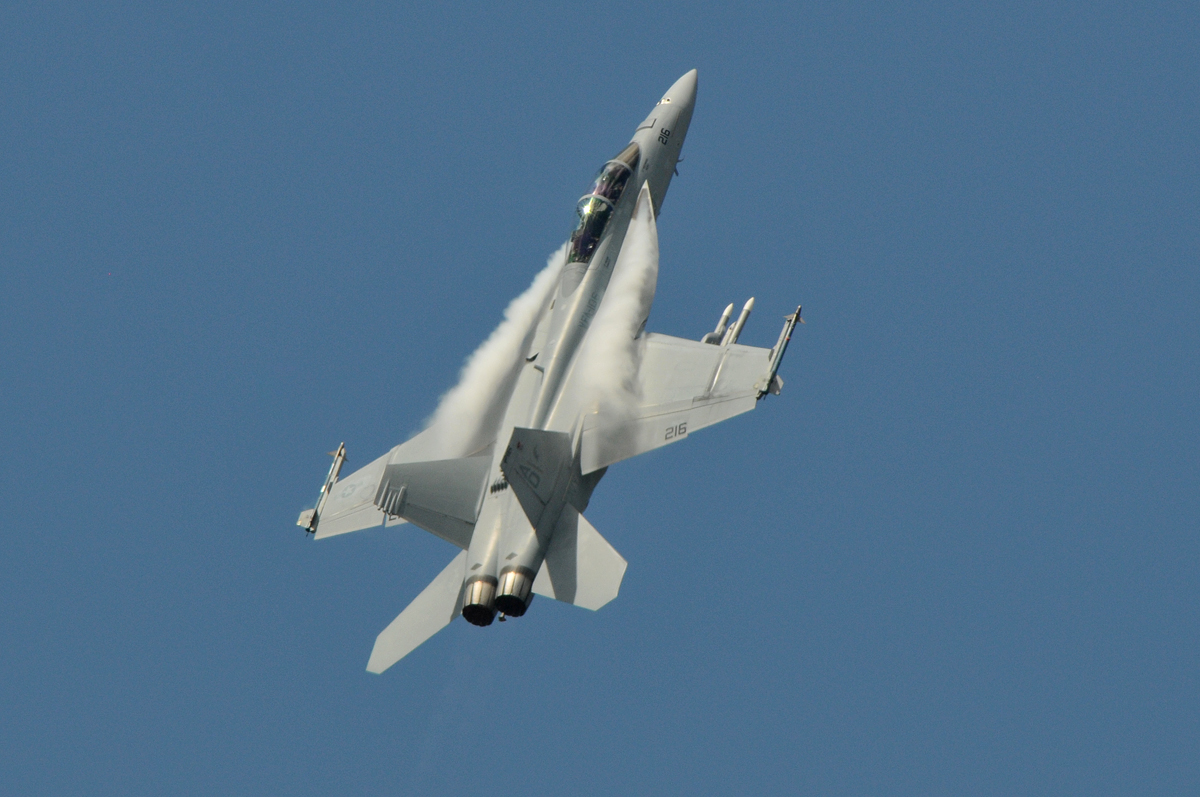
9. Boeing F/A-18E/F Super Hornet
DSC_3153

Well equipped with a great defensive system and excellent weapons the Super Hornet  has much to offer. It is happiest at lower speeds and altitudes  making it a fearsome dogfighter, but is less capable at the BVR mission; a mediocre high-speed high-altitude performance let it down, as does a pedestrian climb rate and acceleration at higher speeds. The touch screen cockpit has disadvantages, as switches and buttons  can be felt ‘blind’ and do not require ‘heads-down’ use. The much-touted AN/APG-79 AESA radars introduced on Block II aircraft has proved unreliable and has enormous development problems. One scathing report said ‘ …operational testing does not demonstrate a statistically significant difference in mission accomplishment between F/A-18E/F aircraft equipped with AESA and those equipped with the legacy radar.’ Read an exclusive interview with a Super Hornet pilot here.

Armament for A2A mission: Super Hornet (high drag ‘Christmas tree’) 12 x AIM-120, realistic = 6 x AIM-120C-7  + 2/4 AIM-9X ) (1 x 20-mm cannon)

8. Grumman F-14 Tomcat (IIRAF)

1907144

The star of ‘Top Gun’ remains active with the Islamic Republic of Iran’s Air Force. Though an aged design it probably retains an impressive ultra-long range engagement capability. As one source said to Hush-Kit ‘Against a US Navy F/A-18, the Tomcat’s radar and AIM-54 are still going to cause a real headache.’

A2A armament:  4 x AIM-54 (remanufactured), 2 x Fatter (local AIM-9P version) (one 20-mm cannon)

Top Ten fictional aircraft here

7. Dassault Rafale

dassault_rafale

In many ways the Dassault Rafale deserves a higher ranking in this top ten. It has great agility, one of the lowest radar cross sections of a ‘conventional’ aircraft and its defensive systems are generally considered superior to those of its arch-rival, the Typhoon. It falls down in its main armament, the MICA, which is generally considered to have a lower maximum range than later model AMRAAMs. It has a little less poke than the Typhoon in terms of  thrust-to-weight ratio leading some potential customers in hot countries to demand an engine upgrade. It has yet to be integrated with a helmet cueing system in operational service and the recent fitment of an AESA, though a publicity coup, is very far from being fleetwide, leaving the vast majority of aircraft with a PESA squeezed into an unfortunately petite nose, a technological cul-de-sac lacking the flexibility of the pure AESA of its US rivals (though it is still a highly regarded sensor).

A2A armament: 6 x MICA (possibly 8 if required, though this has not been seen operationally)  (one 30-mm cannon)

6. McDonnell Douglas F-15C (V) 3 Eagle/Boeing F-15SG

Though the famously one-sided score sheet of the F-15 should be taken with a pinch of salt (Israeli air-to-air claims are often questionable to say the least), the F-15 has proved itself a tough, kickass fighter that can be depended on. It lacks the agility (certainly at lower speeds) of its Russian counterparts, but in its most advanced variants has an enormously capable radar in the APG-63(V)3. The F-15 remains the fastest Western fighter to have ever entered service, and is currently the fastest non-Russian frontline aircraft of any kind in the world. The type is let down by a giant radar cross section, a massive infra-red signature and an inferior high altitude performance to a newer generation of fighters.

A2A armament: 6 x AIM-120C-7, 2 x AIM-9X (1 x 20-mm cannon)

Republic of Singapore Air Force F-15SG lands Oct. 3, 2012, at Eielson Air Force Base, Alaska. The aircraft is assigned to the 428th Fighter Squadron Mountain Home Air Force Base, Idaho Alaska for the RedFlag-Alaska exercis (1

5. Sukhoi Su-30MK

The most capable official members of Sukhoi’s ‘Flanker’ family are the export Su-30MKs. Agile and well-armed they are formidable opponents. Armed with ten missiles the Su-30 has an impressive combat persistence and is able to fly impressively long distance missions. The radar is a large, long-ranged PESA (featuring some elements of an AESA) and Indian aircraft carry particularly good Israeli jamming pods. The type has proved itself superior to both the RAF’s Tornado F.Mk 3 and USAF’s F-15C in exercises, though the degree of dominance over the F-15C is marginal to the point that superior training, tactics and C3 saw the US lord over the type in later exercises. The pilot workload is higher than in later Western designs, the engines demanding  to maintain and the vast airframe has a large radar cross section.

A2A armament: 6 x R-77, 4 x R-73 (1 x 30-mm cannon)

Su30MKI-07

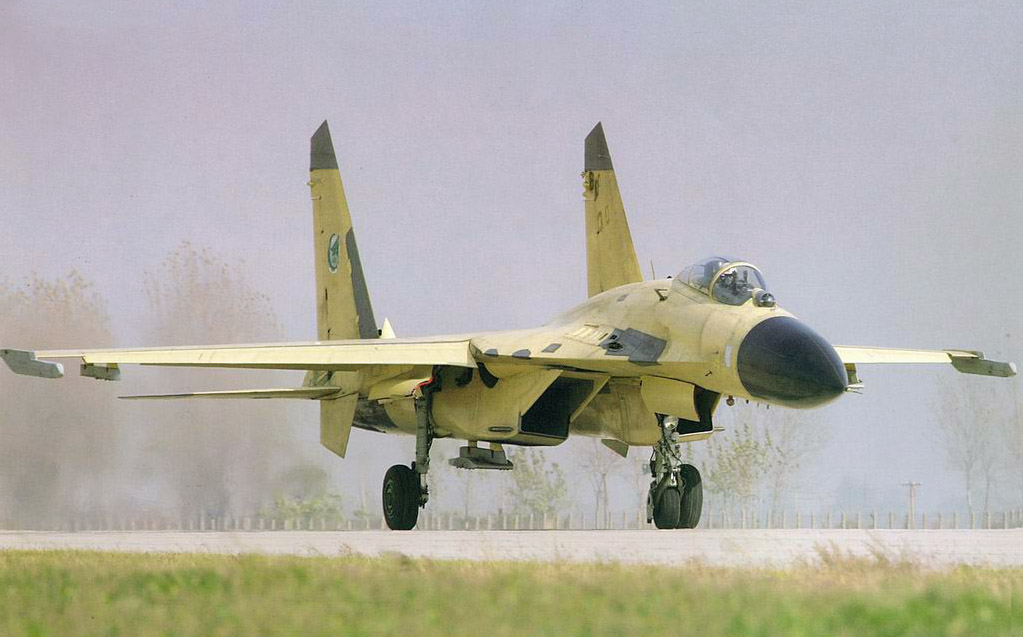
4. Shenyang J-11B

The Chinese pirate version of the ‘Flanker’ features a reduced radar cross section and improved weapons and avionics. With the latest Type 1474 radar (with a 100 miles + range) and the highly-regarded PL-12 active radar AAM, it is an impressive fighter.

6 x PL-12, 4 x PL-10 (or R-73E) + ( 1 x 30-mm cannon)
j11b-prototype

3. Mikoyan MiG-31BM

The recent

The fastest modern fighter in the world, with a top speed of Mach 2.83, the MiG-31 offers some unique capabilities. No aircraft has a longer air-to-air weapon than the type’s huge R-33, which can engage targets well over 100 miles away. Designed to hunt in packs of four or more aircraft the type can sweep vast swathes of airspace, sharing vital targeting information by data-link with other aircraft. The enormous PESA radar was the first ever fitted to a fighter. The type is marred by a mountainous radar cross section and poor agility at lower speeds. More on the MiG-31 here and here.

 4 x R-33, 2 x R-40TD (1 x 23-mm cannon)

mig-31

2. Eurofighter Typhoon

A high power-to-weight ratio, a large wing and a well designed cockpit put the Typhoon pilot in an advantageous position in a BVR engagement. Acceleration rates, climb rates (according to a German squadron leader it can out-climb a F-22) and agility at high speeds are exceptionally good. Pilot workload is very low compared to most rivals and the aircraft has proved reliable. The type will be the ‘last swinging disc in town’ as it will be among the last modern fighters to feature a mechanically scanned radar; the Captor radar may use an old fashioned technology but it still a highly-rated piece of kit. It has a smaller radar cross section than both the F-15 and Su-30 and superior high altitude performance to Rafale. Combat persistence is good and the AIM-132 ASRAAM of RAF aircraft are reported to have a notable BVR capability.

A2A armament (RAF): 6 x AIM-120C-5, 2 x AIM-132 (1 x 27-mm cannon)

eurofighter_typhoon_flying-other

1. Lockheed Martin F-22 Raptor

Undisputed king of beyond-visual range air combat is the F-22 Raptor. Its superbly stealthy design means it is likely to remain undetected to enemy fighters, calmly despatching its hapless opponents. The type’s excellent AESA radar is world class, and its ‘low-probability of interception’ operation enables to see without being seen. When high-altitude limitations are not in place (due to safety concerns) the type fights from a higher perch than F-15s and F-16s, and is more frequently supersonic. High and fast missile shots give its AMRAAMs far greater reach and allow the type to stay out harm’s way. The F-22 is expensive, suffers from a poor radius of action for its size and has suffered a high attrition rate for a modern fighter.

6 x AIM-120C-5 + 2 x AIM-9M (1 x 20-mm cannon)

Help us give you more by donating to Hush-Kit here – even £1 is appreciated and it takes 10 seconds 

F-22A_raptor_lanza_un_aim-120d_amraam

Let’s get in to the merge, Top Ten Dogfighters here

By Joe Coles &  Thomas Newdick

Thank you for reading Hush-Kit. Our site is absolutely free and we have no advertisements. If you’ve enjoyed an article you can donate here– it doesn’t have to be a large amount, every pound is gratefully received. If you can’t afford to donate anything then don’t worry.

At the moment our contributors do not receive any payment but we’re hoping to reward them for their fascinating stories in the future.

As a thank you….


Those who donate more than £50 may ask for a short article on a particular subject.

Those who donate more than £100 may ask for a long article on a particular subject.

Find out about the latest Hush-Kit articles on Twitter: @Hush_kit

Who was Sweden’s flying farm girl?

Want to submit an article for Hush-Kit? Contact: hushkiteditorial@gmail.com


safe_image.jpg

“If you have any interest in aviation, you’ll be surprised, entertained and fascinated by Hush-Kit – the world’s best aviation blog”. Rowland White, author of the best-selling ‘Vulcan 607’

I’ve selected the richest juiciest cuts of Hush-Kit, added a huge slab of new unpublished material, and with Unbound, I want to create a beautiful coffee-table book. Pre-order your copy now right here  


TO AVOID DISAPPOINTMENT PRE-ORDER YOUR COPY NOW

From the cocaine, blood and flying scarves of World War One dogfighting to the dark arts of modern air combat, here is an enthralling ode to these brutally exciting killing machines.

The Hush-Kit Book of Warplanes is a beautifully designed, highly visual, collection of the best articles from the fascinating world of military aviation –hand-picked from the highly acclaimed Hush-kit online magazine (and mixed with a heavy punch of new exclusive material). It is packed with a feast of material, ranging from interviews with fighter pilots (including the English Electric Lightning, stealthy F-35B and Mach 3 MiG-25 ‘Foxbat’), to wicked satire, expert historical analysis, top 10s and all manner of things aeronautical, from the site described as:

“the thinking-man’s Top Gear… but for planes”.

The solid well-researched information about aeroplanes is brilliantly combined with an irreverent attitude and real insight into the dangerous romantic world of combat aircraft.

FEATURING

        • Interviews with pilots of the F-14 Tomcat, Mirage, Typhoon, MiG-25, MiG-27, English Electric Lighting, Harrier, F-15, B-52 and many more.
        • Engaging Top (and bottom) 10s including: Greatest fighter aircraft of World War II, Worst British aircraft, Worst Soviet aircraft and many more insanely specific ones.
        • Expert analysis of weapons, tactics and technology.
        • A look into art and culture’s love affair with the aeroplane.
        • Bizarre moments in aviation history.
        • Fascinating insights into exceptionally obscure warplanes.

The book will be a stunning object: an essential addition to the library of anyone with even a passing interest in the high-flying world of warplanes, and featuring first-rate photography and a wealth of new world-class illustrations.

Rewards levels include these packs of specially produced trump cards.

Pre-order your copy now right here  


I can only do it with your support.
F-22A_raptor_lanza_un_aim-120d_amraam

A very brief history of German stealth

Image

The first application of what we know today as stealth technology, was on German submarines in World War II, which were covered with material coatings to reduce their sonar and radar conspicuity. It is often thought that the Horten Ho 229 flying wing was the first stealth aircraft, but there is little evidence to suggest that this is true.

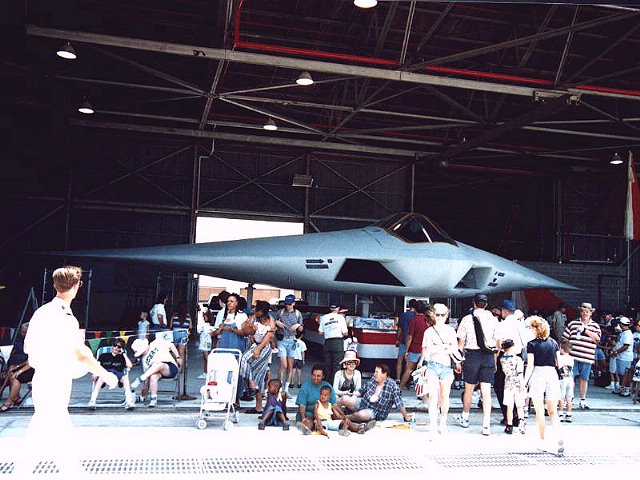
The MBB Lampyridae was a late 1970s/early 1980s project to produce a low-observable missile fighter. US stealth efforts were deeply classified at the time, but the German company MBB arrived at a similar solution to the F-117 independently. The design relied on a simple faceted shape to control radar returns. It is rumoured that following a trip to the MBB black projects section in 1987 by USAF officers, the US demanded that the project be cancelled.

Image

A year earlier, in 1986, Flight International showed an illustration of a new project being studied by Dornier named the LA-2000. This project did not lead to a production aircraft, but the later US-designed McDonnell Douglas A-12 Avenger II bore an uncanny resemblance to the aircraft.

Find out the story of Russian stealth here.

Image

Aviation mythbuster 2 : Why everything you thought you knew about the F-104G Starfighter is wrong

Chronik F 104 N…ebwerkslaufGerman Starfighter by Thomas Newdick 

An avgeek parallel to the internet’s Godwin’s law, as online discussion on the topic of the German F-104 Starfighter grows longer, the probability of a mention of its allegedly dismal attrition record, or of ‘W****maker’, approaches 1. A total of 292 Lockheed F-104s were lost in German military service, one for each of the words in this article. By 21st-century standards, it’s a catastrophe. In fact, Starfighter attrition was an improvement over its predecessor in Luftwaffe service, the RF/F-84F. Proportionally, it suffered fewer losses than the RAF’s Lightning, that perennial ‘pilot’s aircraft’ (just what aircraft isn’t?). Long before the Tornado was drafted, the F-104G was blazing a trail across inclement European skies as the first true multi-role combat aircraft of the jet age.

Starfighter JG …ild Farbe 3In Luftwaffe service, the Starfighter was admittedly limited in its roles of interception and reconnaissance, but as a low-level nuclear strike fighter, it provided teeth to back up NATO’s rhetoric into the early 1980s. Substitute the additional fuel pack used in the strike role for the M61 Vulcan cannon (which found its first application on the F-104), and hang as much conventional ordnance as that famous tiny wing would permit, and the Starfighter was equally useful in the conventional attack role. The German Navy might have wanted the Phantom or Buccaneer, but they showed just what ‘Kelly’ Johnson’s design could do low over the chilly Baltic, toting anti-ship missiles or running the important ‘Baltic Express’ reconnaissance mission.
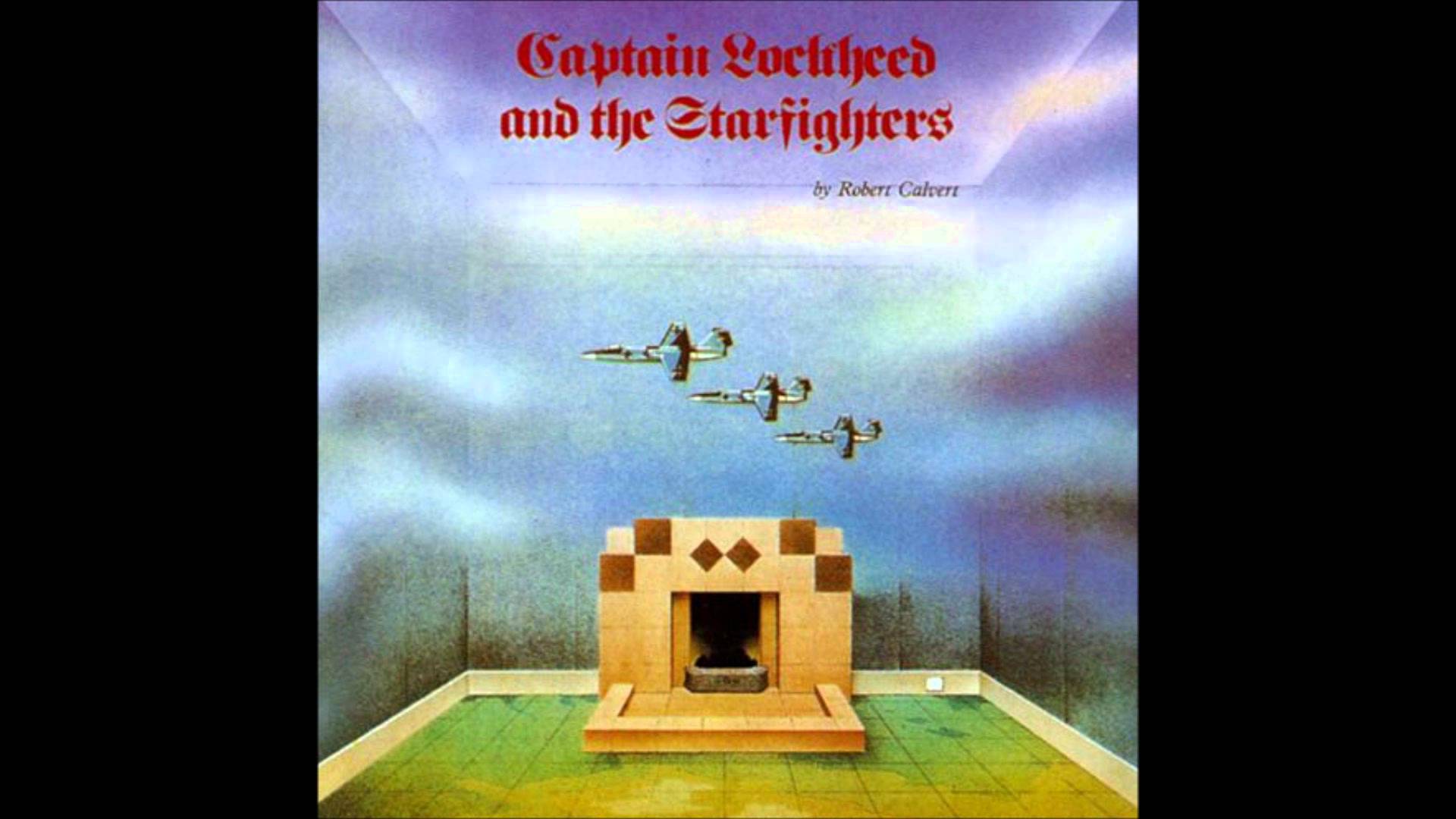
The F-104G was never far from scandal in Germany and elsewhere; even the F-35 would struggle to bring down a Dutch monarch or inspire two concept albums!

maxresdefault

by Combat Aircraft’s Thomas Newdick. If you enjoyed this you will love Essential Aircraft
Identification Guide: Carrier Aircraft 1917–Present
. If you wish to hear some very odd Starfighter music  listen here and here

Read an interview with a Super Hornet pilot here.

Follow my vapour trail on Twitter@Hush_kit

Which weapon has armed the ‘Bear’, Buccaneer, Sea King and the Il-38?

Find out about the latest Hush-Kit articles on Twitter: @Hush_kit

Who was Sweden’s flying farm girl?


Shark’s teeth! A gallery of planes with bite

Picture490-1

Follow my vapour trail on Twitter: @Hush_kit
Go on- donate and keep this madness going. The donate buttons can be found on this page. Thank you. 

You may also enjoy B-52 pilot chooses Top 10 Cold War bombers, Flying & Fighting in the Mirage 2000: a pilot interview, The World’s Worst Air Force, 10 most formidable dogfight missiles, The ten coolest cancelled airlinersTen incredible cancelled Soviet fighter aircraftTen worst Soviet aircraftTen incredible cancelled military aircraftFighter aircraft news round-up,  11 Cancelled French aircraft or the 10 worst British military aircraftSu-35 versusTyphoon10 Best fighters of World War II , Su-35 versus Typhoontop WVR and BVR fighters of today, an interview with a Super Hornet pilot and a Pacifist’s Guide to Warplanes. Flying and fighting in the Tornado. Was the Spitfire overrated? Want something more bizarre? Try Sigmund Freud’s Guide to Spyplanes. The Top Ten fictional aircraft is a fascinating read, as is The Strange Story and The Planet Satellite. The Fashion Versus Aircraft Camo is also a real cracker. Those interested in the Cold Way should read A pilot’s guide to flying and fighting in the Lightning. Those feeling less belligerent may enjoy A pilot’s farewell to the Airbus A340. Looking for something more humorous? Have a look at this F-35 satire and ‘Werner Herzog’s Guide to pusher bi-planes or the Ten most boring aircraft. In the mood for something more offensive? Try the NSFW 10 best looking American airplanes, or the same but for Canadians. 10 great aircraft stymied by the US


How the RAF almost acquired Mirage IVs: An insider’s story

MIRAGE_IV_PR_IMP_B01_web

A fascinating episode that is rarely discussed is how close Britain’s RAF got to adopting Mirage IVs. This insider’s account of this unusual episode in aviation’s annals is taken from Charles Gardner’s ‘British Aircraft Corporation – A History’. This true story starts shortly after the shock-cancellation of the BAC TSR.2.

“BAC promptly, and on a self-help basis, did all it could to offer an alternative to the F-111 purchase, while naturally welcoming the Jaguar and AFVG proposals. These would load the design offices, but would not replace the TSR.2 on the factory floors for some years. What was urgently needed was some production and consequent payment for hardware. Hence the affair of the Spey-Mirage.

The idea was to get the government to take jointly made Mirage IV airframes fitted with Spey engines instead of buying the F-111. This, BAC argued, could provide a highly efficient TSR.2 replacement aircraft, fully capable of performing the TSR.2 tasks, at a total cost, for seventy-five aircraft of under £2 million each. Production assembly would be from two lines, one in France and one at BAC, and production deliveries could start in 1969.

The proposal was exactly in accord with the announced Government policy of Anglo-French colorations, would use an existing engine in an existing airframe, and incorporate already developed avionics and nav-attack systems. It would be complimentary to the AFVG, which was also to be BAC/Dassault collaboration, and, furthermore there were signs that the French air force might be very interested in buying some. Allen Greenwood for BAC and Ronnie Harker of Rolls-Royce become very active in promoting this solution.

Find out about Britain’s cancelled STOVL superfighter here

Mr. Healey has since said he only loses his temper about once in three years, but, when he does, it is an awesome experience. By all accounts he lost his temper over the BAC/Rolls-Royce Spey-Mirage proposals and referred to BAC in quite unprintable terms. In on outburst he said he would divert his two Anglo-French proposals to Hawker and leave BAC to ponder its sins. It is difficult to understand why he should have taken such a view, as he had not yet ordered any F-111s, and the F-111, to his certain and detailed knowledge, was already a very dubious proposition indeed. For some reason, however, he believed BAC was trying to roll stones in the way of his AFVG project, which was absurd.

a3spark7122 Dassault_Mirage_IV_Wallpaper_z0bhq

BAC wanted both the AFVG for the future, and the Spey-Mirage for immediate reasons. The Spey-Mirage was aimed specifically at the F-111 and not the AFVG, and there can be little doubt that it would have filled this bill very well indeed. It would certainly have been an incomparably better aircraft than the subsonic Buccaneers, which the RAF eventually was forced to take when the AFVG fell through. An American General said of the Buccaneer proposal in 1965, ‘It will give its opponents hysterics, and earn the pity of its friends. The USAF discarded aircraft of the Buccaneer performance a decade ago.’

The better the Spey-Mirage looked the angrier grew the Minister and Ministry of Defence, while the Air Staff even went to the extent of interfering with RAF flight test reports, as one of the pilots has subsequently admitted. In the end, Sir Henry Hardman, Ministry of Defence Permanent Secretary, spelt it out to Lord Portal personally that, if BAC expected any more MoD work, it (and Rolls-Royce) better lay off Spey-Mirage as the RAF was determined to have F-111s.

Dassault, who would have done very well out the deal, were understandably angry, and there was much reference to the perfidy of Albion and of her lip service to a European concept while actually being a vassal of the USA. The French were shortly to have their revenge, if for different reasons and motives.”

You will only hear about the latest exclusive aviation features by following Hush-Kit on Twitter

Hush-kit is reminding the world of the beauty of flight.

What was Italy’s ultimate fighter?

follow my vapour trail on Twitter@Hush_kit

Do you have an idea for a Hush-Kit article you would like to write?

mirage_IV_ch61_bi36_4

Great video of Dion singing in an Air France Boeing 707

An Air France Boeing 707-328 and popstar Dion Di Mucci in 1962. The song is a cover of Jerry Leiber and Mike Stoller’s ‘Ruby Baby’ originally recorded by The Drifters. As an aside,  there’s an amazingly fierce cover of this song by Cody Brennan featuring some great guitar playing by the young Roy Buchanan (the intro of which was re-used by The Cramps for ‘Alligator Stomp’.

Brief guide to RAF slang from World War II

pilot

Abbeville Kids, the: Focke-Wulf 190s

Beau: Bristol Beaufighter

Belinda: Barrage balloons

Beetle-juice: The star Betelgeux

Crate: An aeroplane

Groupy: Group Captain

Milk train: The first patrol of the day.

Roman-candle landing: A poor landing, which merited the Control Officer firing off a warning rocket

Turnip-bashing: Drill on the parade ground or field training

Tin fish: A torpedo

Visiting card: A bomb

Whirligig: Westland Whirlwind

Wopag: Wireless Operator/air gunner

Yellow doughnut: Inflatable life raft

The Black Bomber: Rowland White reveals the story behind the Valiant B.2

Image

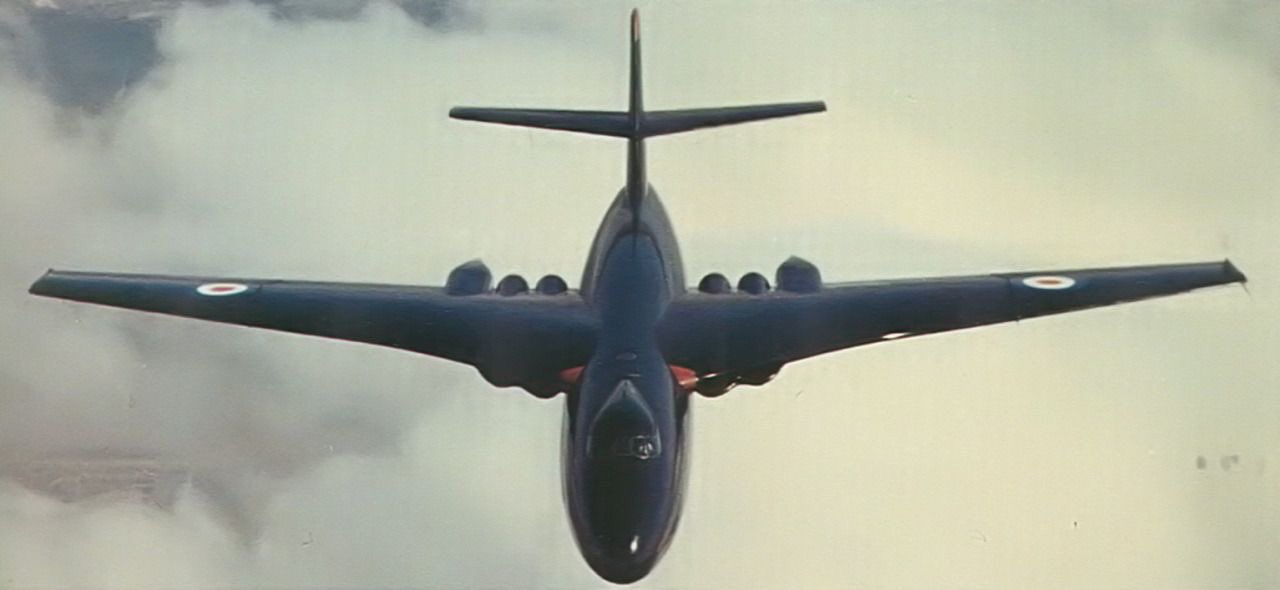
When Gary Powers’ U-2 was shot down in 1960, it was clear that flying high offered Britain’s V-bombers no protection. Instead the RAF began training to go in under the radar.  The strain of flying in thick low-level air soon caused fatigue cracks that saw the immediate retirement of the RAF’s Vickers Valiant B1.

‘And paint the fucker black …’

The irony is that Vickers had actually built an aircraft that was perfectly suited to the new tactics.  Alongside the standard Valiant, a one-off variation on a theme had been ordered.  Based on experience from WWII, the Air Staff wanted a machine that could fly ahead of the main bomber force to accurately mark targets.  The result was the Valiant B.2. Beefed up to fly fast and low, the ‘Pathfinder’ was tested at speeds of up to 640mph.  That’s comparable to the low level performance of the USAF’s swing wing B-1B Lancer, a machine that first flew nearly thirty years later and remains in service today.
 

b2-wj954
Lowdown at 600mph, condensation wrapped the bomber in its own flaring cloud.  It only added menace to an imposing presence that test pilot Brian Trubshaw had been instrumental in creating.  When he saw the bomber’s muscular shape in the Vickers design office, he signalled his approval, then added ‘And paint the fucker black …’


Rowland White’s new book, The Big Book of Flight, is published by Bantam Books on May 23rd, 2013.  The Valiant B2 – and other cancelled aircraft projects – are all featured in the book.  Alongside much more besides, from airline food to drones, by way of cluster ballooning, WWII, aerial firefighting and tortoises in deep space. To keep well-informed of the latest aviation stories follow @hush_kit on twitter or on Facebook. Image

IMG_1959-1